
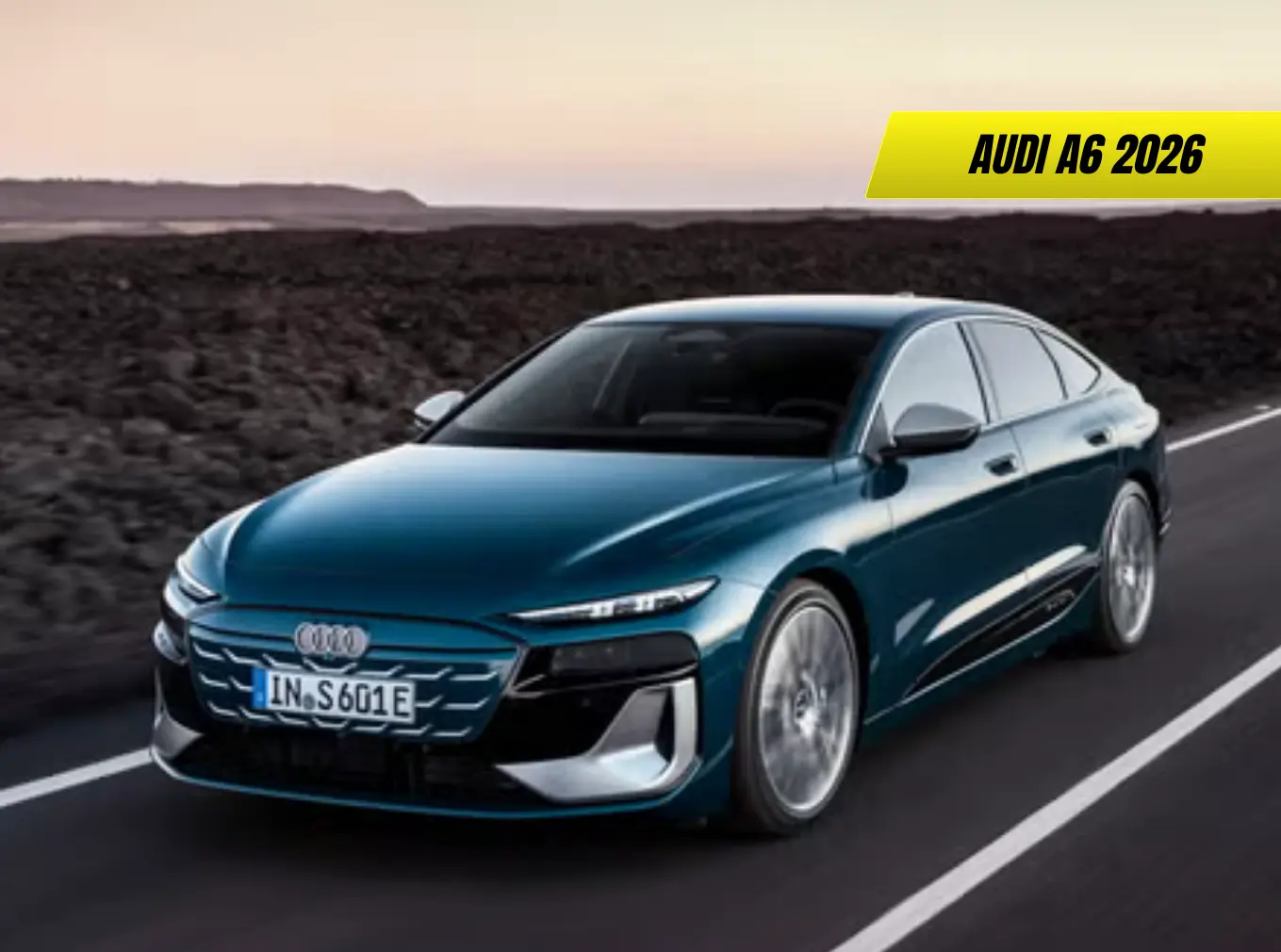
Audi’s future design direction has been dramatically previewed through striking renders applying the controversial Concept C styling to the next-generation A6 sedan, expected around 2030. Under new design chief Massimo Frascella, who assumed leadership in mid-2024, Audi is preparing to introduce a “radical simplicity” philosophy across all future models, abandoning the familiar Singleframe grille for a vertical tablet-shaped black panel that references the 1936 Auto Union Type C race car whilst polarising opinion among UK enthusiasts.
Next-gen Audi A6 rendered with Concept C design language featuring vertical black grille and radical simplicity. UK preview of 2030+ model with new design direction.
Key Points:
- New design chief Massimo Frascella leading complete visual transformation after Marc Lichte’s decade-long tenure shaping current Audi lineup
- Radical grille redesign featuring vertical tablet-shaped black panel replacing iconic Singleframe design across all future Audi models
- Concept C influence demonstrated through slim horizontal LED lighting, minimalist surfaces, and titanium-inspired interior aesthetics
- 2030+ timeline with current-generation A6 only launched in 2025, meaning UK buyers won’t see this design direction for several years
- Four design pillars defining new philosophy: Clear, Technical, Intelligent, and Emotional – emphasising transparency and radical simplicity
- UK availability confirmed with current 2026 A6 priced from £52,060-£69,730 offering petrol, diesel, and plug-in hybrid powertrains
Audi’s Design Revolution Under Massimo Frascella
The direction of any car brand can shift dramatically when a new design chief takes control, and Audi finds itself in precisely this transition. Massimo Frascella succeeded Marc Lichte as Head of Design in mid-2024, inheriting responsibility for shaping models that will define Audi’s visual identity through the 2030s. Lichte spent ten years creating every current Audi model that UK buyers can purchase today, from the compact A1 to the flagship Q8 SUV.
Frascella’s vision was first showcased publicly through the Concept C, an electric two-door sports car unveiled in Milan that previews a potential successor to the discontinued TT. However, this concept’s most significant purpose extends beyond previewing one specific model – it introduces the complete design language that will eventually transform Audi’s entire global lineup. From my point of view, this represents one of the boldest strategic pivots in premium automotive design, comparable to BMW’s controversial adoption of enlarged kidney grilles in recent years.
The philosophy centres on what Frascella describes as “radical simplicity” and transparency, built around four core pillars: Clear, Technical, Intelligent, and Emotional. Audi CEO Gernot Döllner emphasized that this innovative design philosophy extends beyond mere aesthetics, stating: “The manner in which we design our vehicles is how we will shape our company. Clarity is our guiding principle and will navigate Audi through future challenges.”
Controversial Grille Design Replacing Singleframe Icon
The most polarising element of Frascella’s new direction is the complete abandonment of Audi’s Singleframe grille that has defined the brand’s face since 2004. The Concept C features a tall, vertical, tablet-shaped black panel that references the 1936 Auto Union Type C race car, incorporating the iconic four rings alongside advanced lighting technology. This vertical element, described by Audi as creating a “monolithic” appearance, contrasts dramatically with the wide, horizontal Singleframe that UK buyers have grown accustomed to over two decades.
Sugar Design’s A6 renders apply this controversial grille directly to a traditional four-door executive sedan body, paired with the same ultra-slim LED headlights seen on Concept C. More conventional vertical air intakes flank the lower bumper, providing necessary cooling whilst maintaining visual balance. In my experience, dramatic grille changes typically generate strong initial criticism before gradual acceptance – BMW’s enlarged kidneys followed precisely this trajectory.
Frascella confirmed last month that all future Audi models will feature grilles inspired by Concept C, though each will receive specific modifications ensuring individual models maintain distinct identities rather than looking identical. This suggests the A6’s interpretation might feature subtly different proportions or detailing compared to sportier models like a potential TT successor or the upcoming electric Q6 variants.
Reimagined A6 Sedan Proportions and Styling
The rendered A6 showcases how Frascella’s design language translates to Audi’s most important executive sedan. Beyond the controversial front grille, the renders reveal beautifully sculpted flanks with newly designed doors, revised quarter panels, and an altered beltline that creates a sleeker, more dynamic profile than the current generation. From my point of view, the side elevation represents the most successful angle, combining elegance with muscularity in proportions that should appeal to traditional UK executive car buyers.
If production models borrow as heavily from Concept C at the rear, expect slim horizontal taillights connected across the full width, creating the distinctive lighting signature that will characterise all future Audis both day and night. A blacked-out lower bumper and diffuser section would echo the concept’s graphic approach whilst maintaining the practical functionality required for a high-volume production sedan. The new lighting signature, consisting of horizontal elements at each end, will become a hallmark making future Audis instantly recognisable.
The minimalist design ethos extends beyond exterior surfaces to influence every aspect. Smooth, uncluttered body panels with subtle detailing replace the complex character lines and sculpted surfaces that define current models. This “less is more” philosophy aligns with broader industry trends toward cleaner, more aerodynamically efficient shapes driven partly by electrification and efficiency requirements.
Interior Philosophy: Minimalism Meets Premium Craftsmanship
Whilst spy photographs haven’t revealed the next-generation A6’s cabin, the Concept C provides clear direction for Audi’s future interior philosophy. The concept features an extremely minimalist environment with clean lines, geometric symmetry, and a palette inspired by titanium. Anodized aluminum controls, ambient lighting in natural tones, and tactile physical controls on both the steering wheel and central console create what Audi describes as a seamless link between aesthetic purity and technical integrity.
Significantly, physical controls return after years of touch-sensitive surfaces and haptic feedback buttons that frustrated many UK owners. The Concept C’s steering wheel features authentic metal Audi rings at its centre, with all controls crafted to provide a distinct mechanical “Audi click” that enhances tactile feedback and user confidence. In my experience, this return to proper physical interfaces represents a welcome acknowledgment that capacitive touch surfaces simply don’t deliver the same intuitive usability whilst driving.
The cabin continues the theme of radical simplicity through carefully selected premium materials including anodized aluminum, genuine metal switchgear, and soft-touch surfaces positioned at key contact points. This approach prioritises quality over quantity, ensuring every material and surface earns its place through functional or aesthetic contribution rather than visual complexity for its own sake. For UK buyers accustomed to Germanic build quality, this philosophy should deliver the premium ambience expected from a £50,000+ executive sedan.
Current 2026 Audi A6 UK Specifications and Pricing
The current-generation A6 only launched in 2025, meaning UK buyers face at least 4-5 years before the next-generation model incorporating Frascella’s new design language reaches showrooms around 2030 or later. The existing A6 remains available in both four-door saloon and five-door Avant estate bodystyles, priced from £52,060 to £69,730 depending on specification.
UK powertrains include turbocharged 2.0-litre four-cylinder engines in both petrol and diesel forms, each producing 201hp through seven-speed dual-clutch automatic transmissions. The diesel benefits from mild-hybrid technology, quattro all-wheel drive, and 295 lb-ft of torque, whilst the petrol makes do with front-wheel drive and 251 lb-ft. A plug-in hybrid variant combines the petrol engine with electric drive for 204hp total output and the ability to travel up to 54 miles on electricity alone, making it particularly attractive for UK company car drivers seeking low Benefit-in-Kind taxation.
| Current A6 Variant | Engine | Power | Drive | UK Price |
|---|---|---|---|---|
| Premium TFSI Saloon | 2.0 petrol | 201 hp | FWD | £52,785 |
| Premium TFSI Avant | 2.0 petrol | 201 hp | FWD | £54,735 |
| Premium TDI Saloon | 2.0 diesel MHEV | 201 hp | Quattro | £57,055 |
| Premium TDI Avant | 2.0 diesel MHEV | 201 hp | Quattro | £59,005 |
| TFSI e PHEV Saloon | 2.0 plug-in hybrid | 204 hp | FWD | £62,485 |
| TFSI e PHEV Avant | 2.0 plug-in hybrid | 204 hp | FWD | £64,455 |
The A6 competes in the highly competitive UK executive sedan segment against the BMW 5 Series, Mercedes-Benz E-Class, and Volvo S90. Understanding UK regulations including driving licence points and speed camera regulations remains essential for all UK motorists regardless of vehicle choice.
How Future A6 Design Compares to Rivals
By the time the next-generation A6 arrives around 2030, the competitive landscape will look dramatically different. BMW will likely have introduced its Neue Klasse electric architecture across the 5 Series lineup, Mercedes will have further evolved its EQ electric design language, and Chinese premium brands including BYD, Nio, and Xpeng will have established stronger UK presences. Audi’s radical design transformation represents a calculated risk that Frascella believes will differentiate the brand in an increasingly crowded marketplace.
The vertical grille approach contrasts starkly with BMW’s continued commitment to enlarged horizontal kidneys and Mercedes’ more evolutionary changes to its trademark three-pointed star presentation. From my point of view, this divergence creates clearer visual differentiation between German premium brands that have grown increasingly similar in recent generations. UK buyers who appreciate bold, distinctive styling will welcome this approach, whilst conservatives may prefer rivals’ more familiar aesthetics.
The emphasis on minimalism and clean surfaces should also deliver aerodynamic benefits particularly valuable for electric powertrains that the next-generation A6 will almost certainly offer alongside any remaining combustion options. Reduced drag coefficients translate directly into improved electric range and efficiency – critical factors for UK buyers concerned about real-world usability and running costs. Those comparing future electric options should also explore our guides to best plug-in hybrid cars and Chinese SUVs available now.
UK Road Tax and Company Car Considerations
Current 2026 A6 models incur VED road tax based on CO2 emissions, with petrol and diesel variants paying standard rates around £190-£225 annually plus the £410 premium supplement for vehicles exceeding £40,000 list price during the first five years. The plug-in hybrid qualifies for reduced rates thanks to its lower emissions, making it particularly attractive for UK buyers prioritising running costs.
Company car drivers will find the TFSI e plug-in hybrid especially compelling with Benefit-in-Kind taxation around 8-12% depending on electric range, compared to 30-37% for the diesel variants. This dramatic difference can save thousands of pounds annually for higher-rate taxpayers, making the hybrid’s £5,000-£7,000 price premium economically justifiable despite higher initial costs. Understanding UK toll roads and charges also helps calculate comprehensive ownership costs for business users covering extensive annual mileage.
By 2030 when the next-generation A6 arrives, the UK’s tax regime will have evolved further to encourage electrification. Pure electric variants will likely dominate the range, qualifying for minimal VED and extremely low BIK rates that make them far more affordable to run than any combustion alternative for company car drivers.
Timeline for Next-Generation A6 UK Launch
UK buyers considering an A6 purchase shouldn’t delay waiting for Frascella’s new design language – it won’t arrive for at least 4-5 years. The current-generation model launched in 2025, and Audi typically operates on 6-7 year product cycles before complete generational replacements. This suggests the next-generation A6 incorporating Concept C design elements won’t reach UK showrooms until approximately 2030-2032 at the earliest.
Mid-cycle facelifts typically arrive 3-4 years into a model’s lifecycle, meaning the current A6 should receive modest styling updates and technology enhancements around 2028-2029. These refreshes traditionally introduce revised bumpers, updated lighting signatures, enhanced infotainment systems, and sometimes additional powertrain options, but won’t incorporate the radical transformation Frascella is planning for complete model replacements.
I would recommend prospective buyers visit local Audi UK dealers to explore current A6 models through test drives covering both saloon and Avant bodystyles across the petrol, diesel, and plug-in hybrid powertrain options. The existing model represents excellent value with mature, proven technology, comprehensive equipment levels, and the understated elegance that has defined Audi executive sedans for decades.
Will UK Buyers Accept Audi’s Radical New Direction?
The British automotive market tends toward conservatism, particularly in the executive sedan segment where fleet managers and company car drivers prioritise understated professionalism over dramatic styling statements. Audi’s decision to abandon the familiar Singleframe grille represents a significant gamble that could either establish clear visual differentiation from German rivals or alienate traditional customers who value evolutionary design changes over revolutionary transformations.
From my experience, initial negative reactions to controversial design changes typically soften over time as buyers adjust to new visual languages. BMW’s enlarged grilles generated substantial criticism upon introduction but haven’t meaningfully impacted UK sales volumes, suggesting that underlying product quality, brand reputation, and practical attributes matter more than styling controversies. The same pattern will likely apply to Audi’s vertical grille if the company successfully communicates the heritage connection to 1930s Auto Union racing cars.
The return to physical controls in the Concept C’s interior should prove particularly popular with UK buyers who have consistently criticized touch-sensitive interfaces across all premium brands. If Audi delivers on its promise of premium tactile feedback with that distinctive “Audi click,” it could establish a meaningful advantage over rivals who remain committed to capacitive touch surfaces and gesture controls that frustrate daily usability.
For buyers comparing current executive sedan options, alternatives include the BMW 5 Series, Mercedes-Benz E-Class covered in our Mercedes electric GLC preview, and Japanese alternatives like the Toyota Corolla Cross if SUV practicality takes priority over traditional sedan elegance.
Frequently Asked Questions
When will the next-generation Audi A6 launch in the UK?
The next-generation A6 incorporating Massimo Frascella’s new design language won’t arrive until approximately 2030-2032 at the earliest. The current-generation model only launched in 2025, with Audi typically operating on 6-7 year product cycles before complete generational replacements.
How much will the future Audi A6 cost in the UK?
Pricing for the next-generation A6 remains unconfirmed, though expect increases proportional to inflation and technology enhancements. Current 2026 models range from £52,060-£69,730, suggesting future versions could start around £60,000-£65,000 in 2030 money, with premium variants exceeding £80,000.
Will all future Audis feature the controversial vertical grille?
Yes, design chief Massimo Frascella confirmed that all future Audi models will feature grilles inspired by the Concept C’s vertical tablet-shaped design, though each model will receive specific modifications ensuring individual character rather than identical appearances across the range.
What engines are available in the current 2026 Audi A6 for UK buyers?
The current A6 offers turbocharged 2.0-litre four-cylinder engines in petrol (201hp, FWD), diesel with mild-hybrid (201hp, quattro AWD), and plug-in hybrid (204hp, FWD) configurations, all paired with seven-speed dual-clutch automatic transmissions across saloon and Avant bodystyles.
Is the Concept C design suitable for UK roads and weather?
The minimalist exterior design with smooth surfaces and reduced visual complexity should prove well-suited to UK conditions, whilst advanced lighting technology ensures excellent visibility. The reduced aerodynamic drag from cleaner surfaces particularly benefits electric variants through improved range and efficiency.
How does the new Audi design language compare to BMW and Mercedes?
Audi’s vertical grille approach contrasts starkly with BMW’s horizontal enlarged kidneys and Mercedes’ more evolutionary changes, creating clearer visual differentiation between German premium brands that have grown increasingly similar. This should help each brand establish distinct identities in crowded markets.
What is the current Audi A6 company car tax rate in the UK?
Company car drivers pay Benefit-in-Kind taxation based on CO2 emissions: petrol and diesel variants incur 30-37% BIK, whilst the TFSI e plug-in hybrid qualifies for substantially reduced 8-12% rates thanks to its electric range capability, saving thousands of pounds annually for higher-rate taxpayers.
The next-generation Audi A6 incorporating Massimo Frascella’s radical new design philosophy represents one of the most significant transformations in premium automotive design for decades. UK buyers passionate about bold, distinctive styling that references Audi’s racing heritage will appreciate the dramatic departure from conservative evolutionary changes that have defined recent generations. The vertical grille polarises opinion now, but may well become as iconic as the Singleframe it replaces by the time younger buyers enter the premium executive sedan market in the 2030s.
However, those shopping for an A6 today shouldn’t delay their purchase waiting for this future vision. The current-generation model offers mature, proven technology with comprehensive equipment, efficient powertrains including an excellent plug-in hybrid, and the understated elegance that has made the A6 a fleet favourite for decades. Visit your local Audi UK dealer to experience the existing model’s exceptional refinement, whilst keeping an eye on Concept C’s evolution as Frascella’s vision gradually transforms into production reality over the coming years.





