
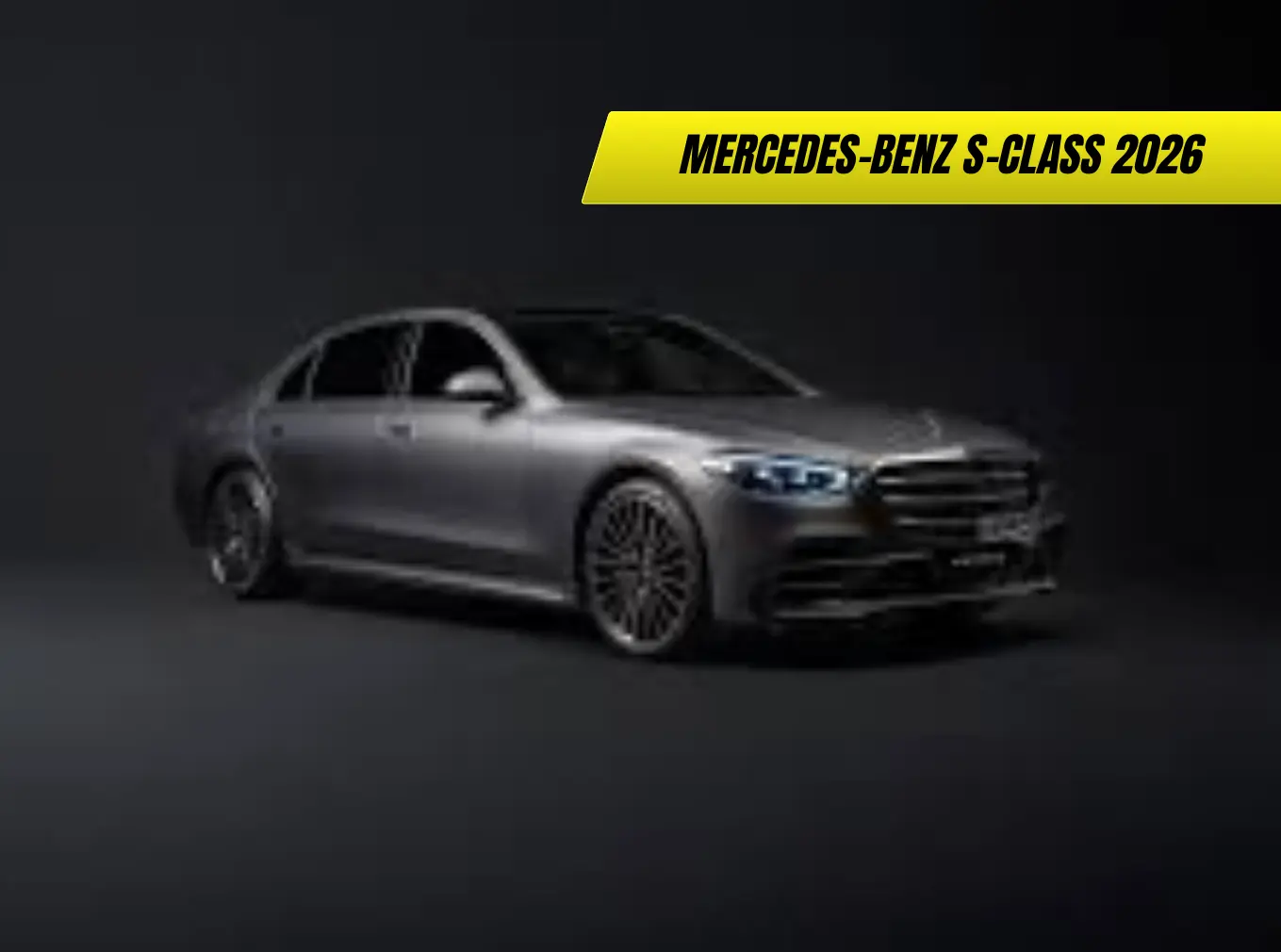
Mercedes-Benz has launched the all-new CLA in the UK with revolutionary MMA platform technology, marking the first chapter in what the company describes as “the biggest product launch program in Mercedes-Benz history” with 30 new models arriving by 2027. Available to order now from £45,615 with customer deliveries beginning Q3 2025, the electric CLA 250+ offers up to 466 miles of WLTP range whilst confirming that Mercedes will replace the discontinued A-Class and B-Class with a new entry-level hatchback and SUV-minivan crossover around 2028 on the same versatile architecture.
Mercedes CLA 2026 now in UK from £45,615 with 466-mile range on new MMA platform. Part of 30-model strategy replacing A-Class & B-Class by 2028.
Key Points:
- UK availability confirmed with CLA 250+ electric from £45,615, CLA 350 4Matic from £49,375, and hybrid versions arriving later in 2025-2026
- Revolutionary MMA platform designed “electric first” with 800V architecture, two-speed transmission, and flexibility for combustion engines as range extenders
- 30 new models by 2027 including 15 electric vehicles as Mercedes executes its most ambitious product offensive, spanning entry-level to flagship segments
- A-Class and B-Class replacements confirmed with new entry-level hatchback arriving 2028 on MMA platform alongside SUV-minivan crossover filling both niches
- Class-leading efficiency with 85kWh battery delivering 466 miles range (CLA 250+), 320kW DC fast charging, and 22-minute 10-80% charge times
- Five MMA bodystyles planned including CLA saloon, CLA Shooting Brake estate, GLA crossover, GLB larger SUV, and new entry-level hatchback for 2028
Mercedes MMA Platform: The Foundation of Future UK Models
The Mercedes Modular Architecture (MMA) represents the German brand’s most significant technological leap since the introduction of the modular MRA platform that underpinned the C-Class and E-Class for over a decade. Announced at a shareholder meeting in October 2020, MMA was designed with an “electric first” philosophy whilst maintaining crucial flexibility to accommodate internal combustion engines in markets where charging infrastructure remains underdeveloped.
The platform features oil-cooled synchronous electric motors, a sophisticated two-speed automatic transmission that balances performance with efficiency, and an 800-volt electrical architecture enabling charging speeds up to 320kW. From my point of view, this two-speed gearbox represents a significant advantage over single-speed rivals – the first gear delivers explosive acceleration from standstill, whilst the second ratio maintains efficiency at motorway cruising speeds where most electric vehicles suffer range penalties.
Mercedes confirmed that MMA will underpin all compact and mid-size models from the CLA up to (but not including) the C-Class, creating a comprehensive lineup spanning multiple bodystyles and price points. The platform’s versatility extends beyond pure electric applications – engineers deliberately left space in the front compartment to accommodate internal combustion engines that can serve as range extenders, providing insurance against slower-than-expected charging infrastructure rollout in certain global markets including parts of the UK where rural coverage remains patchy.
All-New Mercedes CLA 2026: UK Specifications and Pricing
The third-generation CLA launched in the UK with two electric variants available for immediate order, with hybrid models following later in the development cycle. The CLA 250+ with EQ Technology features a single 200kW (268hp) electric motor driving the rear wheels, delivering 247 lb-ft of torque through the innovative two-speed automatic transmission. This configuration achieves a remarkable 466 miles of WLTP range from its 85kWh battery pack – substantially more than any competitor in this segment.
UK pricing starts at £45,615 for the CLA 250+ in Sport Edition specification, rising to £49,375 for AMG Line Edition trim and £51,770 for the range-topping AMG Line Premium Edition. The CLA 350 4Matic with EQ Technology adds a second electric motor powering the front axle for all-wheel-drive capability, increasing total output to 349hp with 380 lb-ft of torque. This dual-motor configuration reduces the 0-62mph time significantly whilst maintaining over 400 miles of real-world range.
| CLA Electric Variant | Motor Configuration | Power | 0-62mph | Range (WLTP) | UK Price |
|---|---|---|---|---|---|
| CLA 250+ Sport Edition | Single RWD | 268 hp | 6.8 sec | 466 miles | £45,615 |
| CLA 250+ AMG Line Edition | Single RWD | 268 hp | 6.8 sec | 466 miles | £49,375 |
| CLA 250+ AMG Line Premium | Single RWD | 268 hp | 6.8 sec | 466 miles | £51,770 |
| CLA 350 4Matic AMG Line | Dual AWD | 349 hp | 5.4 sec (est.) | 420+ miles | £54,000+ (est.) |
The 85kWh battery pack benefits from 20% increased energy density compared to previous Mercedes EV batteries, achieved through advanced cell chemistry and thermal management systems. The 800-volt electrical architecture supports DC fast charging up to 320kW, allowing 10-80% charging in just 22 minutes at suitable rapid chargers – comparable with the fastest-charging electric vehicles currently available including Porsche Taycan and Hyundai Ioniq 6.
CLA Hybrid Models: Bridging Combustion and Electric
For UK buyers not yet ready to commit to full electrification, Mercedes will introduce hybrid CLA variants later in 2025 and into 2026. The CLA 180 Sport features a 1.5-litre four-cylinder petrol engine producing 134hp, augmented by a 30hp electric motor and 1.3kWh battery for mild-hybrid functionality. This combination delivers 56.5mpg combined fuel consumption with CO2 emissions of just 114g/km, making it attractive for company car drivers seeking low Benefit-in-Kind taxation.
The CLA 200 increases output to 187hp whilst maintaining the same 30hp electric boost, reducing the 0-62mph time to 7.1 seconds whilst achieving 54mpg combined. Topping the hybrid range, the CLA 220 4Matic adds all-wheel drive through a rear axle electric motor, producing 187hp total output with improved traction and stability in adverse weather conditions. Fuel consumption remains competitive at 52.4mpg despite the added capability.
From my experience, these mild-hybrid systems deliver genuine benefits in real-world UK driving conditions. The electric motor provides torque fill during low-speed manoeuvring and allows extended electric-only operation in stop-start traffic, reducing fuel consumption where traditional combustion engines prove least efficient. Those comparing hybrid options should also explore our guide to best plug-in hybrid cars UK for alternatives offering greater electric range.
A-Class and B-Class Replacement: 2028 Entry-Level Hatchback Confirmed
In a significant strategic reversal, Mercedes-Benz has confirmed plans to introduce a new entry-level hatchback that will indirectly replace the A-Class when production ends in 2028. This represents a major shift from the luxury-focused strategy championed by CEO Ola Källenius in recent years, which prioritised high-profit flagship models over volume sellers in mainstream segments.
The decision follows pressure from Mercedes’ global dealer network amid continued strong demand for compact hatchbacks, combined with disappointing sales results showing a 6% drop in overall global sales and a concerning 19% decline in EV sales during recent reporting periods. Mercedes executives recognised that the luxury-focused approach came at a high price – namely market share losses to rivals including Audi, BMW, and emerging Chinese premium brands.
The new hatchback will become the fifth bodystyle based on MMA platform, joining the CLA saloon, CLA Shooting Brake estate, and incoming GLA and GLB crossovers. It will be sold with both combustion and electric drivetrains to target the upcoming Audi A3 and BMW 1 Series, providing crucial powertrain flexibility amid uncertain EV adoption rates in key global markets including the UK where buyers remain price-sensitive and range-anxious.
Technical Details and Expected Specifications
The new entry-level Mercedes hatchback will share key dimensions including track widths and wheelbase with the third-generation GLA crossover scheduled for launch in the second half of 2026. This platform-sharing strategy delivers crucial economies of scale, allowing Mercedes to offer competitive pricing whilst maintaining the premium materials quality and advanced technology that differentiate the brand from mainstream volume manufacturers.
Expected UK pricing should start around £32,000-£35,000 for base petrol variants, rising to £38,000-£42,000 for electric versions with competitive battery capacity delivering 250-300 miles of real-world range. This positions the new hatchback competitively against established rivals whilst undercutting premium electric alternatives from Audi and BMW by meaningful margins.
The combustion variants will likely utilise the same 1.5-litre turbocharged four-cylinder mild-hybrid powertrain deployed in the CLA 180, delivering adequate performance with excellent fuel economy. Electric versions should feature single-motor rear-wheel-drive configurations producing around 200-250hp, providing the engaging driving dynamics that premium buyers expect whilst maintaining efficiency through lightweight construction and advanced aerodynamics.
SUV-Minivan Crossover: B-Class Spiritual Successor
Alongside the conventional hatchback, Mercedes is developing a taller, more spacious crossover that will effectively replace both the B-Class MPV and provide additional capacity beyond the GLA. This model represents Mercedes’ response to changing European buyer preferences – families that previously chose traditional MPVs like the B-Class now overwhelmingly prefer SUV-styled crossovers that offer similar practicality wrapped in more fashionable bodywork.
The SUV-minivan will prioritise interior space and versatility over sporting pretensions, featuring a taller roofline, upright seating position, and flexible interior configurations including sliding rear seats and folding front passenger seat for maximum cargo capacity. Expect boot space exceeding 500 litres with rear seats in place, expanding beyond 1,500 litres with seats folded – matching or exceeding the outgoing B-Class whilst incorporating modern safety technology and connectivity features.
From my point of view, this bodystyle makes perfect sense for UK families requiring genuine practicality without resorting to large, expensive seven-seat SUVs like the Mercedes electric GLC. The elevated driving position improves visibility in dense traffic, whilst the compact external dimensions ensure the vehicle remains manageable on narrow UK roads and in tight car parks where larger SUVs struggle.
Mercedes 30-Model Offensive: 2025-2027 Product Blitz
Mercedes-Benz describes its current product launch program as “the biggest in Mercedes-Benz history,” with 30 new models arriving between 2025 and 2027 including 15 pure electric vehicles. This ambitious offensive spans all segments from entry-level vehicles through core models like the C-Class and GLC, all the way to ultra-luxury flagships including updated S-Class variants and exclusive Maybach editions.
The 2026 calendar year alone will see 18 model launches according to recent investor documents, demonstrating Mercedes’ commitment to refreshing its entire lineup simultaneously rather than the traditional staggered approach. This strategy carries significant risk – it requires enormous capital investment, stresses manufacturing capacity, and demands exceptional coordination across global supply chains – but promises to position Mercedes comprehensively against rivals who may have gained temporary advantages during the transition to electrification.
Core Segment Updates: C-Class and GLC Electric
Within the core segment that generates Mercedes’ highest volumes and profits, expect mid-cycle refreshes for both combustion-powered C-Class and GLC models, paired with all-new electric versions positioned as direct alternatives. The electric C-Class will compete against BMW’s i4 sedan and Audi’s forthcoming electric A4, whilst the electric GLC targets buyers considering the BMW iX3 and upcoming electric Audi Q5.
These core segment electric vehicles will likely utilise a dedicated EV platform rather than MMA, which focuses on compact and mid-size models. However, the development philosophy remains consistent – prioritising efficiency, range, and rapid charging capability whilst maintaining the premium driving dynamics and luxury interior appointments that UK buyers expect from Mercedes-Benz products.
Those comparing current options should explore alternatives including the Nissan Qashqai e-Power for hybrid efficiency, or best Chinese SUVs offering compelling value propositions with generous equipment specifications and competitive pricing that undercuts established European premium brands.
UK Road Tax and Company Car Considerations
The electric CLA 250+ qualifies for the reduced £10 annual VED road tax rate applicable to zero-emission vehicles, though vehicles exceeding £40,000 list price incur an additional £410 annual supplement for the first five years. This means Sport Edition models starting at £45,615 will pay total annual road tax of £420 for years 1-5, dropping to just £10 thereafter – remarkably affordable given the vehicle’s performance and premium positioning.
Company car drivers will find the electric CLA exceptionally attractive with just 2% Benefit-in-Kind taxation for the 2025/26 and 2026/27 tax years, compared to 30-37% for equivalent petrol or diesel vehicles. For a higher-rate taxpayer, this dramatic difference saves approximately £5,000-£7,000 annually, making the electric CLA’s higher purchase price economically justifiable within just 12-18 months of ownership for business users.
The hybrid CLA variants incur higher BIK rates based on their CO2 emissions, typically 25-30% depending on specific output and electric range capability. However, these still represent substantial savings compared to pure combustion alternatives, whilst the excellent fuel economy delivers genuine running cost benefits for UK drivers covering moderate to high annual mileages. Understanding UK toll roads and charges also helps calculate comprehensive ownership costs.
MMA Platform vs Competitors: Technical Comparison
Mercedes’ decision to invest in a dedicated MMA platform specifically for compact and mid-size vehicles demonstrates confidence in this segment’s long-term profitability despite recent strategic wavering. This approach contrasts with rivals including BMW, which uses scalable CLAR architecture across multiple size categories, and Audi, which employs various MLB and MEB platforms depending on model and powertrain.
The MMA platform’s key advantage lies in its “electric first” design philosophy combined with genuine multi-energy flexibility. Pure electric vehicles benefit from optimised packaging with flat floor structures, low seating positions, and efficient component arrangements impossible with compromise platforms. However, the ability to accommodate combustion engines provides crucial insurance against market uncertainty – if UK buyers prove reluctant to embrace full electrification as quickly as anticipated, Mercedes can offer petrol, diesel, and hybrid alternatives without requiring entirely separate architectures.
From my point of view, this balanced approach makes more commercial sense than Volkswagen’s decision to create dedicated MEB electric platform and continue separate MQB architecture for combustion models. The development costs and complexity of maintaining multiple platforms strain even the largest manufacturers, whilst the ability to offer electric and combustion variants of the same basic model (sharing much of their exterior styling, interior appointments, and production tooling) delivers significant economies of scale.
Charging Infrastructure and Real-World UK Range
The CLA’s 800-volt architecture and 320kW maximum charging capability positions it among the fastest-charging electric vehicles available in the UK market. However, public charging infrastructure supporting these extreme speeds remains limited – current maximum rates at premium networks including Ionity and Gridserve top out around 350kW, whilst the majority of UK rapid chargers offer 50-150kW.
In real-world conditions, expect the CLA to add approximately 186 miles of range during a 15-minute charging stop at 320kW-capable chargers, or around 140-150 miles during the same duration at more common 150kW rapids. This makes long-distance travel genuinely practical, with typical London-to-Edinburgh journeys requiring just one 15-20 minute charging stop for most drivers.
Home charging using standard 7kW wallboxes will require approximately 12 hours for a complete 10-100% charge, easily accomplished overnight for UK drivers with off-street parking. Those with three-phase electrical supplies can install 22kW chargers reducing the full charge time to around 4 hours, providing additional flexibility for drivers covering high daily mileages who may need to top up between journeys.
How CLA Compares to UK Segment Rivals
The electric CLA enters a fiercely competitive segment against established rivals including the BMW i4, Audi A4 e-tron (when it arrives), Tesla Model 3, and Polestar 2. The Mercedes distinguishes itself through class-leading range exceeding 460 miles – substantially more than the BMW i4’s 315-mile maximum and the Tesla Model 3 Long Range’s 374-mile capability.
UK pricing positions the CLA competitively against premium rivals whilst undercutting them on cost-per-mile metrics. The BMW i4 starts at approximately £51,000 – over £5,000 more than the entry-level CLA 250+ – whilst offering significantly less range and slower charging capability. The Tesla Model 3 offers more competitive pricing from around £42,000, but lacks the premium interior refinement, brand prestige, and advanced safety technology that justify Mercedes’ positioning for its target audience.
| Competitor | Power | Range (WLTP) | 0-62mph | DC Charging | UK Price |
|---|---|---|---|---|---|
| Mercedes CLA 250+ | 268 hp | 466 miles | 6.8 sec | 320 kW | £45,615 |
| BMW i4 eDrive35 | 286 hp | 315 miles | 6.0 sec | 205 kW | £51,905 |
| Tesla Model 3 LR | 366 hp | 374 miles | 4.4 sec | 250 kW | £49,990 |
| Polestar 2 LR SM | 231 hp | 406 miles | 7.4 sec | 205 kW | £47,500 |
Those comparing broader market segments should also explore alternatives including best SUVs under £40k for buyers prioritising practicality, or diesel SUVs for drivers covering exceptionally high annual mileages where diesel’s superior long-distance efficiency still provides economic advantages despite higher fuel costs and VED rates.
UK Delivery Timeline and Order Process
The all-new Mercedes-Benz CLA is available to order now through UK Mercedes-Benz retailers, with customer deliveries scheduled to begin in Q3 2025 (July-September). Initial allocation focuses on the electric CLA 250+ variants across Sport Edition, AMG Line Edition, and AMG Line Premium specifications, with the more powerful CLA 350 4Matic following shortly thereafter.
Hybrid CLA models including the 180, 200, and 220 4Matic will arrive later in the 2025 calendar year and into early 2026, providing time for UK buyers to evaluate their requirements and determine whether full electrification or mild-hybrid technology better suits their driving patterns and charging access. I would recommend arranging test drives of both electric and hybrid variants through your local Mercedes-Benz dealer to experience the different powertrains and assess real-world suitability.
Finance packages are available including Personal Contract Purchase (PCP) with typical deposits around £5,000-£7,000 and monthly payments from £450-£550 depending on specification, annual mileage allowance, and contract duration. Business users should explore contract hire arrangements that may offer more favourable terms for company car applications, particularly given the electric CLA’s extremely low 2% BIK taxation.
Frequently Asked Questions
When will the new Mercedes CLA arrive in UK showrooms?
The all-new Mercedes-Benz CLA is available to order now with customer deliveries beginning in Q3 2025 (July-September). Initial deliveries focus on electric CLA 250+ variants, with hybrid models arriving later in 2025 and early 2026.
How much does the Mercedes CLA 2026 cost in the UK?
UK pricing starts at £45,615 for the electric CLA 250+ in Sport Edition trim, rising to £49,375 for AMG Line Edition and £51,770 for AMG Line Premium. The more powerful CLA 350 4Matic with all-wheel drive will start around £54,000.
What is the electric range of the new Mercedes CLA?
The CLA 250+ delivers up to 466 miles of WLTP range from its 85kWh battery – substantially more than rivals including the BMW i4 (315 miles) and Tesla Model 3 Long Range (374 miles), making it the segment leader for range capability.
Will Mercedes replace the A-Class and B-Class?
Yes, Mercedes has confirmed a new entry-level hatchback will arrive around 2028 on the MMA platform, indirectly replacing the A-Class when production ends in 2028. A taller SUV-minivan crossover will also launch, effectively replacing the B-Class MPV with more fashionable SUV styling.
How fast does the Mercedes CLA charge?
The CLA supports DC fast charging up to 320kW, allowing 10-80% charging in just 22 minutes at suitable rapid chargers. The 800-volt electrical architecture ensures the CLA remains among the fastest-charging electric vehicles available in the UK market.
What hybrid engines are available in the Mercedes CLA?
Hybrid CLA models use a 1.5-litre turbocharged four-cylinder petrol engine with 30hp electric motor assistance. The CLA 180 produces 134hp total, the CLA 200 delivers 187hp, and the CLA 220 4Matic adds all-wheel drive whilst maintaining 187hp output.
How does the MMA platform compare to Mercedes’ other architectures?
MMA was designed “electric first” specifically for compact and mid-size models up to (but not including) the C-Class. It features 800-volt architecture, two-speed transmission, and flexibility to accommodate combustion engines, unlike the dedicated EV platforms used for larger Mercedes models.
The all-new Mercedes-Benz CLA represents a defining moment for the brand’s electrification strategy and future model planning. The combination of class-leading 466-mile range, sophisticated MMA platform technology, and competitive UK pricing from £45,615 positions it as one of the most compelling premium electric sedans available to British buyers in 2025.
However, the CLA’s broader significance extends beyond its individual merits. As the first MMA platform model reaching UK customers, it previews an entire family of future Mercedes vehicles including the confirmed 2028 entry-level hatchback and SUV-minivan crossover that will replace the A-Class and B-Class. This represents Mercedes’ acknowledgment that luxury positioning alone cannot sustain market share – volume segments remain crucial for maintaining dealer network profitability and brand visibility.
From my experience, the CLA’s two-speed transmission and 800-volt architecture deliver genuine real-world advantages over single-speed rivals with 400-volt systems. The ability to exploit explosive first-gear acceleration whilst maintaining second-gear efficiency at motorway speeds provides the best of both worlds, eliminating the compromises that plague most electric vehicles. UK buyers seeking premium electric sedans with exceptional range capability should place the CLA at the top of their consideration lists.
For those comparing alternatives, the BMW i4 offers sportier driving dynamics but substantially less range at higher pricing, whilst the Tesla Model 3 provides competitive value but lacks the interior refinement and brand prestige that justify Mercedes’ positioning. The electric CLA strikes an impressive balance between performance, efficiency, luxury, and value – a combination that should ensure strong UK sales as deliveries commence in Q3 2025 and Mercedes executes its ambitious 30-model product offensive through 2027.





