
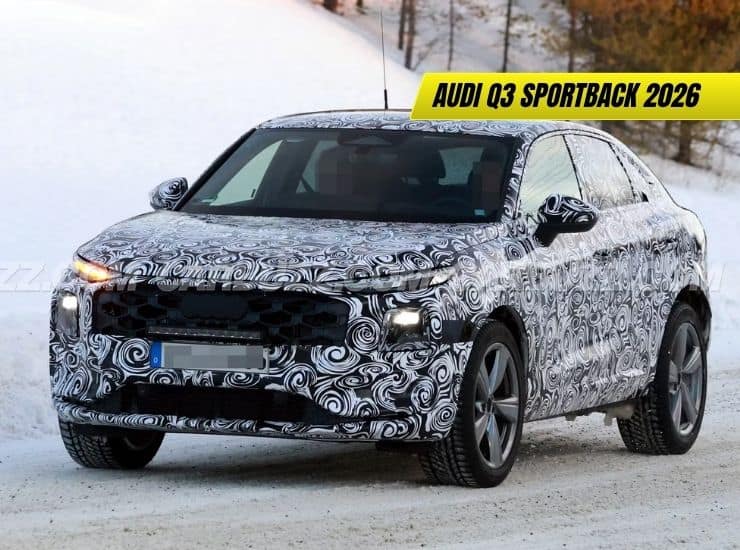
The Audi Q3 2026 receives a significant powertrain upgrade with a new 193 hp 2.0 TDI diesel engine and Quattro all-wheel drive, reinforcing its position as one of the most complete premium compact SUVs available in the UK today.
The Audi Q3 has long been a benchmark in the premium compact SUV segment, and the 2026 model year brings a welcome addition for UK drivers who still believe in the efficiency and long-distance capability of a modern diesel. With the addition of a more powerful 2.0 TDI unit, the Q3 range now covers every type of buyer — from city commuters to motorway cruisers. If you are comparing premium SUVs at this price point, our guide to the all-new 2025 Audi Q3 provides useful additional context.
Audi Q3 2026: Key Highlights
- New 2.0 TDI 193 hp diesel engine with Quattro all-wheel drive added to the range
- UK prices span from £39,850 to £57,895 across petrol, diesel and PHEV variants
- Available in three trim levels with four engine options including a plug-in hybrid
- The 193 hp TDI tops the diesel range, offering a claimed 55 MPG on UK cycle
- S Tronic seven-speed dual-clutch automatic gearbox as standard on TDI models
- Built on Audi’s latest MQB Evo platform with a fully redesigned interior and digital cockpit
Release Date: When Can UK Drivers Order?
The updated Audi Q3 2026 is available now in the UK, with the new 193 hp TDI Quattro variant joining the range in early 2026. Deliveries of the top diesel specification are underway through authorised Audi dealers nationwide. The full range — including the 1.5 TFSI petrol, 2.0 TFSI Quattro petrol and 1.5 e-Hybrid PHEV — has been on sale since late 2025.
For UK buyers who want a premium SUV with strong residual values and a comprehensive dealer network, the Q3 represents one of the safest choices in its class. You can configure yours directly on the Audi UK official website.
Price: How Much Does the Audi Q3 2026 Cost in the UK?
The Audi Q3 2026 range starts from £39,850 in Sport trim and extends to £57,895 for the fully loaded Edition 1 specification. The new 2.0 TDI 193 Quattro in Black Edition trim is listed at £43,995, making it a significant but justifiable step up from the entry-level diesel.
| Engine | Trim | Power | UK Price (from) |
|---|---|---|---|
| 1.5 TFSI | Sport | 150 hp | £39,850 |
| 2.0 TDI | S Line | 150 hp | £42,530 |
| 2.0 TDI Quattro | Black Edition | 193 hp | £43,995 |
| 1.5 e-Hybrid | S Line | 204 hp | £49,460 |
| 2.0 TFSI Quattro | Edition 1 | 265 hp | £56,250 |
From my point of view, the 2.0 TDI 193 Quattro represents the sweet spot of the range for UK drivers who cover significant annual mileage — the combination of genuine AWD capability and diesel efficiency is difficult to beat at this price.
The New 193 hp TDI Engine: More Power, Strong Efficiency
The headline addition to the Q3 2026 range is the uprated 2.0-litre TDI producing 193 hp (142 kW), paired exclusively with Quattro all-wheel drive and the S Tronic seven-speed dual-clutch automatic gearbox. This engine delivers a brisk 0–62 mph in approximately 7.5 seconds and a top speed of 134 mph, while returning a claimed 55 MPG on the combined UK cycle — a genuinely impressive figure for an AWD diesel in this class.
For UK drivers concerned about running costs, the TDI offers real-world advantages on long motorway journeys compared to equivalent petrol models. It is also worth noting that modern diesel SUVs are compliant with Euro 6d emissions standards, meaning they are not subject to current ULEZ charges in London. For more on diesel SUV options, our dedicated diesel SUVs guide covers the segment in depth.
Design and Exterior: Sharpened and Modernised
The Q3 2026 adopts Audi’s latest Single Frame grille with a wider, flatter design language that gives the front end a more assertive presence. LED headlights are standard across the range, with Matrix LED units available on higher trims. The flanks are clean and taut, with pronounced wheelarch lines that reference Audi’s larger Quattro SUV family.
At the rear, the full-width LED light bar connects the taillights in a single horizontal sweep — a contemporary touch that makes the Q3 unmistakably current. 18-inch alloy wheels are standard on Sport trim, rising to 19-inch items on S Line and above.
Interior: Premium Materials, Digital Focus
Inside, the Q3 2026 benefits from Audi’s latest-generation MMI infotainment system, dominated by a 10.1-inch central touchscreen running the latest software with wireless Apple CarPlay and Android Auto as standard. A 10.25-inch digital instrument cluster sits ahead of the driver, fully configurable between several display modes.
Key interior features across the range include:
- Three-zone climate control on S Line and above
- Ambient interior lighting with multiple colour options
- Virtual mirrors available as an option on higher trims
- Panoramic sunroof available on S Line and Edition 1
- Audi Sound System as standard, with Bang & Olufsen available as an upgrade
- Leather-effect upholstery standard on S Line, full leather on Black Edition and above
In my experience, the Q3’s interior quality sets the benchmark for this segment — the materials, fit and finish consistently exceed what you find in equivalent Mercedes GLA or BMW X1 models.
Safety and Driver Assistance
The Audi Q3 2026 achieves a five-star Euro NCAP rating, with a comprehensive suite of active safety systems standard across the range. These include:
- Autonomous emergency braking with pedestrian and cyclist detection
- Lane keeping assist and lane departure warning
- Adaptive cruise control with stop-and-go functionality
- Rear cross-traffic alert and blind-spot monitoring
- Park assist with front and rear sensors
For UK drivers concerned about driving licence points and speed awareness, it is worth noting that the Q3’s speed limiter and camera-alert systems can be configured to UK road speed limits. Our guide on UK driving licence points explains how to check your current total and what happens if you approach the 12-point threshold.
Audi Q3 2026 vs. Key Competitors
| Model | Engine (top diesel) | Power | Price (from) | AWD |
|---|---|---|---|---|
| Audi Q3 2026 | 2.0 TDI | 193 hp | £43,995 | Yes (Quattro) |
| BMW X1 xDrive20d | 2.0d | 150 hp | £42,500 | Yes (xDrive) |
| Mercedes GLA 220d | 2.0d | 190 hp | £44,700 | Yes (4MATIC) |
| Volvo XC40 D3 | 2.0d | 150 hp | £41,200 | No |
FAQ
Is the Audi Q3 2026 available in the UK?
Yes. The full 2026 Q3 range, including the new 193 hp TDI Quattro, is available now through authorised Audi dealers across the UK.
What is the most powerful diesel in the Audi Q3 2026 range?
The new 2.0 TDI producing 193 hp (142 kW) with Quattro all-wheel drive is the most powerful diesel option in the Q3 2026 range.
How fuel-efficient is the Audi Q3 2026 TDI?
The 2.0 TDI 193 returns a claimed 55 MPG on the combined UK cycle, making it one of the most efficient AWD diesel SUVs in its class.
Does the Audi Q3 2026 have a plug-in hybrid option?
Yes. The 1.5 e-Hybrid with 204 hp combined system output is available, with a claimed electric-only range of around 50 miles — qualifying for reduced company car tax rates.
What is the road tax (VED) for the Audi Q3 2026 TDI?
As a diesel vehicle registered after April 2017, the Q3 TDI is subject to standard UK VED rates. For full details, visit the official DVLA vehicle tax checker.
How does the Q3 2026 compare to the BMW X1?
The Q3 edges ahead on interior quality and the new 193 hp diesel is more powerful than the equivalent BMW X1 xDrive20d. The X1 counters with slightly lower pricing and a generous standard equipment list.
Is the Audi Q3 2026 ULEZ compliant?
Yes. All 2026 Q3 engines meet Euro 6d emission standards, making them ULEZ-compliant for driving in London and other clean air zones.
Conclusion
The Audi Q3 2026 is a thoroughly polished premium compact SUV that has been made even more compelling with the addition of the 193 hp TDI Quattro. For UK drivers who want genuine all-weather capability, strong efficiency and a genuinely premium interior, this engine represents the definitive version of the current Q3. I would recommend it without hesitation to anyone covering more than 15,000 miles per year — the running costs will justify the premium over equivalent petrol alternatives in relatively short order.





