
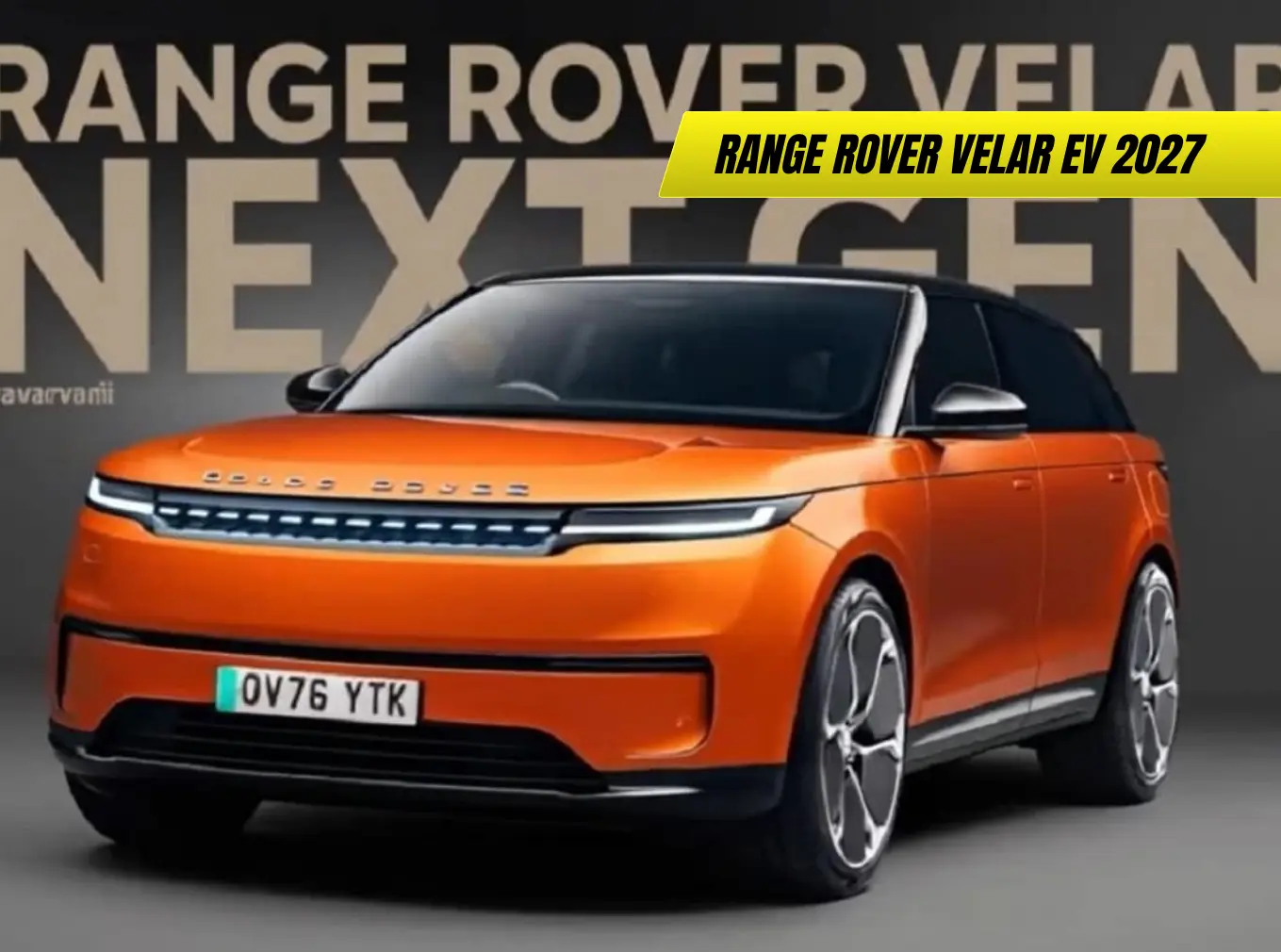
The next-generation Range Rover Velar goes fully electric with a dramatic fastback design, an 800V charging architecture and a debut expected in late 2026 — making it the most radical reinvention of the Velar since its original launch.
The Range Rover Velar has always been the most design-forward model in the Land Rover lineup — the car that proved a premium SUV could have genuine visual elegance without sacrificing practicality. The next generation takes that philosophy into an entirely new era. The all-electric Velar EV will be the first Land Rover built on the brand-new EMA (Electrified Modular Architecture) platform, purpose-designed for electric vehicles — and spy shots emerging in early 2026 suggest it will look unlike anything the brand has produced before. For those weighing up comparable electric luxury SUVs, our reviews of the Mercedes Electric GLC 2026 and Renault Megane E-Tech 2026 Facelift offer useful context at different price points.
Range Rover Velar EV 2026: Key Highlights
- First Land Rover built on the new EMA (Electrified Modular Architecture) dedicated EV platform
- Fully electric only — no petrol, diesel or hybrid options for the next generation
- Dramatic fastback crossover design — closer to a raised estate than a traditional SUV
- 800V electrical architecture with ultra-rapid charging at up to 350 kW
- Expected range of at least 300–400 miles (WLTP), to compete with the Porsche Macan Electric
- 10–80% charge in approximately 20 minutes on an ultra-rapid charger
- Reveal expected late 2026, with UK sales from late 2026 or early 2027
- Starting price estimated at approximately £65,000–£70,000
Release Date: When Is the Range Rover Velar EV Coming to the UK?
JLR CEO Adrian Mardell has confirmed that the first EMA-based Land Rover would be “on the road in springtime 2026”, establishing the Velar EV as the brand’s third electric launch — following the Range Rover Electric and Range Rover Sport Electric, both built on the MLA platform. However, more recent reporting and spy shot activity suggests the full public reveal is more likely in late 2026, with UK customer deliveries beginning in late 2026 or early 2027.
JLR has confirmed that all EMA platform vehicles — including the Velar EV — will be manufactured at the brand’s Halewood plant on Merseyside, into which a £500 million investment is being made to prepare it for electric vehicle production. This makes the Velar EV a genuinely British-built electric car — a point of considerable significance for UK buyers and fleet operators. Further details are expected to be confirmed at the JLR Investor Day in June 2026.
“A Range Rover saloon…? The new Velar is the sleekest yet.” — Autocar, February 2026
Price: How Much Will the Range Rover Velar EV Cost in the UK?
No official UK pricing has been confirmed. The current Range Rover Velar ranges from £55,410 to £77,735 for petrol, diesel and PHEV variants. Given the premium commanded by purpose-built EV platforms, the transition to fully electric and the Velar’s repositioning as the most aerodynamic and design-focused model in the Range Rover family, a price increase is expected.
Industry estimates place the starting price at approximately £65,000–£70,000, broadly in line with the Porsche Macan Electric (from £69,100) — the model JLR is directly targeting.
| Model | Platform | Powertrain | Range (est.) | UK Price (from) |
|---|---|---|---|---|
| Current Range Rover Velar PHEV | MLA | 1.5T + Electric | ~35 miles EV | £74,830 |
| Range Rover Velar EV (new) | EMA | Full Electric | 300–400 miles | ~£65,000–£70,000 est. |
| Porsche Macan Electric | PPE | Full Electric | 390 miles | £69,100 |
| Audi Q6 e-tron | PPE | Full Electric | 381 miles | £63,800 |
| BMW iX3 | CLAR EV | Full Electric | 325 miles | £59,905 |
In my experience, JLR has consistently positioned the Velar as a value-conscious alternative to Porsche in the premium SUV segment. From my point of view, a starting price of £65,000 would make the Velar EV extremely competitive against the Macan Electric — particularly given the Range Rover brand’s stronger residual values in the UK used car market.
The EMA Platform: Land Rover’s Electric-First Architecture
The EMA (Electrified Modular Architecture) platform is fundamentally different from the MLA underpinnings of the Range Rover and Range Rover Sport Electric. While MLA is an adaptation of an existing combustion architecture, EMA is designed from the ground up exclusively for battery electric vehicles — a distinction that matters enormously for efficiency, packaging and long-term development potential.
Key technical characteristics of the EMA platform include:
- Module-less battery pack: A more cost-effective and lighter structural battery design, eliminating the traditional cell-module-pack hierarchy
- 800V electrical architecture: Supporting ultra-rapid DC charging at up to 350 kW — the highest charging power of any Land Rover product
- 10–80% charging in approximately 20 minutes on a compatible ultra-rapid charger
- Bi-directional charging (V2H): Vehicle-to-home capability, allowing the Velar EV to power domestic appliances and reduce energy bills
- Level 2+ autonomous driving: Hands-free highway assist on approved motorway routes
- Built at Halewood, Merseyside: All EMA models produced at JLR’s UK manufacturing facility
The EMA platform will also underpin future electric versions of the Land Rover Discovery Sport, Range Rover Evoque and the anticipated Defender Sport — making the Velar EV the pioneer of an entire family of affordable-to-premium British-built electric Land Rovers.
Design: From SUV to Fastback
The most striking aspect of the Velar EV is its design transformation. Spy photographs captured in early 2026 show a vehicle that has moved decisively away from the traditional SUV silhouette — adopting instead a fastback crossover profile that sits closer to a raised estate car or a Porsche Taycan Cross Turismo in overall character.
Specific design details visible in camouflaged prototype images include:
- A steeply raked roofline that flows continuously from the A-pillar to a pronounced rear spoiler — a radical departure from the current Velar’s more upright glasshouse
- Angular rear haunches flanking the rear window, creating strong visual presence from behind
- A twin spoiler arrangement at the rear — a prominent upper spoiler above the glass and a secondary blade below — similar in character to the Porsche Cayenne Coupe
- Flush door handles and a clean, uncluttered body surface optimised for aerodynamic efficiency
- Slim, connected rear light bar with Range Rover lettering — consistent with the Range Rover Sport and current Velar
- A clamshell rear tailgate offering wide, unobstructed access to the boot
Perhaps most intriguingly, spy shots suggest the rear glass may be replaced by cameras and a digital display rather than a conventional window — an approach already seen on the Audi e-tron and BMW iX, trading traditional rearward visibility for improved aerodynamics and a dramatic aesthetic statement.
Performance: Targeting the Porsche Macan Electric
While official performance figures have not been released, the Velar EV’s positioning against the Porsche Macan Electric and Audi Q6 e-tron provides a clear performance target. Dual-motor AWD variants are expected to deliver:
- 0–62 mph in under 4 seconds for the top performance specification
- Top speed electronically limited to 130–155 mph, consistent with Porsche and Audi equivalents
- Rear-biased torque distribution — a characteristic of EMA platform architecture — for a more driver-focused dynamic character than the current Velar’s neutral, comfort-oriented setup
The 800V architecture also brings meaningful real-world performance advantages for UK motorway use. At 350 kW peak charging speed, stops at compatible ultra-rapid chargers — such as the Osprey, Gridserve and ionity networks increasingly found at UK motorway service areas — will be extremely brief.
Interior: A New Generation of Land Rover Technology
JLR has not officially detailed the Velar EV’s interior, but based on the brand’s recently established technology direction — visible in the Range Rover Electric and new Defender — the following is expected:
- Pivi Pro infotainment system with a large curved central touchscreen
- Digital instrument cluster with configurable display modes
- Head-up display with augmented reality navigation
- Meridian Signature Sound System as standard, with an upgraded option
- Four-zone climate control
- Heated and cooled front and rear seats
- Sustainable material options — recycled and responsibly sourced alternatives to traditional leather
- Panoramic fixed glass roof — taking advantage of the fastback roofline’s aerodynamic profile
British Built: The Halewood Advantage
The fact that the Velar EV will be assembled at JLR’s Halewood plant in Merseyside carries practical benefits for UK buyers beyond national pride. UK-manufactured electric vehicles may benefit from favourable treatment under future trade agreements and are not subject to the import tariffs that affect some rival EVs built outside the UK. It also means shorter supply chains, potentially faster delivery times and stronger dealer parts availability. For reference on UK road regulations that will affect Velar EV owners, our UK speed camera regulations guide and UK toll roads and charges guide are essential reading.
Range Rover Velar EV: ULEZ, Road Tax and Running Costs
As a fully electric vehicle, the Range Rover Velar EV will be:
- Exempt from the London ULEZ and Congestion Charge
- Subject to the lowest rate of UK VED (road tax) applicable to zero-emission vehicles
- Eligible for reduced Benefit-in-Kind (BIK) company car tax — currently 3% for zero-emission vehicles, making it highly attractive for business users
- Subject to the £620 per year luxury car supplement for years two to six, as a vehicle that will almost certainly be priced above the £40,000 threshold
For full details on current UK vehicle tax rates, visit the official DVLA vehicle tax guidance.
FAQ
When is the Range Rover Velar EV available in the UK?
A public reveal is expected in late 2026, with UK customer deliveries anticipated from late 2026 or early 2027.
How much will the Range Rover Velar EV cost in the UK?
No official price has been confirmed. Industry estimates place the starting price at approximately £65,000–£70,000 — broadly in line with the Porsche Macan Electric.
Is the new Range Rover Velar EV fully electric?
Yes. The next-generation Velar will be fully electric only, with no petrol, diesel or hybrid options — built exclusively on the new EMA platform.
What is the charging speed of the Range Rover Velar EV?
The 800V architecture supports ultra-rapid DC charging at up to 350 kW, enabling a 10–80% charge in approximately 20 minutes.
Where is the Range Rover Velar EV made?
All EMA platform vehicles, including the Velar EV, will be manufactured at JLR’s Halewood plant in Merseyside — making it a genuinely British-built electric car.
What range will the Range Rover Velar EV offer?
An official figure has not been confirmed. Based on the platform and competitive positioning against the Porsche Macan Electric and Audi Q6 e-tron, an estimated 300–400 miles of WLTP range is expected.
Is the Range Rover Velar EV exempt from ULEZ charges?
Yes. As a zero-emission vehicle, it will be fully exempt from ULEZ charges and the London Congestion Charge.
Conclusion
The Range Rover Velar EV 2026 represents the most significant reinvention of the Velar nameplate since its original debut. The transition to a purpose-built EV platform, the dramatic fastback design, the 800V charging architecture and the British manufacturing base combine to make it one of the most compelling electric SUV launches of the year. At an estimated £65,000–£70,000, it will go directly head-to-head with the Porsche Macan Electric — and I believe it has the design drama, brand prestige and real-world practicality to win that battle convincingly. I would strongly recommend placing a reservation as soon as JLR opens order books, as early allocation on new Land Rover electric models has consistently been limited.





