
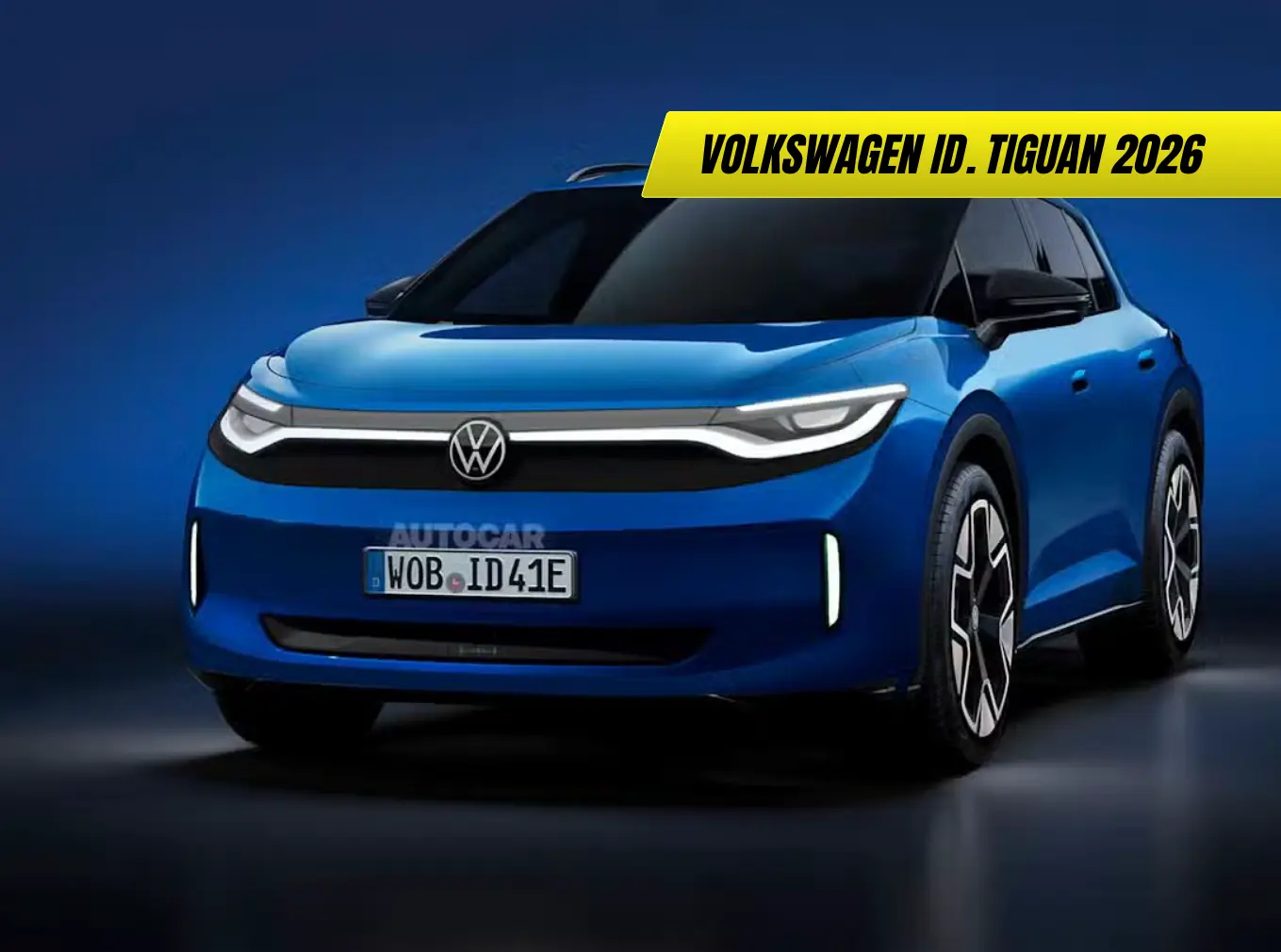
Everything you need to know about Volkswagen’s forthcoming ID. Tiguan — the renamed and redesigned successor to the ID.4, targeting UK buyers from 2027 with smarter design, physical controls, and improved range.
The Volkswagen ID. Tiguan represents a significant strategic shift for VW: rather than launching an entirely new electric SUV, the brand is thoroughly reworking the ID.4 formula, renaming it after one of Britain’s best-loved SUV nameplates. The move is designed to make VW’s EV lineup feel more familiar to mainstream buyers, and based on what we know so far, it is a smart piece of thinking.
What the ID. Tiguan Means for UK Buyers
Volkswagen will drop the ID.4 name and replace it with the ID. Tiguan, expected to be officially revealed later in 2026 with UK sales beginning in 2027. This is not a minor refresh — it is a comprehensive reimagining of the platform, cabin, technology, and even the badge strategy. By leveraging the Tiguan name, VW is betting that recognition and trust built over decades will help accelerate EV adoption among buyers who may have been hesitant about the more abstract “ID.” naming convention.
For UK drivers, this matters. The Tiguan has consistently been one of the best-selling SUVs in Britain, and attaching that name to VW’s core electric offering could meaningfully shift consumer perception.
Design: Familiar but More Refined
The ID. Tiguan retains the ID.4’s underlying proportions but moves decisively toward a more conventional SUV aesthetic. Key design changes include:
- Rectangular LED headlights connected by a full-width light bar and an illuminated VW badge at the front
- Straighter shoulder line and revised window graphics in profile, replacing the more rounded ID.4 look
- Conventional pull-action door handles replacing the flush handles that frustrated many ID.4 owners in winter conditions
- Full-width taillight cluster at the rear, mirroring the front light bar design
- A revised bumper and subtle roof spoiler that clean up the overall silhouette
The result is a vehicle that looks unmistakably like a VW SUV rather than a concept car brought to market. From my point of view, this is the right call — the ID.4’s styling was divisive, while the Tiguan’s visual language has proven universally appealing across the UK market.
Interior: Physical Controls Return
One of the most significant improvements is the return of proper physical buttons. The ID.4’s haptic sliders and touch-sensitive controls were among the most criticised features of any mainstream car in recent years. The ID. Tiguan will bring:
- Physical steering wheel buttons for audio and driver assistance functions
- Dedicated HVAC controls — no more navigating touchscreen menus to adjust the temperature
- An actual volume knob, a small but deeply welcome change
- A large infotainment screen retained, but supplemented with AI integration including ChatGPT and conversational voice commands
- Improved interior materials, with increased use of recycled and fabric surfaces
Interior quality is also set to improve broadly, addressing another consistent criticism of the ID.4 and bringing it closer to the standard expected of a vehicle in this segment.
Powertrain and Battery: MEB+ Architecture
The ID. Tiguan will continue on Volkswagen Group’s MEB architecture, upgraded to the MEB+ specification. Expected powertrain details:
| Variant | Motor Configuration | Power Output | Battery | WLTP Range |
|---|---|---|---|---|
| Standard RWD | Single rear motor | ~282 hp (210 kW) | ~77 kWh LFP | ~311 miles (500 km) |
| Performance AWD | Dual motor | ~335 hp (250 kW) | ~86 kWh LFP | ~342 miles (550 km) |
The switch to LFP (lithium iron phosphate) batteries is notable — these chemistry cells are more thermally stable, better suited to frequent DC fast charging, and retain capacity better over time, which is reassuring for long-term ownership. The 400-volt architecture means DC fast-charging speeds will be competitive, though not at the ultra-rapid 800V level offered by rivals such as the Hyundai Ioniq 5 and Kia EV6.
Recalibrated driver-assistance systems and upgraded safety features round out the package, which should help the ID. Tiguan maintain or improve on the ID.4’s solid Euro NCAP scores.
Key Rivals in the UK Market
When it arrives, the ID. Tiguan enters one of the most competitive segments in the British EV market. Here is how it stacks up against its primary competitors:
| Model | Starting Price (est.) | Range (WLTP) | Key Strength |
|---|
| Model | Starting Price (est.) | Range (WLTP) | Key Strength |
|---|---|---|---|
| VW ID. Tiguan (2027) | TBC | ~311–342 miles | Brand trust, practicality |
| Tesla Model Y | ~£42,990 | ~310 miles | Supercharger network |
| Hyundai Ioniq 5 | ~£42,000 | ~300 miles | 800V charging |
| Kia EV6 | ~£40,000 | ~316 miles | Performance, range |
| Skoda Enyaq | ~£38,000 | ~350 miles | Value, boot space |
| Ford Mustang Mach-E | ~£41,000 | ~300 miles | Ford dealer network |
The ID. Tiguan’s strongest selling point will likely be the combination of VW dealer coverage across the UK, the familiarity of the Tiguan name, and a powertrain that genuinely competes on range. For buyers who find Tesla’s minimalism off-putting and want a more traditional ownership experience, it could be the compelling option that the ID.4 never quite became. We recommend keeping a close eye on official UK pricing when VW reveals the car later this year.





