
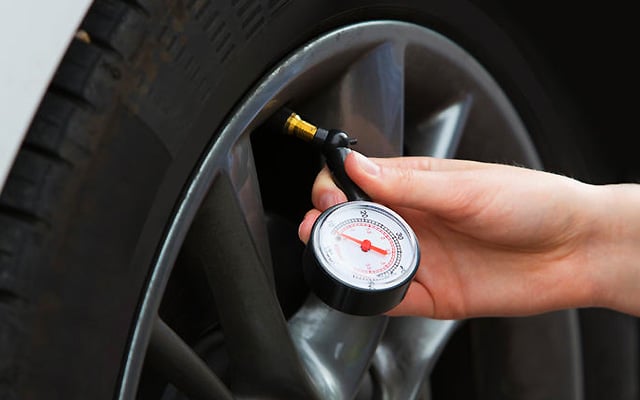
Tyre pressure is the single most neglected aspect of routine vehicle maintenance — and the consequences of getting it wrong range from poor fuel economy to catastrophic blowouts. This guide covers every mistake UK drivers make, and how to avoid them.
Key Points
- Over 50% of UK vehicles are estimated to be driving on at least one incorrectly inflated tyre at any given time
- Under-inflation is far more common than over-inflation and causes significantly more damage
- The correct pressure is found in the vehicle’s door sill placard or owner’s manual — not the tyre sidewall
- Tyre pressures should be checked cold — after the car has been stationary for at least two hours
- Electric vehicles require higher pressures than equivalent petrol cars due to battery weight
- TPMS warning lights indicate a pressure at least 25% below correct — the tyre is already significantly under-inflated when the light appears
Mistake 1: Checking Pressure When the Tyre Is Hot
This is the most common and consequential error. Driving heats the air inside a tyre, which expands and raises the pressure reading — typically by 4–6 PSI above the cold pressure. Checking a hot tyre and adjusting to the correct cold figure means you are actually under-inflating it.
Always check and adjust tyre pressures when the car has been stationary for a minimum of two hours, or before driving any significant distance in the morning. The recommended pressures listed in your vehicle’s handbook and door sill placard are cold pressures without exception.
Mistake 2: Using the Tyre Sidewall Pressure Figure
The figure moulded into a tyre’s sidewall — typically reading something like MAX 51 PSI — is the maximum pressure the tyre structure is designed to contain, not the recommended operating pressure for your vehicle. Using this figure will significantly over-inflate the tyre.
The correct pressure for your specific vehicle, load, and speed conditions is found:
- On the fuel filler flap
- On the driver’s door sill placard
- In the owner’s manual
Most UK cars specify different pressures for front and rear tyres, and many specify a higher pressure for laden conditions (full passenger and luggage load) — check the placard for both figures.
Mistake 3: Ignoring the TPMS Warning Until Convenient
The Tyre Pressure Monitoring System warning light — a cross-section of a tyre with an exclamation mark — is mandatory on all new UK cars since 2014. It illuminates when one or more tyres has dropped to at least 25% below the recommended pressure.
By the time the TPMS light appears, the tyre is already significantly under-inflated and is generating excess heat. Continued driving on a substantially under-inflated tyre risks internal structural damage — which can cause a sudden deflation even after the tyre is subsequently re-inflated to the correct pressure. When the TPMS light illuminates, check and correct pressures at the earliest safe opportunity — not at the end of the day’s driving.
Note that TPMS does not replace manual pressure checks — it only alerts to significant pressure loss. A tyre that is 10% under-inflated will not trigger the warning but is already affecting fuel economy and wear patterns.
Mistake 4: Using the Same Pressure for Motorway as for Urban Driving
Some vehicles — particularly those with variable load recommendations on the placard — specify different pressures for high-speed sustained driving than for urban use. At motorway speeds, a slightly higher pressure reduces the flexing and heat build-up that occurs in the tyre’s sidewall under sustained load.
If your vehicle’s placard specifies a motorway or high-speed pressure — typically 2–4 PSI above the standard recommendation — apply it before a long motorway journey. After returning, you can reduce back to the standard figure, though many drivers simply use the higher figure permanently for simplicity and slightly better fuel economy.
Mistake 5: Forgetting the Spare
The spare tyre — whether a full-size spare, space-saver, or run-flat — is the tyre most commonly neglected in routine pressure checks. A spare that has been sitting in the boot for 18 months may have lost several PSI simply through natural air permeation.
A deflated spare discovered at the roadside after a puncture is a particularly miserable experience. Include the spare in every monthly pressure check — it takes thirty seconds and ensures it is genuinely usable when needed. Space-saver spares typically require a significantly higher pressure than standard tyres — 60 PSI is common; check the sidewall of the space-saver itself for its specific requirement.
Mistake 6: Not Adjusting for Electric Vehicle Weight
Electric vehicles are substantially heavier than equivalent petrol or diesel models due to the battery pack — typically 200–600kg more than the combustion equivalent. This additional weight translates directly into higher tyre stress and, in most cases, a higher recommended operating pressure than the equivalent petrol model’s placard suggests.
Always check the EV-specific tyre pressure recommendation rather than assuming the figure from a petrol equivalent applies. Tyres fitted to EVs as original equipment are typically rated for the additional load, but running them at pressures designed for lighter vehicles accelerates wear and reduces the safety margin.
Monthly Pressure Check: The Correct Process
- Check tyres when cold — stationary for at least two hours
- Remove the valve cap and press a calibrated digital gauge squarely onto the valve stem
- Read the pressure and compare against the door sill placard for your load condition
- Add or release air as needed — most forecourt air machines are accurate enough for adjustment
- Replace the valve cap — even a missing cap allows moisture ingress that corrodes the valve core over time
- Check all four tyres plus the spare
- Reset the TPMS system if required after adjustment — on some vehicles, re-calibration requires a menu selection in the infotainment system
| Tyre Condition | Effect on Fuel Economy | Effect on Wear | Safety Risk |
|---|---|---|---|
| 10% under-inflated | −1 to −2% mpg | Accelerated shoulder wear | Low–moderate |
| 25% under-inflated (TPMS trigger) | −3 to −5% mpg | Significant shoulder wear | High |
| 50% under-inflated (visibly flat) | Severe | Catastrophic | Very high — blowout risk |
| 10% over-inflated | +0.5% mpg | Accelerated centre wear | Low |
| 20% over-inflated | +1% mpg | Significant centre wear | Moderate — reduced grip |
FAQ
How often should I check tyre pressures?
At least once a month and before any long journey. Monthly checks catch the natural air permeation that occurs through the tyre and valve, which typically causes a loss of 1–2 PSI per month.
Can I check my tyre pressure at a petrol station?
Yes — most UK petrol station forecourts have air machines capable of both inflating and reading pressure. Ensure you use a cold pressure figure and check before driving to the station where possible, or allow the tyres to cool after arrival.
Does tyre pressure affect MOT?
Tyre condition is assessed at MOT, but pressure is not directly tested. However, uneven wear patterns caused by chronic under- or over-inflation may prompt the tester to inspect more carefully for sidewall damage or structural compromise.
Is it safe to drive with the TPMS light on?
Briefly, at low speed, to reach a safe location to check and correct pressures — yes. Continuing to drive at normal speeds with the TPMS illuminated is not recommended and risks tyre failure.
Do run-flat tyres need the same pressure as standard tyres?
Run-flat tyres are specified to the same pressure recommendations as standard tyres for the same vehicle. They do not require higher pressure in normal operation. The difference is structural — they can support the vehicle briefly after deflation — not operational pressure.





