
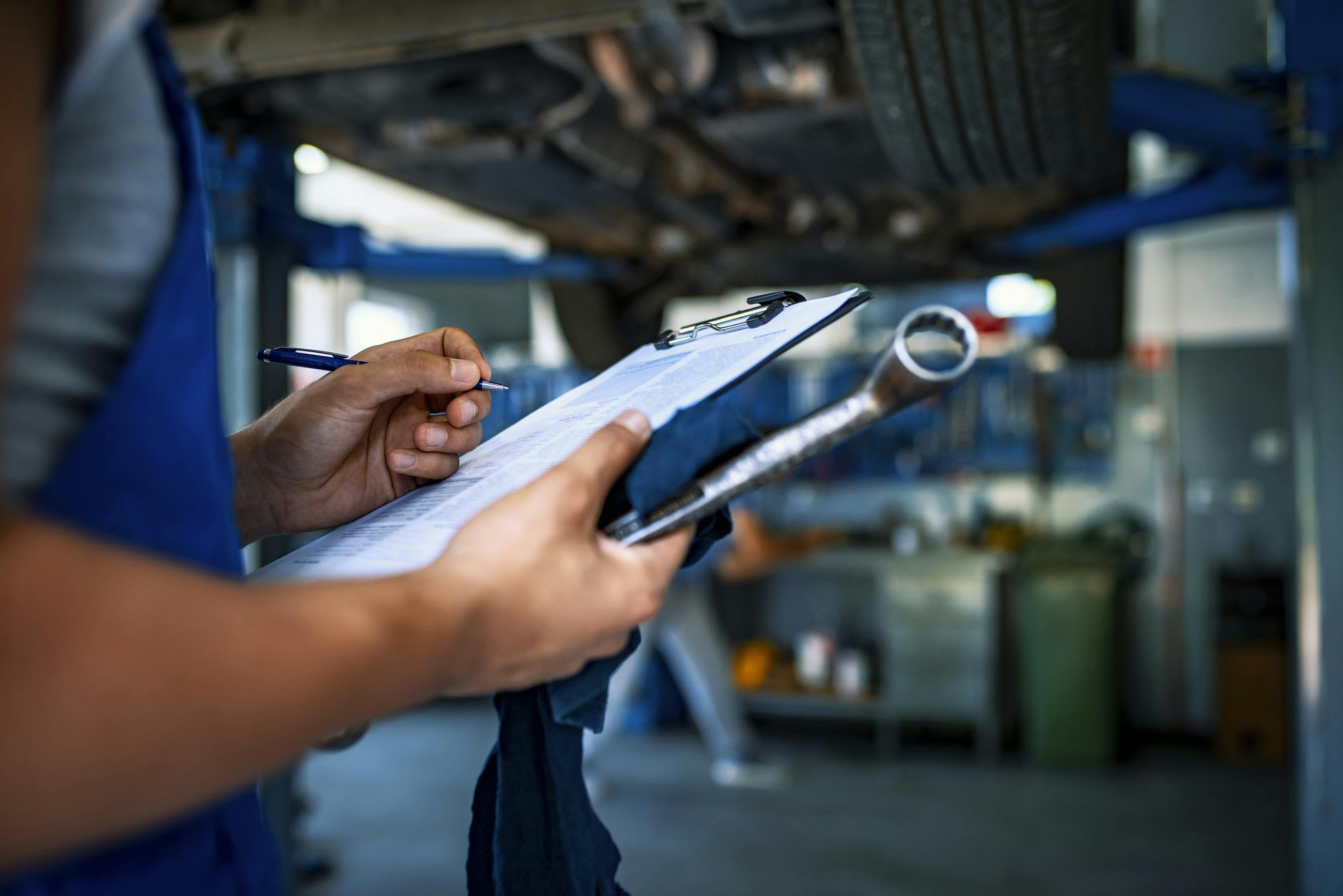
Understanding when your car needs routine maintenance — and what happens if you defer it — is the foundation of reliable, cost-effective motoring. This guide provides a practical UK-oriented maintenance schedule covering every major service item, from weekly checks to long-term component replacement.
Key Points
- Oil and filter should be changed every 12 months or 10,000 miles for most modern petrol engines — whichever comes first
- Diesel engines with DPF systems benefit from an annual oil service regardless of low mileage
- Brake fluid must be replaced every two years regardless of mileage — it is hygroscopic and absorbs moisture over time
- Coolant should be replaced every five years on most modern vehicles — check your manufacturer’s specification
- Timing belt replacement — where applicable — is the single most consequential deferred service item
- Battery testing should be part of every annual service on vehicles over five years old
Weekly Checks: Two Minutes That Prevent Breakdowns
The RAC and AA consistently identify fluid levels and tyre condition as the leading causes of preventable breakdowns. Five weekly checks take under two minutes:
- Engine oil level — check the dipstick with the engine cold or after five minutes of switching off; the level should be between the MIN and MAX marks
- Coolant level — visible in the translucent expansion tank; should be between MIN and MAX marks when cold
- Windscreen washer fluid — particularly important in winter; ensure the reservoir is full and that the fluid concentration is correct for the ambient temperature
- Tyre pressures — check against the door sill placard; include the spare
- Tyre condition — visual check for obvious damage, embedded objects, or uneven wear
These checks do not replace scheduled servicing but catch acute issues — a sudden oil leak, a coolant loss, or a slow puncture — before they cause roadside failure.
The Annual Service: What It Should Include
A comprehensive annual service on a modern petrol car should cover:
| Item | Action | Notes |
|---|---|---|
| Engine oil and filter | Replace | Every 12 months or 10,000 miles, whichever first |
| Air filter | Inspect and replace if needed | Typically every 2 years or 20,000 miles |
| Pollen/cabin filter | Inspect and replace | Annually recommended; affects air quality and demisting |
| Spark plugs | Inspect; replace on schedule | Every 30,000–60,000 miles depending on type |
| Brake fluid | Replace | Every 2 years regardless of mileage |
| Tyre condition and pressures | Check and correct | At every service |
| Brake pad and disc thickness | Measure and record | Replace when below manufacturer minimum |
| All fluid levels | Check and top up | Coolant, power steering, washer |
| Battery health test | Conduct | Particularly important over 5 years old |
| Lights and electrics | Functional check | Replace any failed bulbs |
| Wiper blades | Inspect; replace if streaking | Annually or as needed |
Diesel-Specific Maintenance
Diesel engines — particularly those with Diesel Particulate Filters (DPF) — have specific maintenance requirements that differ from petrol engines:
- Oil change intervals should not be extended — diesel combustion produces more contaminants that degrade oil faster; annual changes are strongly recommended regardless of low mileage
- DPF condition — urban drivers on short journeys should periodically drive at sustained motorway speeds (20–30 minutes above 60mph) to allow passive DPF regeneration; persistent DPF warning lights indicate the filter requires active regeneration or cleaning
- AdBlue top-up — Euro 6 diesels consume AdBlue (diesel exhaust fluid) at approximately 1 litre per 600–1,000 miles; check the level at each service and top up as needed; our AdBlue warning light guide covers the full management process
- Fuel filter — diesel fuel filters require replacement every 2 years or 20,000–30,000 milesdepending on the vehicle
The Timing Belt: The Highest-Stakes Service Item
A timing belt (or cambelt) synchronises the rotation of the crankshaft and camshaft in engines where these components are belt-driven. If the timing belt fails, the engine’s pistons and valves collide — causing catastrophic internal damage that typically requires a complete engine rebuild or replacement, costing £2,000–£6,000 depending on the vehicle.
Timing belt replacement intervals vary by manufacturer but are typically:
- Every 5 years or 60,000 miles — whichever comes first; many manufacturers specify 40,000 miles on diesel engines
- Always replace the water pump simultaneously — it is driven by the same belt and is a common failure point; replacing it at the same time as the belt costs a fraction of what a second labour operation would
Check your vehicle’s manufacturer service schedule for the specific interval. Used car buyers should always establish when the timing belt was last changed — it is one of the most important questions to ask before purchase.
Chain-driven engines do not have this specific concern — timing chains are designed to last the engine’s lifetime under normal operating conditions, though they can stretch if oil changes are neglected.
Electric Vehicle Maintenance: What Still Needs Doing
EVs have significantly fewer service items than combustion vehicles — no oil, no timing belt, no spark plugs, no exhaust system. However, EV maintenance is not zero:
| Item | Interval | Notes |
|---|---|---|
| Brake fluid | Every 2 years | Same as combustion — hygroscopic regardless of drivetrain |
| Coolant (battery thermal system) | Every 5 years typically | Check manufacturer specification |
| Cabin air/pollen filter | Annually | Same importance as combustion vehicles |
| Tyres | Check monthly | EVs wear tyres faster due to weight and instant torque |
| Wiper blades | Annually | Same as combustion |
| 12V auxiliary battery | Test annually | EVs have a 12V battery for electronics; it fails independently of the traction battery |
| Brake inspection | Annually | Regenerative braking reduces wear but brakes still require periodic inspection |
The 12V auxiliary battery is a frequently overlooked EV maintenance item. It powers the electronics, locks, and 12V systems — and its failure can prevent the car from starting entirely even when the main traction battery is fully charged. Annual testing is worthwhile on any EV over three years old.
FAQ
How often should I service my car in the UK?
At minimum once per year or every 10,000–12,000 miles, whichever comes first. Manufacturer service intervals on some modern cars extend to 18,000–20,000 miles, but annual oil changes remain strongly recommended regardless of the manufacturer’s extended interval specification.
What happens if I skip a service?
Single missed services rarely cause immediate problems — but deferred maintenance compounds. Oil degradation accelerates wear; missed brake fluid changes allow moisture accumulation that reduces boiling point and braking performance; undetected wear items progress to failure. The MOT catches some deferred items but not all.
Does a full service history increase a car’s value?
Yes — significantly. Full service history (FSH) adds £500–£2,000 to the value of a typical used car compared to a partial or no service history equivalent. It is also the single strongest reassurance a buyer can have about a vehicle’s maintenance standard.
Can I service my car myself and maintain its warranty?
Under EU block exemption regulations, which continue to apply in UK law, manufacturers cannot void a vehicle warranty simply because the owner used an independent garage rather than a franchised dealer — provided the correct specification parts and fluids were used and the service is documented. Keep all invoices and parts receipts as evidence.
What is the difference between an interim and a full service?
An interim service (every 6 months or 6,000 miles) covers oil, filter, and a basic safety check. A full service (annually) covers all the items in the schedule above, including filters, fluids, and a comprehensive inspection. Most manufacturers recommend full services only — interim services are a dealer upsell product for high-mileage drivers.





