
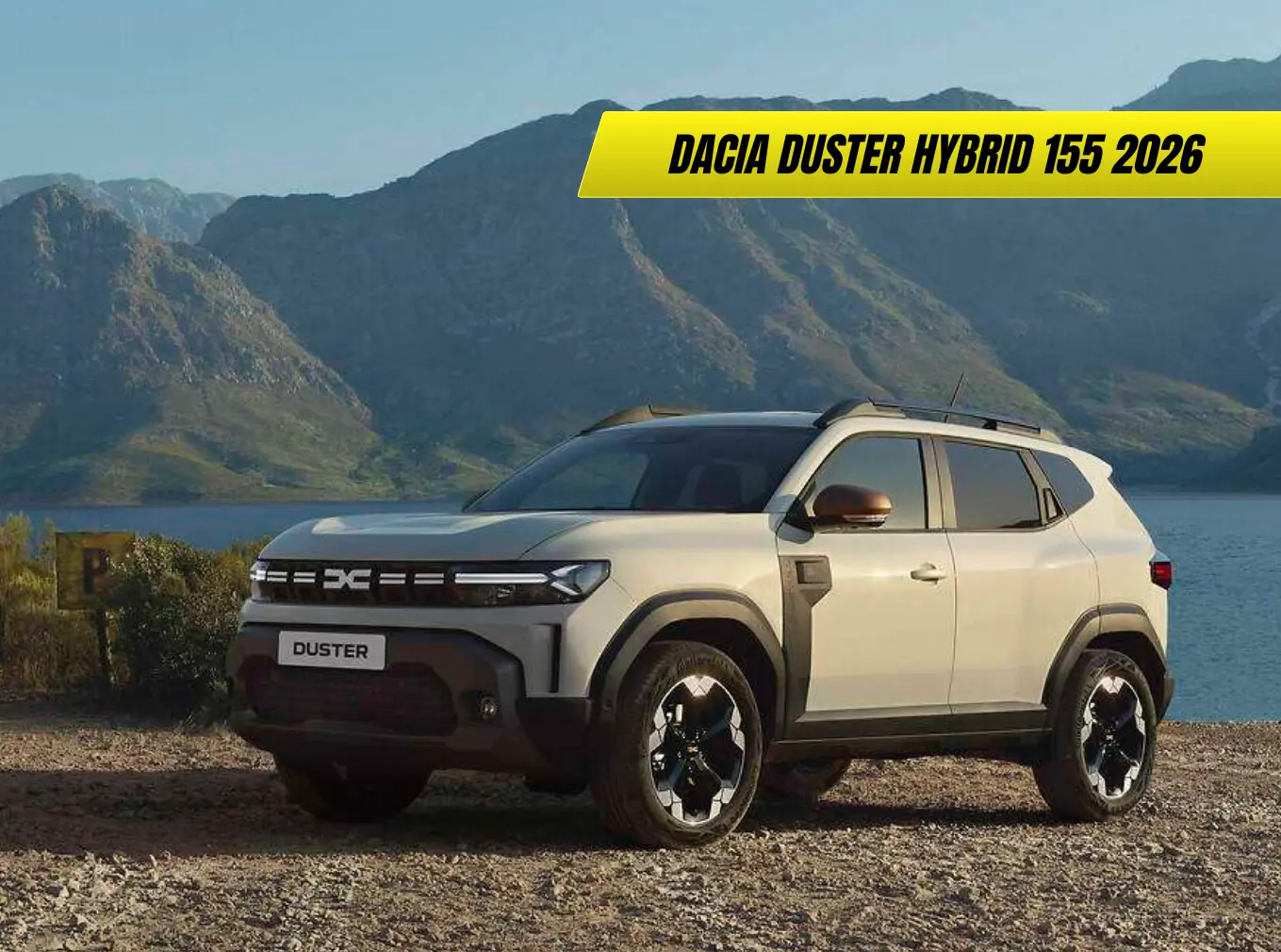
The third-generation Dacia Duster arrived in the UK in late 2024 and has already established itself as one of the strongest value propositions in the SUV market. With a full hybrid now available, a significantly improved interior, and prices still dramatically below every mainstream rival, the Duster’s formula has never been more compelling — or more widely applicable.
Key Points
- Prices start from £18,745 for the bi-fuel petrol/LPG version — the cheapest entry into the SUV segment by a wide margin
- The new 1.8 full hybrid (155bhp) delivers up to 56.5mpg combined and is the strongest all-round recommendation
- A genuine 4×4 version remains available with the mild-hybrid 140 engine from £23,445
- Boot space is a practical 472 litres — comparable to rivals costing significantly more
- Interior quality has improved dramatically over the outgoing model — Dacia’s cheapest car now feels genuinely acceptable
- ULEZ-compliant across all petrol variants; zero road tax in year one on the full hybrid version
What Is New on the Third-Generation Duster
The third-generation Duster is a more substantive step forward than Dacia’s previous iterations. The exterior adopts the brand’s new design language — squared-off, deliberately rugged styling that sits closer to a proper off-road aesthetic than the rounded crossover look of its predecessor. Inside, the cabin represents the most significant quality improvement: a 10.1-inch central touchscreen (on Journey trim and above), a digital instrument cluster, and materials that feel genuinely acceptable rather than merely functional.
The powertrain range has been modernised and expanded: the entry TCe 130 mild-hybriddelivers 130bhp with a 48-volt mild-hybrid system that improves urban efficiency; the 1.8 full hybrid 155 is a genuine self-charging hybrid that requires no plug and delivers the strongest fuel economy in the range; and the bi-fuel TCe 100 — available in Essential trim only — can run on either petrol or LPG, making it arguably the most cost-per-mile-competitive vehicle in the UK market for drivers with LPG access.
The Engine Range in Full
| Engine | Power | Drivetrain | Economy (WLTP) | Price From |
|---|---|---|---|---|
| TCe 100 Bi-Fuel (LPG) | 100bhp | 2WD | 44.8mpg (petrol) | £18,745 |
| TCe 130 mHEV | 130bhp | 2WD / 4WD | 47.9mpg | £21,845 |
| 1.8 Hybrid 155 Auto | 155bhp | 2WD | 56.5mpg | £24,245 |
The full hybrid is available in automatic transmission only, which makes it the more refined daily driver regardless of the efficiency advantage. The mild-hybrid 140 — now renamed TCe 130 in the 2026 specification update — is the more engaging driver’s option and the only powertrain available with four-wheel drive.
The 4×4 Question
One of the Duster’s most enduring USPs in a segment increasingly dominated by front-wheel-drive crossovers dressed as SUVs is a genuine mechanical four-wheel-drive option. The 4×4 version — available with the TCe 130 mild-hybrid in Expression, Journey, and Extreme trims — uses a terrain-selectable on-demand system with Auto, Sand, Mud, and Rock modes.
The 4×4 Duster’s 212mm ground clearance, locking centre differential, and genuine mud and sand modes give it off-road ability that the vast majority of competing SUVs simply cannot match at any price. For rural buyers, equestrian families, smallholders, and those who face genuinely poor track or field access, the Duster 4×4 is not merely the cheapest option — it is often the only credible option at the price.
4×4 pricing: From £23,445 (TCe 130 Expression 4×4) — approximately £2,200 premium over the equivalent 2WD model.
Interior and Technology: The Biggest Leap Forward
Previous-generation Dusters were honest about their cost-cutting — hard plastics, basic screens, and functional simplicity were the trade-offs for the price. The third-generation model changes this substantially:
- 10.1-inch Media Nav touchscreen (Journey and Extreme) with wireless Apple CarPlay and Android Auto
- 7-inch digital instrument cluster replacing the previous analogue dials
- Keyless entry and push-button start on Journey and Extreme trims
- 360-degree parking camera on Extreme trim
- Wireless phone charging on Journey and Extreme
Expression trim — the volume-seller — retains a more basic specification with an 8-inch screen and physical controls for ventilation, but the step up to Journey (a £1,700 premium) is worthwhile for most buyers given the technology upgrade it delivers.
Running Costs: The Duster’s Core Argument
At £24,245 for the full hybrid in Expression trim, the Duster Hybrid delivers:
- 56.5mpg WLTP combined — approximately 48–52mpg real-world mixed use
- £0 first-year VED (under 100g/km CO₂)
- £200 per year VED from year two
- Insurance group 15–18 — notably low for an SUV; typical annual premium £500–£800 for a standard adult driver
- Servicing costs aligned with Renault Group — parts are widely available and competitively priced
The total cost of ownership comparison between a Duster Hybrid at £24,245 and a Nissan Qashqai e-Power at £30,615 — nearly £6,000 more expensive — is the most compelling argument the Duster makes. The Qashqai is a more refined car with a stronger interior; but the Duster delivers the SUV fundamentals at a price that transforms the financial case.
Who the Duster Is Really For
The Duster’s appeal is genuinely broad in 2026, but it suits specific buyers most:
- Budget-conscious families who want SUV space and practicality without paying a premium for brand names
- Rural drivers who need the 4×4 version’s genuine off-road capability — no other SUV offers this at the price
- Second car buyers looking for a practical, reliable addition to a household fleet without significant financial commitment
- High-mileage drivers for whom the hybrid’s efficiency advantage produces meaningful fuel cost savings over ownership
- LPG users — the bi-fuel variant is one of very few remaining new cars compatible with LPG, making it exceptionally cheap per mile for drivers with LPG infrastructure access
Where the Duster falls short is in refinement and premium feel — motorway wind and road noise are higher than in rivals at twice the price, the ride on poorer surfaces is firm on Extreme trim with larger wheels, and the brand carries none of the status associations of a Nissan, Kia, or Skoda. For buyers for whom these things matter, the price advantage does not compensate. For buyers who simply want a practical, reliable, economical SUV at the lowest possible cost — the Duster is the unambiguous recommendation.
FAQ
Is the Dacia Duster reliable?
The Duster has a strong reliability record across all generations — Dacia’s focus on mechanical simplicity, using well-proven Renault Group components, means fewer potential failure points than more complex rivals. Owner satisfaction surveys consistently rate it highly for reliability.
No — all petrol variants run on standard 95-octane unleaded. The bi-fuel LPG version runs on standard LPG (propane-butane mix) available at approximately 1,000 UK filling stations.
Is the Dacia Duster good for motorway driving?
Competent but not exceptional. At 70mph the cabin is noticeably noisier than mid-range rivals. The full hybrid automatic is the most relaxed motorway companion in the range. For buyers who prioritise refinement on long journeys, step up to a Nissan Qashqai or Skoda Karoq.
What is the Dacia Duster’s towing capacity?
Up to 1,500kg braked trailer on 2WD models; up to 1,500kg on the 4×4 version. Not a class leader for towing, but adequate for a standard family trailer or small boat.
How does the Dacia Duster compare to the Dacia Bigster?
The Bigster is larger — a longer wheelbase, a 667-litre boot versus the Duster’s 472 litres, and a more premium interior specification — from £25,215. For families who need genuine boot space, the Bigster justifies the approximately £3,000 premium. For buyers who value the Duster’s 4×4 option or lower entry price, the Duster remains the choice. For a detailed look at the Dacia Sandero as an alternative urban option, our Dacia Sandero 2026 guide covers the full hatchback range.
From my point of view, the third-generation Duster with the full hybrid powertrain is the most rationally justified new SUV purchase in the UK market in 2026. The interior improvement alone addressed the previous model’s most legitimate criticism, and the hybrid’s fuel economy transforms the running cost case. I would recommend it without hesitation to any buyer for whom the premium feel of a Qashqai or Sportage is less important than extracting maximum practical value from their budget.





