
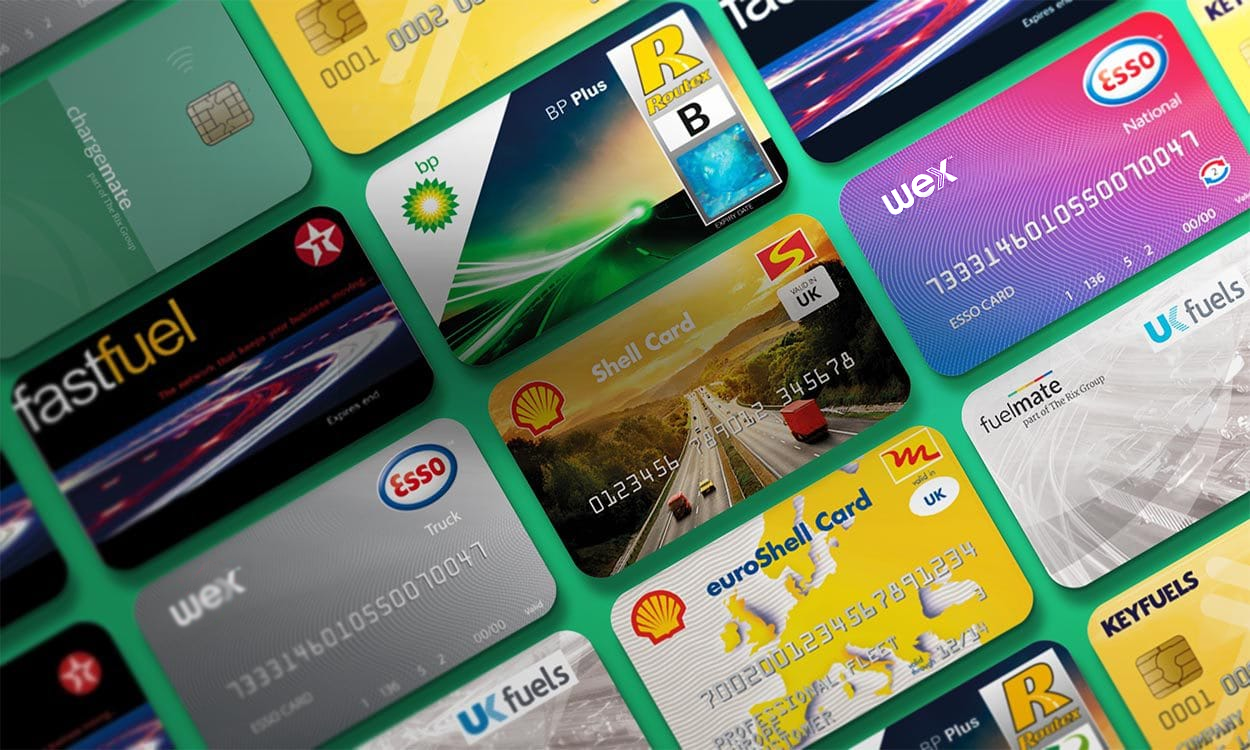
Fuel cards are one of the most straightforward cost management tools available to UK small businesses with any level of fleet activity — from a single van to twenty vehicles. Understanding how they work, which networks offer genuine savings, and what the administrative benefits are prevents settling for the wrong product.
Key Points
- Fuel cards eliminate the need for driver expense claims and provide HMRC-compliant VAT invoices automatically
- The best cards offer fixed weekly prices rather than pump prices — protecting against price spikes at the forecourt
- Shell Flexi and Allstar are the strongest recommendations for nationwide coverage in 2026
- FuelGenie is the top recommendation for businesses whose drivers primarily use supermarket forecourts
- Cards with online management portals allow real-time monitoring of fuel spend by vehicle and driver
- Minimum spend requirements vary — some cards require £300/month per account minimum; others have no minimum
How Fuel Cards Work
A fuel card operates similarly to a charge card — drivers use it at participating filling stations to purchase fuel without cash or personal payment cards. The business receives a consolidated weekly or monthly invoice covering all transactions, including a full VAT breakdown that satisfies HMRC’s requirements for VAT reclaim without individual receipts.
The financial benefit comes from two sources. First, many fuel cards offer fixed weekly pricingset below the pump price — particularly on diesel, where cards such as Shell Flexi and UK Fuels fix the price in advance, removing exposure to mid-week pump price increases. Second, the elimination of expense claim administration saves staff time and reduces the risk of fraudulent or inflated claims.
For a business with three vehicles each covering 1,500 miles per month on diesel, the potential annual saving from fixed-price cards versus pump price is typically £200–£600, depending on price volatility — modest but consistent.
The Best Fuel Cards for UK Small Businesses in 2026
Best for Nationwide Coverage — Shell Flexi
The Shell Flexi card is the strongest recommendation for businesses requiring reliable coverage across motorway services and major A-roads. Its network of over 3,900 UK stations — including all Shell sites, Esso, Total, Morrisons, Gulf, and Circle K — covers virtually every route a UK business driver is likely to take.
Key benefits:
- Fixed weekly price on FuelSave Diesel — protection against mid-week pump price rises
- Access to motorway network services — critical for businesses whose drivers use motorways regularly
- Add-on options for AdBlue, M6 Toll, and Dartford Crossing on the same account
- Consolidated weekly HMRC-compliant invoicing
- Online management portal with per-vehicle reporting
The Shell Flexi is the natural first choice for businesses with mixed routes including motorway use. Its fixed weekly pricing is the most useful feature for cost predictability.
Best for Fleet Control — Allstar
The Allstar card is the market leader for larger small business fleets and is the most feature-rich management platform available at this level. With access to approximately 7,600 UK stations — the widest network of any fuel card — it covers virtually every filling station format including independents and supermarkets.
Allstar’s management portal provides per-driver, per-vehicle, and per-journey spend monitoring, mileage tracking, and anomaly alerts. For businesses where fuel fraud — drivers purchasing personal fuel on company cards — is a concern, Allstar’s transaction monitoring is the most robust available.
The card is accepted at more sites than any competitor, making it the safest choice for businesses whose drivers operate in areas with lower station density.
Best for Supermarket Users — FuelGenie
For small businesses whose drivers primarily use supermarket forecourts — Tesco, Sainsbury’s, Asda, and Morrisons — FuelGenie offers the most targeted solution. The FuelGenie card works at all major supermarket forecourts and, with the FuelGenie+ upgrade, extends to Shell stations — covering over 2,200 sites.
The key advantage: supermarket diesel prices are consistently 2–4p per litre below branded forecourt pump prices. For businesses already using supermarket forecourts, FuelGenie formalises and consolidates this saving with HMRC-compliant invoicing. The FuelGenie+ card provides a discounted petrol rate at Shell stations on top of supermarket access.
Best for New or Small-Credit Businesses — Maxx Control Prepay Card
For startup businesses or those with limited credit history, the standard fuel card application process involves a credit check that some new businesses cannot pass. The Fleetmaxx Maxx Control prepay card operates on a prepaid basis — no credit check required — with access to fixed-price diesel at over 3,210 UK pumps.
The prepay model means loading the card in advance rather than paying on invoice, which requires more active management but removes the credit barrier entirely. For new businesses, it is a pragmatic entry point to the fuel card benefits.
Best for UK Fuels Network Access — UK Fuels Fleet One
The UK Fuels Fleet One card offers access to 2,950 stations across multiple brands including branded motorway services and independent sites, with a comprehensive online management suite and single HMRC-compliant invoices. The minimum spend requirement of £300 per account per month makes it more appropriate for businesses with at least three to four vehicles in regular use.
Key Features to Compare
| Feature | Shell Flexi | Allstar | FuelGenie | UK Fuels |
|---|---|---|---|---|
| Network size | 3,900+ | 7,600+ | 2,200+ | 2,950+ |
| Fixed weekly pricing | Yes (diesel) | Partial | No | Yes |
| Supermarket access | Morrisons only | Yes | Yes | Partial |
| Motorway services | Yes | Yes | Limited | Yes |
| Management portal | Yes | Advanced | Basic | Yes |
| Minimum spend | None stated | None stated | None stated | £300/month |
| Credit check required | Yes | Yes | Yes | Yes |
| Prepay option | No | No | No | No |
VAT Reclaim: The Administrative Benefit
For VAT-registered businesses, the consolidated fuel card invoice is a valid VAT receipt for each transaction. This eliminates the need for drivers to retain individual fuel receipts and submit expense claims — a significant administrative saving for any business with more than two or three drivers.
The VAT rate on road fuel is the standard 20% — on a monthly fuel bill of £2,000, the reclaimable VAT is approximately £333. Without a fuel card, recovering this requires individual receipts per transaction; with a fuel card, the consolidated invoice handles all reclaim documentation automatically.
For businesses using diesel vans, AdBlue purchases can also be consolidated onto the same account with several card providers — see our AdBlue warning light guide for context on AdBlue consumption rates across common UK commercial vehicles.
FAQ
Do fuel cards save money for a single-vehicle business?
At low volumes, the savings are modest — typically £100–£200 annually. The primary benefit for a single-vehicle business is VAT administration simplification rather than fuel cost reduction. Cards with no minimum spend requirement (Shell Flexi, FuelGenie) are appropriate at this scale.
Can employees use fuel cards for personal purchases?
No — fuel cards are for business fuel purchases only. Most cards include fraud detection that flags unusual transaction patterns. Misuse constitutes theft and grounds for disciplinary action. Clear written fuel card policies for drivers reduce this risk.
Are fuel cards compatible with electric vehicles?
EV-specific charge cards and combined fuel and EV charge cards are emerging. Allstar and Fuel Card Services both offer EV charge card products alongside traditional fuel cards, providing consolidated invoicing for businesses with mixed petrol/diesel and electric fleets.
How long does it take to get a fuel card?
Most fuel card providers process applications within 3–5 working days for approved businesses. Cards are typically delivered within 7–10 working days of application approval. Online management access is usually available immediately on approval.
Is a fuel card worth it for a business with irregular fuel use?
For businesses with very irregular fuel patterns — occasional use rather than regular daily driving — a fuel card’s administrative benefits are reduced. The consolidation advantage accrues most strongly to businesses with consistent, regular fuel purchases.





