
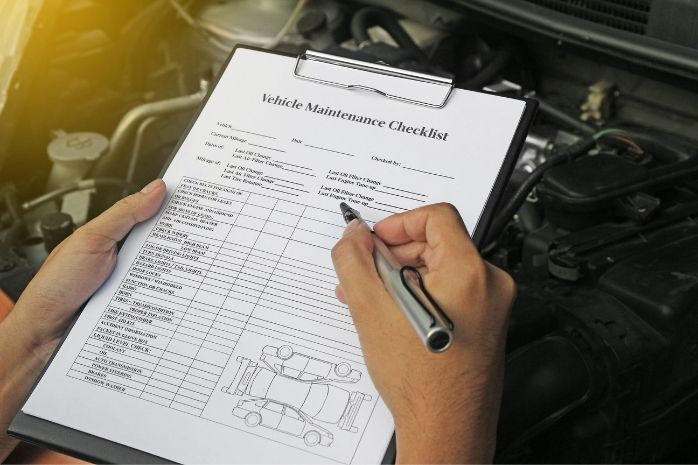
The complete annual car maintenance checklist for UK drivers — covering every check by frequency, from weekly fluid levels to the annual service items that prevent costly breakdowns.
Regular maintenance is the single most effective way to avoid unexpected repair bills, maintain a vehicle’s residual value, and ensure it passes its MOT without expensive remedial work. This guide organises every check by frequency so that nothing is missed.
Why Regular Checks Matter More Than Ever
Modern vehicles are significantly more reliable than their predecessors — but that reliability can create a false sense of security. Because problems develop slowly and invisibly, many UK drivers only discover faults at MOT time, when repairs are compulsory and often more expensive than they would have been if caught earlier. A systematic approach to vehicle checks costs nothing in time beyond a few minutes per week and can prevent the most common causes of roadside breakdown.
The RAC and AA consistently identify the same preventable failures at the top of their breakdown callout lists: flat or under-inflated tyres, flat batteries, low coolant, and empty screen wash. Every one of these is identified by a weekly check that takes under five minutes.
Weekly Checks
Tyre pressures and condition:
Check all four tyres — and the spare — when cold (stationary for at least two hours). Compare against the door sill placard for the correct pressure for your load condition. While checking pressure, visually inspect each tyre for cuts, bulges, embedded objects, or uneven wear patterns. The legal minimum tread depth in the UK is 1.6mm across the central three-quarters of the tyre — a 20p coin inserted into the tread groove with the outer band visible indicates the tyre is at or near the legal limit.
Engine oil level:
Park on level ground, wait two minutes after switching off the engine, withdraw the dipstick, wipe clean, reinsert fully, and withdraw again. The oil level should sit between the minimum and maximum marks. Top up with the grade specified in the owner’s manual — using the wrong grade in modern engines can trigger the spanner warning light and in severe cases damage engine components.
Fuel level:
Keep at least a quarter tank at all times — particularly in winter, when stationary traffic can leave a driver stranded for extended periods.
Screenwash:
The legal requirement is that the windscreen washer system operates correctly. In winter, ensure the concentration is sufficient for the forecast temperature — a diluted screenwash that freezes in the nozzle or smears rather than clears the screen is both a legal issue and a safety hazard.
Monthly Checks
Coolant level:
Check the expansion tank against the minimum and maximum marks when the engine is cold — never open the cap when the engine is warm. Low coolant causes overheating; a consistently dropping level indicates a leak that requires investigation before it causes head gasket failure.
Brake fluid level:
The brake fluid reservoir is typically located at the rear of the engine bay on the driver’s side. It should sit between the MIN and MAX marks. A gradual drop over time is normal as brake pads wear — a sudden drop indicates either a leak in the brake system or severely worn pads, both requiring immediate attention.
Power steering fluid (where applicable):
Electric power steering — standard on most post-2015 vehicles — requires no fluid check. Hydraulic power steering systems have a separate reservoir; heavy or noisy steering at low speed indicates low fluid or a developing pump fault.
All lights:
Walk around the car and check that all lights function — headlights (dipped and full beam), front and rear indicators, brake lights, reversing light, and number plate illumination. A failed brake light is both an MOT failure and a road traffic offence. Checking brake lights requires an assistant or a reflective surface behind the car.
Horn:
Test in a quiet location. A non-functioning horn is an MOT failure.
Every Six Months
Wiper blades:
Replace blades that streak, skip, or fail to clear the screen cleanly. In the UK’s wet climate, wipers are in almost continuous use for much of the year; a blade that performed adequately in June may be degraded by October. Beam blades (flat blades without a metal frame) perform consistently better than traditional frame designs in heavy rain and frost.
Battery condition:
Most garages, Halfords, and Kwik Fit branches offer free battery testing. A battery producing less than 70% of its rated output should be replaced before winter — the cost of a quality replacement battery (typically £80–£150) is far less than a breakdown callout and the associated stress of a failure at an inconvenient time.
Air filter:
A blocked air filter reduces engine efficiency and fuel economy. On most vehicles it is a visual check requiring only the removal of the airbox cover — a grey or brown filter with visible debris should be replaced. Service interval recommendations typically suggest replacement every 15,000–20,000 miles, but UK urban driving with higher dust and particulate levels may require earlier replacement.
Cabin air filter (pollen filter):
The cabin filter cleans air entering the heating and ventilation system. A blocked filter reduces airflow, causes musty odours, and makes the air conditioning less effective. Replacement is straightforward on most vehicles — typically located behind the glovebox — and costs £10–£25 for a quality filter.
The Annual Service: What It Should Include
A full annual service — or service at the manufacturer’s recommended mileage interval, whichever comes first — should cover:
| Service Item | Typical Interval | Notes |
|---|---|---|
| Engine oil and filter change | Annually or 10,000 miles | Use manufacturer-specified grade |
| Spark plugs (petrol) | Every 30,000–60,000 miles | Iridium plugs last longer |
| Fuel filter | Every 20,000–30,000 miles | Diesel particularly important |
| Brake fluid replacement | Every 2 years | Absorbs moisture over time |
| Coolant flush | Every 5 years (long-life) | Check manufacturer interval |
| Timing belt/chain inspection | Per manufacturer schedule | Belt failure causes catastrophic engine damage |
| Brake pad and disc measurement | Annually | Replace pads below 3mm |
| Tyre rotation | Annually or 10,000 miles | Evens out wear patterns |
| DSG/automatic transmission fluid | Every 40,000 miles | Often missed; expensive if neglected |
The timing belt warning deserves particular emphasis. A snapped timing belt causes immediate and catastrophic engine damage — bent valves and destroyed pistons — on interference engines, which includes the majority of modern cars. Replacement cost is typically £400–£700; the engine damage from a snapped belt routinely exceeds the value of the vehicle. Never exceed the manufacturer’s replacement interval.
Warning Lights: The Immediate Response Checklist
Modern vehicles communicate developing problems through dashboard warning lights. The correct response depends on the light:
Red warning lights require immediate action — stop as soon as safely possible:
- Red oil pressure light — stop immediately; continuing to drive destroys the engine within minutes
- Red battery light — the charging system has failed; the battery is draining; find a safe stop soon
- Red coolant temperature light — the engine is overheating; stop immediately and allow to cool
Amber warning lights require prompt attention — drive to a garage at the earliest opportunity:
- Engine management light (amber) — a fault has been detected; the car can generally be driven but should be diagnosed soon
- Spanner/service light — a scheduled service is due; see our spanner warning light guide
- AdBlue warning (diesel) — AdBlue is low; top up before the level triggers engine restriction; full guidance in our AdBlue warning light guide
- Handbrake/brake warning light — check brake fluid level immediately; if fluid is correct, have brakes inspected; see our handbrake warning light guide
The MOT: Preparing Your Car
The MOT tests whether the vehicle meets minimum roadworthiness standards — it is not a service and does not involve mechanical maintenance. Common MOT failure points that are entirely preventable with regular checks:
- Tyres below 1.6mm tread — the most common failure item; check monthly
- Failed lights — bulb replacement costs pennies; an MOT retest costs money and time
- Worn wiper blades — replace before the test if any smearing is evident
- Low screenwash — the examiner checks the washer operates; an empty reservoir is an immediate advisory or failure
- Brake performance below standard — linked to worn pads or degraded fluid; both preventable
- Emissions failure — a fresh oil and filter change before the test improves emissions readings on petrol engines; a good run at motorway speeds before the test warms the catalytic converter and clears deposits
For the full guide to how your licence points accumulate and what happens at 12 points, see our UK driving licence points guide.
How often should I check my engine oil?
Once a week for older vehicles; once a month for modern cars under five years old. Any vehicle that visibly consumes oil — requiring topping up between services — should be checked weekly and the rate of consumption investigated by a mechanic.
Can I drive with the engine management light on?
If the light is amber and steady, the car can generally be driven cautiously to a garage for diagnosis. If the light is red or flashing, stop as soon as safely possible — a flashing amber or red engine light indicates a serious fault that can cause immediate damage if driving continues.
How do I know if my brakes need replacing?
A high-pitched squealing noise when braking indicates the wear indicator on the brake pad has reached the metal backing plate — pads need replacing immediately. A grinding noise indicates metal-on-metal contact and likely disc damage. Brake feel that is spongy, requires more pedal pressure than usual, or pulls to one side all indicate brake system issues requiring investigation.
How often should brake fluid be changed?
Every two years, regardless of mileage. Brake fluid is hygroscopic — it absorbs moisture from the atmosphere over time, which lowers its boiling point and introduces the risk of brake fade under hard use. This is the most commonly skipped service item and one of the most safety-critical.
Is it worth servicing a high-mileage car?
Yes — regular servicing on a high-mileage vehicle is more important than on a low-mileage one, not less. Higher-mileage engines accumulate more deposits and wear more components; skipping services accelerates deterioration. A well-maintained 120,000-mile car is significantly more reliable than a neglected 80,000-mile equivalent.
In my experience, the drivers who avoid unexpected repair bills almost invariably follow a simple discipline: they check their car’s oil, tyres, and lights once a week and have it serviced on schedule regardless of how well it appears to be running. The cost of prevention is a fraction of the cost of cure in every case — and the peace of mind of knowing the car is roadworthy is worth the ten minutes per week it requires.





