
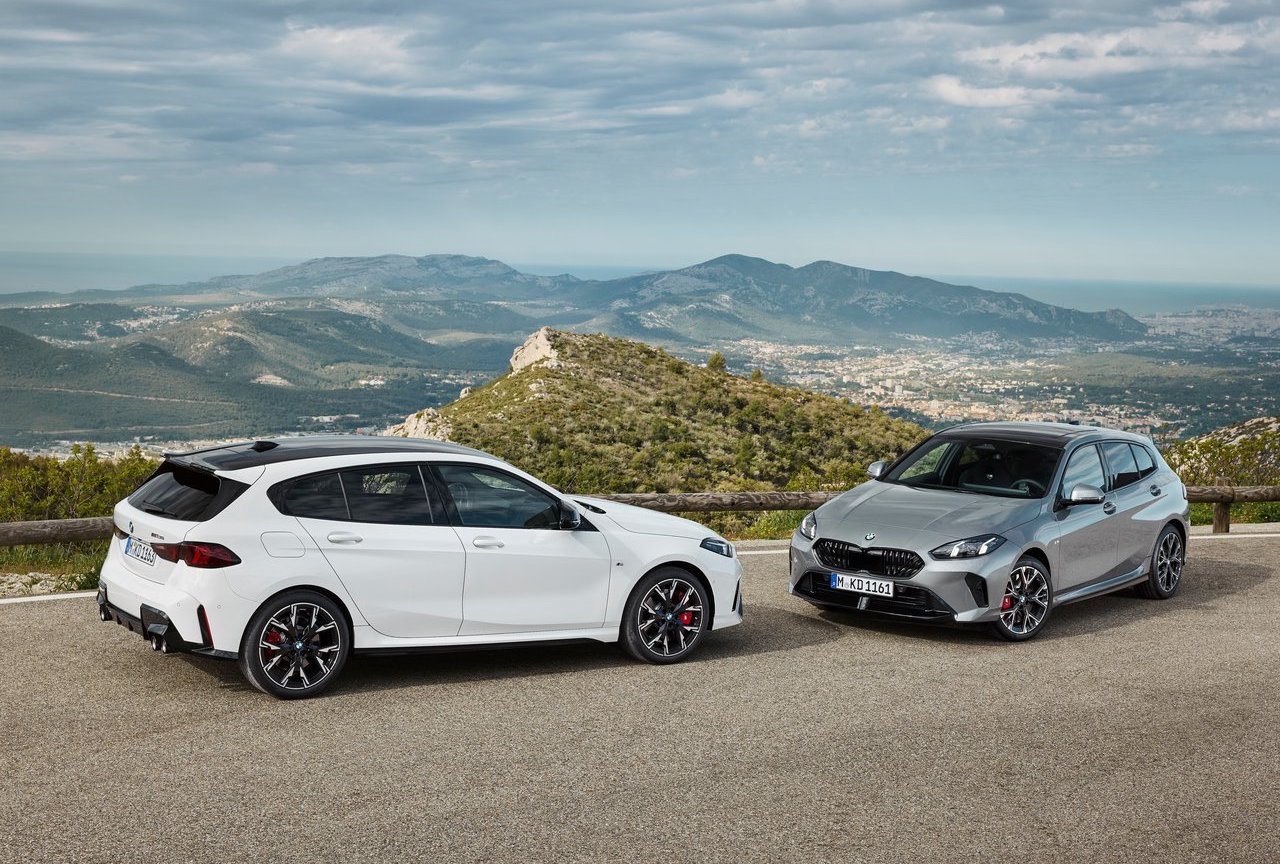
Choosing between the Audi A3 and BMW 1 Series is one of the most genuinely difficult decisions in the premium compact segment — and in 2026 both cars have been significantly updated, making the choice more interesting than it has been for years. This is a comprehensive guide for UK buyers who need a definitive answer.
Audi A3 vs BMW 1 Series: Head-to-Head Overview
Both cars target the same buyer: someone who wants premium quality, engaging driving character, and a strong badge in a compact package. Their approaches, however, are different — and those differences matter more in daily use than any spec sheet comparison suggests.
| Audi A3 Sportback | BMW 1 Series | |
|---|---|---|
| Body style | 5-door hatchback / Saloon | 5-door hatchback |
| Platform | MQB-Evo (front-wheel drive base) | FAAR (rear-wheel drive base) |
| Starting price | From £31,870 | From £33,680 |
| Best petrol engine | 2.0 TFSI 150hp | 120 2.0i 170hp |
| Best diesel | 2.0 TDI 150hp | 120d 2.0d 163hp |
| PHEV available | A3 45 TFSIe (245hp, 42-mile EV range) | 120e (245hp, 42-mile EV range) |
| Boot space | 380 litres | 380 litres |
| Drive configuration | Front-wheel drive / quattro 4WD | Rear-wheel drive / xDrive 4WD |
| Five-star Euro NCAP | Yes (2021, updated 2024) | Yes (2019, updated 2024) |
The Fundamental Difference: Driving Character
This is where the choice is made or lost. The BMW 1 Series is built on a rear-wheel-drive platform — unusual in this segment and the car’s defining characteristic. Rear-wheel drive delivers more balanced weight distribution (approximately 50:50 front to rear) and a steering feel that is more communicative and natural than any front-wheel-drive competitor.
In my experience driving both cars back-to-back, the 1 Series feels more playful and more alive through corners — there is a directness to the steering and a willingness to rotate in bends that the A3 simply does not replicate. The Audi is more precise and planted, with an interior that feels marginally more substantial at equivalent price points, but it does not engage in the same way.
For drivers who value driving enjoyment above all else, the 1 Series is the recommendation. For drivers who prioritise interior quality, quattro four-wheel-drive availability, and the broadest powertrain choice including the most capable PHEV, the A3 is the stronger all-round package.
Engines and Powertrains: Which to Choose
Both cars offer petrol, diesel, and plug-in hybrid variants. The recommended specifications are:
For most buyers — petrol:
The BMW 120 (170hp, 2.0-litre four-cylinder) is the standout petrol choice — it is smooth, free-revving, and comfortably more characterful than the equivalent Audi 2.0 TFSI at similar prices. Real-world economy of approximately 40–45mpg on mixed routes is competitive.
The Audi A3 35 TFSI (150hp) is the value entry point and entirely adequate — its 1.5-litre turbocharged four-cylinder is refined and economical (up to 47mpg), though it lacks the top-end character of the BMW unit.
For high-mileage drivers — diesel:
Both the A3 35 TDI (150hp) and BMW 120d (163hp) deliver genuine long-distance economy — 55–60mpg on motorway routes is achievable in real-world use. The BMW 120d is the more enjoyable diesel to drive; the A3 TDI is more refined at motorway cruise. Both require Euro 6 awareness for Clean Air Zone access.
For company car drivers — PHEV:
The A3 45 TFSIe and BMW 120e are near-identical in specification — both deliver approximately 42 miles of electric range, a 245hp combined output, and BiK rates of approximately 8% in 2026. The choice between them comes down to the same driving character argument as the combustion versions.
For a full analysis of the PHEV options across the compact premium segment, our best plug-in hybrid cars guide covers every PHEV model currently available in the UK.
Interior Quality: Closer Than You Think
The conventional wisdom — Audi interior is superior — is less true in 2026 than it has been historically. The current BMW 1 Series (F40 generation, refreshed 2024) has a genuinely impressive interior: the Curved Display combining a 10.25-inch digital instrument cluster with a 10.7-inch central touchscreen is clean, intuitive, and visually striking. Material quality is excellent throughout.
The Audi A3’s interior (also updated 2024) retains its characteristically precise, horizontal dashboard architecture — everything feels well-made and logically arranged. The 10.1-inch MMI touchscreen is responsive and supports wireless CarPlay and Android Auto as standard from mid-trim upward.
From my point of view, the BMW’s interior has closed the gap to the point where it is no longer a decisive factor — both cars offer a premium environment that exceeds anything available at this price from a mainstream brand.
Trim Levels: Where the Value Lies
Audi A3 UK trim levels: Sport, S line, S line Competition, Vorsprung
- S line is the sweet spot — 18-inch alloys, sport suspension, privacy glass, and the interior specification most buyers actually want. Avoid Vorsprung unless the additional technology justifies the significant premium
BMW 1 Series UK trim levels: Sport, M Sport, M Sport Pro
- M Sport is the recommended trim — it adds the visual package, sport suspension, and interior upgrades that define the 1 Series experience. Be aware that M Sport’s 18-inch alloys can compromise ride quality on poorer UK urban roads
Both cars’ standard specifications include the essential technology — digital instruments, touchscreen, wireless phone integration, LED lighting — from Sport/entry trim upward. The trim upgrades are primarily about visual identity and suspension specification rather than fundamental capability.
For comparison with the broader compact premium SUV alternative — a question many A3 and 1 Series buyers also consider — our Audi Q3 review covers the Q3’s value proposition against both hatchback rivals.
The official specifications, pricing, and configurator for the Audi A3 are available at audi.co.ukand for the BMW 1 Series at bmw.co.uk.
Which is more reliable — Audi A3 or BMW 1 Series?
Both score similarly in owner satisfaction surveys. The A3’s 1.5 TFSI petrol engine is well-proven across the VW Group; the BMW 2.0-litre unit is equally established. The rear-wheel-drive BMW’s differential and driveshaft components add marginally more mechanical complexity than the front-wheel-drive A3 at equivalent specification, but neither car has a significantly better or worse reliability record in current generation form.
Is the Audi A3 or BMW 1 Series better for motorway driving?
Both are excellent motorway cars. The A3 is marginally more refined at sustained high speeds due to its slightly lower road noise levels; the BMW’s rear-wheel-drive balance makes it more planted and confident during high-speed lane changes. For pure motorway comfort, the A3 edges it; for driver involvement on the approach to and exit from motorway junctions, the BMW is more rewarding.
Which has better resale value — A3 or 1 Series?
Both hold residual value well by mainstream car standards. The Audi A3 has historically retained value slightly better than the BMW 1 Series in the UK used market — Audi’s brand perception in the used market remains very strong. Both depreciate significantly in the first year; three-year-old used examples represent substantially better value than new for most buyers.
Should I buy an Audi A3 or BMW 1 Series as a company car?
Both the A3 45 TFSIe and BMW 120e PHEVs deliver comparable BiK benefits at approximately 8% in 2026. The choice is personal preference — driving character (BMW) versus interior refinement (Audi). The PHEV variants make significantly more financial sense than diesel or petrol for any company car driver, regardless of the brand chosen.
Is the BMW 1 Series rear-wheel drive in the UK?
Yes — the current BMW 1 Series (F40 generation) is rear-wheel drive as standard, with the xDrive all-wheel-drive system available as a cost option on selected engines. This is unique in the premium compact hatchback segment and is the primary reason the 1 Series drives more engagingly than its front-wheel-drive rivals.





