
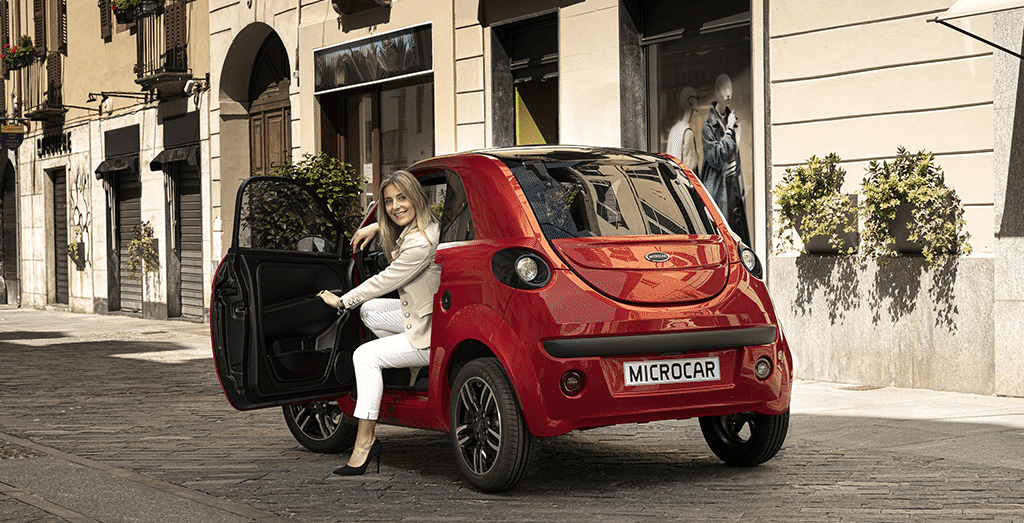
Microcars and quadricycles — vehicles like the Citroën Ami, Casalini Ydea, and Aixam Crossline — are becoming increasingly visible on UK roads. But the rules around licensing, insurance, and road use differ significantly from standard cars. Here is what every UK driver and potential owner needs to know.
Microcar and Quadricycle Insurance in the UK: The Legal Position
The short answer is yes — microcars and quadricycles legally used on UK public roads must carry third-party insurance under the Road Traffic Act 1988. There are no exemptions for vehicles in this category from the UK’s compulsory motor insurance requirements. Driving an uninsured quadricycle on a public road is the same offence as driving an uninsured car — with the same penalties.
| Category | UK Category | Licence Required | Insurance Required | Max Speed | Max Power |
|---|---|---|---|---|---|
| Light quadricycle | L6e | AM licence (16+) or B car licence | Yes — third party minimum | 45km/h (28mph) | 6kW motor / 4kW engine |
| Heavy quadricycle | L7e | B car licence (17+) | Yes — third party minimum | No restriction | Up to 15kW |
| Standard car | M1 | B car licence | Yes — third party minimum | No restriction | No restriction |
What Licence Do You Need to Drive a Microcar in the UK?
This is where the distinction between European and UK rules creates genuine confusion. In France and several other EU countries, light quadricycles (L6e) can be driven from age 14 on an AM licence — without a full car licence. This is the rule that makes the Citroën Ami enormously popular with young French drivers.
In the UK, the rules are different. The UK Government confirmed post-Brexit that light quadricycles require either:
- A full Category B car licence (standard UK driving licence, from age 17), or
- A Category AM licence (moped licence, from age 16) — but only for vehicles that meet the L6e specification strictly
The practical implication: most UK drivers of microcars will use their standard car licence. A 16-year-old cannot drive a Citroën Ami on UK public roads without a licence — unlike in France. For current and up-to-date DVLA licence category guidance, the DVLA vehicle licensing categories page provides the definitive reference.
Insurance: What Type Do You Need and What Does It Cost?
Third-party insurance is the legal minimum for any quadricycle on UK public roads. Comprehensive insurance is available from specialist providers and is strongly recommended for any vehicle of financial value.
Mainstream insurers frequently do not cover quadricycles — they fall outside the standard car insurance classification — meaning specialist providers such as Adrian Flux, Footman James, or Classicline are typically required. Annual premiums vary significantly by vehicle, driver age, and postcode, but £300–£600 per year for comprehensive cover on a vehicle like the Citroën Ami is a reasonable guideline for an experienced adult driver.
The most important practical steps for a UK quadricycle buyer:
- Obtain insurance quotes before purchase — confirm the vehicle is insurable at an acceptable premium
- Verify the vehicle’s DVLA category (L6e or L7e) as this determines licence requirements
- Check that the specific model is Type Approved for UK roads — not all European microcar variants meet UK road safety standards
- Confirm whether the vehicle requires a MOT — light quadricycles under 25 years old are generally exempt from standard MOT testing but should still be maintained to a roadworthy standard
The Citroën Ami in the UK: A Specific Case
The Citroën Ami — the most recognisable microcar on UK roads — is classified as a light quadricycle (L6e) with a 6kW electric motor and a top speed of 45km/h. In the UK, it requires a Category B car licence for most drivers (or AM for those who meet specific age and licence conditions), and full third-party insurance as a minimum.
Citroën UK launched the Ami in 2022 — it is available for purchase outright or via a subscription model and is currently sold through Citroën’s UK dealer network. Its UK-specification pricing starts from approximately £8,995, making it one of the most affordable new electric vehicles available.
The Ami’s 75km (approximately 46 miles) range makes it a genuine urban runabout — suitable for short local journeys, not motorway or long-distance use. Its 45km/h top speed means it is unsuitable for most A-roads and all dual carriageways.
For UK drivers considering whether a microcar suits their needs, or whether a small conventional city car — such as the Dacia Sandero or Renault Clio — provides better all-round value, our comparison of available options at different budgets helps clarify the choice.
Can a 16-year-old drive a microcar in the UK?
In limited circumstances, yes — a 16-year-old with a Category AM licence (moped licence) can drive a light quadricycle (L6e) that meets the precise specification: maximum 45km/h, maximum 6kW motor. In practice, most UK 16-year-olds seeking to drive a microcar will need to obtain the AM licence first. Unlike France, the UK does not allow unlicensed microcar driving at any age.
Is a Citroën Ami road legal in the UK?
Yes — the Citroën Ami is sold through Citroën’s UK dealer network in a UK Type Approved specification, making it fully road legal on UK public roads subject to appropriate licence and insurance. It is not suitable for motorways, dual carriageways, or roads with a speed limit above 30mph due to its 45km/h maximum speed.
Do quadricycles need an MOT in the UK?
Light quadricycles (L6e category) under 25 years old are generally exempt from the standard MOT test applicable to cars. They are still required to be maintained in a roadworthy condition — the MOT exemption does not remove the owner’s legal obligation to keep the vehicle safe. Owners should ensure annual safety checks are carried out by a qualified technician.
Can I drive a microcar without insurance?
No — driving any motor vehicle on a UK public road without valid insurance is an offence under the Road Traffic Act 1988, regardless of the vehicle’s category. Penalties include a £300 fixed penalty notice, six penalty points, and potential vehicle seizure. There are no exemptions for quadricycles or microcars from this requirement.
Is it worth buying a microcar instead of a city car in the UK?
For purely urban use — short journeys, parking in tight spaces, low speeds — a microcar’s simplicity and low running cost are genuine advantages. For any journey requiring A-road or dual carriageway use, a microcar’s speed limitation makes it impractical. Most UK buyers who compare the Citroën Ami’s £8,995 price against a used Dacia Sandero or Renault Clio find the conventional city car provides significantly more versatility for a modest additional investment.





