
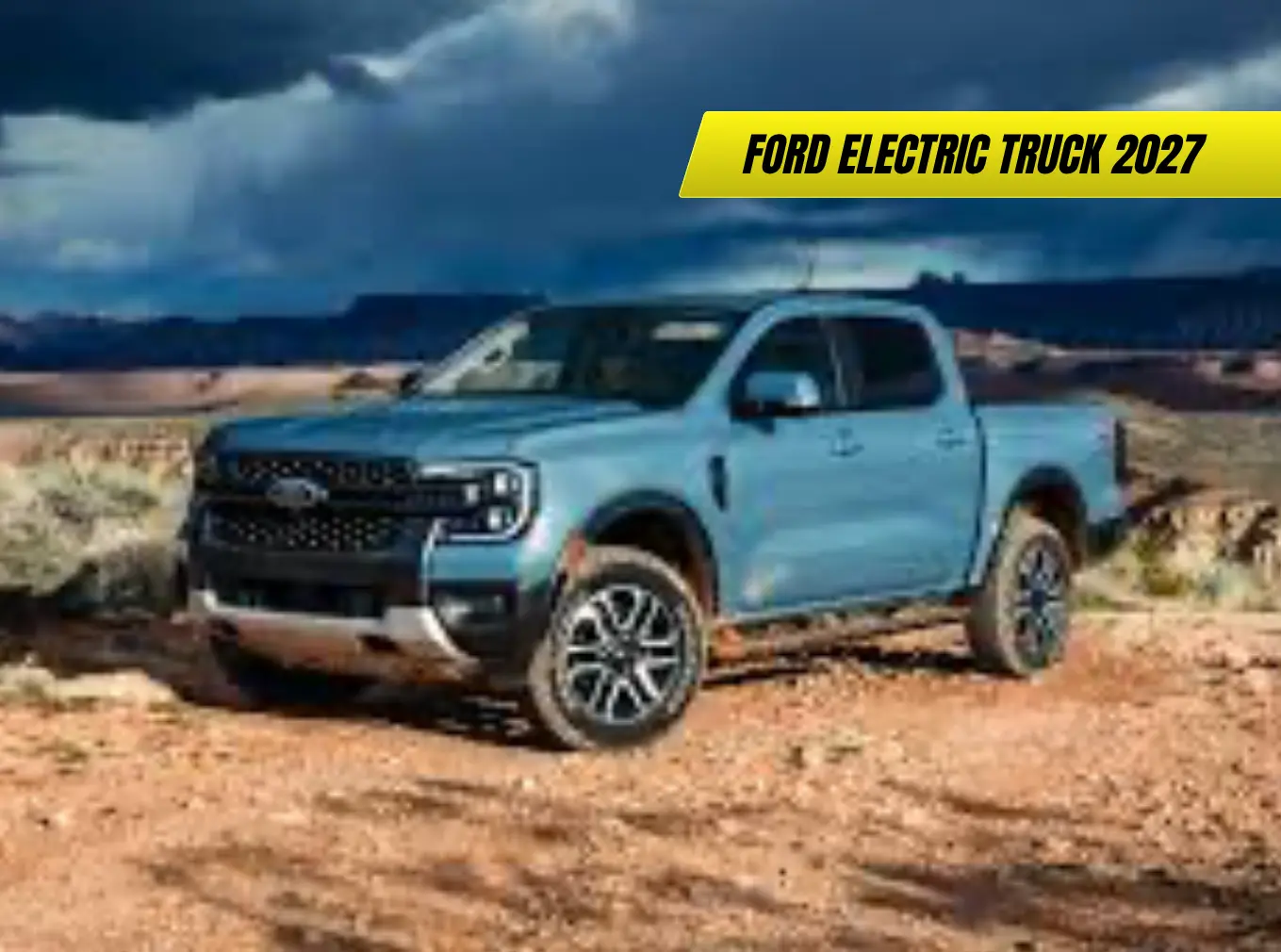
Ford’s CEO has accidentally — or deliberately — shown the world the first glimpse of a compact electric truck designed to make EV ownership accessible to millions of American and potentially British buyers.
Ford has teased its upcoming compact electric pickup truck, targeting a $30,000 (approximately £24,000) starting price and a 2027 launch, built on a new Universal EV platform with 20% fewer parts and gigacasting-style aluminium construction.
Key Points
- Starting price target of $30,000 (~£24,000)
- Launch date targeted for 2027
- Built on Ford’s new Universal EV platform
- Uses gigacasting-style unicasting for large aluminium components
- 20% fewer parts, 25% fewer fasteners than conventional vehicles
- May revive the Ranchero nameplate, last used in 1979
- LFP (lithium iron phosphate) batteries confirmed
Ford CEO Jim Farley posted images of the forthcoming electric truck on LinkedIn — images that were clearly staged as a teaser rather than a genuine leak, but which offered nonetheless the clearest indication yet of the truck’s design language. The visible sections show a muscular bed design and a clean roofline consistent with a compact pickup format rather than the full-size F-150 Lightning. The truck is notably more compact and clearly aimed at a younger, more urban buyer than Ford’s traditional truck customer.
This is Ford’s most direct response to the Slate EV truck, a startup-backed compact electric pickup that has generated considerable attention with its similarly affordable price positioning. With Ford’s manufacturing scale and brand recognition, a $30,000 EV pickup from the Blue Oval carries considerably more credibility than any startup rival.
The Universal EV Platform: A Technical Leap
The new Universal EV platform is perhaps the most significant aspect of this truck’s story. Developed by an internal Ford skunkworks team, it represents a fundamental reimagining of how electric vehicles are engineered at scale. The platform features:
- 20% fewer parts than a conventionally engineered vehicle
- 25% fewer fasteners — reducing assembly time and failure points
- 40% fewer plant workstations — dramatically cutting manufacturing cost
- Gigacasting-style unicasting of large aluminium components, similar to Tesla’s process
This last point is particularly noteworthy. By casting large sections of the vehicle’s structure as single aluminium pieces — rather than assembling them from dozens of stamped components — Ford can dramatically reduce weight, improve structural rigidity, and cut production cost simultaneously. This is the same fundamental technology shift that allowed Tesla to reduce the Model Y’s manufacturing cost so significantly.
LFP Batteries and the $30,000 Price Point
The use of lithium iron phosphate (LFP) batteries is a deliberate and strategic choice. LFP chemistry is less energy-dense than the NMC batteries in most premium EVs, but it is substantially cheaper, has a longer cycle life, handles thermal stress better, and can be charged to 100% regularly without degradation. For a working truck buyer concerned primarily with total cost of ownership and reliability, LFP is the right choice.
The $30,000 target represents a genuine step change in EV accessibility. At current exchange rates, a UK equivalent — if Ford pursues right-hand drive — might land around £26,000–£28,000 after localisation costs, placing it in competition with the Ford Ranger and approaching the affordability of mainstream mid-size pickups. For context on how pickups are taxed in the UK, the gov.uk guidance on commercial vehicle tax is useful reading.
Ranchero Revival?
The detail that has generated the most enthusiasm among automotive enthusiasts is the suggestion that Ford may revive the Ranchero nameplate for this new truck. The original Ranchero was a car-based pickup — essentially an estate car with a cargo bed — sold between 1957 and 1979. It pioneered the concept that a vehicle could be both stylish and practical, combining car-like ride quality with pickup utility.
A modern interpretation as a compact, affordable electric pickup with car-derived ride characteristics and a focus on urban usability would be a logical and historically resonant name choice. Ford has not confirmed the branding, but multiple sources point strongly in this direction.
When will Ford’s $30,000 electric truck be available?
Ford is targeting a 2027 launch. UK availability, right-hand drive homologation, and British pricing have not been confirmed.
No. It is built on an entirely new Universal EV platform and is considerably more compact and affordable than the full-size F-150 Lightning.
What does LFP battery chemistry mean for owners?
LFP batteries can be regularly charged to 100% without long-term degradation, have excellent thermal stability, and have a longer cycle life than NMC batteries — making them ideal for a working vehicle.
Will Ford’s electric truck come to the UK?
No confirmation yet. The initial launch is North American-focused. Right-hand drive variants would be required for UK sale and have not been announced.
How does Ford’s gigacasting approach compare to Tesla’s?
Both use large single-piece aluminium castings to replace assemblies of many smaller parts. Ford’s “unicasting” approach aims for the same benefits — reduced weight, improved rigidity, lower cost — applied to its Universal EV platform.
From my point of view, Ford’s $30,000 electric truck could be one of the most consequential vehicle launches of the decade if the company delivers on its pricing and engineering promises. A well-built, genuinely affordable EV pickup from one of the world’s most trusted truck brands would be a genuine game-changer — for the American market first, and potentially for the UK thereafter.





