
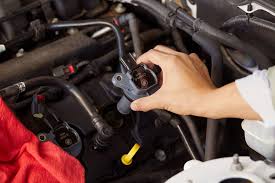
Everything UK drivers need to know about ignition coil replacement — from misfire symptoms and diagnostic codes to step-by-step fitting instructions and costs.
A faulty ignition coil is one of the most common causes of engine misfires on UK cars, yet it is often misdiagnosed or ignored until it causes a more expensive fault. Whether your engine is running roughly, your dashboard is showing a warning light, or you have pulled a misfire fault code with an OBD reader, this guide walks you through identifying, testing and replacing an ignition coil on a modern petrol car — saving you time and potentially significant garage costs.
Key Points
- The ignition coil converts the car’s 12V battery voltage into the high voltage needed to fire the spark plugs
- A failing coil causes engine misfires, rough idling, increased fuel consumption and potential catalytic converter damage
- Most modern UK cars use a coil-on-plug (COP) system — one coil per cylinder, making individual replacement straightforward
- Replacement cost ranges from approximately £30 DIY to £200 at a garage depending on vehicle and coil type
- Always replace spark plugs at the same time — a worn plug is often the cause of coil failure in the first place
- Driving with a persistent misfire can overheat and destroy your catalytic converter, turning a £30 repair into a £1,000+ bill
What Does an Ignition Coil Do?
The ignition coil is an electromagnetic transformer that steps up your car’s 12-volt battery supply to the 15,000–40,000 volts required to jump the electrode gap of a spark plug. This high-voltage pulse ignites the compressed air-fuel mixture in the cylinder, driving the piston down and producing power. Without a functioning coil on every cylinder, combustion is incomplete or absent on that cylinder — a condition known as a misfire.
On older vehicles, a single distributor coil served all cylinders via a rotor arm and HT leads. The vast majority of modern UK cars instead use a coil-on-plug (COP) system, where a compact coil sits directly on top of each spark plug, eliminating the HT leads entirely. Some vehicles use a coil pack — a single unit serving two or more cylinders — which is common on older Ford, Vauxhall, and Renault models still widely driven in the UK.
Symptoms of a Failing Ignition Coil
Ignition coil failure has a distinctive set of symptoms that are easy to confuse with other engine faults. Look for the following signs:
- Engine misfire — a noticeable judder, stumble or hesitation, particularly at idle or under light acceleration
- Rough or lumpy idle — the engine feels and sounds uneven when stationary
- Engine management warning light — almost always illuminated when a misfire is detected; often flashing, which indicates an active misfire damaging the catalytic converter
- Increased fuel consumption — unburned fuel passes through the cylinder, reducing efficiency
- Loss of power — particularly noticeable under load, when overtaking or climbing hills
- Difficulty starting — especially in cold or wet conditions, which is common in the UK
- Strong smell of unburned fuel from the exhaust
From my experience, a flashing engine management light should be treated as urgent — it almost always indicates an active misfire, and continued driving in this state can destroy the catalytic converter within minutes of driving. Given that a catalytic converter on a typical UK family car costs £300–£1,200 to replace, acting immediately makes strong financial sense.
If the warning light has come on, it is also worth reading our guide on the spanner warning light and what it means for UK drivers to understand how the vehicle’s diagnostic system works.
Diagnosing the Faulty Coil: Using an OBD Reader
Before replacing any components, it is worth confirming which cylinder is misfiring using an OBD-II diagnostic reader — available from Halfords or Amazon for as little as £15–£30. Connect the reader to the OBD port (usually located under the dashboard on the driver’s side) and read any stored fault codes.
| Fault Code | Meaning |
|---|---|
| P0300 | Random/multiple cylinder misfire |
| P0301 | Cylinder 1 misfire |
| P0302 | Cylinder 2 misfire |
| P0303 | Cylinder 3 misfire |
| P0304 | Cylinder 4 misfire |
| P030X | Cylinder X misfire (X = cylinder number) |
Once you have identified the misfiring cylinder, you can confirm whether the coil is the cause by swapping the suspect coil with the coil from an adjacent cylinder and re-running the engine. If the misfire moves to the new cylinder, the coil is confirmed faulty. If the misfire stays on the same cylinder, the spark plug or injector is more likely to blame.
Tools and Parts You Will Need
| Item | Notes |
|---|---|
| Replacement ignition coil | Match to your exact engine code — coils are not universal |
| New spark plugs | Replace all plugs while the coils are accessible |
| Socket set and extension bars | COP coils are often recessed deep into the cam cover |
| Torx or hex bit set | Some coil retaining bolts use non-standard heads |
| Dielectric grease | Apply to the inside of the coil boot to prevent moisture ingress |
| OBD-II reader | For fault code diagnosis and clearing after the repair |
| Soft brush and compressed air | Clean debris from around plugs before removal |
Always source a coil that matches your vehicle’s exact engine code, not just make and model. Many manufacturers use multiple different engines across the same model range, and the wrong coil may fit physically but deliver incorrect voltage characteristics.
Step-by-Step: Replacing a Coil-On-Plug Ignition Coil
This is the most common replacement procedure on modern UK petrol cars. The process is similar for coil pack systems, but the pack serves multiple cylinders and must be replaced as a unit.
- Ensure the engine is cold before starting — coils sit on the cylinder head and will be very hot after running. Disconnect the negative battery terminal
- Remove the engine cover if fitted — most modern cars have a plastic cosmetic cover over the top of the engine secured by push clips or bolts
- Locate the faulty coil using your OBD fault code. On a COP system, each coil sits directly above its spark plug, labelled or positioned in cylinder firing order
- Disconnect the electrical connector from the coil — press the retaining clip and pull firmly. Do not pull on the wiring loom itself
- Remove the coil retaining bolt — typically an 8 mm or 10 mm bolt, or a Torx head on some European vehicles
- Pull the coil upward and twist slightly to break the seal with the spark plug boot. If it is stuck, use a gentle rocking motion — never lever against the cam cover
- Remove the spark plug using a plug socket with a rubber insert to prevent cracking the ceramic insulator — torque it carefully on removal to avoid stripping the thread in the aluminium head
- Inspect the plug — black sooty deposits suggest rich running or oil fouling; white or grey is normal. Replace regardless of condition if the vehicle has covered more than 30,000 miles since the last service
- Fit the new spark plug by hand first to avoid cross-threading, then torque to specification — typically 20–30 Nm for most petrol engines
- Apply a small amount of dielectric grease to the inside of the new coil boot
- Press the new coil firmly down onto the plug until it seats fully, refit the retaining bolt and reconnect the electrical connector
- Repeat for any additional coils being replaced, refit the engine cover, reconnect the battery and start the engine
- Clear the fault codes using the OBD reader and monitor for recurrence
Should You Replace All Coils at Once?
This is a common question — and the answer depends on mileage and budget. On high-mileage vehicles (over 80,000 miles), coils degrade progressively. If one has failed, the others are under similar stress and may follow shortly. Replacing all coils in one session saves on repeat labour and ensures consistent ignition performance across all cylinders.
On lower-mileage vehicles, replacing only the faulty coil — confirmed by the swap test — is perfectly reasonable. However, always replace the spark plugs on the affected cylinder at minimum, and consider replacing all plugs across the engine at the same time. A worn plug dramatically increases the electrical load on the coil and is one of the primary causes of premature coil failure.
Ignition Coil Replacement Costs in the UK
| Vehicle Type | Average Garage Cost (per coil) | Parts Only |
|---|---|---|
| Small petrol hatchback (e.g. Ford Fiesta 1.0, VW Polo) | £60–£120 | £15–£40 |
| Family hatchback (e.g. Golf, Focus, Astra) | £70–£140 | £20–£50 |
| Premium brand (BMW, Audi, Mercedes) | £100–£200 | £30–£80 |
| Coil pack (older models e.g. Vauxhall 1.8, Ford 1.6) | £80–£160 | £25–£60 |
Prices are approximate 2026 UK market estimates. Labour typically takes 30–60 minutes per coil at a garage. Always request a written quote.
It is worth noting that the cost of ignoring a misfire can far exceed the cost of a coil. If the catalytic converter is damaged through repeated misfiring, replacement costs on a standard UK family car typically range from £300 to £1,200 — and on premium or diesel vehicles with a diesel particulate filter, costs are even higher. Our guide on DPF cleaning and maintenanceexplains how exhaust after-treatment components are affected by incomplete combustion.
DIY or Professional Replacement?
Coil-on-plug ignition coil replacement is one of the most beginner-friendly DIY engine jobs available on a modern UK car. With the correct coil, a basic socket set and an OBD reader to confirm the diagnosis, most drivers with no previous mechanical experience can complete the job in under an hour. The main risks are cross-threading the spark plug into the aluminium head (always start by hand) and pulling on the wiring loom connector rather than the connector body.
I would recommend this as an excellent first DIY engine job for any UK driver comfortable working under the bonnet. The UK government’s MOT testing standards do not directly test ignition components, but an engine management warning light on at the time of the MOT test is an automatic failure — so clearing the underlying fault is essential before presenting the car for its annual check.
How do I know if my ignition coil has failed?
The most reliable method is to connect an OBD-II reader and check for misfire fault codes (P0301–P030X). Confirm the coil by swapping it with an adjacent unit — if the misfire moves to the new cylinder, the coil is faulty. Symptoms include rough idling, hesitation under acceleration and a flashing engine management light.
Can I drive with a faulty ignition coil?
Briefly and at low speed to reach a garage — but not further, and never with a flashing engine management light. A persistent misfire passes raw unburned fuel into the catalytic converter, causing it to overheat and fail. The repair cost of a destroyed catalytic converter vastly exceeds the cost of a new ignition coil.
How often do ignition coils need replacing?
There is no fixed service interval. Most coils on modern UK cars last between 60,000 and 120,000 miles. They are more likely to fail prematurely if the spark plugs have not been replaced at the recommended service interval, as worn plugs increase the electrical stress on the coil.
Do I need to replace the spark plugs at the same time?
Yes — at the very least on the affected cylinder, and ideally across the whole engine. A worn spark plug is one of the leading causes of coil failure. Fitting a new coil onto an old, worn plug risks a repeat failure within a short period.
Will a faulty ignition coil cause an MOT failure?
Not directly — ignition coils are not tested at MOT. However, a misfire caused by a failed coil will almost certainly trigger the engine management warning light, which is an automatic MOT failure if illuminated at the time of the test. The fault must be diagnosed and repaired before presenting the vehicle.
Is a coil pack the same as a coil-on-plug?
No. A coil pack is a single unit that serves two or more cylinders via HT leads, common on older UK cars such as early Ford Focus, Vauxhall Astra and Renault models. A coil-on-plug (COP)system uses one individual coil per cylinder, sitting directly on top of the plug. COP systems are standard on most post-2005 UK petrol cars.
Can a bad ignition coil damage other components?
Yes. Beyond catalytic converter damage from misfires, a failing coil can cause unburned fuel to wash down the cylinder walls, diluting the engine oil. In turbocharged engines, raw fuel entering the exhaust can also damage the turbocharger. Addressing coil faults promptly protects a wide range of downstream components.
Conclusion
The ignition coil is a small, inexpensive component whose failure has consequences that extend well beyond a rough idle. Catching and resolving a misfire promptly — ideally within one or two days of the first symptoms — protects your catalytic converter, preserves fuel economy and prevents a £30 repair from escalating into a four-figure bill. For most UK drivers, COP coil replacement is one of the most accessible DIY engine jobs available, requiring minimal tools and delivering immediately noticeable results. Pairing the coil replacement with fresh spark plugs is not optional — it is the most important step in ensuring the new coil lasts its full service life. If you are carrying out broader engine maintenance at the same service, our guides on water pump replacement and EGR valve replacement cover the other components most likely to need attention on a high-mileage UK petrol or diesel engine.





