
A step-by-step guide to water pump replacement for UK drivers — covering symptoms, costs, timing belt considerations and why this job should never be delayed.
The water pump is the heart of your car’s cooling system, and when it fails, the consequences can be severe — from an overheated engine on a busy UK motorway to a warped cylinder head costing thousands of pounds to repair. Recognising the warning signs early and understanding when and how to replace a water pump is one of the most valuable pieces of mechanical knowledge any UK driver can have. This guide covers everything you need to know, from symptoms and tools through to a full step-by-step replacement guide.
Key Points
- The water pump circulates coolant around the engine — failure leads to rapid overheating and potential engine damage
- Common symptoms include coolant leaks near the pump, overheating, a rumbling noise from the front of the engine and a sweet smell from the engine bay
- On most UK cars, the water pump is driven by the timing belt — always replace both at the same time
- Replacement costs range from approximately £200 to £700 at a UK garage, including timing belt replacement
- A failed water pump can cause catastrophic engine damage within minutes if the car continues to be driven
- Always use a vehicle-specific coolant — the wrong type can corrode seals and reduce system lifespan
What Does a Water Pump Do?
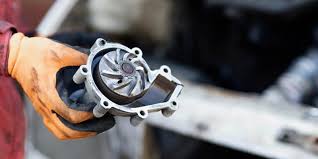
The water pump is a centrifugal pump, typically driven by the engine’s timing belt or auxiliary (serpentine) belt, that continuously circulates coolant through the engine block, cylinder head, radiator and heater matrix. By maintaining a constant flow of coolant, it prevents the engine from exceeding safe operating temperatures — typically 85–105°C for most modern UK petrol and diesel engines.
Most water pumps use an impeller — a finned rotor — to move coolant under pressure. The pump body is sealed with a mechanical face seal or gasket, and the shaft runs on internal bearings. When these bearings wear, the impeller seal fails, or the impeller itself corrodes (particularly with the wrong coolant type), the pump loses efficiency or fails entirely. On timing-belt-driven systems, bearing failure can also cause the belt to jump or snap — leading to catastrophic engine damage.
Symptoms of a Failing Water Pump
A water pump rarely fails without warning. Watch for these signs carefully — catching the fault early is the difference between a manageable repair and a rebuilt engine:
- Coolant leak beneath the front of the engine — a weeping seal or failed gasket, often leaving a green, orange or pink stain on the ground
- Engine overheating — temperature gauge climbing above normal, or the red warning light illuminating
- Rumbling, grinding or whirring noise from the front of the engine — caused by worn pump bearings
- Coolant loss with no visible external leak — can indicate internal pump seal failure or early head gasket involvement
- Steam from the engine bay — a serious warning requiring the engine to be stopped immediately
- Sweet smell of ethylene glycol from the engine bay or through the cabin ventilation
If your temperature warning light illuminates while driving, stop the vehicle as soon as safely possible and allow the engine to cool completely before opening the bonnet. Continuing to drive an overheating engine, even for a short distance, can warp the aluminium cylinder head — a repair that typically costs £500–£1,500 on a UK family car. Our guide to the spanner warning light and what it means for UK drivers explains how to interpret dashboard cooling system warnings correctly.
The Timing Belt Connection: Why It Matters
The vast majority of water pumps on modern UK petrol and diesel cars are driven directly by the cam belt (timing belt). This means the water pump and timing belt share the same service interval — and when one is replaced, replacing the other is not optional, it is essential.
| Drive Type | Examples | Notes |
|---|---|---|
| Timing belt driven | Most VW Group, Ford, Renault, Vauxhall engines | Replace pump with belt — always |
| Auxiliary belt driven | Some BMW, Honda engines | Easier access; belt replacement less critical |
| Chain driven | Many modern BMW, Mercedes, Jaguar engines | No belt service; pump accessed separately |
Replacing the timing belt without the water pump — or vice versa — is a false economy. The labour required to access either component is the same, and the cost of the pump itself is minor relative to total job cost. A water pump that fails shortly after a timing belt replacement will require the entire job to be repeated at full labour cost.
Tools and Parts You Will Need
| Item | Notes |
|---|---|
| Replacement water pump | Must match exact engine code — impeller material matters |
| Timing belt kit | Include tensioner, idler pulleys and belt — never reuse old components |
| Fresh engine coolant | Use vehicle-specific type — check handbook (G12, G13, OAT, etc.) |
| Torque wrench and socket set | Critical — pump and timing cover bolts must be torqued to spec |
| Timing lock tools | Engine-specific set — available to hire from motor factors |
| Drain tray | For catching coolant — dispose of responsibly |
| RTV sealant or new gasket | Depending on pump design |
| Breaker bar | Crankshaft bolt is extremely tight on most engines |
| Hose clamp pliers | For releasing spring-type coolant hose clips |
Never reuse timing belt tensioners or idler pulleys when replacing a water pump on a belt-driven system. These components fail progressively and replacing them separately adds disproportionate future labour costs.
Step-by-Step: Replacing a Timing Belt-Driven Water Pump
This is a more advanced procedure than routine maintenance jobs. If you are not confident setting engine timing, this job is best left to a qualified mechanic. The following is a general guide — always consult a vehicle-specific workshop manual.
- Allow the engine to cool fully, then disconnect the negative battery terminal. Place a drain tray under the radiator and drain the coolant via the radiator drain plug or by disconnecting the lower radiator hose
- Remove the auxiliary belt(s) first if they obstruct access to the timing cover
- Remove the timing cover(s) — usually a series of bolts and plastic clips. On some vehicles, the engine mount must be supported and a mount bracket removed for access
- Lock the engine at TDC (Top Dead Centre) using the correct engine-specific timing lock tools — inserted into the camshaft and crankshaft lock positions. This is critical — do not proceed without locking the engine correctly
- Release the timing belt tensioner and carefully slide the belt off the camshaft sprockets, crankshaft sprocket and water pump pulley — note the routing before removal
- Remove the old water pump — typically four to six bolts. Have the drain tray ready as residual coolant will drain from the pump cavity
- Clean the mating surface on the engine block thoroughly — old gasket material or RTV sealant must be fully removed
- Fit the new water pump with a new gasket or a bead of RTV sealant as specified. Torque the mounting bolts evenly in a cross pattern to the manufacturer’s specification — typically 8–12 Nm
- Install the new timing belt following the correct routing, then fit the new tensioner and idler pulleys. Set tension according to the manufacturer’s method — this is critical for timing accuracy
- Remove the timing lock tools and rotate the engine by hand (two full crankshaft revolutions) to verify timing marks align correctly
- Refit the timing cover(s) and engine mount bracket if removed
- Reconnect coolant hoses and refill the system with the correct coolant mixture — typically 50% antifreeze / 50% distilled water for UK conditions
- Bleed the cooling system — run the engine with the heater set to maximum, checking for air pockets. Top up the expansion tank as required and check for leaks
Cooling System Bleeding: An Often-Missed Step
Refilling the cooling system correctly is as important as fitting the pump itself. Air trapped in the system creates hot spots in the cylinder head that cause localised overheating and accelerate head gasket wear. Most modern UK cars have a bleed nipple or bleed screw on the top of the thermostat housing or highest coolant hose — open this briefly while filling to allow air to escape.
After the initial fill, run the engine until it reaches operating temperature and the thermostat opens — you will feel the top radiator hose become hot. Switch on the cabin heater to maximum to draw coolant through the heater matrix and expel any remaining air pockets. Top up the expansion tank to the correct level and check all hose connections for seeping leaks.
Water Pump Replacement Costs in the UK
| Scenario | Typical UK Garage Cost | DIY Parts Cost |
|---|---|---|
| Water pump only (aux belt driven) | £150–£300 | £30–£80 |
| Water pump + timing belt kit | £300–£600 | £80–£180 |
| Premium brand (BMW, Audi, Mercedes) | £400–£800 | £100–£250 |
| Chain-driven engine (pump only) | £200–£400 | £40–£100 |
Prices are approximate 2026 UK market estimates. Always request a written itemised quote that specifies whether tensioners and idler pulleys are included.
For context on the wider cost of cooling system failures and how they interact with exhaust aftertreatment systems, our guide on DPF cleaning explains how coolant contamination can damage diesel particulate filters. The SMMT’s vehicle parc data confirms the average UK car is now over eight years old — meaning timing belt and water pump intervals are a pressing concern for a significant proportion of vehicles on UK roads.
DIY or Professional Replacement?
Water pump replacement on a timing belt-driven engine is an advanced DIY job. Setting engine timing incorrectly — even by a single tooth on the camshaft sprocket — can cause the valves to strike the pistons on engine startup, resulting in catastrophic and unrepairable engine damage. This risk is real and significant on interference engines, which include the majority of modern UK petrol and diesel cars.
From my point of view, I would only recommend this as a DIY job for mechanics who have previous experience with timing belt replacement on the specific engine in question, have access to the correct engine-specific timing lock tools, and have a vehicle-specific workshop manual rather than a generic guide. For all others, the labour cost of a professional replacement is genuinely good value given the level of risk involved. The UK government’s MOT testing standards do not assess timing components directly, but a failed water pump leading to overheating will produce a cascade of faults that will result in multiple MOT failures.
How do I know if my water pump needs replacing?
The most common signs are a coolant leak near the front of the engine, a grinding or rumbling noise from the pump area, and an engine that runs warmer than usual or overheats. A mechanic can confirm the fault by inspecting the pump for bearing play, seal weeping and impeller condition.
Can I drive with a leaking water pump?
Only to the nearest garage and at low speed, monitoring the temperature gauge constantly. If the temperature rises above normal at any point, stop immediately. A leaking pump will progressively lose coolant until the engine overheats — potentially within a single journey.
How often should a water pump be replaced?
On timing belt-driven systems, the water pump should be replaced every time the timing belt is changed — typically every 60,000–100,000 miles or every 5–6 years, whichever comes first. Check your vehicle’s service schedule for the exact interval.
What coolant should I use in the UK?
The correct coolant type depends on your vehicle manufacturer’s specification — not all coolants are compatible. Common types include G12 (red/pink), G13 (purple), and OAT (Organic Acid Technology). Mixing incompatible types causes gel formation that blocks the cooling system. Always check your handbook or the coolant reservoir cap label.
Will a water pump failure damage my engine?
Yes — potentially severely. If the pump fails and coolant circulation stops, the engine will overheat within minutes. At high temperatures, the aluminium cylinder head warps, head gasket integrity is lost, and in worst cases, pistons can seize in the bores. These are multi-thousand-pound failures that are entirely preventable with timely maintenance.
Is the water pump covered under a used car warranty?
Most used car warranties cover the water pump as a mechanical component, subject to the terms of the policy. Check whether your policy includes cooling system components and whether there is a single-claim limit that might not cover the full cost of a timing belt and pump job. For UK consumer rights on vehicle warranties, the Citizens Advice Bureau guidance on used car purchases is a useful reference.
What is the difference between a coolant leak and a water pump leak?
A coolant leak can originate from the water pump, radiator, hose connections, thermostat housing, or heater matrix. A water pump leak specifically presents as a weep from the pump body or shaft seal — often visible as a dried white or coloured stain directly below the pump pulley at the front of the engine. A pressure test of the cooling system will identify the exact source.
Conclusion
The water pump is a maintenance item whose replacement interval is fixed and non-negotiable — particularly on timing belt-driven engines, where the consequences of failure extend far beyond the pump itself. Combining water pump and timing belt replacement at the correct service interval is one of the most cost-effective investments a UK car owner can make, preventing catastrophic engine failures that dwarf the cost of the service many times over. In my experience, the drivers who suffer expensive overheating failures are almost always those who deferred a known service interval or dismissed early symptoms as minor. If your car is approaching the timing belt replacement mileage or age interval, do not wait — book the service proactively and specify that the water pump, tensioner and idler pulleys are included. For further engine maintenance guidance, our articles on ignition coil replacement and EGR valve replacement cover the other high-priority service items on ageing UK engines.





