
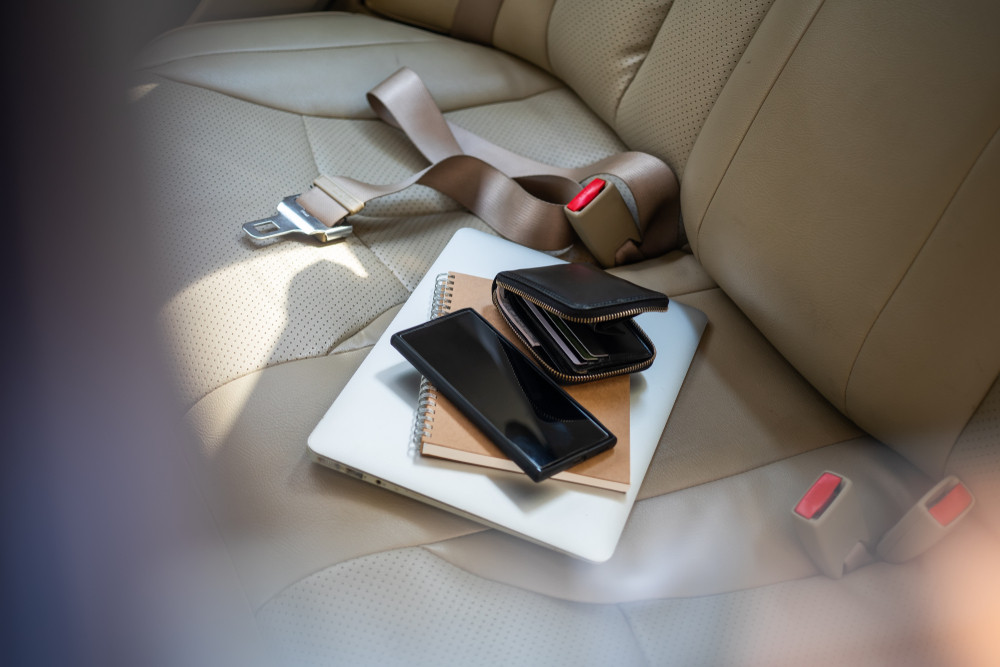
High summer temperatures make your car’s interior dangerously hot, reaching 60-70°C in direct sun. This extreme heat transforms everyday items into potential hazards that can explode, catch fire, or release toxic fumes. Knowing what never to leave in your car protects your vehicle, your health, and your safety.
Never leave batteries, air fresheners, perfume bottles, spray cans, electronic devices, sunglasses, matches, lighters, medication, or perishable food in hot cars. These items can explode, melt, shatter, or become toxic. Remove all dangerous items before parking, especially in direct sunlight. Store essentials in cool bags or take them with you. Check your car regularly before leaving.
Batteries: Explosion and Fire Risk
Never leave batteries for phones or cars in your car as they can explode or catch fire. This is one of the most dangerous items to leave in hot weather.
Why Batteries Are Dangerous
Batteries contain lithium and other reactive chemicals that become unstable at high temperatures. When interior temperatures reach 60°C+, battery chemistry destabilises, causing:
- Internal pressure buildup – gases expand inside the battery casing
- Chemical reactions – reactive materials ignite spontaneously
- Thermal runaway – heat from one part triggers neighbouring parts, creating escalating heat
- Explosion – pressurised casing bursts violently
- Fire – burning lithium spreads rapidly and is difficult to extinguish
Which Batteries Are Most Dangerous
- Phone batteries – small but highly reactive lithium cells
- Laptop batteries – larger capacity, more dangerous when failing
- Car batteries – contain acid that can leak and corrode
- Power bank batteries – designed for high output, very unstable when hot
- Camera batteries – similar risks to phone batteries
- Wireless device batteries – earbuds, speakers, all contain reactive cells
What Happens When Batteries Fail
A failing battery first shows signs of:
- Swelling or deformation
- Hissing or clicking sounds
- Heat emitted from the battery
- Smoke or strange odours
These warnings come too late – the battery is already failing catastrophically. Remove batteries immediately if you notice any signs.
Safe Battery Storage
- Take batteries with you when leaving the car
- Store in cool bags if you must leave them temporarily
- Keep in original packaging to prevent contact with metal objects
- Dispose properly – don’t leave old batteries in the car
Air Fresheners: Melting and Toxic Fumes
Air fresheners have plastic containers that can melt and release toxic fumes in hot cars. This is a common item that drivers dangerously overlook.
Why Air Fresheners Are Dangerous
Most air fresheners use plastic containers that soften at 50-60°C. When melted, they release:
- Chemical vapours – synthetic fragrance compounds become toxic when heated
- Plastic fumes – melting plastic releases harmful chemicals
- Righting liquids – fragrance oils can ignite at extreme temperatures
- Residue – melted plastic sticks to surfaces, difficult to clean
Types of Air Fresheners Most Dangerous
- Clip-on vent fresheners – plastic melts and drips onto vents
- Hanging card fresheners – cardboard burns, plastic melts
- Bottle fresheners – liquid boils, container explodes
- Spray fresheners – pressurised canisters explode
- Gel fresheners – gel melts and spreads toxic residue
What Happens When Air Fresheners Melt
Melting air fresheners create:
- Sticky residue on dashboard and vents
- Toxic fumes filling the cabin
- Potential fire if liquids contact hot surfaces
- Permanent damage to interior surfaces
Safe Air Freshener Use
- Remove before parking – take with you every time
- Use natural alternatives – bamboo chips or activated charcoal
- Choose heat-stable products – some brands market heat-resistant options
- Never leave plugged-in fresheners – electrical + heat = extreme danger
Perfume Bottles: Shattering and Flammability
Perfume bottles have glass that can shatter and liquid that is flammable in hot cars. This creates both physical injury risk and fire hazard.
Why Perfume Bottles Are Dangerous
Glass perfume bottles face two threats:
Thermal shattering – glass expands when heated. If one part heats faster than another (like when sunlight hits one side), the uneven expansion causes the glass to crack and shatter violently.
Flammable liquid – perfume contains alcohol and other volatile compounds that ignite at relatively low temperatures. When glass shatters, flammable liquid spreads across hot surfaces.
What Happens When Perfume Bottles Fail
- Glass shatters – sharp fragments fly across the cabin
- Liquid spills – flammable perfume spreads everywhere
- Ignition risk – perfume can ignite on hot dashboard or vents
- Toxic fumes – burning perfume releases harmful chemicals
- Permanent staining – perfume damages upholstery and surfaces
Safe Perfume Storage
- Take perfume with you – never leave in parked car
- Use travel-sized bottles – smaller volumes less dangerous
- Store in cool bags – insulated bags reduce temperature
- Choose alcohol-free products – less flammable options available
Spray Cans: Explosion Under Pressure
Spray cans build up pressure causing explosion in hot cars. This includes hairspray, deodorant, cleaning sprays, and any pressurised container.
Why Spray Cans Are Dangerous
Pressurised cans contain gas under high pressure. When temperature rises:
- Gas expands – pressure inside the can increases dramatically
- Seal weakens – heat softens the seal holding pressure
- Explosion occurs – when pressure exceeds container strength, it bursts violently
- Contents spray – explosive force releases all contents instantly
- Fire risk – many spray contents are flammable
Types of Spray Cans Most Dangerous
- Hairspray – highly flammable, explodes violently
- Deodorant spray – pressurised, flammable contents
- Cleaning sprays – chemicals can be toxic when released
- Paint sprays – extremely flammable, toxic fumes
- Air freshener sprays – pressurised fragrance, flammable
- Food sprays – oil-based, fire hazard
What Happens When Spray Cans Explode
Explosions create:
- Violent burst sending metal fragments flying
- All contents sprayed across the entire cabin
- Potential fire if contents are flammable
- Toxic fumes from burning chemicals
- Permanent staining and damage
Safe Spray Can Storage
- Never leave spray cans in car – take them with you
- Store in cool places – home closets, not cars
- Check expiry dates – older cans more likely to fail
- Dispose properly – don’t keep old pressurised cans
Electronic Devices: Overheating and Damage
Electronic devices like phones, laptops, and tablets can overheat and damage in hot cars. This is both a financial loss and safety risk.
Why Electronic Devices Are Dangerous
Electronic devices face multiple threats:
Battery overheating – as discussed with batteries, the batteries inside devices are extremely dangerous when hot.
Component damage – heat damages electronic components, causing permanent failure.
Screen damage – LCD screens crack or warp at high temperatures.
Data loss – heat can corrupt storage, losing important data.
Fire risk – failing electronics can ignite.
Which Devices Are Most Vulnerable
- Smartphones – small, battery-heavy, very vulnerable
- Laptops – large batteries, complex electronics
- Tablets – similar to phones, larger batteries
- Cameras – sensitive electronics, batteries
- GPS devices – electronics + batteries
- Portable speakers – batteries + electronics
- Power banks – pure battery danger
What Happens When Devices Overheat
Overheating causes:
- Screen cracking or warping
- Battery swelling or failure
- Component burnout
- Data corruption
- Complete device failure
- Potential fire
Safe Electronic Device Storage
- Take devices with you – never leave in parked car
- Use cool bags – insulated bags protect temporarily
- Remove batteries – if possible, remove from devices
- Store in shade – if temporarily leaving, park in shade
Sunglasses: Warping and Damage
Sunglasses have plastic frames that can warp in hot cars. While not dangerous, this is expensive damage to avoid.
Why Sunglasses Are Damaged
Plastic frames soften at 50-60°C. When warped:
- Frames lose shape – don’t fit properly anymore
- Lens damage – coatings crack or peel
- Hinge failure – hinges break or become loose
- Permanent deformation – won’t return to original shape
Types of Sunglasses Most Vulnerable
- Plastic frame sunglasses – most common, very vulnerable
- Sports sunglasses – expensive, easily damaged
- Designer sunglasses – costly to replace
- Polarised sunglasses – special coatings damaged by heat
Safe Sunglasses Storage
- Use sunglasses cases – hard cases protect from heat
- Store in dashboard holders – better than loose on seats
- Take with you – best option is removing when leaving
- Choose metal frames – metal doesn’t warp like plastic
Matches and Lighters: Extreme Fire Hazard
Matches and lighters are highly flammable and can ignite in hot cars. This is one of the most dangerous items to leave.
Why Matches and Lighters Are Dangerous
Lighters contain pressurised gas that expands and can explode when hot. The gas is highly flammable methane or propane.
Matches contain combustible material that can ignite spontaneously at high temperatures.
Both create immediate fire hazards when exposed to 60°C+ interior temperatures.
What Happens When Lighters Ignite
- Gas explodes – pressurised gas bursts violently
- Fire starts – ignited gas creates flames
- Fire spreads – flames ignite nearby materials
- Car burns – entire vehicle can be destroyed
What Happens When Matches Ignite
- Matches ignite – combustible material burns
- Fire spreads – flames spread to nearby materials
- Car burns – potential complete vehicle destruction
Safe Matches and Lighters Storage
- Never leave in car – take with you always
- Store in cool places – home, not vehicles
- Dispose properly – don’t keep old matches
- Use electric alternatives – electric lighters safer than fuel
Medication: Loss of Effectiveness
Medication has heat that destroys effectiveness in hot cars. This isn’t a fire risk but a health risk.
Why Medication Is Damaged
Heat breaks down chemical compounds in medication:
- Active ingredients degrade – medicine loses potency
- Chemical changes – compounds transform into ineffective forms
- Capsule melting – some medications melt and become unusable
- Liquid separation – liquid medications separate and become ineffective
Which Medications Are Most Vulnerable
- Pills and capsules – most common, very vulnerable
- Liquid medications – separate and become ineffective
- Injections – temperature-sensitive, dangerous if degraded
- Insulin – extremely temperature-sensitive
- Heart medication – potency critical for safety
- Antibiotics – degrade quickly in heat
- Painkillers – lose effectiveness
What Happens When Medication Degradates
Degradated medication:
- Doesn’t work when you need it
- Could cause unexpected reactions
- Wastes money on失效 medication
- Creates health risks if you rely on ineffective medicine
Safe Medication Storage
- Take medication with you – never leave in car
- Use cool bags – insulated bags protect temporarily
- Check storage instructions – some require specific temperatures
- Replace expired medication – don’t use degraded medicine
Perishable Food: Rapid Spoilage
Perishable food items spoil quickly in hot cars. This creates health risks and unpleasant odours.
Why Food Spoils in Hot Cars
High temperatures accelerate bacterial growth:
- Bacteria multiply rapidly – 60°C is ideal for many bacteria
- Foodrots quickly – perishable items spoil within hours
- Toxins form – bacteria produce harmful toxins
- Odours develop – rotting food creates unpleasant smells
- Health risk – eating spoiled food causes illness
Which Foods Are Most Vulnerable
- Meat and poultry – spoil fastest, dangerous bacteria
- Dairy products – milk, cheese, yogurt spoil quickly
- Eggs – can hatch bacteria rapidly
- Fresh fruit and vegetables – rot and mould
- Prepared meals – contain multiple spoilable ingredients
- Bread and baked goods – mould grows rapidly
- Snacks with fat – oils separate and spoil
What Happens When Food Spoils
Spoiled food creates:
- Unpleasant odours throughout the cabin
- Health risk if consumed
- Difficulty cleaning residue
- Permanent staining
- Bacterial contamination
Safe Food Storage
- Take food with you – never leave in parked car
- Use cool bags – insulated bags keep food cool temporarily
- Choose non-perishable snacks – nuts, dried fruit, crackers
- Eat before leaving – don’t bring food you won’t consume
Summary: Items to Never Leave in Hot Cars
| Item | Primary Risk | Action |
|---|---|---|
| Batteries | Explosion, fire | Take with you |
| Air fresheners | Melting, toxic fumes | Remove before parking |
| Perfume bottles | Shattering, flammability | Take with you |
| Spray cans | Explosion under pressure | Never leave in car |
| Electronic devices | Overheating, damage | Take with you |
| Sunglasses | Frame warping | Use case or take with you |
| Matches/lighters | Extreme fire hazard | Never leave in car |
| Medication | Loss of effectiveness | Take with you |
| Perishable food | Rapid spoilage | Eat or use cool bag |
Emergency Steps If You Leave Dangerous Items
If you realise you’ve left dangerous items in your car:
- Return immediately – don’t wait
- Remove items carefully – don’t touch if hot or damaged
- Check for signs of failure – swelling, hissing, smell
- Dispose properly – damaged items need special disposal
- Inspect car – check for residue, damage, or odours
- Clean if necessary – remove any contamination
In my experience, most drivers underestimate how dangerous common items become in hot cars. The interior temperature reaching 70°C transforms everyday objects into hazards. A simple phone battery can explode, a familiar air freshener can melt toxic fumes, and a perfume bottle can shatter flammable liquid.
From my point of view, the most important habit is checking your car before leaving – a quick scan ensures you’ve removed dangerous items. This 30-second check prevents catastrophic damage.
I would recommend creating a checklist of items to remove: batteries, electronics, spray cans, perfume, lighters, medication, and food. Keep this checklist visible and follow it every time you park.
For UK drivers, summer temperatures regularly reach 35°C+, making interior temperatures 60-70°C. These extreme temperatures make dangerous items even more hazardous. Removing dangerous items before parking is essential, not optional, for safety. For vehicle safety information, visit gov.uk. For fire safety guidelines, check local fire service resources.





