
Auto Express has separately reviewed three electric cars occupying very different parts of the UK market. The 2026 Nissan Leaf and new BMW i3 both receive 5.0 stars, while the Porsche Macan Electric scores 4.5. Their listed UK prices range from £32,589 to £99,945, so the right choice depends as much on budget and priorities as on headline range. You can read the individual tests in the Nissan Leaf review, BMW i3 review and Porsche Macan Electric review.
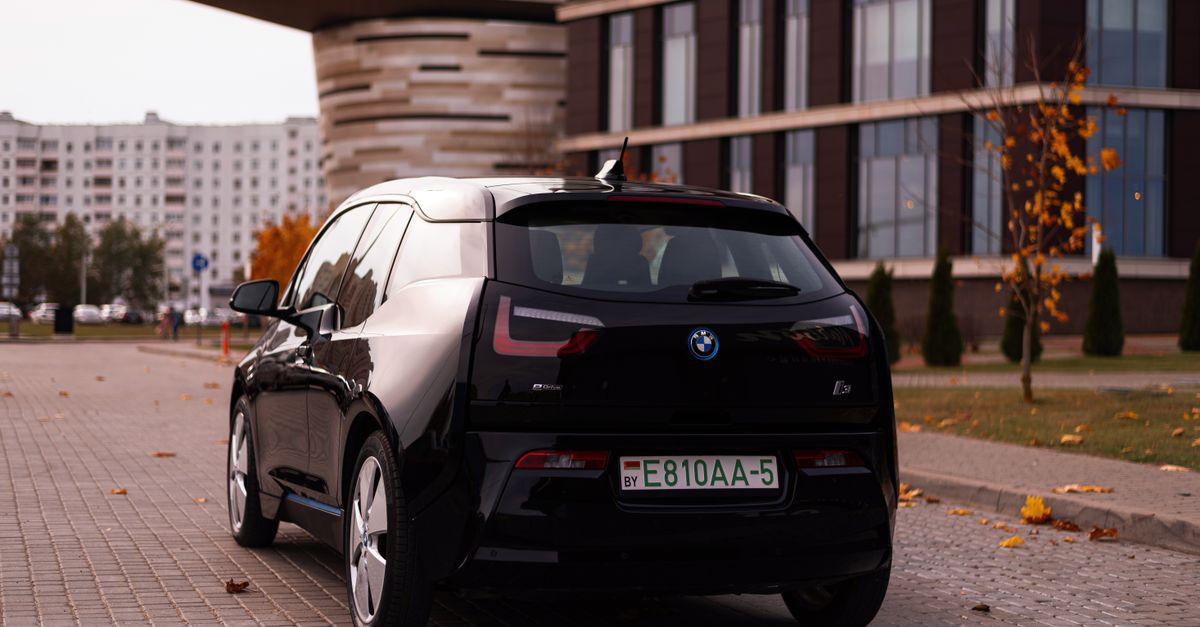
There is an important caveat: this is not a published three-way Auto Express group test. It is a buyer-focused comparison of separate reviews. The BMW in question is also the new 2026 electric saloon, not the discontinued 2013–2022 city car that shared the i3 name.
At a glance
All prices and scores below are those listed by Auto Express. Range figures are maximum WLTP estimates, not real-world test results.
| Model | Auto Express editorial rating | UK price listed | Maximum listed WLTP range |
|---|---|---|---|
| 2026 Nissan Leaf | 5.0 stars; 2026 Car of the Year | £32,589–£39,989 | 271 miles to 386 miles, depending on battery and version |
| BMW i3 | 5.0 stars | From £47,975; £54,925 for the tested i3 50 xDrive | 436 miles for the i3 40 xDrive; 566 miles for the i3 50 xDrive |
| Porsche Macan Electric | 4.5 stars | £70,445–£99,945 | Up to 398 miles for the entry-level single-motor version |
Nissan Leaf: the value-led choice
On the listed figures, the Leaf is the most accessible car here. Auto Express gives it a UK RRP range of £32,589 to £39,989 and names it its 2026 Car of the Year. The review praises its comfort, efficiency and equipment, making it the obvious starting point for buyers who want an electric car without moving into premium-car pricing.
The Leaf is available with 52kWh and 75kWh batteries. Auto Express lists the 52kWh Engage at 271 miles WLTP and the 75kWh Engage at up to 386 miles WLTP. Maximum DC charging is listed as 105kW and 150kW respectively. Those figures should be read as different battery and version combinations, rather than a single range figure applying to every Leaf.
The compromise is practicality and charging speed. Auto Express says the Leaf’s sloping roof restricts practicality and that its charging performance trails some rivals. In buyer terms, that points towards a value-focused family or commuting role, provided the available boot and rear-seat space work for your needs. That is an editorial interpretation of the review, not a Nissan claim.
BMW i3: the long-range executive option
The new i3 sits much higher in the price range, with UK pricing starting at £47,975 for the i3 40 xDrive. Auto Express’s tested i3 50 xDrive is listed at £54,925. The publication positions the car as an electric executive saloon with driving characteristics similar to a BMW 3 Series.
Its range figures are the strongest of the three cars covered here. The i3 40 xDrive is listed at up to 436 miles WLTP, while the i3 50 xDrive can reach up to 566 miles WLTP. The latter uses a 112kWh battery, supports charging at up to 400kW and has a claimed 10–80% charging time of 21 minutes.
Auto Express highlights the i3’s handling, equipment and range. However, it identifies rear passenger space and the 420-litre boot as weaknesses. That creates a clear choice: the BMW is the most convincing option for a buyer prioritising executive-car dynamics and long-distance capability, but anyone regularly carrying adults or bulky luggage should check the rear accommodation in person.
The Macan Electric is in a different financial category, with Auto Express listing a UK RRP range of £70,445 to £99,945. Its appeal is less about value and more about performance, premium interior quality and SUV practicality.
The entry-level single-motor model has a claimed WLTP range of up to 398 miles. Auto Express reports peak DC charging of 270kW and a claimed 10–80% charging time of 21 minutes. As with the BMW, those are maximum or claimed figures rather than a promise of identical results at every public charger.
The Porsche is the most useful of the three on the published luggage figures. It offers 540 litres of boot space, reducing to 480 litres in GTS and Turbo versions, plus an 84-litre front luggage compartment. With the tow bar fitted, it can tow up to 2,000kg.
Auto Express praises the Macan’s driving ability, charging performance and interior quality. Its criticisms are the high purchase price, expensive options and limited rear-seat space. It therefore suits buyers who specifically want a premium electric SUV and are prepared to pay for it, rather than shoppers comparing running costs and initial price alone.
Which one suits your needs?
- Choose the Nissan Leaf if the lowest purchase price matters most, its comfort and equipment appeal, and a WLTP range of 271 or 386 miles is suitable for your driving. Be realistic about the sloping roof and charging capability.
- Choose the BMW i3 if you want an executive saloon with the longest listed range and the highest stated charging ceiling in this comparison. The trade-offs are a much higher price than the Leaf and less impressive rear-seat and boot practicality.
- Choose the Porsche Macan Electric if premium quality, performance, SUV packaging, fast charging and towing matter more than purchase cost. Its price and options make it difficult to justify as a purely rational value choice.
Verdict
The Leaf and BMW i3 share Auto Express’s 5.0-star editorial rating, but they win over different buyers. The Leaf is the sensible value option, the i3 is the long-range executive choice, and the Macan Electric is the premium performance SUV for buyers with a substantially larger budget.
None is a universal winner. The range numbers come from different versions, the prices are far apart and all the quoted distances are WLTP estimates. The best fit is therefore determined by how much you can spend, how much rear-seat and luggage space you need, and whether low cost, long-distance ability or premium SUV performance is your priority.





