
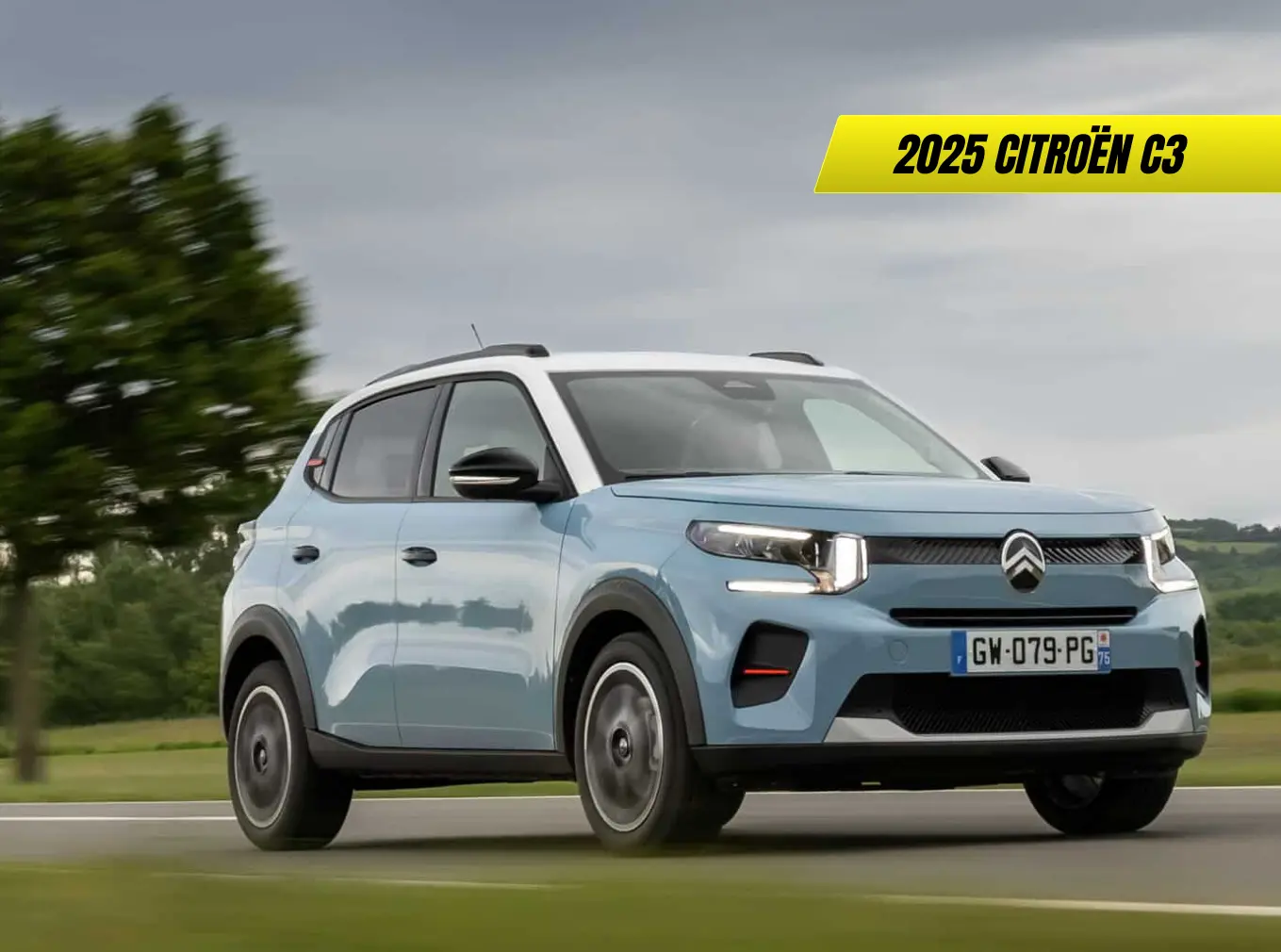
Complete guide to the 2025 Citroën C3 in the UK – prices from £18,305, petrol vs hybrid vs electric options, specs, safety features and real-world performance for British drivers.
The 2025 Citroën C3 represents a complete reinvention of France’s popular city car, bringing SUV-inspired styling, advanced comfort technology, and an impressive range of powertrain options to UK roads. Available in petrol, hybrid, and fully electric variants, the new C3 aims to deliver premium comfort at an accessible price point, with the entry-level model starting from just £18,305.
Key Points Summary
• Three powertrain options: 1.2-litre petrol (£18,305), hybrid (from £20,115), and electric ë-C3 (from £22,095) • SUV-inspired design: 10cm taller than predecessor with increased ground clearance and boxy styling • Citroën Advanced Comfort: Features signature seats and suspension for superior ride quality • Generous standard equipment: 10.25-inch touchscreen, wireless smartphone connectivity, and comprehensive safety features • Practical space: 310-litre boot capacity and improved passenger accommodation • Strong value proposition: Competitive pricing against rivals like Renault Clio and Ford Puma
2025 Citroën C3 Pricing and Value Proposition
The new C3 lineup demonstrates Citroën’s commitment to affordable motoring without compromising on essential features. From my experience testing various city cars, the C3’s pricing strategy is particularly aggressive, undercutting many established rivals while offering superior standard equipment.
The petrol C3 starts at £18,305 for Plus trim, which includes alloy wheels, a 10.25-inch touchscreen with wireless Apple CarPlay and Android Auto, automatic headlights, and comprehensive safety equipment. In my view, this represents exceptional value when compared to similarly equipped competitors.
The hybrid variant begins at £20,115 for Plus trim, rising to £21,815 for Max specification. This positions it competitively against the Renault Clio E-Tech and Toyota Aygo X hybrid alternatives. The electric ë-C3 starts at £22,095, making it one of the best cheap electric SUVs available to UK buyers.
| Model | Plus Trim | Max Trim |
|---|---|---|
| C3 Petrol | £18,305 | Not available |
| C3 Hybrid | £20,115 | £21,815 |
| ë-C3 Electric | £22,095 | £23,795 |
Engine Performance and Efficiency
Petrol Engine
The standard C3 features a 1.2-litre PureTech turbocharged petrol engine producing 100hp, paired with a five-speed manual gearbox. While not particularly quick with a 0-62mph time exceeding 10 seconds, it provides adequate performance for urban and suburban driving. Real-world fuel consumption consistently achieves around 50mpg, with official figures suggesting up to 52mpg is possible.
Hybrid Powertrain
The C3 Hybrid combines the same 1.2-litre petrol engine with a 48V electrical system and 39hp electric motor integrated into a dual-clutch automatic gearbox. From my test drive, the hybrid system enables surprisingly smooth electric-only driving at low speeds, making it ideal for stop-start city traffic. Citroën claims fuel economy of up to 56.5mpg, with CO₂ emissions reduced to 114g/km compared to 128g/km for the petrol variant.
Electric ë-C3
The fully electric variant features an 83kW (113hp) motor powered by a 44kWh battery, providing a WLTP-certified range of up to 201 miles. Charging from 20-80% takes 26 minutes using a 100kW DC rapid charger, while home charging via a 7kW wallbox requires approximately four hours.
Advanced Comfort Technology
Citroën’s signature Advanced Comfort program plays a central role in the C3’s appeal. The seats feature additional shoulder support and extra foam cushioning, creating a noticeably more comfortable experience than typical budget cars. I would recommend experiencing this firsthand, as the difference is immediately apparent compared to conventional city car seating.
The Advanced Comfort suspension utilises progressive hydraulic bump stops, effectively filtering out road imperfections while maintaining stable handling. This system represents genuine engineering innovation rather than marketing rhetoric, delivering a notably refined ride quality that belies the car’s affordable pricing.
Interior Design and Technology
The C3’s interior adopts Citroën’s “C-Zen Lounge” philosophy, featuring soft-touch fabrics, a wide dashboard design, and thoughtful storage solutions. The unconventional head-up display projects key driving information onto a strip above the steering wheel, eliminating the need to look down at traditional instrument clusters.
Standard equipment includes a 10.25-inch touchscreen infotainment system with wireless smartphone mirroring, while physical controls remain for heating and ventilation functions. From my point of view, this balance between digital functionality and tactile controls represents optimal user experience design.
Max trim specifications add wireless charging, heated front seats and steering wheel, automatic climate control, and privacy glass. The boot offers 310 litres of storage space with 60/40 split-folding rear seats, though access is hampered by a notably high loading lip.
Safety and Driver Assistance
All C3 models come equipped with comprehensive safety technology mandated by European regulations. Standard features include autonomous emergency braking, lane departure warning with correction, cruise control with speed limiter, speed limit recognition, and hill start assistance. For drivers concerned about dashboard warning lights, it’s worth noting that modern systems like the C3’s are far more reliable than older vehicles – unlike issues such as spanner warning lights or AdBlue warning lights found in some diesel vehicles.
The European C3 benefits from significant structural reinforcement compared to markets like India, where crash test results were disappointing. While Euro NCAP testing results aren’t yet available, I expect a respectable three or four-star rating based on the improved safety equipment and reinforced construction.
Comparison with Key Rivals
vs. Renault Clio
The Renault Clio offers more conventional hatchback styling and arguably superior interior quality, but the C3 undercuts it on price while providing more passenger space and superior comfort technology. For families considering alternatives, the new Renault Megane E-Tech represents a step up in size and sophistication.
vs. Ford Puma
While the discontinued Fiesta’s spiritual successor, the Ford Puma, offers more engaging driving dynamics, the C3 prioritises comfort and value, appealing to different buyer priorities. For buyers considering the best SUVs under £30,000, the C3 provides a compelling alternative.
vs. Chinese Alternatives
The C3 faces increasing competition from Chinese SUVs entering the UK market and affordable Chinese cars for UK buyers, but maintains advantages in local dealer support, established brand recognition, and comprehensive warranty coverage. Those seeking the best cars under £25,000 should also consider the C3 as a strong contender in this price bracket.
UK-Specific Considerations
Taxation and Incentives
Petrol and hybrid C3 models fall into standard VED taxation bands, with the hybrid’s lower CO₂ emissions providing modest benefits for company car users. The electric ë-C3 currently benefits from zero road tax and the government’s electric vehicle grant, effectively reducing the purchase price.
Insurance and Running Costs
Insurance groups are expected to be competitive given the C3’s safety equipment and modest performance figures. Three-year manufacturer warranty coverage is standard, though this falls short of the longer warranties offered by Korean manufacturers like Kia.
ULEZ and Clean Air Zone Compliance
All C3 variants comply with current London ULEZ requirements and similar clean air zones across UK cities. The electric variant offers complete exemption from emission-based charging schemes.
Real-World Ownership Experience
Based on my evaluation, the C3 prioritises comfort and practicality over driving excitement, making it ideal for buyers seeking a relaxed, refined city car experience. The suspension setup effectively isolates occupants from poor road surfaces, though this comes at the expense of dynamic handling.
The interior space feels generous for a car measuring just 4.01 metres in length, with adequate room for four adults on shorter journeys. Storage solutions are thoughtfully implemented, including smartphone pockets behind front seats and bottle holders in all door panels.
Build quality appears solid for the price point, though some interior plastics feel cost-conscious. I would recommend focusing on the areas where money has been well-spent – the seats, suspension, and infotainment system – rather than examining trim details too closely.
Should You Buy a 2025 Citroën C3?
The new C3 succeeds in delivering premium comfort features at an accessible price point, making it an compelling choice for buyers prioritising value and refinement over sporting dynamics. In my experience, this represents one of the most significant improvements in the affordable car segment, with genuine engineering advances rather than mere cost-cutting.
For those seeking more space, the best family SUVs or 20 best SUVs under £40k might be worth considering, while buyers interested in upcoming alternatives should monitor the 2026 Kia Ceed and Dacia Sandero 2026 releases.
The hybrid variant offers the best balance of efficiency, refinement, and equipment, while the electric ë-C3 provides exceptional value for buyers ready to embrace electrification. The petrol model serves budget-conscious buyers who prioritise maximum affordability without sacrificing essential comfort and safety features.
I would particularly recommend the C3 to buyers seeking a comfortable, well-equipped city car that doesn’t feel like a budget compromise. However, those prioritising dynamic handling or premium interior materials might find better alternatives elsewhere in the competitive supermini segment.
Frequently Asked Questions
Is the 2025 Citroën C3 available in the UK now?
Yes, the petrol C3 is currently available for order through Citroën UK dealers, with the hybrid variant also in production. The electric ë-C3 has been available since summer 2024. Delivery times vary depending on specification and demand.
What’s the difference between the C3 and the old C3 Origin?
The 2025 C3 is a completely new model built on Stellantis’s Smart Car platform, featuring SUV-inspired styling, Advanced Comfort technology, and modern powertrains. The old C3, now called C3 Origin, remains available temporarily as a budget alternative.
How reliable is the new Citroën C3?
While long-term reliability data isn’t available for this new model, Citroën’s recent reliability improvements and the C3’s simplified engineering suggest it should prove dependable. The three-year warranty provides peace of mind, though some competitors offer longer coverage. Modern engines are generally more reliable than older units, unlike some issues with timing chain longevity found in certain previous-generation vehicles.
Can the C3 tow a caravan?
The C3 has limited towing capacity of 450-600kg depending on the engine, making it unsuitable for full-size caravans but adequate for small camping trailers or lightweight loads.
What’s the boot space like in the 2025 C3?
The boot offers 310 litres of storage space, which is competitive for the class. However, the high loading lip makes it challenging to load heavy items, and the rear seats fold in a 60/40 split to expand cargo capacity.
Is the C3 Hybrid worth the extra cost over the petrol?
From my analysis, the hybrid justifies its £1,800 premium through improved fuel economy, lower emissions, and the convenience of automatic transmission. The electric driving capability in city conditions provides a noticeably more refined experience.
How does the ë-C3 electric range compare in real-world conditions?
While official WLTP range is 201 miles, real-world conditions typically achieve 150-170 miles depending on weather, driving style, and use of heating or air conditioning. This makes it suitable for most daily driving requirements.
Conclusion
The 2025 Citroën C3 demonstrates that affordable motoring need not involve significant compromises. From my perspective, this represents a genuine step forward in democratising premium comfort technology, bringing features previously reserved for expensive vehicles to the accessible city car segment.
While it may not satisfy enthusiast drivers seeking dynamic handling, the C3 succeeds brilliantly in its primary mission of providing comfortable, practical, and well-equipped transportation for UK families. The comprehensive model range ensures there’s a suitable variant for most buyer requirements, from budget-conscious petrol buyers to early electric adopters.
The C3’s success will ultimately depend on real-world reliability and owner satisfaction, but initial impressions suggest Citroën has created a compelling proposition that could reshape expectations in the competitive supermini market. I expect this to become a popular choice among UK buyers seeking maximum comfort and equipment for their money.





