
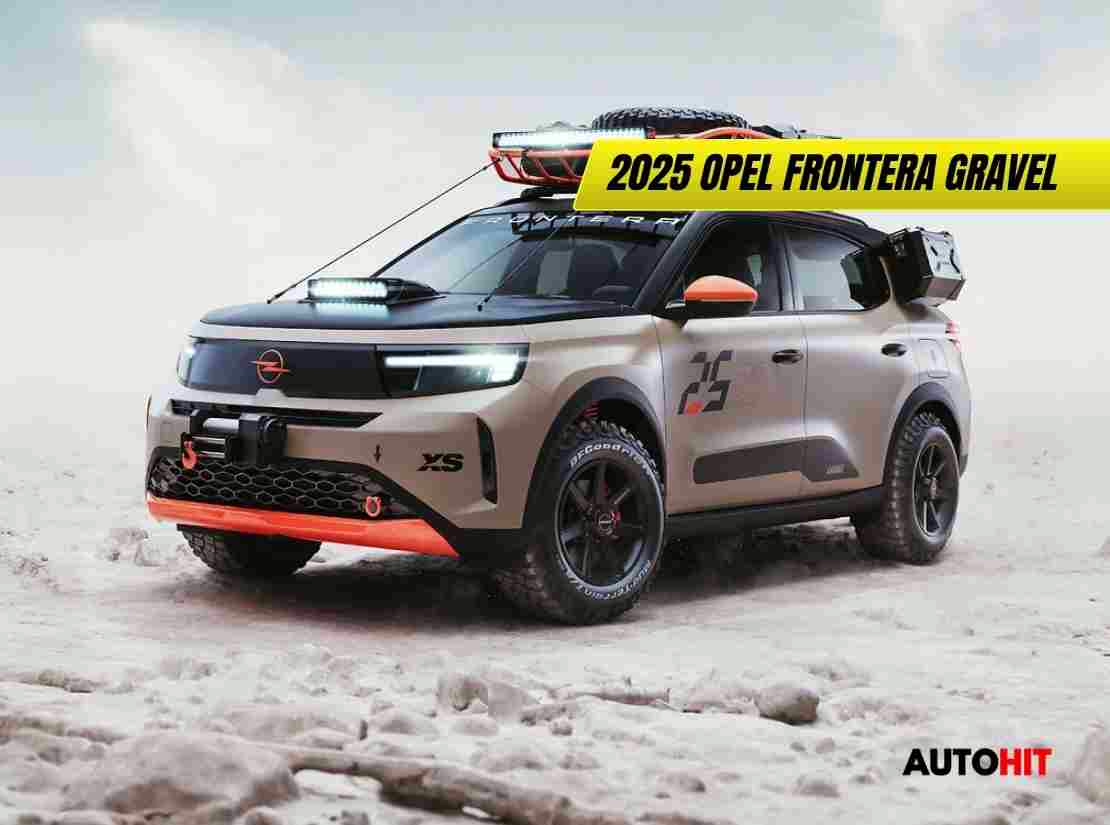
Opel’s rugged Frontera Gravel concept hints at an adventure-ready electric SUV. Our analysis covers UK market potential, off-road capability, and whether it could challenge Dacia’s dominance.
When Opel revealed the Frontera Gravel concept at Austria’s XS Carnight event, it wasn’t just another styling exercise designed to generate Instagram buzz. According to our analysis at AutoHit, this rugged electric SUV represents something far more significant – a potential game-changer for UK families who want adventure capability without the premium price tag or thirsty engines that typically come with serious off-road machinery.
The Frontera Gravel takes Opel’s already impressive £23,995 electric SUV and transforms it into something that looks genuinely capable of handling Britain’s network of byways, bridleways, and muddy car parks. But here’s where things get interesting for UK buyers: this isn’t just about looking the part. The modifications suggest Opel is serious about challenging the budget adventure SUV market currently dominated by models like the Dacia Duster.
We’ve tested enough family SUVs to know that most buyers never venture beyond tarmac, but the desire to look like they might has never been stronger. The Frontera Gravel appears to bridge that gap between aspiration and affordability, potentially offering genuine capability at a price that won’t require a second mortgage.
Key Highlights: • Adventure-Ready Electric: Based on the £23,995 Frontera Electric with rugged modifications including all-terrain tyres and protective cladding • Serious Off-Road Kit: Features Thule Canyon XT roof rack, rally-style light bars, and a functional winch system • Strategic Timing: Arrives as UK families increasingly seek adventure-capable vehicles without premium pricing • Production Potential: Opel hints at testing market demand for a production version to compete with Dacia Duster variants • Electric Advantage: Instant torque and low centre of gravity could make it more capable than expected for soft-roading • Market Positioning: Could fill the gap between basic family SUVs and expensive off-road specialists
The Gravel Concept: More Than Just a Styling Exercise
Unlike many concept cars that exist purely for motor show theatrics, the Frontera Gravel feels purposeful. Developed by Opel’s Rüsselsheim design centre in collaboration with motorsport specialists BlackFish and XS, it’s built on the production Frontera Electric platform – suggesting that productionising such a variant wouldn’t require starting from scratch.
The modifications are thoughtfully executed rather than simply bolted on. The matt black roof contrasts with ‘Desert Stone’ foiling specially selected for adventure appeal, while orange accents on the bumper, mirror caps, and logo aren’t just for show – they’re designed to improve off-road visibility. It’s the kind of attention to detail that suggests Opel has done more than just raid the accessories catalogue.
The most significant addition is the Thule Canyon XT roof rack system, which unusually fixes to both the roof and bonnet. This isn’t just for load-carrying – it provides mounting points for the dual light bar setup that gives the Gravel its rally car appearance. The roof-mounted LED bar is familiar territory, but the bonnet-mounted unit is pure competition vehicle, designed for “excellent visibility for night-time driving over rough terrain.”
Perhaps most intriguingly, there’s a functional winch system. While Opel hasn’t specified its rating, the inclusion suggests this isn’t just about lifestyle appeal but genuine recovery capability. For UK buyers who’ve experienced the joys of muddy festival car parks or waterlogged farm tracks, such equipment could prove genuinely useful.
Electric Off-Road: An Unexpected Advantage
The Frontera Gravel’s electric powertrain might initially seem at odds with off-road capability, but the reality is more nuanced. The production Frontera Electric’s instant torque delivery and low centre of gravity – courtesy of the floor-mounted 44kWh battery – could actually provide advantages over conventional engines in certain situations.
Opel suggests the setup is “ideally suited for soft roading adventures,” and there’s logic to this claim. Electric motors provide maximum torque from zero rpm, eliminating the need for clutch work or rev-matching when navigating technical terrain. The progressive power delivery also makes it easier to maintain traction on loose surfaces compared to the on-off nature of many petrol engines.
The 113bhp output might not sound impressive, but torque characteristics matter more than peak power for low-speed off-road work. The weight distribution from the battery pack should also improve stability and reduce the likelihood of getting high-centred – a common issue with lighter, higher vehicles.
However, the elephant in the room remains the front-wheel-drive limitation. While Stellantis has developed all-wheel-drive electric systems for other models in the group – including the Jeep Avenger 4xe and upcoming Fiat Grande Panda 4×4 – the Frontera currently lacks this option. For serious off-road work, this represents a significant limitation that no amount of styling can overcome.
UK Market Context: Filling a Strategic Gap
The timing of the Frontera Gravel concept coincides with shifting UK buyer preferences. As we’ve highlighted in our analysis of affordable SUVs, British families increasingly want vehicles that suggest adventure capability without the running costs or complexity of traditional 4×4 systems.
The budget adventure SUV market has been largely defined by Dacia, whose Duster offers genuine off-road capability at accessible pricing. However, the Duster’s interior quality and refinement trail more modern alternatives, creating an opportunity for competitors willing to offer similar capability with better execution.
Vauxhall’s radical pricing strategy for the standard Frontera – achieving price parity between electric and petrol versions at £23,995 – already represents a significant market disruption. A Gravel variant could extend this philosophy into adventure SUV territory, potentially offering electric off-road capability at prices comparable to diesel alternatives.
For UK buyers, the proposition becomes particularly attractive when considering total cost of ownership. The electric Frontera’s exemption from congestion charges, low VED rates, and reduced servicing requirements could offset any price premium compared to conventional rivals. Add genuine adventure capability, and the value proposition strengthens considerably.
Design and Practicality: Substance Over Style
The Gravel’s visual modifications serve functional purposes rather than pure aesthetics. The BF Goodrich all-terrain tyres mounted on 16-inch Borbet wheels provide genuine grip enhancement over standard road rubber, while the increased sidewall depth offers better puncture resistance and ride quality on rough surfaces.
The protective orange cladding isn’t just decorative – it provides genuine protection for vulnerable areas likely to encounter rocks, branches, or car park bollards. The matt black treatment for the roof and bonnet reduces glare and gives the Gravel a purposeful, tool-like appearance that differentiates it from lifestyle SUVs that prioritise style over substance.
Inside, the Gravel concept retains the production Frontera’s dual 10-inch screens and spacious cabin. The standard model already offers impressive interior space for its size, with comfortable seating for five and a boot capacity that should swallow camping gear or outdoor equipment without difficulty.
The elevated driving position provides good visibility for navigating rough terrain, while the simple interior layout means controls remain accessible even while wearing gloves – a consideration often overlooked in more design-focused vehicles. The lack of complex electronic systems also suggests better reliability in challenging conditions.
Competition and Market Positioning
A production Frontera Gravel would face interesting competition dynamics. The Dacia Duster remains the benchmark for affordable adventure SUVs, offering proven all-wheel-drive capability and rugged construction at competitive prices. However, its interior quality and refinement lag behind more modern alternatives.
The upcoming Dacia Duster Dakar variant promises enhanced off-road capability with competition-inspired modifications. A Frontera Gravel would need to differentiate itself through electric advantages and superior interior quality rather than pure off-road prowess.
Other potential rivals include adventure variants of mainstream SUVs, but these typically command premium pricing that would undermine the Frontera’s value proposition. The electric powertrain could provide a unique selling point, particularly for buyers seeking reduced environmental impact without sacrificing capability.
For context, when we examined the best hybrid cars for city driving, we noted the increasing importance of vehicles that can handle diverse driving scenarios without compromising daily usability. A Frontera Gravel could extend this philosophy to adventure-focused buyers.
Technical Considerations and Limitations
While the Gravel concept generates excitement, certain technical realities must be acknowledged. The 188-mile range of the base Frontera Electric could prove limiting for extended off-road adventures, particularly given that rough terrain typically reduces efficiency compared to smooth tarmac.
The charging infrastructure in remote areas likely to appeal to adventure SUV buyers remains patchy, though this situation continues improving. The Frontera’s 100kW fast-charging capability means 20-80% top-ups take around 26 minutes where suitable chargers exist, but planning becomes crucial for longer expeditions.
The front-wheel-drive configuration represents a more fundamental limitation. While electronic traction control systems have improved dramatically, they can’t overcome the fundamental physics of having drive wheels at the light end of the vehicle. Serious off-road work would still favour conventional all-wheel-drive systems.
Ground clearance, while not officially specified for the Gravel variant, likely remains similar to the standard model. This could limit capability over larger obstacles compared to purpose-built off-road vehicles, though it should prove adequate for green lanes and rough tracks.
Production Prospects and Market Timing
Opel’s marketing communications suggest the Gravel concept serves as market research rather than pure fantasy. Rebecca Reinermann, VP of Marketing for Opel and Vauxhall, explicitly stated the concept is “built to fire up our fanbase and test the demand for a bolder, more rugged Frontera in the future.”
The timing aligns with broader industry trends toward adventure-capable electric vehicles. Land Rover’s upcoming electric Defender variants and Ford’s electric Transit projects suggest established manufacturers recognise this market opportunity. Opel could gain first-mover advantage in the affordable electric adventure segment.
From a production perspective, the Gravel’s modifications appear relatively straightforward to implement. The roof rack, light bars, and protective cladding could be offered as factory options or dealer-fit accessories without requiring fundamental platform changes. The biggest challenge would be developing an all-wheel-drive variant to provide genuine off-road credibility.
UK market conditions appear favourable for such a vehicle. The combination of increasing environmental consciousness, desire for adventure capability, and cost-of-living pressures creates demand for affordable, efficient vehicles that don’t compromise capability. A production Gravel could address all these requirements simultaneously.
The Tesla Model Y vs Skoda Enyaq Parallel
The Frontera Gravel’s potential market positioning reminds us of dynamics we explored in our Tesla Model Y vs Skoda Enyaq comparison. Both vehicles demonstrated that electric SUVs could offer competitive capability at different price points, with each appealing to distinct buyer priorities.
A production Gravel would likely target the value-conscious end of the adventure SUV market, much as the Enyaq appeals to buyers seeking electric practicality without Tesla’s premium pricing or polarising design. The key difference would be targeting adventure capability rather than pure family transport.
Environmental and Social Considerations
The Gravel concept addresses an interesting paradox in modern SUV ownership. Many buyers want vehicles that suggest outdoor adventure capability but feel guilty about the environmental impact of traditional off-road vehicles. An electric adventure SUV could resolve this tension, offering conscience-friendly exploration capability.
For UK buyers increasingly concerned about environmental impact, the Gravel could provide guilt-free adventure vehicle ownership. The electric powertrain produces zero local emissions, making it suitable for environmentally sensitive areas where internal combustion engines might face restrictions.
The adventure vehicle market has traditionally been dominated by large, thirsty SUVs that project capability but deliver poor efficiency. A compact electric alternative could appeal to younger buyers seeking adventure capability without the environmental baggage of traditional off-roaders.
Frequently Asked Questions
Will the Frontera Gravel actually go into production?
While Opel hasn’t confirmed production plans, the concept appears designed to gauge market demand rather than serve as pure design exercise. The modifications are relatively straightforward to implement, and Opel’s communications suggest genuine consideration of a production variant. Given the success of adventure-themed SUV variants from other manufacturers, a production Gravel seems plausible if customer interest proves sufficient.
How capable would it be off-road without all-wheel drive?
The front-wheel-drive limitation means the Gravel would be better suited to “soft roading” – green lanes, farm tracks, and rough surfaces – rather than serious off-road work. The electric motor’s instant torque and low centre of gravity would help in some situations, but physics ultimately favours all-wheel-drive systems for challenging terrain. It would likely handle British conditions like muddy car parks and gravel tracks adequately.
What about range anxiety on off-road adventures?
The 188-mile official range would likely reduce on rough terrain due to increased energy consumption. However, most UK off-road driving involves relatively short distances from home or charging infrastructure. The 100kW fast-charging capability means quick top-ups are possible where chargers exist, though planning becomes more important for extended adventures in remote areas.
How much would a production version cost?
Based on the standard Frontera Electric’s £23,995 starting price, a Gravel variant would likely command a premium for the additional equipment. Expect pricing around £26,000-28,000, which would still undercut many conventional adventure SUVs while offering electric advantages. The exact price would depend on which modifications make production and whether they’re offered as packages or individual options.
Could it compete with the Dacia Duster?
A production Gravel would offer different strengths than the Duster – electric efficiency and modern refinement versus proven all-wheel-drive capability and lower pricing. The Gravel would likely appeal to buyers prioritising environmental considerations and daily usability, while the Duster would retain advantages for serious off-road use. Both could coexist serving slightly different market segments.
When might we see a production version?
If Opel proceeds with production, expect a timeline of 18-24 months from concept to showroom. The company would need to finalise specifications, arrange supplier agreements for the modifications, and complete regulatory approval processes. Given typical automotive development cycles, a production Gravel could arrive for the 2026 model year if approved soon.
Would it work as a family car?
The standard Frontera already offers impressive family practicality with spacious seating and good boot capacity. The Gravel modifications shouldn’t significantly impact daily usability, while the adventure capability could enhance family weekend activities. The electric powertrain provides quiet, smooth operation ideal for family use, though the reduced range compared to petrol alternatives requires consideration for longer trips.
Our Verdict: Adventure Capability Meets Electric Reality
The Opel Frontera Gravel concept represents more than nostalgic styling exercises or motor show posturing. It addresses a genuine gap in the UK market for affordable, capable electric SUVs that can handle weekend adventures without breaking the bank or the environment.
According to our analysis at AutoHit, the concept’s strength lies not in revolutionary innovation but in sensible execution. The modifications appear functional rather than merely decorative, the pricing strategy could undercut established rivals, and the electric powertrain offers advantages that suit modern buyer priorities.
However, this isn’t a vehicle for serious off-road enthusiasts. The front-wheel-drive limitation and modest ground clearance mean the Gravel would excel at soft roading rather than rock crawling. For UK buyers whose adventures consist of camping trips, muddy car parks, and the occasional green lane, this level of capability should prove adequate.
The real question isn’t whether Opel should build the Gravel – it’s whether buyers will embrace an electric adventure SUV at this price point. Early signs suggest they might. The combination of environmental consciousness, cost pressures, and desire for capability creates demand for exactly this type of vehicle.
If Opel can deliver the Gravel with genuine production capability while maintaining the Frontera’s attractive pricing, it could establish a new category in the UK market. For families seeking adventure capability without traditional off-road compromises, the Gravel concept points toward an appealing future.
Bottom Line: The Frontera Gravel isn’t trying to be a Defender or Wrangler replacement – it’s targeting families who want adventure capability, environmental credentials, and affordable ownership in a single package. For that specific brief, it could prove remarkably effective.





