
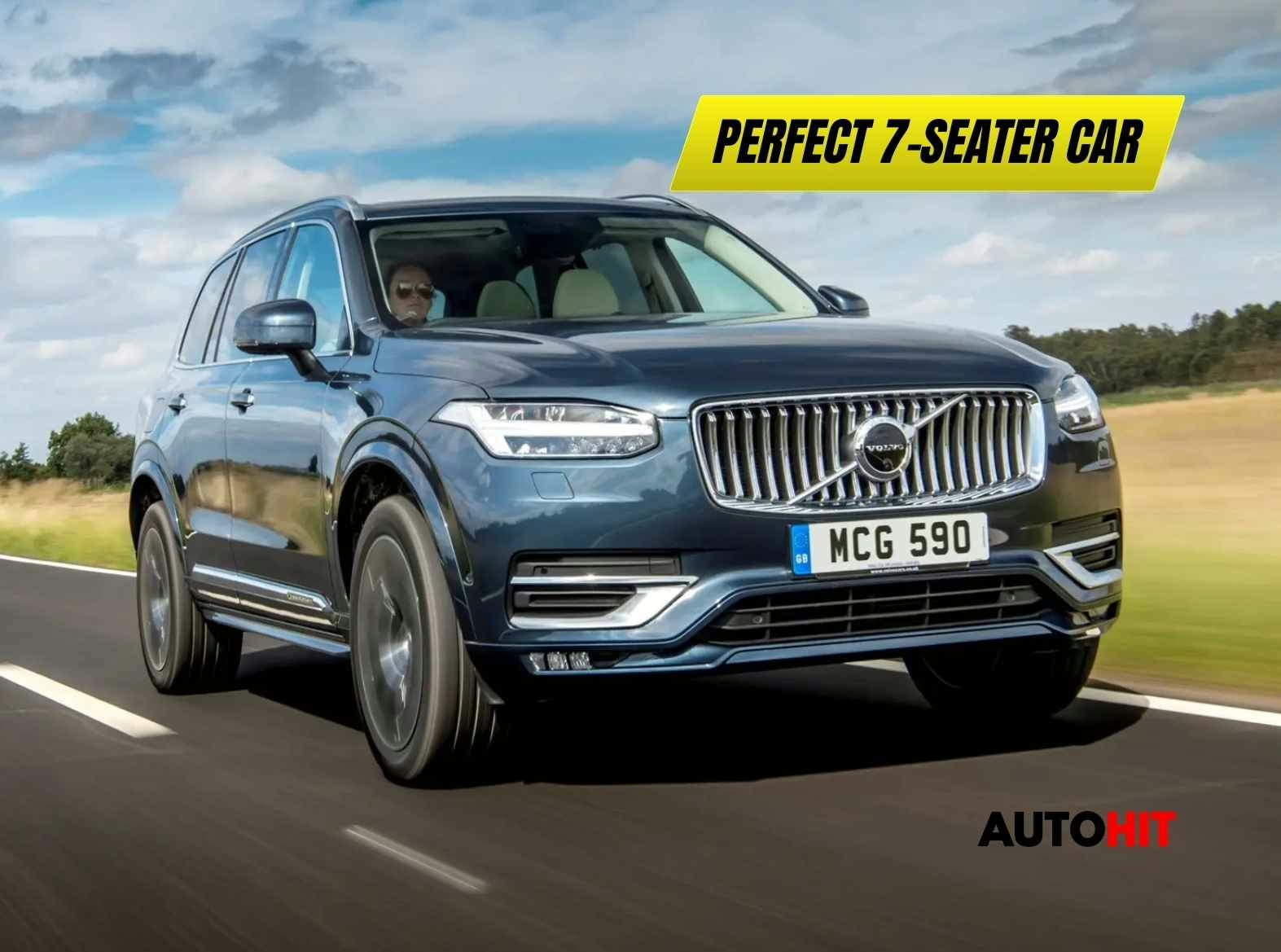
Finding the right 7-seater car in 2025 means balancing space, practicality, fuel efficiency and budget. From affordable family options to premium SUVs, this guide will help UK buyers navigate the increasingly diverse market of vehicles capable of carrying seven passengers in comfort and style.
When You Need More Than Five Seats
For growing families, sports teams, or those who regularly transport groups of people, a 7-seater car offers the ultimate flexibility. These versatile vehicles provide extra seating when needed while maintaining practical everyday usability, making them increasingly popular in the UK market.
The 7-seater segment has evolved significantly over the past decade. What was once dominated by large MPVs (Multi-Purpose Vehicles) has transformed into a diverse category spanning from compact crossovers with occasional third-row seating to full-size luxury SUVs capable of carrying seven adults in comfort. This evolution offers UK buyers more choice than ever before, but also makes selecting the right vehicle more complex.
In this comprehensive guide, we’ll explore the key considerations for buying a 7-seater car in the UK, highlight the different types available, and showcase the best models across various price points to help you make an informed decision for your family’s needs.
Key Points
- Consider how often you’ll use all seven seats – occasional use may suit a different model than daily use
- Third-row seat comfort varies dramatically between models – test with real passengers if possible
- Boot space with all seats in use is typically limited, so check measurements carefully
- Running costs differ significantly between petrol, diesel, hybrid and electric options
- Access to the third row is a crucial practical consideration, especially for families with young children
- Vehicle dimensions should be considered in relation to UK parking spaces and narrow roads
Types of 7-Seater Vehicles
Before diving into specific models, it’s important to understand the different categories of 7-seater vehicles available in the UK market:
MPVs (Multi-Purpose Vehicles)
Traditional MPVs are designed with space efficiency as the primary goal. They typically feature boxy shapes that maximize interior volume, sliding doors for easy access in tight parking spaces, and flexible seating arrangements.
Advantages:
- Better third-row accommodation than most SUVs
- Lower floor height for easier access
- More flexible seating configurations
- Often better visibility for all passengers
Disadvantages:
- Less fashionable styling
- Lower driving position
- Typically less off-road capability
SUVs (Sport Utility Vehicles)
SUVs have become the dominant force in the 7-seater market, offering a commanding driving position, robust styling and the perception of greater safety.
Advantages:
- Higher driving position with good visibility
- Contemporary styling that appeals to many
- Better ground clearance for rough terrain
- Often more powerful engine options
Disadvantages:
- Third-row space often more compromised
- Higher floor makes access more difficult
- Generally poorer fuel economy
- Larger footprint in UK car parks
Crossovers
These vehicles blend characteristics of both SUVs and traditional cars, offering a middle ground that appeals to many UK families.
Advantages:
- More manageable dimensions than full-size SUVs
- Better fuel efficiency than traditional SUVs
- Car-like driving experience
- Modern styling
Disadvantages:
- Third-row seating often suitable only for children
- Limited boot space when all seats are in use
- Less off-road capability than proper SUVs
Key Considerations When Choosing a 7-Seater
Actual Seating Capacity
Not all “7-seaters” are created equal. In many vehicles, particularly crossovers and smaller SUVs, the third row is best suited for children or smaller adults on short journeys. According to our editorial team at AutoHit, if you regularly need to carry seven adults, you should focus on larger MPVs or full-size SUVs that offer genuine comfort for all passengers.
Key questions to ask:
- Who will typically sit in the third row?
- How tall are your regular passengers?
- How long are your typical journeys?
Access to the Third Row
The mechanism for accessing the rearmost seats varies significantly between models and impacts everyday usability. Some vehicles offer a simple tilt-and-slide function for the second row, while others have more sophisticated systems that allow access even with child seats installed.
For UK families with young children, easy third-row access should be a priority consideration. The Tesla Model Y, for example, offers relatively simple access compared to some competitors, though it’s still not as convenient as sliding doors found on traditional MPVs.
Boot Space
One of the biggest practical compromises with 7-seater vehicles is boot space when all seats are in use. This can range from virtually non-existent (less than 100 litres) to reasonably practical (300+ litres).
For context, a typical family hatchback offers around 380 litres, so even the most spacious 7-seaters will have reduced luggage capacity when carrying seven people. If you frequently need to transport both seven people and significant luggage, you may need to consider roof boxes or larger vehicles like the Toyota Land Cruiser.
Seating Flexibility
The ability to reconfigure the seating layout adds tremendous versatility to a 7-seater. The best models offer:
- Individual sliding and reclining seats in the second row
- Easy-fold or removable third-row seats
- The ability to fold the second row flat for maximum cargo space
- 40:20:40 split folding for the second row to accommodate long items
Models like the Peugeot 5008 excel in this area, offering three individual middle-row seats that can slide independently, providing flexibility for balancing passenger space and luggage needs.
Running Costs
Seven-seater vehicles are typically larger and heavier than standard cars, which impacts running costs. In the UK, where fuel prices remain high, this is a significant consideration.
Diesel engines have traditionally been popular for larger vehicles due to their better fuel economy and torque characteristics. However, with increasing restrictions on diesel vehicles in urban areas like London’s ULEZ, alternatives are becoming more attractive.
Hybrid and plug-in hybrid (PHEV) options offer a good compromise, with models like the Kia Sorento Hybrid providing improved fuel economy without the range anxiety of pure electric vehicles. For those ready to make the leap to electric, options like the Kia EV9 and Mercedes EQB now offer genuine 7-seat capability with zero emissions.
Budget Considerations
The price range for 7-seater vehicles in the UK is enormous, starting from around £18,000 for the Dacia Jogger up to £100,000+ for premium models like the BMW X7.
When calculating total ownership costs, remember to factor in:
- Insurance (typically higher for larger vehicles)
- Vehicle Excise Duty (road tax)
- Maintenance (larger tyres and more complex systems can be costly)
- Depreciation (varies significantly between brands)
- Fuel/electricity costs
The Best 7-Seaters for Different Needs
Best Budget-Friendly Option: Dacia Jogger
Starting from just over £18,000, the Dacia Jogger represents exceptional value in the 7-seater market. This crossover-style vehicle offers surprising space efficiency with a third row that can accommodate adults up to 1.70m tall comfortably.
Despite its budget positioning, the Jogger comes with decent standard equipment including air conditioning and smartphone integration. The 565-litre boot (in 5-seat configuration) is generous, though this shrinks to 160 litres with all seats in use.
Available with efficient petrol, LPG, and hybrid powertrains, the Jogger offers reasonable running costs. The hybrid version is particularly well-suited to UK urban driving, offering improved fuel economy in stop-start traffic.
According to AutoHit’s editorial team, the Jogger represents the perfect entry point for families needing occasional seven-seat capability without breaking the bank.
Best All-Rounder: Skoda Kodiaq
The Skoda Kodiaq has earned its reputation as one of the UK’s most well-rounded family SUVs, winning numerous awards including Carbuyer’s Best Large Family Car for 2025.
Priced from approximately £35,000, the recently updated Kodiaq offers an excellent blend of quality, practicality and value. The latest model features improved interior technology, including a digital cockpit and enhanced infotainment system.
The third-row seating is best suited for children or smaller adults on shorter journeys, but the overall package excels with:
- Outstanding build quality
- Generous equipment levels
- Excellent safety features
- “Simply Clever” practical touches throughout
- Efficient engine options including a plug-in hybrid (though the PHEV is currently only available in 5-seat configuration)
With 270 litres of boot space even with all seven seats in place (expanding to 765 litres in 5-seat mode), the Kodiaq offers better-than-average practicality for a mid-size SUV.
Best for Premium Luxury: Volvo XC90
For buyers seeking seven-seat capability with premium comfort and safety credentials, the Volvo XC90 remains a benchmark choice. Starting from around £63,000, this Swedish SUV combines elegant design with class-leading safety technology.
The XC90 is one of the few vehicles in its class that can genuinely accommodate adults in all seven seats. The third row can comfortably seat passengers up to 1.70m tall, with good head and legroom. Access is also well-considered, with second-row seats that slide and tilt forward.
Boot capacity is impressive at 262 litres with all seats in use, expanding to 709 litres in 5-seat configuration and a cavernous 1,874 litres when just the front seats are in use.
Volvo’s reputation for safety is well-deserved in the XC90, with comprehensive active and passive safety systems that have resulted in no recorded fatalities in the UK for XC90 occupants in collisions – a remarkable statistic that gives peace of mind to family buyers.
Available with mild hybrid and powerful plug-in hybrid powertrains, the XC90 also offers reasonable running costs for its class. The T8 plug-in hybrid provides an electric-only range of around 40 miles, enough for many UK commutes with zero emissions.
Best Electric Option: Kia EV9
As the electric vehicle transition accelerates in the UK, the Kia EV9 has established itself as the benchmark for electric 7-seaters. Starting from approximately £65,000, this isn’t a budget option, but it represents good value in the electric SUV segment.
The EV9’s purpose-built electric platform allows for exceptional interior space, with genuine adult-friendly accommodation in all three rows. The flat floor and long wheelbase create a lounge-like environment, while the flexible seating options include the ability to rotate second-row seats to face the third row – perfect for family interactions on longer journeys.
With a claimed range of up to 349 miles and rapid charging capability that can add 150 miles in approximately 15 minutes (at suitable chargers), the EV9 addresses the range anxiety that has deterred some buyers from electric 7-seaters.
Boot space stands at 333 litres with all seats in place – significantly better than most competitors and enough for a family shopping trip or airport run with luggage.
For UK buyers considering the transition to electric, the EV9’s comprehensive 7-year warranty provides additional peace of mind, covering both the vehicle and battery.
Best for Occasional Seven-Seat Use: Citroen C3 Aircross
Not everyone needs seven seats all the time, and for those seeking a compact vehicle with occasional 7-seat capability, the new Citroen C3 Aircross offers an interesting proposition. Starting from approximately £23,000, this compact crossover packs surprising versatility into its modest dimensions.
The third row is definitely in the “occasional use” category, best suited for children on shorter journeys. However, for families with younger children who occasionally need to transport an extra friend or family member, this compact package makes a lot of sense in the UK’s crowded urban environments.
The C3 Aircross stands out with its comfortable suspension system featuring “hydraulic cushions” that smooth out Britain’s increasingly potholed roads. Combined with Citroen’s “Advanced Comfort” seats, it offers a level of ride quality that belies its affordable price point.
Available with efficient petrol and hybrid powertrains (though the fully electric version doesn’t offer the 7-seat option), the C3 Aircross delivers reasonable running costs and is well-suited to UK urban and suburban driving.
Practical Considerations for UK Drivers
Parking and Maneuverability
The UK’s historic towns and cities weren’t designed with large vehicles in mind. Standard parking spaces in many UK car parks measure approximately 4.8m x 2.4m, which can be challenging for larger 7-seaters that may exceed 5 meters in length and 2 meters in width.
When choosing a 7-seater, consider where you’ll be parking regularly and whether features like parking sensors, cameras and automated parking systems might be worth investing in. Models like the Peugeot 5008 and Skoda Kodiaq offer relatively compact external dimensions while maximizing interior space.
UK Road Infrastructure
Britain’s road network includes many narrow country lanes, tight urban streets and height-restricted car parks. If your regular routes include such challenges, consider more compact options or vehicles with good visibility and maneuverability.
Features that can help include:
- 360-degree camera systems
- Lane-keeping assistance
- Cross-traffic alerts
- Blind spot monitoring
UK Climate Considerations
Britain’s notoriously changeable weather presents specific challenges for family vehicles. Features worth considering include:
- Heated seats and steering wheel for cold winter mornings
- Efficient climate control systems with multi-zone capability
- All-season tyres or 4WD/AWD for areas prone to snow or flooding
- Heated windscreens for quick demisting in damp conditions
Many 7-seaters now offer these comfort features as standard or optional extras, with premium models like the Land Rover Defender providing comprehensive all-weather capability.
Environmental and Regulatory Considerations
ULEZ and Clean Air Zones
With London’s Ultra Low Emission Zone (ULEZ) now covering all boroughs and similar schemes expanding in other UK cities, emissions standards are increasingly important for UK car buyers.
Most modern 7-seaters meet Euro 6 standards and are thus ULEZ compliant, but it’s worth confirming this before purchase, especially when buying used vehicles. Diesel models manufactured before 2015 may not comply with the latest emissions regulations.
For those frequently driving in ULEZ or Clean Air Zones, hybrid, plug-in hybrid or fully electric options offer peace of mind and potential cost savings.
Vehicle Excise Duty (Road Tax)
Vehicle Excise Duty in the UK is based on CO2 emissions for the first year, with subsequent years charged at a flat rate (currently £190 for most conventional vehicles). However, vehicles with a list price over £40,000 (which includes many premium 7-seaters) incur an additional “luxury car tax” of £390 per year for the first five years.
Electric vehicles currently enjoy exemption from VED, making options like the Kia EV9 more cost-effective from a taxation perspective, though this advantage may change in future UK budgets.
FAQ on 7-Seater Cars
Which 7-seater has the most boot space with all seats in use? The Land Rover Discovery offers one of the largest boots with all seven seats in place at 258 litres, closely followed by the Volvo XC90 at 262 litres. For comparison, the Skoda Kodiaq provides 270 litres, while smaller crossovers may offer less than 100 litres.
Are there any 7-seater cars that are ULEZ compliant? Yes, virtually all new 7-seater vehicles meet the Euro 6 emissions standards required for ULEZ compliance. For used vehicles, petrol cars registered after 2005 and diesel vehicles registered after September 2015 are generally compliant, but it’s always best to check specific models using Transport for London’s vehicle checker.
What’s the most affordable 7-seater in the UK? The Dacia Jogger is currently the most affordable new 7-seater in the UK, with prices starting from approximately £18,000. This represents exceptional value compared to most competitors that typically start from £30,000+.
Are there any electric 7-seaters available? Yes, the electric 7-seater market is growing rapidly. Current options include the Kia EV9, Mercedes EQB, and Tesla Model Y (which offers a 7-seat configuration as an option). The upcoming Volvo EX90 will also join this category.
How do hybrid 7-seaters compare to diesel options for long journeys? Modern hybrid 7-seaters can match or exceed diesel fuel economy in mixed driving, but diesels may still have an advantage on constant high-speed motorway journeys. Plug-in hybrids offer excellent efficiency for shorter trips if regularly charged, but may be less efficient than diesels on longer journeys once the battery is depleted.
Can I fit three child seats in the second row of a 7-seater? This varies significantly between models. Vehicles with three individual second-row seats (like the Peugeot 5008) often accommodate three child seats better than those with a bench seat. Always check the vehicle’s manual and test the actual seats before purchase, as compatibility depends on both the vehicle and the specific child seats.
Which 7-seater holds its value best in the UK? Premium brands typically retain value better, with the Land Rover Discovery, Volvo XC90, and BMW X7 showing strong residual values. Among mainstream brands, the Skoda Kodiaq and Kia Sorento perform well due to their combination of practicality and strong warranty offerings.
Conclusion
Choosing the right 7-seater car in the UK market requires balancing practical requirements with budget constraints and personal preferences. While traditional MPVs once dominated this segment, SUVs and crossovers now offer compelling alternatives with improved driving dynamics and contemporary styling.
The ideal choice depends heavily on how you’ll use those extra seats – occasional use for children suggests different models than regular transport of adult passengers. Similarly, urban drivers face different considerations than those in rural areas who might need additional ground clearance and all-weather capability.
What’s clear is that the 7-seater market offers more diversity than ever before. From the budget-friendly practicality of the Dacia Jogger to the premium luxury of the Volvo XC90 and the zero-emission future represented by the Kia EV9, there’s a 7-seater to match virtually any family requirement and budget.
For those still unsure about which direction to take, our guides to the best SUVs under £30,000 and premium SUVs under £60,000 provide additional context for making an informed purchase decision. With careful consideration of your specific needs, the perfect family 7-seater is certainly within reach.





