
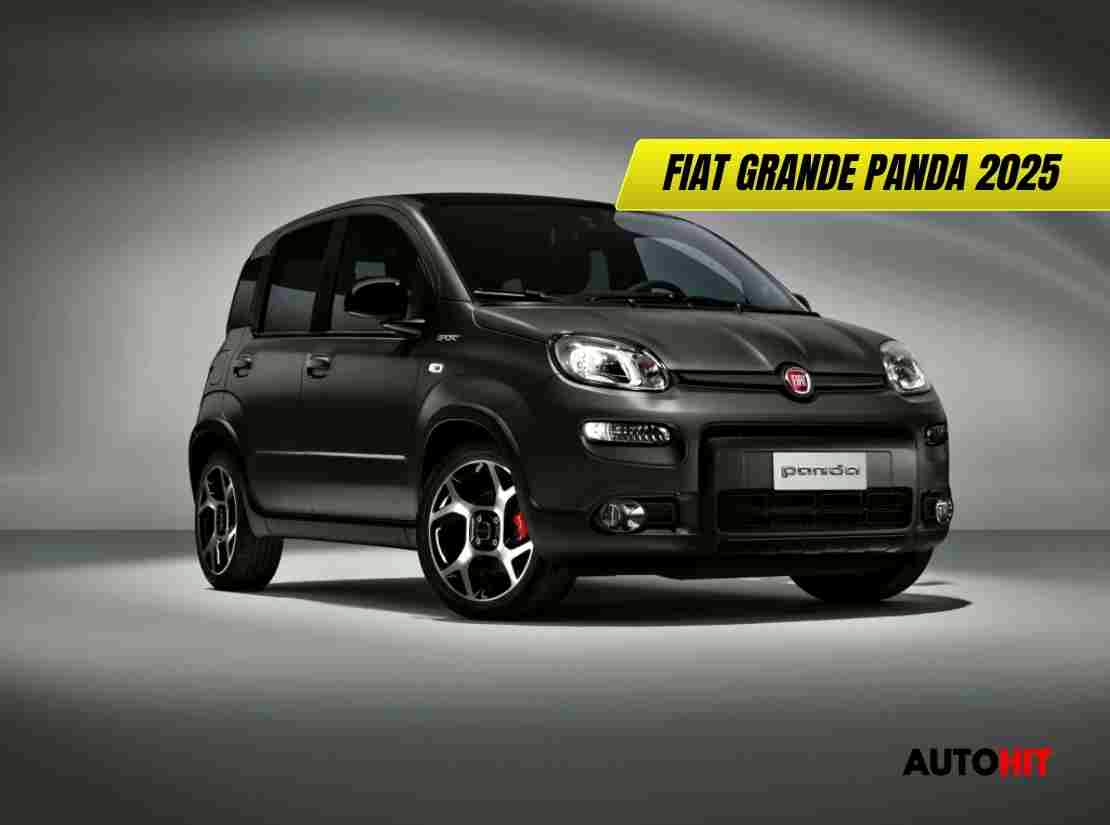
The Fiat Grande Panda returns with 100hp hybrid power from £18,975. Can this stylish Italian supermini challenge the Renault 5? Full UK review here.
When Fiat announced the return of the Panda nameplate with a completely new model, our editorial team at AutoHit was genuinely curious whether the Italian brand could recapture the original’s charm while meeting modern expectations. Having spent time with various budget superminis this year, we were particularly intrigued by Fiat’s decision to launch with both electric and hybrid powertrains simultaneously – a strategy that acknowledges not all buyers are ready for full electrification.
The Grande Panda represents more than just a new model for Fiat – it’s a statement of intent from a brand that has spent recent years focusing primarily on the retro-styled 500. With aggressive pricing starting at £18,975 for the hybrid version, the Grande Panda aims to democratise stylish motoring while offering genuine alternatives to established budget champions like the Dacia Sandero and upcoming threats like the BYD Dolphin Surf.
This comprehensive review examines whether the Grande Panda’s combination of Italian design flair, practical packaging, and accessible pricing can carve out a meaningful position in the increasingly competitive budget supermini segment.
Key Highlights
- Starting price £18,975 for hybrid Icon trim, £20,975 for La Prima
- 100hp 1.2-litre mild-hybrid with 48V system and eDCT automatic gearbox
- Electric driving capability at low speeds up to 18mph for short distances
- 199-mile electric version available from £20,975 (£2,000 premium)
- Pixel-style LED headlights and distinctive crossover-inspired styling
- 10.25-inch infotainment screen with smartphone connectivity as standard
- Recycled interior materials including bamboo fibre elements
- Spring 2025 launch with both hybrid and electric versions available
Design Philosophy: Retro Meets Utility
Exterior Styling: Boldly Different
According to our analysis at AutoHit, the Grande Panda succeeds in creating a distinctive identity that references the iconic original without feeling derivative. At just under 4 metres long, it adopts a crossover-inspired stance with a higher riding position and protective cladding that gives it a more rugged appearance than typical superminis.
The signature pixel-style LED headlights immediately mark it out as a contemporary Fiat, while the squared-off proportions and upright stance maximise interior space despite the compact external footprint. We’ve tested enough small cars to know that this approach usually pays dividends in terms of practicality, even if it sacrifices some aerodynamic efficiency.
The colour palette deserves particular mention – Fiat has deliberately avoided offering grey as an option, instead focusing on vibrant yellows, blues, and greens that emphasise the car’s cheerful character. It’s a brave decision that should help the Grande Panda stand out in car parks full of monochrome alternatives.
Interior Design: Function Meets Flair
The cabin philosophy continues the original Panda’s focus on ingenious space utilisation and practical storage solutions. The standout feature is an unexpected upper glovebox that maximises dashboard storage, while over 20 different storage areas throughout the cabin demonstrate Fiat’s understanding of small car priorities.
Sustainability features prominently in the interior design, with recycled materials used extensively throughout. The top-spec La Prima trim includes bamboo fibre elements in the glovebox construction – a detail that feels genuinely innovative rather than merely trendy.
The reality, however, is that cost constraints show in the overall material quality. As Top Gear noted, “the dash is made of hard plastic stuff,” but this isn’t necessarily problematic given the price point. The key is whether the overall design execution disguises these limitations effectively.
Technical Specifications: Sophisticated Hybrid System
Powertrain Details: More Than Mild
The Grande Panda’s 1.2-litre three-cylinder petrol engine produces 100hp when combined with the 48V mild-hybrid system – competitive figures for this segment. The integration of a 21kW electric motor within the six-speed eDCT (electric dual-clutch transmission) represents a sophisticated approach that should deliver both performance and efficiency benefits.
Fiat Grande Panda Hybrid 2025 – Technical Specifications
| Specification | Icon Trim | La Prima Trim | Industry Comparison | Our Assessment |
|---|---|---|---|---|
| Engine | 1.2L 3-cyl + 48V hybrid | 1.2L 3-cyl + 48V hybrid | More sophisticated than most rivals | Well-engineered system |
| Power Output | 100hp combined | 100hp combined | Competitive for segment | Adequate for most needs |
| Transmission | 6-speed eDCT auto | 6-speed eDCT auto | Auto advantage over manual rivals | Smooth operation expected |
| Electric Range | 0.5 miles at <18mph | 0.5 miles at <18mph | Limited but useful | Parking/traffic benefit |
| Fuel Economy | ~55mpg (estimated) | ~55mpg (estimated) | Competitive with hybrids | Good efficiency potential |
| CO2 Emissions | 118g/km (target) | 118g/km (target) | Low tax implications | Company car friendly |
| Price | £18,975 | £20,975 | Strong value proposition | Excellent positioning |
The system’s ability to run on electric power alone for up to half a mile at speeds below 18mph might seem limited, but it’s precisely where hybrid systems deliver their greatest efficiency benefits – in stop-start traffic and parking manoeuvres.
Real-World Performance Expectations
With 100hp available, the Grande Panda should offer adequate performance for British driving conditions. The eDCT automatic transmission eliminates the manual gearbox penalty that affects many budget rivals, potentially making it more appealing to urban buyers who prioritise convenience.
Based on what we know from similar Stellantis hybrid systems, expect refined low-speed operation with seamless transitions between electric and petrol power. The system’s sophistication should deliver both improved fuel economy and enhanced drivability compared to conventional alternatives.
UK Market Context and Competition
Pricing Strategy: Aggressive Value Positioning
The Grande Panda’s £18,975 starting price positions it strategically within the budget supermini segment. It undercuts many established rivals while offering significantly more sophistication than the cheapest alternatives.
Budget Supermini Comparison – UK Market 2025
| Model | Starting Price | Power | Transmission | Fuel Type | Key Advantage |
|---|---|---|---|---|---|
| Fiat Grande Panda | £18,975 | 100hp | 6-speed auto | Mild hybrid | Style + auto transmission |
| Dacia Sandero | £14,715 | 90hp | 6-speed manual | Petrol/LPG | Unbeatable value |
| Citroën C3 | £19,995 | 83hp | 5-speed manual | Petrol | Style-focused |
| Skoda Fabia | £20,995 | 95hp | 5-speed manual | Petrol | Build quality |
| Vauxhall Corsa | £22,055 | 100hp | 6-speed manual | Petrol | Mainstream appeal |
| Toyota Aygo X | £16,795 | 72hp | 5-speed manual | Petrol | Reliability reputation |
| Hyundai i10 | £17,745 | 84hp | 5-speed manual | Petrol | Warranty coverage |
Looking at this comparison, the Grande Panda’s automatic transmission becomes a significant differentiator. Most rivals at this price point rely on manual gearboxes, making the Fiat particularly appealing to urban buyers who prioritise convenience.
As we’ve noted in our guide to the best hybrid cars for city driving in 2025, mild-hybrid systems are becoming increasingly important for urban efficiency and emissions compliance.
Target Market: Style-Conscious Value Seekers
The Grande Panda clearly targets buyers who want something more distinctive than a Dacia Sandero but can’t stretch to premium alternatives like the Renault 5. This includes young professionals, urban families, and anyone seeking a characterful second car that doesn’t compromise on practicality.
For UK company car drivers, the targeted 118g/km CO2 emissions should result in attractive BiK rates compared to conventional alternatives. According to current UK government vehicle taxation rates, this positions the Grande Panda favourably for business users.
Practicality and Real-World Usability
Interior Space: Maximising the Footprint
Despite its compact external dimensions, the Grande Panda’s upright proportions and intelligent packaging should deliver impressive interior space. The crossover-inspired stance provides a commanding driving position that many buyers prefer over traditional supermini layouts.
Boot space figures haven’t been officially confirmed, but the platform sharing with the Citroën C3 suggests around 300 litres of cargo capacity – adequate for the segment and sufficient for most small car usage patterns.
The abundance of interior storage solutions addresses a common small car frustration – where to put phones, keys, wallets, and the myriad items that accumulate during daily driving.
Urban Focus: Designed for City Life
The Grande Panda’s compact dimensions and electric-assist capabilities make it ideally suited to British urban environments. The ability to creep along in traffic using electric power alone, even for short distances, should provide a more refined experience than conventional alternatives.
Parking in tight city centre spaces should be effortless, while the higher driving position improves visibility in congested conditions. These practical advantages help justify the crossover styling, even if they come at some cost to fuel efficiency.
Electric Alternative: Dual Powertrain Strategy
EV Option: Same Style, Zero Emissions
The Grande Panda Electric, available from £20,975, uses the same platform and styling but substitutes a 111hp electric motor and 44kWh battery for the hybrid system. With a claimed 199-mile range, it represents one of the most affordable electric superminis available.
Hybrid vs Electric – Decision Matrix
| Factor | Hybrid (£18,975) | Electric (£20,975) | Recommendation |
|---|---|---|---|
| Purchase Price | £2,000 cheaper | £2,000 premium | Hybrid for budget buyers |
| Running Costs | ~10p per mile | ~4p per mile | Electric for high mileage |
| Range Anxiety | None | Potential concern | Hybrid for long-distance |
| Charging Infrastructure | Not required | Home charging essential | Hybrid for convenience |
| Environmental Impact | Lower than petrol | Zero emissions | Electric for eco-priority |
| Resale Value | Traditional market | Future-proofed | Electric for long-term |
The £2,000 price difference between hybrid and electric versions is remarkably small – testament to Fiat’s commitment to making both powertrains accessible. For many buyers, the decision will come down to charging infrastructure availability and usage patterns.
Manufacturing Quality and Reliability Expectations
Stellantis Platform Benefits
Built on the proven Smart Car platform already used by the Citroën C3, the Grande Panda benefits from shared development costs and established manufacturing processes. This should help ensure mechanical reliability while keeping prices competitive.
The hybrid system draws on technology already deployed across multiple Stellantis brands, suggesting that parts availability and service expertise should be readily available through the UK dealer network.
However, as we’ve observed in our analysis of best affordable SUVs under £25,000, budget-focused models often show their cost constraints in interior materials and minor quality details.
Build Quality Expectations: Honest Assessment
At £18,975, the Grande Panda cannot match the material quality of more expensive alternatives. Interior plastics will feel hard, panel gaps may be inconsistent, and some interior components will reflect the cost-conscious development approach.
This doesn’t necessarily indicate poor reliability – the mechanical components are proven across multiple applications – but buyers should adjust expectations accordingly. The key question is whether the overall design execution and driving experience justify the compromises.
UK Launch and Availability
Market Entry Timeline
Fiat Grande Panda UK Launch Schedule
| Phase | Timeline | Details | Our Advice |
|---|---|---|---|
| Order Books Open | March 2025 | Both hybrid and electric | Consider both powertrains |
| First Deliveries | Spring 2025 | Limited initial allocation | Express interest early |
| Full Availability | Q2 2025 | Complete range and options | Better choice of colours/trims |
| Dealer Network | Established | Existing Fiat dealerships | Check local service capability |
| Competition Response | 2025-2026 | Rivals likely to respond | Early adopter advantage |
Fiat’s established UK dealer network should provide adequate sales and service coverage, though the brand’s premium focus in recent years means some dealers may lack experience with budget-segment customers.
Market Positioning: Right Time, Right Price
The Grande Panda’s launch timing appears shrewd, arriving as the budget EV segment expands but before most established manufacturers respond with credible alternatives. This first-mover advantage could prove crucial for initial market share.
The dual powertrain strategy acknowledges that not all buyers are ready for full electrification while positioning Fiat for the eventual transition. This flexibility should broaden appeal compared to EV-only alternatives.
Ownership Experience and Running Costs
Total Cost Analysis: Competitive Economics
Fiat Grande Panda Hybrid – 5-Year Ownership Projection
| Cost Category | Annual Amount | 5-Year Total | Comparison Notes |
|---|---|---|---|
| Purchase Price | – | £18,975 | One-time cost |
| Insurance | £600-£900 | £3,750 | Higher than basic rivals |
| Fuel | £800-£1,200 | £5,000 | Hybrid efficiency advantage |
| Servicing | £300-£500 | £2,000 | Stellantis network coverage |
| Depreciation | £2,500-£3,500 | £15,000 | Estimated 60-70% over 5 years |
| VED/Road Tax | £190 | £950 | Based on CO2 emissions |
| Total (excl. purchase) | £4,390-£6,100 | £26,700 | Competitive running costs |
The Grande Panda’s running costs should prove competitive, with the hybrid system delivering fuel economy benefits that help offset the higher purchase price compared to basic alternatives like the Sandero.
Service and Support: Established Network
Fiat’s established UK presence provides reassurance regarding parts availability and service expertise. The shared platform with other Stellantis brands should ensure widespread component availability and competitive service pricing.
However, the brand’s recent focus on premium models means some dealers may need to readjust their approach for budget-conscious customers. Early buyers should verify their local dealer’s enthusiasm for the brand’s return to accessible pricing.
Long-Term Market Impact
Industry Significance: Style Meets Affordability
The Grande Panda’s success could influence other manufacturers’ approaches to budget supermini development. By proving that distinctive design and competitive pricing aren’t mutually exclusive, it challenges the industry assumption that cheap cars must be characterless.
This is particularly relevant given the context explored in our coverage of premium SUVs under £60k, where we noted the growing polarisation between budget and premium market segments.
Competitive Response: Raising the Bar
If the Grande Panda proves successful, expect other manufacturers to invest more heavily in budget-segment design and engineering. This competitive pressure ultimately benefits consumers through improved choice and value across the market.
The dual powertrain strategy may also influence competitor approaches, demonstrating that offering both hybrid and electric versions can maximise market appeal without significantly increasing development costs.
Frequently Asked Questions
Is the £18,975 starting price genuinely competitive?
Yes, particularly when you consider the automatic transmission and mild-hybrid system. Most rivals at this price point offer manual gearboxes and conventional engines. The nearest automatic alternatives cost significantly more, making the Grande Panda exceptional value for buyers prioritising convenience.
How does the hybrid system actually work in practice?
The 48V system provides electric assistance during acceleration and can power the car alone at very low speeds (under 18mph) for short distances. Think of it as making the engine more efficient rather than providing meaningful electric driving. The main benefits are smoother operation and improved fuel economy in stop-start traffic.
Should I choose the hybrid or electric version?
It depends on your usage patterns and charging infrastructure. If you can charge at home and do mostly local driving, the electric version’s £2,000 premium is easily justified by lower running costs. For mixed usage or those without home charging, the hybrid offers greater flexibility with minimal compromises.
How does build quality compare to more expensive rivals?
At £18,975, expect functional rather than premium quality. Interior materials will be basic and some fit-and-finish details may disappoint compared to German alternatives. However, the mechanical components are proven across multiple Stellantis brands, so fundamental reliability should be sound.
Is the styling too distinctive for mainstream appeal?
The Grande Panda’s crossover-inspired design and pixel headlights certainly stand out, but Fiat has balanced distinctiveness with broad appeal. The proportions are practical rather than controversial, and the colour palette emphasises cheerfulness over aggression. It should age well compared to more extreme designs.
What about dealer support and parts availability?
Fiat has an established UK dealer network, and the shared platform with Citroën ensures widespread parts availability. However, some dealers may need to readjust their approach for budget customers after years of focusing on premium models. Check your local dealer’s enthusiasm before committing.
When will the first cars actually reach UK customers?
Order books open in March 2025 with first deliveries expected in spring. Given the competitive pricing and distinctive styling, early demand could exceed supply. If you’re genuinely interested, registering interest early would be prudent to secure preferred specifications and delivery slots.
Our Verdict: Style and Substance at a Sensible Price
The Fiat Grande Panda represents exactly what the budget supermini segment needed – proof that affordable cars don’t have to be boring or characterless. By combining distinctive Italian design with practical engineering and aggressive pricing, Fiat has created something genuinely appealing rather than merely acceptable.
The hybrid powertrain deserves particular praise for its sophistication at this price point. While the electric-only driving capability is limited, the overall system should deliver meaningful efficiency improvements over conventional alternatives while providing the convenience of automatic transmission. That’s a compelling combination for urban buyers.
We’re also impressed by the dual powertrain strategy, which acknowledges that buyer preferences vary while maximising the model’s appeal across different usage patterns. The £2,000 premium for the electric version is remarkably small, making it accessible to buyers who might otherwise be priced out of EV ownership.
That said, cost constraints are evident in interior materials and some quality details. The Grande Panda feels appropriately built for its price point rather than offering premium quality at budget pricing. Buyers need to understand what they’re getting – excellent value rather than a bargain luxury car.
The styling deserves credit for being distinctive without being polarising. Fiat has successfully created something that looks contemporary and cheerful without resorting to controversial design elements that might alienate mainstream buyers. The crossover-inspired proportions should age well while providing practical benefits in daily use.
Our recommendation depends on your priorities and budget. If you want the cheapest possible transport, the Dacia Sandero remains unbeatable. If you seek premium refinement, stretch to established alternatives like the Skoda Fabia. But if you want something characterful, practical, and reasonably priced, the Grande Panda hits a sweet spot that few rivals can match.
For buyers considering the broader landscape of budget motoring, the Grande Panda proves that Italian design flair and accessible pricing aren’t mutually exclusive. It’s not perfect, but it’s genuinely appealing – and in today’s budget supermini market, that’s rarer than it should be.
As detailed on the official Fiat UK website, the company’s commitment to combining style with affordability reflects a welcome return to the values that made the original Panda such an enduring success. The Grande Panda won’t suit everyone, but for those it does suit, it could prove to be one of the most satisfying budget car purchases available.
The automotive world needs more cars like the Grande Panda – vehicles that prioritise character and user experience over mere cost-cutting. Whether Fiat can maintain this balance as production scales up remains to be seen, but early signs suggest they’ve created something genuinely worthwhile.





