
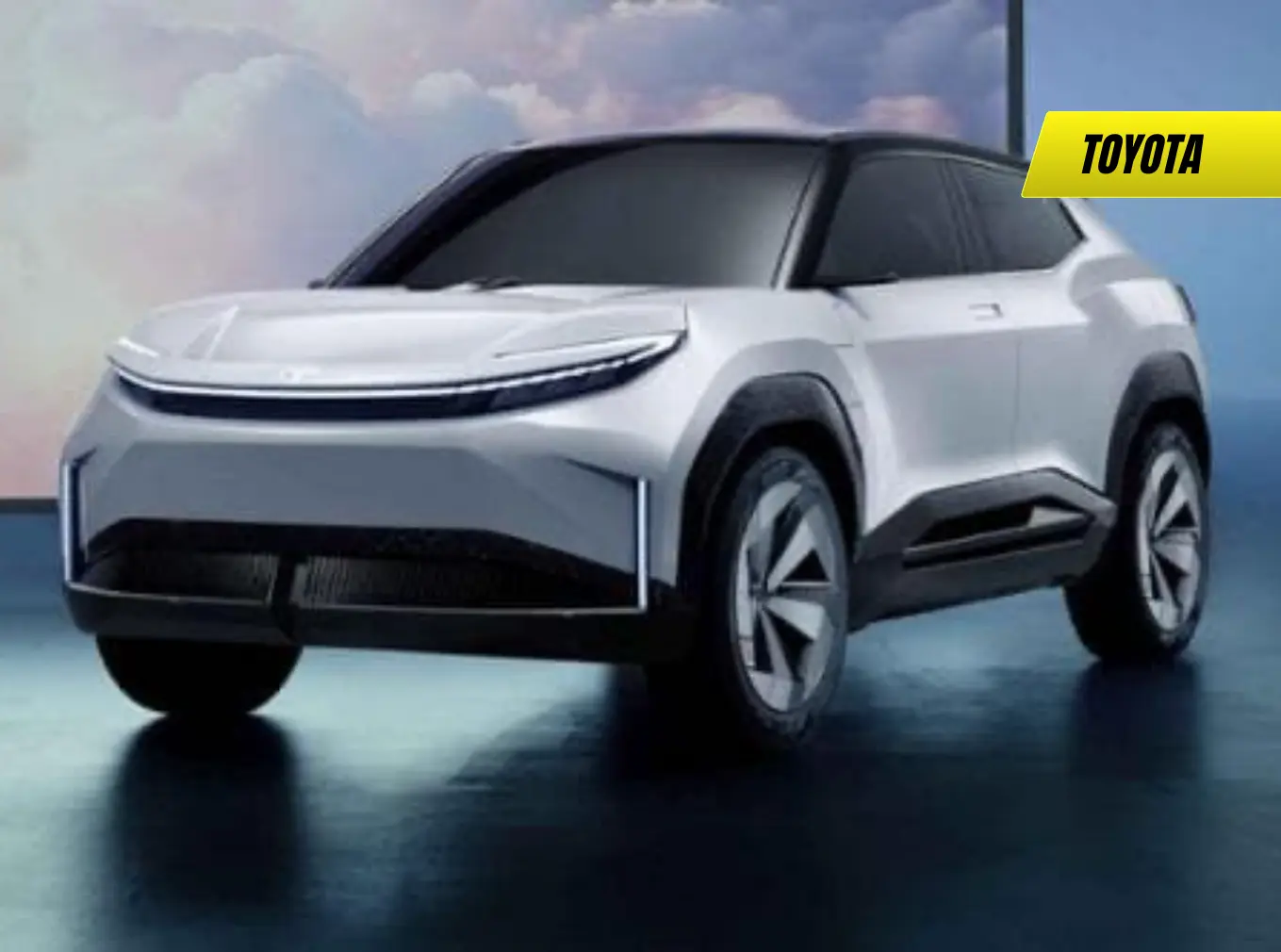
Toyota confirms its long-awaited three-row electric SUV will be unveiled February 10, 2026, with new teaser images revealing six or seven-seat configuration, panoramic sunroof, and digital cockpit ahead of US production launch.
Toyota’s cryptic “Something new is on the horizon” teaser campaign reaches climax with February 10, 2026 official reveal of three-row electric SUV manufactured at Georgetown, Kentucky plant using batteries from Toyota North Carolina facility, marking brand’s flagship EV offering positioned against Kia EV9 and Hyundai Ioniq 9 in burgeoning large family electric segment. Latest teaser images confirm six or seven-seat interior configurationfeaturing second-row captain’s chairs, panoramic glass sunroof, USB-C ports integrated into C-pillars, and large tablet-style infotainment screen paired with digital instrument cluster matching patent images from 2021 bZ Large SUV concept suggesting production version retains concept’s proportions and styling. While Toyota hasn’t confirmed naming, speculation centers on bZ5X designation continuing brand’s electric nomenclature or potential bZ Highlander/ Highlander EV leveraging established nameplate recognition similar to Ford’s Mustang Mach-E strategy capitalizing on familiar branding easing EV adoption among traditional buyers. The vehicle’s window design featuring small triangular base at front matches previously uncovered patent drawings strengthening production-version identification, with rumored specifications including 100kWh battery capacity, optional solar roof, and potential $50,000-60,000 USD pricing (approximately £40,000-48,000 UK) competing directly against Korean three-row EVs while offering Toyota reliability credentials and growing dealer network support.
Design Language and Concept Heritage
The upcoming three-row SUV draws heavily from Toyota’s 2021 bZ Large SUV concept showcased during the brand’s ambitious announcement of 15 electric vehicles planned through 2026, though that aggressive timeline subsequently moderated following stronger-than-expected demand for hybrid and combustion alternatives.
Key Design Elements from Teaser Images
| Feature | Details | Significance |
|---|---|---|
| Rear light bar | Full-width LED strip | Contemporary EV design signature matching bZ4X aesthetic |
| Body proportions | Upright, boxy silhouette | Maximizes interior volume for three-row packaging |
| Window design | Triangular front base, upright D-pillar | Matches patent drawings, confirms concept-to-production translation |
| Roof treatment | Panoramic glass sunroof | Premium feature competitive with Kia EV9, Hyundai Ioniq 9 |
| Overall stance | Wide, planted appearance | Suggests robust platform enabling substantial battery capacity |
The teaser images reveal remarkably faithful translation from concept to production, unusual in automotive industry where concepts typically undergo substantial dilution through engineering, cost, and regulatory constraints. Toyota’s confidence maintaining distinctive styling suggests strong internal commitment to establishing recognizable electric design language separate from hybrid/combustion offerings while preserving brand identity.
Interior Configuration Options
The confirmed second-row captain’s chairs visible in teaser images indicate Toyota offering six-seat configuration as standard or optional arrangement, with traditional three-person second-row bench enabling seven-seat capacitylikely available across trim levels. This dual-configuration strategy mirrors competitors like the Renault Clio 6 2026which also emphasizes flexible interior arrangements for family buyers:
- Kia EV9: Six or seven seats depending on trim
- Hyundai Ioniq 9: Six or seven seats with captain’s chairs or bench
- Mercedes EQB: Five or seven seats (no captain’s chair option)
- Tesla Model X: Five, six, or seven seats with various configurations
The USB-C charging ports integrated into C-pillar bases demonstrate thoughtful third-row passenger accommodation – critical detail often overlooked in three-row vehicles where rearmost occupants suffer from inadequate charging access and climate control.
Powertrain Specifications and Platform Architecture
While Toyota hasn’t disclosed complete technical specifications, industry analysis and component sourcing provide reliable estimates for the Kentucky-built electric SUV’s capabilities.
Expected Specifications
| Specification | Estimated Details | Competitive Context |
|---|---|---|
| Battery capacity | 100 kWh usable (105-110 kWh gross) | Similar to Kia EV9 Long Range (99.8 kWh) |
| Architecture | e-TNGA dedicated EV platform (third-gen) | Shared with bZ4X but extended wheelbase |
| Motor configuration | Dual motor AWD (base), possible single motor RWD | Standard AWD competitive necessity for US market |
| Power output | 300-350 hp combined (estimated) | Competitive with Ioniq 9 (313 hp), below EV9 GT-Line (384 hp) |
| Range (EPA) | 280-320 miles (estimated) | Class-competitive, below best-in-class EV9 (304 miles) |
| DC fast charging | 150 kW maximum | Adequate but trails Hyundai/Kia 800V architecture (350 kW) |
| Production location | Georgetown, Kentucky (USA) | Domestic content benefits, IRA tax credit eligibility |
The 100kWh battery capacity rumor aligns with Toyota’s strategic positioning – sufficient enabling genuine three-row utility without excessive weight penalty or cost escalation, though falling short of premium rivals offering 120-130kWh options in their most capable configurations.
Platform Evolution: e-TNGA Third Generation
The bZ5X (or Highlander EV) likely utilizes Toyota’s third-generation e-TNGA (Electric-Toyota New Global Architecture) platform representing substantial evolution over the bZ4X’s implementation:
First-gen e-TNGA (bZ4X, 2022-2025)
- Co-developed with Subaru (Solterra platform twin)
- 71.4 kWh battery, modest 252-mile EPA range
- Criticized for limited range, slow charging (150kW max)
- Wheel detachment recall damaged launch reputation
Third-gen e-TNGA (bZ5X/Highlander EV, 2026+)
- Extended wheelbase accommodating three-row seating and larger battery
- Improved thermal management enabling sustained fast charging
- Optimized aerodynamics despite upright proportions
- Potential 800V architecture adoption (unconfirmed but competitive necessity)
The Kentucky production location proves strategically critical for US market success, enabling $7,500 federal tax credit eligibility under Inflation Reduction Act requirements favoring North American assembly and battery component sourcing – competitive advantage against imported rivals from Korea or Europe facing credit restrictions.
Naming Strategy: bZ5X vs. Highlander EV Branding Debate
Toyota’s naming decision represents crucial strategic choice balancing electric brand building against leveraging established nameplate equity.
Case for bZ5X Designation
Arguments favoring continuation of bZ (Beyond Zero) nomenclature:
- Consistent electric branding: Maintains bZ4X, bZ3 (China), Urban Cruiser EV naming logic
- Clear differentiation: Signals electric vehicle instantly without confusion with combustion/hybrid Highlander
- Future-focused positioning: Appeals to tech-forward buyers prioritizing EV credentials over traditional associations
- International consistency: Simplifies global marketing with universal naming versus region-specific adaptations
Case for Highlander EV / bZ Highlander
Arguments favoring established Highlander nameplate:
- Brand equity leverage: Highlander sells 190,000+ units annually US (2021-2023 average) with strong recognition
- Customer trust: Familiar name reduces psychological barriers to EV adoption among traditional Toyota buyers
- Competitive precedent: Ford Mustang Mach-E, Chevrolet Blazer EV successfully translated established names to electric
- Simplified lineup: Avoids confusing alphanumeric soup plaguing German premium brands
The compromise solution – “bZ Highlander” – potentially offers best of both approaches: leveraging familiar Highlander recognition while maintaining bZ electric branding consistency, though risk exists creating unwieldy nomenclature compared to clean “Highlander EV” clarity.
Market Context: Highlander Sales Dynamics
Toyota’s current Highlander situation complicates naming strategy:
| Model | 2024 US Sales | Change vs 2023 | Strategic Implications |
|---|---|---|---|
| Highlander (standard) | 56,208 units | -37% | Declining significantly, potential replacement candidate |
| Grand Highlander(extended) | 136,801 units | +91% | Surging success, differentiation from electric sibling |
The standard Highlander’s 37% sales collapse while Grand Highlander surges 91% suggests customers preferring larger variant’s extra space and premium positioning, potentially freeing Highlander nameplate for electric transition without cannibalizing successful Grand Highlander. This dynamic supports Highlander EV naming – the electric version essentially replaces declining standard combustion Highlander while Grand Highlander continues serving buyers requiring maximum space and preferring traditional powertrains, similar to how Toyota Yaris 2026 is being repositioned for changing market demands.
UK Market Implications and Availability
While Toyota’s teaser campaign targets US market where three-row SUVs dominate family vehicle segment, UK and European availability remains uncertain pending regional demand assessment and production capacity allocation.
UK Large Electric SUV Landscape
| Model | UK Price | Seats | Range | Battery | Market Position |
|---|---|---|---|---|---|
| Kia EV9 | £65,025-73,025 | 6 or 7 | 304-349 miles | 76.1-99.8 kWh | Premium Korean leader |
| Hyundai Ioniq 9 | £63,000-70,000 (est) | 6 or 7 | 335 miles (est) | 110 kWh | EV9 sibling, recent launch |
| Mercedes EQB | £60,000-72,000 | 7 | 260 miles | 70.5 kWh | German premium compact |
| Toyota bZ5X/Highlander EV | £48,000-58,000 (est) | 6 or 7 | 285-310 miles (est) | 100 kWh | Value positioning below Koreans |
| Volvo EX90 | £95,000-110,000 | 7 | 300-364 miles | 107-111 kWh | Scandinavian luxury flagship |
Estimated UK pricing £48,000-58,000 positions Toyota’s three-row EV substantially below Korean rivals (£15,000-20,000 cheaper than EV9), potentially attracting budget-conscious families unable justifying Kia/Hyundai’s premium pricing while preferring established Japanese brand reputation over Chinese alternatives featured in guides like best Chinese SUVs in the UK for 2025.
UK Launch Timeline Uncertainty
Several factors cloud UK availability prospects:
- Right-hand drive development: US-spec left-hand drive launches late 2026; UK RHD conversion requires 12-18 months
- Production capacity: Kentucky plant prioritizes massive US market; European allocation depends on US demand
- Market prioritization: UK three-row SUV segment smaller than US; Toyota may delay European launch pending US success validation
- Charging infrastructure: UK’s extensive charging network supports large-battery EVs better than many European markets
Realistic UK launch timeline suggests late 2027 or early 2028 arrival, potentially missing critical window where Kia EV9 and Hyundai Ioniq 9 establish market leadership before Toyota’s alternative materializes.
For UK families requiring three-row electric transportation immediately, alternatives include current Kia EV9, incoming Hyundai Ioniq 9, or waiting 18-24 months for Toyota’s offering prioritizing proven reliability over cutting-edge technology or premium positioning.
BMW M5 Facelift 2027: Neue Klasse Design Debate and Powertrain Evolution
BMW prepares mid-cycle 5-Series refresh debuting 2027 model year with digital renderings exploring two distinct design directions – evolutionary refinement versus radical Neue Klasse transformation – while M5 performance variant potentially regains lost V8 power meeting Euro 7 regulations.
BMW’s current G60 5-Series undergoes mid-cycle facelift targeting 2027 model year launch (late 2026 debut) with spy photographs revealing camouflaged prototypes testing revised front and rear sections though extent of design changes remains disputed, spawning competing digital renderings illustrating conservative evolutionary updatesversus comprehensive Neue Klasse-inspired redesign featuring slimmer kidneys, horizontal lighting elements, and simplified surfacing mirroring upcoming i3 sedan and iX3 electric SUV aesthetic debuting 2026-2027. The flagship M5 sedan and M5 Touring estate follow base 5-Series facelift by approximately 12-18 months suggesting 2028 model year introduction, potentially addressing Euro 7-mandated 40hp V8 power reduction (577hp to 537hp) through revised electric motor calibration restoring full output while maintaining 717hp total system power from plug-in hybrid S68 V8 configuration. Interior updates remain uncertain though Panoramic iDrive digital cockpit from new iX3 could migrate to facelifted 5-Series alongside physical control reintroduction addressing widespread customer frustration with touch-sensitive surfaces replacing traditional buttons and switches causing usability problems in moving vehicles. The facelift timing proves unusually rapid following G60’s mid-2023 launch – typically manufacturers wait 3-4 years before mid-cycle updates, but BMW’s aggressive Neue Klasse rollout potentially accelerates existing models’ refresh cycles maintaining design coherence across expanding electric and combustion lineups through shared visual language elements.
Design Direction Uncertainty: Two Competing Visions
The facelifted 5-Series’ appearance remains subject of intense speculation with digital artists creating competing interpretations based on limited spy photography showing heavily-camouflaged prototypes.
Conservative Evolution Scenario
Digital artist Nikita Chuyko’s red M5 Touring rendering illustrates evolutionary refinement maintaining current G60’s fundamental design while introducing targeted improvements:
Front End Modifications
- Slimmer headlights: Narrower units with simplified LED daytime running light signatures replacing current complex multi-element design
- Reduced kidney grille size: Modestly smaller kidneys addressing criticism of current G60’s oversized proportions while remaining larger than incoming Neue Klasse models
- Revised bumper and intakes: New lower fascia with different side air intake configurations and updated front quarter panels
- Retained overall proportions: Fundamental body structure, greenhouse, and character lines unchanged from current model
This approach represents typical mid-cycle facelift – enough visual differentiation distinguishing new from old without requiring expensive tooling changes or radical departures alienating existing customer base, similar to updates seen in vehicles like the Audi Q3 2025.
Radical Neue Klasse Transformation Scenario
Alternative renderings explore comprehensive redesign adapting 2023 Vision Neue Klasse concept elements to combustion 5-Series architecture:
Neue Klasse-Inspired Elements
- Full-width horizontal panel: Upper fascia integrating headlights and kidney grilles within continuous element spanning vehicle width
- Slimmer, more horizontal kidneys: Dramatically reduced vertical dimension creating wider, flatter appearance referencing classic BMW designs (E30 3-Series, E24 6-Series)
- Simplified surfacing: Cleaner side profile with reduced character lines and less complex door sculpting
- Modern lighting graphics: Contemporary LED signatures matching electric i3 and iX3 models’ visual language
Hybrid Approach Variations
Some renderings attempt compromise solutions combining Neue Klasse lighting with modified current-generation kidney grilles – acknowledging reality that comprehensive platform redesign unlikely during mid-cycle refresh constrained by existing body structure, crash safety engineering, and production tooling investments.
M5 Powertrain: Restoring Lost V8 Power
The M5’s plug-in hybrid S68 powertrain faces ongoing development addressing Euro 7 emissions regulations that forced 40hp V8 output reduction in European-spec models, though total system power remained unchanged through electric motor recalibration.
Current M5 PHEV Specifications (2024-2026)
| Specification | European Spec (Euro 7) | Rest of World | Change |
|---|---|---|---|
| S68 V8 power | 537 hp (544 PS) | 577 hp (585 PS) | -40 hp Europe only |
| Electric motor | 194 hp (197 PS) enhanced | 187 hp (190 PS) | +7 hp compensation |
| Total system output | 717 hp (727 PS) | 717 hp (727 PS) | Unchanged |
| Torque | 738 lb-ft (1,000 Nm) | 738 lb-ft (1,000 Nm) | Unchanged |
| 0-62 mph | 3.5 seconds | 3.5 seconds | Unchanged |
| Electric range | 42 miles WLTP | 42 miles WLTP | Unchanged |
The 40hp V8 reduction resulted from Euro 7’s stricter particulate emissions limits requiring enhanced exhaust gas treatment systems that slightly constrain combustion efficiency, though BMW’s engineers compensated through electric motor upgrades maintaining headline performance figures.
2027-2028 Facelift Powertrain Evolution
Speculation suggests BMW potentially restoring full 577hp V8 output through refined emissions control strategies developed since initial Euro 7 compliance, potentially enabling:
Optimistic Scenario
- S68 V8: 577 hp (585 PS) – full original power restored
- Electric motor: 194 hp (197 PS) – maintaining enhanced calibration
- Total system output: 770 hp (780 PS) – meaningful increase over current 717 hp
- Performance improvement: 0-62 mph potentially sub-3.4 seconds
Conservative Scenario
- S68 V8: 537 hp (544 PS) – Euro 7 constrained output maintained
- Electric motor: Enhanced further to 210+ hp through battery/inverter upgrades
- Total system output: 740-750 hp – modest increase maintaining M5’s competitive positioning
The likelihood of either scenario depends on BMW’s willingness investing in further S68 development for vehicles likely representing final generation combustion M5 before full electrification transition renders traditional powertrains obsolete mid-2030s.
Interior Technology: Panoramic iDrive Migration?
While exterior updates generate most speculation, potential interior revisions carry equal significance for customer satisfaction and competitive positioning.
Current G60 5-Series Interior (2023-2026)
- Curved display: Integrated 12.3-inch digital instrument cluster and 14.9-inch central touchscreen under single glass panel
- iDrive 8.5: Latest BMW infotainment with QuickSelect shortcut bar and voice control
- Touch-sensitive controls: Controversial capacitive surfaces replacing physical buttons for climate and vehicle functions
- Materials: Premium leather, metal, and wood trim options across trim levels
Potential Facelift Interior Updates
Panoramic iDrive from iX3
The new iX3 electric SUV debuts Panoramic iDrive – BMW’s most advanced digital cockpit featuring:
- Unified widescreen display spanning entire dashboard width
- Enhanced augmented reality navigation
- Contextual interface adapting to driving modes and situations
- Improved voice assistant with more natural language processing
Migration to facelifted 5-Series would represent substantial update though feasibility questioned given mid-cycle refresh typically avoids expensive dashboard redesigns requiring new tooling, crash testing, and supplier integration.
Physical Control Reintroduction
More likely change involves restoring physical controls for essential functions following widespread customer complaints about touch-sensitive interfaces, addressing usability concerns similar to those detailed in guides like the spanner warning light guide:
- Climate control knobs and buttons replacing touchscreen menus
- Physical volume controls supplementing steering wheel adjustments
- Traditional gear selector versus electronic toggle
- Shortcut buttons for frequently-used features (parking cameras, driving modes, navigation)
This customer-driven reversal acknowledges that excessive digitization sacrificed usability for perceived modernity – lesson learned across automotive industry as manufacturers balance technology integration with human factors engineering.
UK Pricing and Market Positioning
The facelifted 5-Series and subsequent M5 variants maintain BMW’s traditional premium positioning while facing intensifying competition from electric alternatives and rival German manufacturers.
Estimated UK Pricing (2027-2028)
| Model Variant | Current G60 Price | Facelift Estimate (2027-2028) | Expected Changes |
|---|---|---|---|
| 520i | £49,995 | £52,000-54,000 | Modest increase reflecting inflation, minor updates |
| 530e PHEV | £54,995 | £57,000-59,000 | Battery/motor improvements justifying premium |
| 540i | £56,995 | £59,000-61,000 | Mild-hybrid enhancements |
| M550e xDrive | £69,995 | £72,000-75,000 | Performance PHEV bridging gap to M5 |
| M5 Competition | £112,980 | £118,000-125,000 | Restored V8 power, potential system output increase |
| M5 Touring | £115,980 | £121,000-128,000 | Estate premium over sedan |
These estimates assume typical 4-6% price increases reflecting inflation, technology upgrades, and regulatory compliance costs (Euro 7 emissions equipment) while maintaining competitive positioning versus Mercedes-Benz E-Class and Audi A6 rivals undergoing similar evolutionary development cycles.
Company Car Tax Implications
UK business users represent significant 5-Series customer segment, making Benefit-in-Kind (BIK) taxation critical to variant selection, with implications detailed in resources like UK driving licence points guide:
| Powertrain Type | BIK Rate 2027-28 | Annual Tax (40% taxpayer, £56k P11D) | Monthly Cost |
|---|---|---|---|
| Petrol (520i, 540i) | 38-39% | £8,512-8,736 | £709-728 |
| PHEV (530e, M550e) | 8-12% | £1,792-2,688 | £149-224 |
| M5 PHEV | 14-18% (high power) | £6,310-8,122 | £526-677 |
The dramatic tax advantage favoring PHEV variants (£6,000-7,000 annual savings versus combustion equivalents) explains why plug-in 530e and M550e dominate UK company car sales despite higher purchase prices – the BIK benefit overwhelms upfront premiums within 18-24 months for higher-rate taxpayers.
Frequently Asked Questions
When does the Toyota three-row electric SUV launch?
Official reveal scheduled February 10, 2026, with US production beginning late 2026 at Georgetown, Kentucky plant. First customer deliveries expected Q4 2026 or Q1 2027. UK and European availability uncertain, potentially delayed until late 2027 or 2028 pending right-hand drive development and production capacity allocation.
Will it be called bZ5X or Highlander EV?
Toyota hasn’t confirmed naming. Industry speculation favors either bZ5X (continuing electric nomenclature) or Highlander EV / bZ Highlander (leveraging established nameplate). Given standard Highlander’s 37% US sales decline while Grand Highlander surges 91%, Highlander EV naming would differentiate electric version from extended Grand Highlander without causing confusion.
How much will Toyota’s three-row EV cost?
Estimated US pricing $50,000-60,000, translating to approximately £40,000-48,000 UK (if launched). This positions substantially below Kia EV9 (£65,025-73,025) and Hyundai Ioniq 9 (£63,000-70,000 estimated), potentially attracting value-conscious buyers prioritizing Toyota reliability reputation over premium Korean positioning.
What’s the range and battery size?
Rumored 100kWh battery capacity enabling estimated 280-320 miles EPA range (300-350 miles WLTP equivalent). This proves competitive with Kia EV9 (304 miles) and Hyundai Ioniq 9 (335 miles estimated) though trails best-in-class by modest margin. DC fast charging likely limited to 150kW versus Korean rivals’ 350kW 800V architecture.
When does the BMW M5 facelift arrive?
Base 5-Series facelift expected late 2026 debut as 2027 model year. M5 sedan and M5 Touring follow 12-18 months later, suggesting 2028 model year launch (late 2027 reveal). This rapid refresh cycle (3-4 years post-launch versus typical 4-5 years) reflects BMW’s Neue Klasse rollout accelerating existing model updates.
Will the facelifted M5 adopt Neue Klasse design?
Uncertain. Spy photos show camouflaged prototypes but extent of changes unclear. Digital renderings explore both conservative evolution (slimmer headlights, modestly smaller kidneys) and radical transformation (full Neue Klasse horizontal lighting and grille integration). Mid-cycle facelifts typically avoid expensive comprehensive redesigns, suggesting evolutionary updates more likely than revolutionary transformation.
Will BMW restore the M5’s lost 40 horsepower?
Possibly. Euro 7 regulations forced S68 V8 output reduction from 577hp to 537hp in Europe (rest of world unchanged), though total system power maintained at 717hp through enhanced electric motor. Facelift potentially restores full V8 power through refined emissions strategies, possibly increasing total output beyond current 717hp, though conservative scenario maintains existing configuration with minor electric motor enhancements.
Does the facelifted 5-Series get Panoramic iDrive?
Doubtful for mid-cycle refresh. While new iX3’s Panoramic iDrive represents BMW’s latest digital cockpit, migrating to facelifted 5-Series requires expensive dashboard redesign typically avoided during mid-cycle updates. More likely changes include physical control reintroduction addressing customer frustration with touch-sensitive interfaces and minor infotainment software updates.
Conclusion
Toyota’s February 10, 2026 reveal of its long-awaited three-row electric SUV marks crucial milestone in Japanese manufacturer’s electrification strategy, positioning Kentucky-built bZ5X or Highlander EV against established Korean rivals Kia EV9 and Hyundai Ioniq 9 through estimated $50,000-60,000 pricing undercutting competition by $15,000-20,000 while leveraging Toyota reliability reputation and growing dealer network support. The confirmed six or seven-seat configuration, 100kWh battery capacity, and production-faithful translation from 2021 bZ Large SUV concept suggest serious commitment to large family EV segment where traditional Toyota strengths in durability, resale value, and customer trust potentially offset technological disadvantages versus Korean brands’ superior 800V fast-charging architecture and more aggressive styling.
Meanwhile, BMW’s impending 5-Series facelift generates design direction uncertainty with competing visions ranging from conservative evolutionary refinement to comprehensive Neue Klasse transformation, though mid-cycle refresh constraints likely favor modest updates reserving radical departures for next-generation models debuting late-2020s. The M5’s powertrain evolution potentially restoring Euro 7-reduced V8 output while enhancing electric motor contribution could yield 750-770hp total system power maintaining flagship performance sedan’s competitive positioning against Mercedes-AMG E 63 hybrids and Audi RS 6 rivals, though such developments represent final refinements of combustion technology before inevitable full electrification renders traditional powertrains obsolete within decade.
For UK buyers, Toyota’s three-row EV likely arrives 18-24 months post-US launch (late 2027/early 2028) potentially missing critical first-mover advantage while Kia and Hyundai establish market leadership, though patient customers may find Toyota’s proven reliability and value positioning justify waiting versus paying £15,000-20,000 premiums for Korean alternatives offering comparable capability with less certain long-term support and resale value prospects in maturing EV marketplace increasingly prioritizing total ownership costs over cutting-edge technology specifications.





