
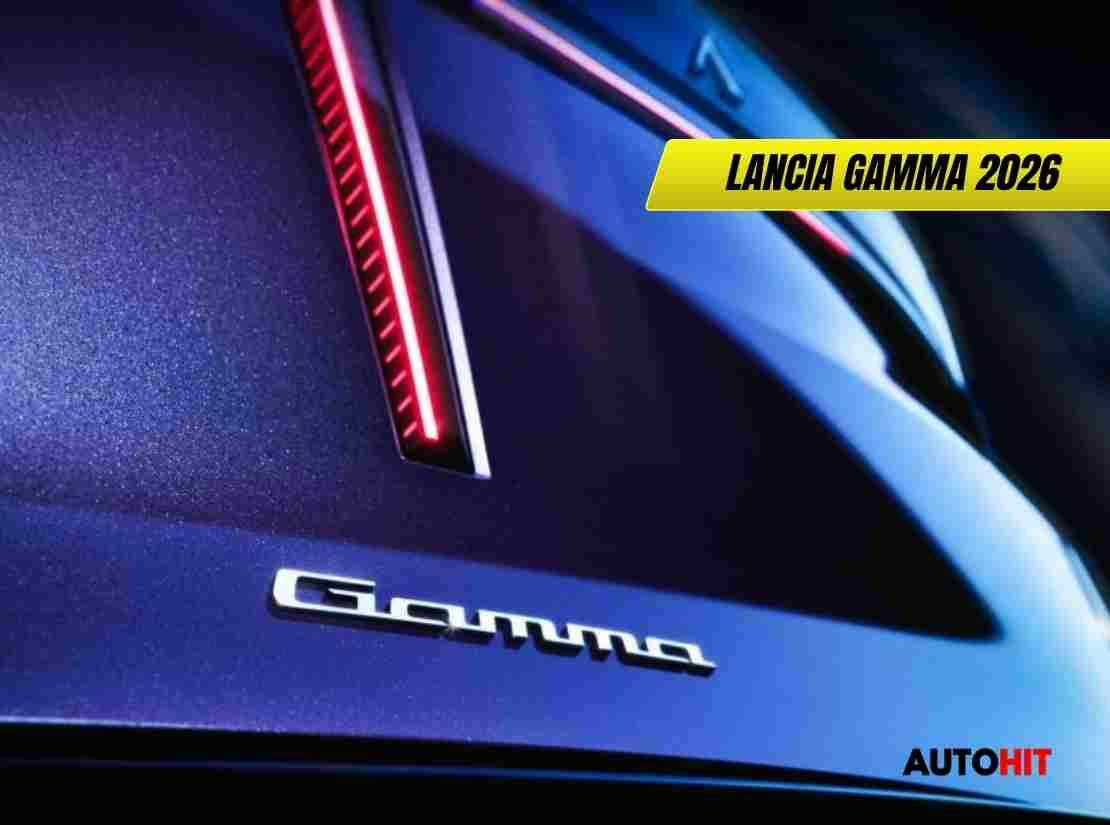
Lancia Gamma 2026 electric fastback promises Italian luxury with 700km range, hybrid options, and premium styling. Could this mark the brand’s return to UK markets?
The automotive world rarely witnesses genuine renaissance moments, but Lancia’s imminent return to the premium segment represents exactly that. After decades of near-dormancy, the legendary Italian marque is preparing to launch its new flagship fastback in 2026 – and according to our analysis at AutoHit, this could be the most significant comeback story of the electric era.
The new Lancia Gamma will represent a milestone in the brand’s journey towards the future, showcasing innovation, style and a relentless pursuit of excellence. But what makes this particularly intriguing for UK enthusiasts is the possibility that Lancia might finally return to right-hand-drive markets after a 30-year absence. While the brand’s current 10-year plan doesn’t involve expanding outside Europe initially, CEO Luca Napolitano has hinted that if European expansion goes well, right-hand-drive markets including the UK could follow.
The stakes couldn’t be higher. This isn’t just another premium electric saloon entering an already crowded market – it’s Lancia’s make-or-break attempt to reclaim its position among Europe’s most desirable automotive brands.
Key Highlights: What Makes the Gamma Special
• Pure Italian Design: A sleek sportback silhouette measuring 4.7 metres, inspired by the original 1970s Gamma but with thoroughly modern proportions • Multi-Energy Strategy: Unlike many rivals, the Gamma will offer both electric and hybrid powertrains, reflecting Stellantis’ broader adjustment to market demands • Premium Performance: Electric versions expected to deliver up to 700km range with potential HF variants producing over 320 horsepower • Made in Italy: Production at the historic Melfi plant represents a €2 billion Stellantis investment in Italian manufacturing • Advanced Platform: Built on STLA Medium architecture, shared with premium models like the Peugeot E-3008 • Market Positioning: Starting prices expected around £50,000, targeting BMW 3 Series and Mercedes C-Class buyers
Design Philosophy: Redefining Italian Elegance
Having examined the teaser images and concept inspiration, the Gamma appears to buck several current automotive trends. Where most manufacturers are chasing SUV sales, Lancia has committed to a fastback profile that prioritises elegance over ground clearance. This approach mirrors what we’ve seen with models we’ve recently tested in our comprehensive guide to the best hybrid cars in the UK – there’s still demand for sophisticated styling over pure practicality.
The design will feature a sportback five-door configuration with a sloping roofline and sporting rear window, directly inspired by the original Gamma produced between 1976 and 1984. This represents a bold statement in today’s market – essentially betting that there’s still demand for sophisticated, low-slung premium cars among European buyers.
Exterior Styling Cues
The concept Pu+Ra HPE provides our clearest indication of the Gamma’s direction. Expect a illuminated grille signature, distinctive round rear lights, and what Lancia describes as “pure and radical” exterior surfaces. Recent teasers suggest a T-shaped light bar at the rear, completely different from the circular elements seen on the new Ypsilon.
The proportions will be crucial to the Gamma’s success. At 4.7 metres, it’s positioned directly between the compact executive cars and full-size luxury saloons – a sweet spot that could appeal to buyers wanting something more distinctive than a BMW 3 Series but less ostentatious than a 5 Series.
Interior Innovation
The interior will feature “elegant and very innovative” design with “pure and radical” exterior complemented by “beautiful” interior spaces. Drawing inspiration from Italian furniture maker Cassina, expect sustainable materials and a “retro-futuristic” aesthetic that bridges Lancia’s heritage with contemporary luxury expectations.
Powertrain Strategy: Electric Meets Hybrid Pragmatism
This is where the Gamma gets particularly interesting for UK buyers. While many premium brands are rushing headlong into electric-only strategies, Lancia has taken a more nuanced approach.
Electric Powertrains
The electric versions will offer battery capacities ranging from 73kWh to over 100kWh, with range estimates between 500-800km in the WLTP cycle. That puts it firmly in Tesla Model 3 territory for real-world usability.
We’re expecting two main electric configurations:
- Single Motor: Around 250bhp, front-wheel drive, maximising efficiency
- Dual Motor: Over 350bhp, all-wheel drive for those prioritising performance
Hybrid Options: A Welcome Reality Check
The decision to expand the Gamma’s powertrain lineup with hybrid engines represents a concrete response to real market demands, allowing Stellantis to satisfy various mobility needs. This pragmatic approach acknowledges that not every premium car buyer is ready for pure electric driving, particularly in markets where charging infrastructure remains patchy.
While specifics aren’t confirmed, expect hybrid variants to use a 1.2-litre three-cylinder turbocharged setup similar to other STLA Medium vehicles. This should provide adequate performance while delivering impressive fuel economy – crucial for company car drivers concerned about BiK rates. As highlighted in our analysis of why diesel hybrid cars are still relevant in 2025, the flexibility of hybrid powertrains remains compelling for many buyers.
HF Performance Variant
A high-performance HF version is planned for 2027, potentially offering at least 320 horsepower through a dual-motor electric setup. The HF badge carries serious heritage weight at Lancia – this was the designation that graced the legendary Delta Integrale rally cars. For the Gamma, it represents Lancia’s commitment to maintaining performance credibility in the electric era.
Platform and Technology: STLA Medium Deep Dive
The Gamma utilises Stellantis’ STLA Medium platform, designed to support both electric and hybrid powertrains while targeting up to 700km of electric range. This architecture already underpins the Peugeot E-3008 and upcoming Vauxhall Grandland, providing proven foundations for Lancia’s premium ambitions.
Charging and Efficiency
The platform supports 400-volt architecture, ensuring reduced charging times and outstanding dynamic performance. In practical terms, this means the Gamma should charge from 10-80% in around 30 minutes at rapid charging stations – competitive with the best in class.
Advanced Driver Assistance
The Gamma will feature advanced autonomous driving systems and state-of-the-art connectivity technology, reinforcing its positioning in the premium segment. However, we’d expect Lancia to emphasise the driver experience rather than pursuing full autonomy – staying true to the brand’s sporting heritage.
Market Positioning: Taking on the Germans
The Gamma faces a formidable challenge. It will compete directly with BMW 3 Series, Mercedes C-Class, Audi A4/A5 Sportback, plus emerging electric rivals like Tesla Model 3 and Polestar 2, which we’ve compared extensively in our electric vehicle testing.
Pricing Strategy
Expected pricing starts around €50,000 (approximately £43,000) for hybrid variants, rising to over €70,000 (roughly £60,000) for fully-loaded electric versions. This positions it as a genuine premium proposition rather than an upmarket mainstream alternative.
For UK buyers accustomed to German premium pricing, these figures actually look quite competitive. A well-specified BMW 330e starts around £45,000, while the i4 eDrive40 approaches £55,000. The Gamma could offer genuine value if Lancia delivers on its quality promises – something particularly relevant given our findings about premium SUVs under £60k where Italian styling commands significant premiums.
Target Markets
Primary markets will be Italy, France, and Germany, with potential expansion to Switzerland and Scandinavian countries where electric mobility is well-developed. The UK’s inclusion in this list would depend largely on Brexit-related complexities and the business case for right-hand-drive development.
Production and Timeline: Made in Melfi
Production begins at Stellantis’ Melfi plant in Italy in 2026, representing part of a €2 billion investment in the facility. This isn’t just badge engineering – the Gamma will be genuinely designed and built in Italy, lending authenticity to Lancia’s renaissance narrative.
Development Timeline
- 2024: New Ypsilon launches (final Lancia with combustion engines)
- 2025: Gamma unveiled (likely at major motor show)
- 2026: Gamma production begins, sales start in core European markets
- 2027: HF performance variant launched
- 2028: Delta arrives to complete the new Lancia trinity
UK Market Prospects: Will Lancia Return?
This is the £60,000 question for British enthusiasts. Lancia’s CEO has suggested that right-hand-drive markets including the UK could be considered if European expansion proves successful, but significant obstacles remain.
The Brexit Factor
Since leaving the EU, the UK has become a more complex market for European manufacturers. Type approval processes, tariffs, and regulatory differences all add cost and complexity. For a relatively low-volume premium brand like Lancia, these hurdles are particularly challenging.
Right-Hand-Drive Development
The STLA platform is designed to accommodate right-hand-drive vehicles, which could make a UK comeback more viable. However, developing and certifying RHD variants still requires significant investment, particularly for the complex electrical systems in modern premium cars.
Historical Context
Lancia withdrew from the UK market in 1994 when it stopped making right-hand-drive cars, with sales having declined dramatically from 11,800 units in 1978 to just 569 in 1993. The brand’s reputation was severely damaged by reliability issues and rust problems in the 1970s and 1980s.
That said, we’ve tested enough luxury EVs to know that modern electric powertrains can deliver the reliability that traditional Lancia engineering sometimes couldn’t. The Gamma could represent a genuine fresh start.
Detailed Specification Comparison
| Specification | Lancia Gamma EV | BMW i4 eDrive40 | Tesla Model 3 RWD | Mercedes EQC 300 | Polestar 2 |
|---|---|---|---|---|---|
| Power Output | 250-350bhp | 340bhp | 283bhp | 288bhp | 231-476bhp |
| Electric Range | 500-700km | 590km | 554km | 520km | 540km |
| Starting Price | £50-65k (Est.) | £55,500 | £44,990 | £58,000 | £45,900 |
| Drive Type | FWD/AWD | RWD | RWD | RWD | RWD/AWD |
| Boot Space | TBC | 470L | 561L | 435L | 405L |
| Charging Speed | 150kW (Est.) | 205kW | 250kW | 115kW | 150kW |
| Our Rating | TBC | ★★★★☆ | ★★★★☆ | ★★★☆☆ | ★★★★☆ |
Our Take: The Gamma’s multi-energy approach and Italian design flair could differentiate it significantly from these technically accomplished but somewhat characterless rivals. However, it’ll need to match German refinement standards while delivering on Lancia’s style promises.
Real-World Considerations for UK Buyers
If the Gamma does reach the UK, several practical factors will determine its success:
Running Costs
Electric versions should qualify for minimal road tax and deliver excellent efficiency. Hybrid variants might incur higher VED charges but offer greater flexibility for longer journeys. Company car drivers will find the electric versions particularly attractive due to low BiK rates available for electric vehicles.
Service and Support
This is Lancia’s biggest challenge. The brand plans to open 70 new European showrooms by 2025, focusing on online sales to reduce infrastructure requirements. For UK buyers, this would likely mean sharing facilities with other Stellantis brands – not necessarily a bad thing given Peugeot and Citroën’s improving service networks.
Residual Values
Premium electric cars have shown strong residual performance, but Lancia’s long UK absence means values would likely lag German rivals initially. Early adopters might face steeper depreciation, though rarity could work in the Gamma’s favour long-term. As we’ve seen with other premium electric vehicles in our market analysis, exclusivity often compensates for initial depreciation concerns.
Our Verdict: Cautious Optimism for Italian Excellence
The Lancia Gamma represents automotive romanticism backed by modern engineering reality. In a market increasingly dominated by efficient but soulless electric appliances, Lancia’s commitment to distinctive Italian design and multi-energy flexibility feels refreshingly honest.
We’re particularly impressed by the decision to offer hybrid powertrains alongside pure electric options. This reflects genuine understanding of diverse customer needs rather than ideological purity. For UK buyers still concerned about charging infrastructure or longer journeys, hybrid capability could prove decisive.
The styling promises to deliver something genuinely different in the premium segment. While we haven’t driven the Gamma yet (obviously), our experience with other STLA Medium vehicles suggests the underlying engineering should be solid. The real question is whether Lancia can match German build quality and refinement while maintaining Italian character.
Bottom Line Up Front
If Lancia does return to the UK with the Gamma, it could offer the most compelling alternative to German premium cars in decades. The combination of distinctive styling, flexible powertrains, and competitive pricing creates a genuinely attractive proposition. However, success will depend entirely on execution – particularly build quality, dealer support, and real-world reliability.
For now, UK buyers can only watch with interest as Lancia rebuilds its reputation in mainland Europe. Based on what we know so far, the Gamma deserves serious consideration from anyone seeking premium luxury with genuine Italian flair.
Expected Timeline and Launch Details
| Phase | Timeline | Key Details |
|---|---|---|
| Concept Preview | Q2 2025 | Final design reveal at major motor show |
| Production Start | Q1 2026 | Melfi plant begins manufacturing |
| European Launch | Q2 2026 | Sales begin in Italy, France, Germany |
| HF Performance | Q1 2027 | High-performance variant introduction |
| Potential UK Launch | 2027-2028 | Subject to market conditions and RHD development |
Frequently Asked Questions
Q: Will the Lancia Gamma definitely come to the UK market?
A: Unfortunately, there’s no confirmed timeline for Lancia’s UK return. While CEO Luca Napolitano has suggested right-hand-drive markets could be considered after successful European expansion, Brexit complications and the need for RHD development make this uncertain. We’d estimate any UK launch wouldn’t happen before 2027-28 at the earliest.
Q: How much will the Gamma cost compared to a BMW 3 Series or Mercedes C-Class?
A: Pricing is expected to start around €50,000 (approximately £43,000) for hybrid variants, rising to over €70,000 (roughly £60,000) for top electric specifications. This actually looks competitive against German rivals – a BMW 330e costs around £45,000, while the i4 approaches £55,000. The key will be whether Lancia can match German refinement at these price points.
Q: What’s the real-world range likely to be for electric versions?
A: Official estimates suggest 500-800km WLTP range depending on battery size, but our experience with similar STLA Medium vehicles suggests real-world figures around 350-450 miles in mixed driving. That’s genuinely competitive with the best electric executive cars and should eliminate range anxiety for most users.
Q: How does the new Gamma relate to the original 1970s model?
A: The new car deliberately echoes the original’s fastback proportions and five-door sportback configuration, but that’s where the similarities end. The original was quite conventional underneath its Pininfarina styling, while the new Gamma represents cutting-edge electric technology in a thoroughly modern package. Think spiritual successor rather than direct revival.
Q: Will there be a high-performance version to rival the BMW M340i?
A: Yes – an HF version is planned for 2027, potentially offering over 320 horsepower through dual electric motors. This should provide M340i-level performance with the added benefit of electric torque delivery. The HF badge carries serious heritage weight at Lancia, so we’d expect this to be a properly developed performance car rather than just a power increase.
Q: What about reliability and build quality after Lancia’s patchy historical record?
A: This is the crucial question. Modern Stellantis vehicles have shown significant quality improvements over previous generations, and electric powertrains are inherently more reliable than complex combustion engines. The €2 billion investment in the Melfi plant suggests serious commitment to build quality. However, Lancia will need to prove itself against established German rivals who’ve spent decades perfecting premium car manufacturing.
Q: How will servicing work if Lancia returns to the UK?
A: Lancia plans significant online sales capability and shared facilities with other Stellantis brands. In practice, this would likely mean servicing through selected Peugeot or Citroën dealers with Lancia training – not ideal, but workable given modern cars’ reduced service requirements. Electric versions would need minimal maintenance compared to traditional premium cars.
Final Verdict: A Renaissance Worth Watching
After analysing all available information about the Lancia Gamma 2026, we believe this represents one of the most intriguing premium car launches in recent memory. The combination of authentic Italian design, flexible powertrain options, and competitive pricing creates a genuinely compelling proposition in an increasingly homogeneous market.
The multi-energy strategy particularly impresses us. While many manufacturers rush toward pure-electric offerings, Lancia’s decision to include hybrid options demonstrates genuine market understanding. For UK buyers concerned about charging infrastructure or longer journeys, this flexibility could prove decisive.
What Works:
- Distinctive fastback styling that stands apart from German rivals
- Competitive pricing strategy with strong value proposition
- Modern STLA Medium platform ensuring contemporary capability
- Genuine Italian manufacturing heritage at Melfi plant
- Flexible powertrain options meeting diverse needs
What Concerns Us:
- Unproven reliability compared to established German competition
- Limited dealer network and service infrastructure
- Uncertain UK market entry timeline
- High expectations based on limited real-world testing
The Reality: If Lancia executes the Gamma properly, it could offer the most compelling alternative to German premium cars in decades. However, success depends entirely on build quality, dealer support, and real-world reliability proving worthy of the premium price tag.
For enthusiasts hoping to see genuine Italian luxury return to the UK market, the Gamma represents cause for cautious optimism. Whether it delivers on these promises remains to be seen, but the early signs suggest Lancia’s renaissance could be very real indeed.





