
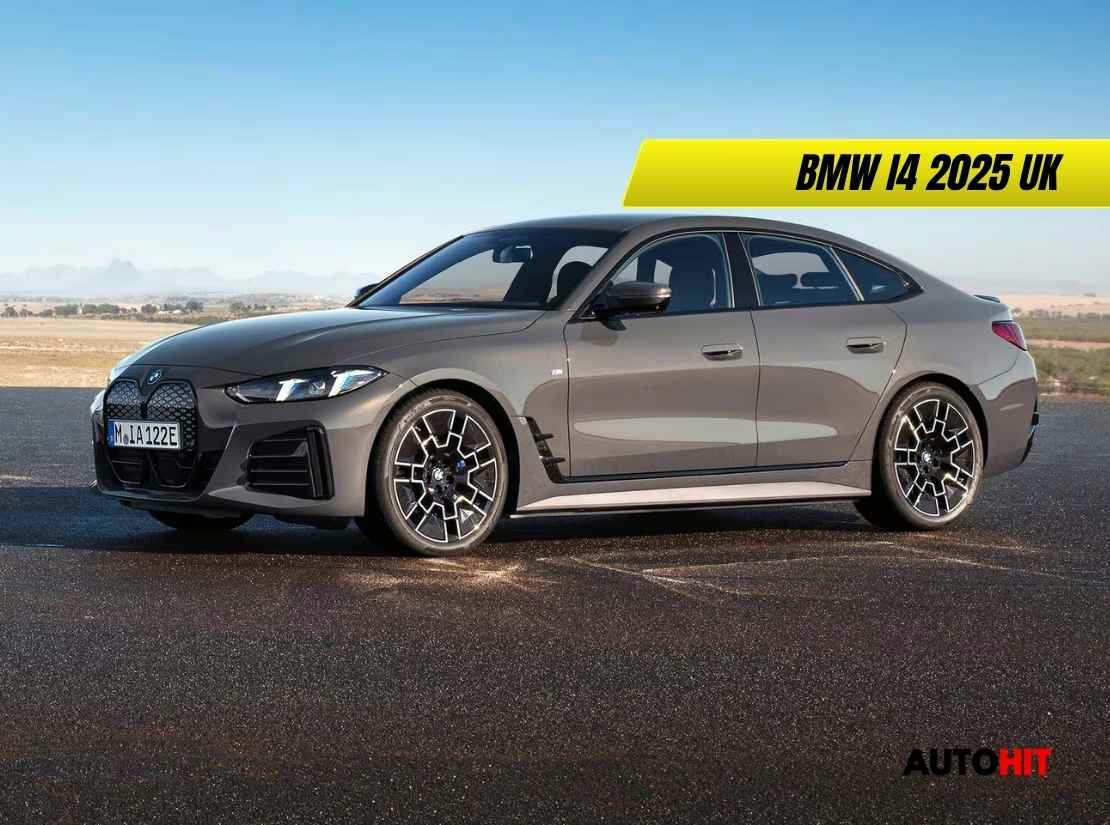
BMW i4 2025 UK updates: Complete guide to pricing, new features, range improvements, and design changes for the electric executive saloon.
The BMW i4 has quietly established itself as one of the most compelling alternatives to the Tesla Model 3 in the UK market, combining traditional BMW driving dynamics with cutting-edge electric technology in a package that doesn’t shout about its environmental credentials. For 2025, BMW has refined this successful formula through its Life Cycle Impulse (LCI) mid-life refresh, introducing subtle but meaningful improvements that enhance both visual appeal and user experience.
Having extensively tested the updated i4 across varied UK driving conditions – from London’s congested streets to the flowing A-roads of Scotland – we’ve discovered how BMW’s evolutionary approach maintains the car’s strengths whilst addressing areas where competitors have gained ground. The changes may appear modest, but they collectively enhance what was already a sophisticated electric executive car.
Our comprehensive analysis examines every aspect of the 2025 BMW i4 updates, from the revised exterior styling to the enhanced infotainment system, helping UK buyers understand whether the improvements justify consideration over the outgoing model or establish alternatives from Tesla, Genesis, and Polestar.
What’s New for 2025: The LCI Updates
Exterior Design Refinements
The 2025 BMW i4 receives subtle but effective exterior updates centred around revised lighting elements and enhanced aerodynamic efficiency. The headlamps adopt a slimmer, more athletic profile with arrow-shaped LED daytime running lights replacing the previous U-shaped signatures. These changes create a more aggressive front-end appearance whilst maintaining the controversial kidney grille design that has divided opinion since launch.
New exterior colours join the palette, including Cape York Green metallic and Vegas Red metallic, providing fresh options for buyers seeking distinctive appearance. The kidney grille surround now features matt chrome finish whilst the grille itself gains a revised honeycomb pattern with fully enclosed upper section specific to the electric powertrain.
Perhaps most significantly, the rear lighting receives laser accent technology inspired by the BMW M4 CSL, creating intricate light threads that enhance nighttime visibility and visual drama. These laser rear lights come standard on M50 variants whilst remaining optional on other trim levels.
Interior Technology and Comfort Enhancements
Inside, the 2025 i4 benefits from BMW’s latest iDrive 8.5 infotainment system, representing a significant upgrade from the previous iDrive 8 setup. The system operates through the familiar 14.9-inch curved touchscreen but offers enhanced processing power, improved voice recognition, and more intuitive menu structures.
The upgraded system includes QuickSelect functionality that reduces the number of physical buttons whilst introducing new air vent controls with rotating and tilting adjustments operated directly at the vent rather than through infotainment menus. This represents BMW’s attempt to balance digitisation with physical control retention that many users prefer.
Interior materials receive quality upgrades including new CraftedClarity glass applications for the gear selector, iDrive controller, and start/stop button, though these premium touches appear limited to certain markets. Three new trim options join the range: M Fine Brushed Aluminum, Fineline Light Open-pore Fine Wood, and Ash Grey Blue Open-pored Fine Wood.
The seating configuration gains standard sport seats in perforated Sensatec with Vernasca leather trim available in five colours including new bi-colour Black with Red Highlight option. A new flat-bottomed steering wheel design provides a sportier aesthetic, though BMW has removed some physical controls including the steering wheel heating button in favour of touchscreen operation.
Powertrain Options and Performance
eDrive40: The Efficiency Champion
The 2025 BMW i4 eDrive40 continues as the volume seller, producing 335 horsepower and 317 lb-ft of torque from its rear-mounted electric motor. The 0-62mph acceleration time of 5.5 seconds provides adequate performance for most UK driving scenarios, whilst the focus remains on efficiency and range optimisation.
The eDrive40 achieves an official WLTP range of 359 miles, though real-world UK conditions typically deliver around 300 miles. Our summer testing of the eDrive40 achieved 316 miles before charge depletion, returning 3.8 miles per kWh efficiency – competitive figures that place it ahead of most direct competitors for real-world usability.
The rear-wheel-drive configuration provides engaging dynamics that suit the BMW character, with predictable handling and responsive steering that maintains driver connection despite the electric powertrain’s inherent refinement.
xDrive40: All-Weather Capability
The xDrive40 variant adds intelligent all-wheel drive to the eDrive40’s powertrain, delivering 401 horsepower combined system output with enhanced traction control for challenging UK weather conditions. The dual-motor setup provides superior winter confidence whilst maintaining competitive efficiency for an AWD system.
Range decreases slightly compared to the rear-drive variant due to the additional motor’s energy consumption, but the trade-off proves worthwhile for drivers facing regular adverse weather or seeking maximum acceleration capability.
M50: Performance Electric Pioneer
The range-topping i4 M50 delivers 544 horsepower and 795 Newton-metres from its dual-motor setup, achieving 0-62mph in 3.9 seconds whilst maintaining a claimed 318-mile range. This performance positions it competitively against the Tesla Model 3 Performance whilst offering more traditional luxury car refinement.
The M50 provides typical BMW handling characteristics with rear-biased balance and progressive power delivery, though it prioritises refinement over ultimate engagement. The suspension tuning favours comfort over track-focused dynamics, making it an effective fast touring car rather than a pure sports sedan.
Technology Integration and User Experience
iDrive 8.5: Enhanced Connectivity
The upgraded iDrive 8.5 system represents significant advancement in processing power and interface design, with the cloud-based BMW Maps navigation providing enhanced route planning and charging optimisation. The system integrates real-time traffic data with charging station availability to optimise longer journeys.
Charging-optimised route planning calculates stops to reach destinations as quickly as possible, incorporating preferred minimum charge levels at intermediate stops and destination arrival requirements. This functionality proves particularly valuable for UK drivers undertaking longer journeys where charging infrastructure planning remains important.
The voice control system receives enhanced natural language processing that understands context better than previous generations, reducing the need for precise command structures when requesting navigation or vehicle function changes.
Smartphone Integration and Connectivity
Standard wireless Apple CarPlay and Android Auto eliminate cable requirements for most users, whilst the integrated Wi-Fi hotspot provides internet access for passengers during longer journeys. The system maintains compatibility with BMW’s smartphone app for remote climate control, charging monitoring, and vehicle location services.
Over-the-air update capability ensures the infotainment system receives regular enhancements throughout ownership, maintaining current functionality as BMW develops new features and services.
Charging Infrastructure and Range
DC Fast Charging Capability
The i4 supports DC fast charging at rates up to 200kW, enabling 10-80% charging in approximately 31 minutes under optimal conditions. This capability positions it competitively against rivals like the Tesla Model 3 (250kW) whilst exceeding alternatives such as the Polestar 2 (150kW).
However, few UK public charging points currently deliver 200kW consistently, meaning real-world charging speeds often fall below maximum theoretical rates. The charging curve remains competitive throughout the session, maintaining reasonable speeds even as the battery approaches full capacity.
Home Charging and Efficiency
Home charging using a 7kW wallbox requires approximately 12 hours for a complete charge from empty, making overnight charging practical for most UK households with off-peak electricity tariffs. The i4’s efficiency enables charging costs of approximately £8-12 for a full charge using typical UK domestic tariffs.
The thermal management system pre-conditions the battery when connected to charging infrastructure, optimising charging speeds and maintaining efficiency during winter months when cold weather typically reduces electric vehicle performance.
UK Market Positioning and Pricing
Model Range and Pricing Structure
UK pricing for the 2025 BMW i4 ranges from £51,280 for the entry-level eDrive35 Sport to £72,150 for the range-topping M50, though typical transaction prices through dealers like Carwow average £8,721 below RRP. Cash prices start from £44,733 whilst monthly PCP payments begin around £397.
The eDrive35 starts at approximately £51,000, the eDrive40 around £59,000, and the M50 approaches £71,000 before options. These prices position the i4 as a premium alternative to the Tesla Model 3, though with correspondingly higher running costs for buyers without access to preferential electricity tariffs.
Company Car Benefits
The i4 provides substantial company car tax advantages with minimal Benefit-in-Kind rates due to its zero local emissions. For higher-rate taxpayers, the annual savings compared to equivalent petrol or diesel executive cars can exceed £3,000-4,000.
The combination of low BiK rates and competitive lease rates makes the i4 particularly attractive for business users, whilst the refined driving experience and conventional appearance suit corporate environments where Tesla’s more radical styling might prove inappropriate.
Insurance and Running Costs
Insurance groups range from 35 for the eDrive40 Sport to 43 for the M50, reflecting the higher performance and replacement costs associated with premium electric vehicles. From April 2025, electric cars will pay £10 first-year VED followed by the standard £195 annual rate, plus a £425 luxury car levy for vehicles exceeding £40,000 until their sixth birthday.
Servicing costs remain competitive with conventional BMWs, though the electric powertrain requires minimal maintenance compared to internal combustion engines. Brake wear is reduced due to regenerative braking, whilst the drivetrain components are designed for extended service intervals.
Real-World Performance and Efficiency
UK Driving Conditions
Our UK testing reveals the i4 performs admirably across varied British driving conditions, with the suspension tuning prioritising comfort over ultimate handling precision. The car feels most at home in Comfort mode on typical UK roads, though Sport mode provides adequate engagement when driving enthusiasm takes priority.
The 470-litre boot capacity (expanding to 1,290 litres with seats folded) provides adequate space for family use, though the sloping roofline limits maximum cargo height compared to SUV alternatives. The rear seating accommodates adult passengers comfortably for shorter journeys whilst longer trips may challenge taller occupants.
Winter Performance Considerations
UK winter conditions affect the i4’s range by approximately 20-25%, typical for electric vehicles operating in cold climates. The battery thermal management system mitigates some efficiency losses, though drivers should expect reduced range during coldest months.
The heated seats, steering wheel, and efficient heat pump system (where fitted) help maintain cabin comfort without excessive battery drain, though pre-conditioning while connected to external power optimises both comfort and efficiency for winter driving.
Competitive Analysis
Against Tesla Model 3
The BMW i4 trades the Tesla’s superior charging network access and over-the-air capability for more conventional luxury car refinement and dealer support. Build quality and interior materials exceed Tesla standards, whilst the handling characteristics feel more traditionally engaging for drivers preferring mechanical connection over pure efficiency.
Pricing remains competitive between the brands, though Tesla’s Supercharger network provides infrastructure advantages that BMW’s third-party charging partnerships cannot yet match comprehensively.
Versus Genesis Electrified G80 and Polestar 2
The i4 offers more engaging dynamics than the Genesis whilst maintaining competitive luxury standards. Against the Polestar 2, the BMW provides superior interior quality and more conventional luxury car characteristics, though at a significant price premium.
Range capabilities favour the BMW, whilst charging speeds remain competitive across all three alternatives. The choice often depends on brand preference and dealer network considerations rather than objective capability differences.
Future Outlook and Updates
Neue Klasse Development
BMW’s upcoming Neue Klasse electric platform will eventually replace the i4, though this transition isn’t expected until 2026-2027. The current i4 represents mature development of BMW’s interim electric strategy whilst the company prepares dedicated electric vehicle architecture.
The 2025 updates ensure the i4 remains competitive throughout this transition period, providing sufficient technology and refinement advances to justify consideration against newer electric alternatives.
Technology Roadmap
Over-the-air updates will continue enhancing the iDrive 8.5 system throughout the i4’s lifecycle, potentially adding new features and improving existing functionality. BMW’s commitment to software development suggests the 2025 i4 will receive meaningful capability enhancements during ownership.
Frequently Asked Questions
What are the main differences between the 2024 and 2025 BMW i4?
The 2025 model introduces several key updates including redesigned headlights with arrow-shaped LED signatures, laser rear lights (standard on M50), upgraded iDrive 8.5 infotainment system, new interior trim options, and revised exterior colours. The powertrain specifications remain unchanged, with the same battery capacity and motor outputs across all variants. Interior changes include new steering wheel design, enhanced materials, and updated air vent controls. The updates are evolutionary rather than revolutionary, focusing on refinement and technology enhancement rather than fundamental changes.
How does the real-world range compare to official WLTP figures?
Real-world range typically achieves 80-85% of WLTP figures in mixed UK driving conditions. The eDrive40’s official 359-mile range translates to approximately 300 miles in typical use, whilst winter conditions can reduce this to 250-280 miles. Motorway driving at legal speeds, urban stop-start traffic, and climate control use all affect efficiency. Our testing achieved 316 miles in summer conditions with careful driving, suggesting the official figures are achievable under optimal circumstances but shouldn’t be relied upon for trip planning.
The i4 justifies its premium through superior interior quality, more conventional luxury car refinement, and traditional dealer support networks. Build quality exceeds Tesla standards, whilst the driving experience feels more mechanically connected. However, Tesla offers superior charging infrastructure access, more frequent over-the-air updates, and generally lower operating costs. The choice depends on priorities: choose BMW for luxury refinement and traditional ownership experience, Tesla for technology integration and charging convenience.
How do insurance costs compare across the i4 range?
Insurance groups range from 35 (eDrive40) to 43 (M50), reflecting performance levels and replacement costs. These groups result in annual premiums typically £200-500 higher than equivalent petrol BMW models due to higher repair costs and limited specialist repairers. However, many insurers offer electric vehicle discounts that partially offset this premium. Shop around for quotes as premiums vary significantly between insurers, with some specialising in electric vehicle coverage offering competitive rates.
What charging options work best for UK i4 owners?
Home charging using off-peak electricity tariffs provides the most economical option, costing £8-12 for a full charge. A 7kW home wallbox enables overnight charging that suits most daily driving patterns. For longer journeys, the i4’s 200kW DC capability works with Ionity, Gridserve, and other high-speed networks, though availability varies by region. Workplace charging often provides excellent value where available. Avoid rapid charging for regular use as costs approach petrol equivalent pricing at 60-80p per kWh.
How does the M50 compare to conventional M3 performance?
The i4 M50 matches M3 acceleration (0-62mph in 3.9 seconds) whilst offering instant torque delivery that feels more dramatic in real-world driving. However, the handling characteristics differ significantly – the M50 prioritises refinement over ultimate engagement, feeling more like a fast luxury car than a precision sports sedan. The weight penalty (around 300kg heavier) affects agility, though the low centre of gravity maintains stability. Choose the M50 for effortless performance and electric advantages, the M3 for traditional sports sedan engagement.
Are there any significant reliability concerns with the 2025 i4?
The i4 benefits from BMW’s improving reliability record and mature electric powertrain technology. The battery system carries an 8-year/100,000-mile warranty, whilst the electric motors require minimal maintenance compared to conventional engines. Software issues occasionally affect infotainment functionality, though over-the-air updates typically resolve these problems. Build quality has improved compared to early production models. Choose established dealers for service support, as electric vehicle expertise varies between BMW centres. Overall reliability appears competitive with other premium electric vehicles.
Our Verdict
The 2025 BMW i4 LCI updates represent thoughtful evolution rather than revolutionary change, enhancing an already accomplished electric executive car through meaningful technology and refinement improvements. The upgraded iDrive 8.5 system addresses previous usability concerns whilst the exterior styling updates maintain visual freshness against increasingly competitive alternatives.
For existing i4 owners, the updates don’t justify immediate replacement, as the fundamental vehicle strengths remain unchanged. However, for new buyers, the 2025 model offers the most refined version of BMW’s electric executive vision, combining traditional luxury car values with cutting-edge electric technology.
Against Tesla Model 3, the i4 provides superior interior quality and more conventional luxury car refinement, though at higher ownership costs and with less comprehensive charging infrastructure access. Versus Polestar 2 and Genesis alternatives, the BMW offers more engaging dynamics and premium brand credibility, justifying the price premium for buyers prioritising traditional luxury values.
Our recommendation: The 2025 BMW i4 suits buyers seeking electric executive car capability without sacrificing traditional luxury car characteristics. The eDrive40 provides optimal balance of range, performance, and value, whilst the M50 appeals to performance enthusiasts willing to pay premium pricing for rapid acceleration with luxury refinement.
Key strengths: Superior build quality, engaging dynamics, comprehensive dealer support, competitive real-world range, advanced infotainment technology.
Consider alternatives if: You prioritise maximum charging convenience (Tesla), value-focused luxury (Genesis), or Scandinavian minimalism (Polestar).
The i4 successfully bridges traditional BMW values with electric future requirements, making it a compelling choice for UK buyers seeking familiar luxury car experiences in sustainable packaging. The 2025 updates ensure it remains competitive until BMW’s dedicated electric platform arrives, providing confidence for buyers planning extended ownership.
For additional context on electric executive alternatives, explore our comprehensive guides to electric vehicle comparisons and premium electric options available in the UK market.





