
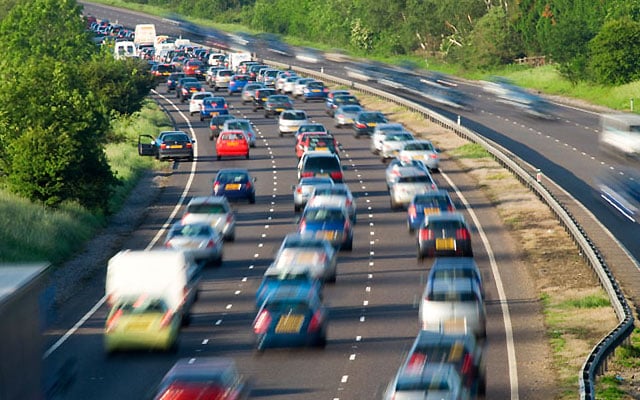
Motorway driving in the UK is straightforward once you understand lane discipline, safe joining and how to maintain a good gap to the vehicle ahead. The main priorities are to merge smoothly, stay in the left lane unless overtaking and take regular breaks on longer trips.
Key Points
- Join the motorway from the slip road at a speed close to the traffic flow.
- Stay in the left lane unless overtaking.
- Keep a safe following gap, and increase it in rain.
- Take a break at least every couple of hours on long journeys.
- Do not use the hard shoulder unless you have an emergency or signs tell you to.
- Plan your exit early and signal in good time before leaving.
Joining Safely
The safest way to join a motorway is to use the slip road to match the speed of the traffic already on the carriageway. Check mirrors, keep an eye on blind spots and move into a clear gap without making sudden steering inputs.
It helps to think ahead while you accelerate. If you arrive too slowly, you can disrupt traffic; if you arrive too fast, you leave yourself less time to judge the gap properly.
Lane Discipline
On UK motorways, the left lane is the normal driving lane and the right-hand lanes are for overtaking. Once the overtake is complete, return to the left when it is safe to do so.
Staying out of the right lane when you do not need it makes traffic smoother and reduces frustration for drivers behind you. It also lowers the chance of becoming boxed in among faster-moving vehicles.
Speed And Space
The legal speed limit for cars on UK motorways is 70 mph, and a steady cruising speed is usually easier to manage than constantly changing pace. Keeping a consistent speed helps traffic flow and gives other drivers a clearer picture of what you are doing.
A good rule is the two-second gap in dry conditions and more in rain. That extra space gives you time to react if traffic slows suddenly, which matters because motorway braking needs more distance than city driving.
Breaks And Fatigue
Long motorway journeys are tiring even when the road is smooth and traffic is light. A break every couple of hours helps reduce fatigue, improve concentration and make the rest of the trip easier to manage.
In my experience, the first signs of fatigue are often subtle: you start missing details, feeling less patient or settling into a fixed gaze. That is the point to stop sooner rather than later.
What lane should I use on a motorway?
Use the left lane as your normal driving lane and move right only when overtaking or when traffic conditions require it.
How fast can I drive on a UK motorway?
For cars, the limit is 70 mph unless signs or conditions require a lower speed.
How close should I follow the car in front?
Use at least a two-second gap in dry conditions and more in rain.
What should I do when joining a motorway?
Match the speed of the traffic on the carriageway, check mirrors and blind spots, and merge into a clear gap from the slip road.
Can I use the hard shoulder if traffic is heavy?
No. The hard shoulder should only be used in an emergency or when signs explicitly allow it.
How often should I stop on a long motorway drive?
Take a break at least every couple of hours to stretch, rest and reset your concentration.
What is the safest way to leave the motorway?
Signal in good time, move left early if needed and use the slip road smoothly rather than braking sharply at the last moment.
Conclusion
Motorway driving becomes much less stressful when you keep to the left, merge at the right speed and leave generous space around the car. For UK drivers, the safest habits are also the simplest ones: stay predictable, stay alert and take breaks before fatigue builds.





