
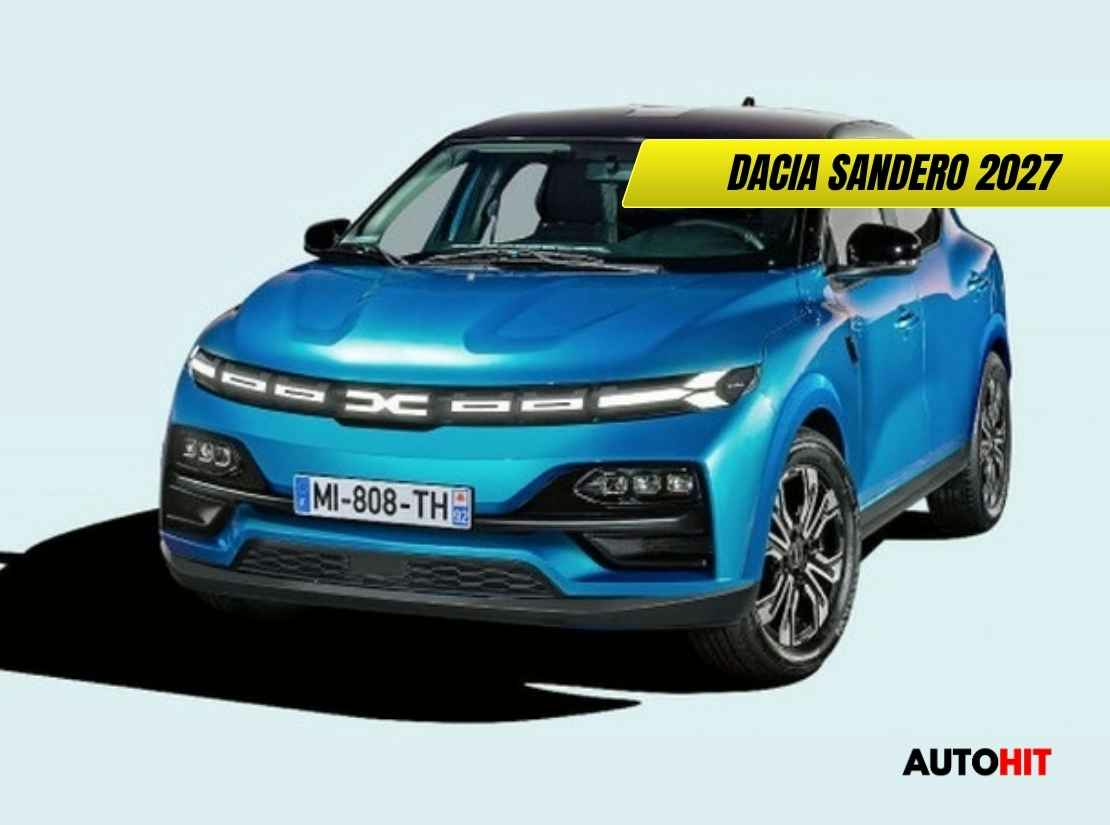
Dacia Sandero 2027 UK: Discover the 5 key design changes coming to Europe’s best-selling car, including electric power and rugged new styling
The Dacia Sandero has quietly become Europe’s automotive success story, claiming the title of best-selling car across the continent for consecutive years through its uncompromising focus on value and practicality. For UK buyers seeking essential motoring without premium pricing, the Romanian brand has delivered exactly what the market demanded: a proper car that simply works without breaking the bank.Now, as we approach 2027, Dacia is preparing the most significant transformation in the Sandero’s history. The fourth generation will introduce electric power for the first time whilst embracing a more rugged design philosophy that reflects the brand’s evolving outdoor-focused identity. These changes promise to maintain the Sandero’s value proposition whilst future-proofing it for an increasingly electrified automotive landscape.Having spoken extensively with Dacia executives and design teams, we’ve uncovered five fundamental design changes that will define the 2027 Sandero. These alterations represent more than cosmetic updates – they signal Dacia’s commitment to electric affordability and utilitarian design that distinguishes it from mainstream manufacturers chasing premium positioning.
The Five Revolutionary Design Changes1. Electric-First Architecture with CMF-B EV Platform
The most significant change for 2027 involves migrating to Renault Group’s dedicated CMF-B EV platform, shared with the upcoming Renault 4 and 5 electric models. This represents a fundamental shift from the current CMF-B architecture, enabling purpose-built electric capability rather than retrofitted electrification.The new platform brings several advantages that will transform the Sandero experience. Battery placement beneath the floor creates a lower centre of gravity whilst maintaining the generous interior space that has made the Sandero popular with UK families. The electric drivetrain eliminates the transmission tunnel, potentially increasing rear passenger space further.UK Market Implications: The electric Sandero will likely start around £18,000-20,000, positioning it as Britain’s most affordable new electric car. This pricing strategy could democratise electric vehicle ownership for UK buyers currently priced out of the EV market.Battery and Range Strategy: Dacia has confirmed the electric Sandero won’t chase maximum range, instead prioritising affordability through smaller battery packs. Expect 40-50kWh batteries delivering 200-250 miles range – adequate for most UK daily driving whilst keeping costs manageable.
2. Rugged Outdoor-Inspired Exterior Design
Dacia design boss David Durand has confirmed the 2027 Sandero will embrace the brand’s increasingly outdoor-focused design language whilst remaining recognisably a hatchback rather than becoming another SUV. This represents a careful balance between modern ruggedness and traditional supermini proportions.The exterior design will incorporate elements from Dacia’s successful SUV range, including the Duster and upcoming Bigster. Expect wider wheel arches, a higher beltline, and more muscular surfacing that gives the car a crossover-influenced appearance without the height penalty.Front End Evolution: The characteristic Dacia grille will evolve to reflect both the brand’s new identity and electric powertrain requirements. The electric version will feature a largely closed grille for aerodynamic efficiency, though Durand emphasises that electric power doesn’t necessitate radical styling departures.Ground Clearance Increase: The new Sandero will sit higher off the ground than current models, providing increased confidence on rough roads and emphasising the brand’s utility-focused positioning. This addresses UK buyers’ concerns about poor road surfaces whilst maintaining car-like handling characteristics.
3. Enhanced Interior Practicality with Modern Technology
The interior transformation focuses on maximising the space advantages created by electric architecture whilst introducing technology features that were previously exclusive to premium brands. Spy shots of development prototypes reveal significantly larger infotainment screens, suggesting Dacia is serious about technology integration.Space Optimisation: The CMF-B platform already delivered significant space improvements for the current generation, with 90 litres additional boot capacity and improved rear legroom. The electric version’s flat floor should provide further benefits, particularly for rear passenger comfort.Technology Integration: Whilst maintaining Dacia’s no-nonsense approach, the 2027 Sandero will likely feature comprehensive smartphone integration, advanced driver assistance systems, and connectivity features that rival more expensive alternatives. The key lies in delivering these features without complexity that might alienate traditional Dacia buyers.Material Quality Improvements: Current Sandero models already demonstrate surprisingly good interior quality for their price point, and the 2027 iteration should continue this evolution with more sophisticated materials and improved build quality throughout.
4. Stepway Differentiation and Model Range Strategy
Dacia executives have confirmed plans to further differentiate the Sandero Stepway variant from the standard model, potentially creating what amounts to separate model lines whilst sharing underlying architecture to maintain cost efficiencies.Stepway Evolution: The high-riding Stepway variant will likely become even more SUV-like in appearance, with additional plastic cladding, roof rails, and design elements that emphasise its outdoor capabilities. Some reports suggest the Stepway could evolve into a standalone compact SUV model entirely.Market Positioning: This strategy reflects Dacia’s recognition that Sandero and Stepway buyers represent different market segments. Company research shows these buyer groups rarely cross-shop between variants, justifying increased differentiation.UK Appeal: For British buyers, the enhanced Stepway positioning could provide SUV-style presence and capability at supermini pricing, appealing to families seeking elevated driving positions without premium costs.
5. Sustainable Manufacturing and Cost Engineering
The 2027 Sandero will demonstrate Dacia’s commitment to environmental responsibility beyond just electrification, incorporating sustainable materials and manufacturing processes whilst maintaining the cost discipline that defines the brand.Material Innovation: CEO Denis Le Vot has hinted at potential sodium-based battery chemistry to reduce costs, acknowledging trade-offs in energy density but emphasising affordability benefits. This reflects Dacia’s willingness to prioritise accessibility over ultimate performance.Manufacturing Strategy: The electric Sandero will likely be built in existing Renault facilities in France rather than requiring investment in Dacia’s Romanian plant, enabling faster time-to-market whilst leveraging established electric vehicle production expertise.Cost Management: Dacia’s success depends on maintaining affordability whilst adding electric capability. The company explicitly rejects chasing maximum range or fastest charging speeds, instead focusing on delivering adequate capability at minimum cost.
Market Positioning and CompetitionUK Pricing Strategy
Current Sandero pricing starts from £14,715, making it one of Britain’s most affordable new cars. The electric version will inevitably command a premium, though Dacia’s commitment to accessibility suggests pricing significantly below £25,000.Target Pricing: Industry sources suggest the electric Sandero could start around £18,000-20,000 after any government incentives, positioning it as the UK’s most affordable new electric car by a substantial margin.Value Proposition: This pricing would undercut alternatives like the MG4 by £5,000-7,000 whilst offering similar practical capability, potentially transforming electric vehicle accessibility for cost-conscious UK buyers.
Competitive Landscape
The 2027 Sandero will face competition from several directions, including traditional superminis adding electric variants and purpose-built electric vehicles targeting the budget segment.Traditional Rivals: Within the Renault Group, the Sandero Electric will compete against models like the Twingo Electric (expected around £17,000), requiring careful positioning to maintain distinct value propositions.Chinese Competition: Leapmotor’s T03, available from £15,995, represents new competition in the budget electric segment, though the Sandero’s European build quality and dealer network should provide advantages.Market Opportunity: The budget electric segment remains relatively empty in the UK market, providing significant opportunity for an affordable, well-engineered electric supermini that maintains Dacia’s practical focus.
Technology and Engineering DevelopmentsElectric Powertrain Options
The Sandero Electric will likely share powertrain components with Renault’s electric models, offering 70kW, 90kW, and potentially 110kW motor options with 40kWh and 52kWh battery variants.Performance Expectations: The base electric Sandero should deliver adequate performance for UK driving conditions, with 0-62mph times around 10-12 seconds – competitive with current petrol variants whilst offering instant torque delivery that enhances urban driveability.Charging Capability: Expect DC fast charging capability around 80-100kW, enabling 10-80% charging in approximately 35-45 minutes. This represents reasonable capability for occasional longer journeys whilst keeping costs manageable.
Safety and Driver Assistance
Current Sandero models already include comprehensive safety technology mandated by EU regulations, and the 2027 iteration should build upon this foundation with enhanced systems enabled by the new platform’s electrical architecture.Standard Equipment: Expect automatic emergency braking, lane keeping assistance, traffic sign recognition, and other systems as standard across the range – features that were premium options just a few years ago.Advanced Features: Higher trim levels could include adaptive cruise control, parking assistance, and 360-degree cameras, bringing advanced safety technology to the budget segment.
Timeline and Production StrategyDevelopment Schedule
Dacia has confirmed the 2027 timeline for the new Sandero generation, with production likely beginning late 2027 for 2028 model year sales in the UK.Concept Preview: A production-ready concept is expected in 2026, providing clear indication of final design direction and specification details.Market Launch: UK sales should commence in early 2028, positioning the electric Sandero to benefit from any remaining government incentives whilst targeting buyers ahead of the 2030 ICE ban.
Production Location
The electric Sandero will likely be built at existing Renault facilities in France rather than requiring new investment in Romania, enabling faster market introduction whilst leveraging established electric vehicle production expertise.Manufacturing Benefits: European production provides advantages including reduced transportation costs, EU tariff avoidance, and quality assurance that benefits UK buyer confidence.Capacity Planning: Renault’s existing electric vehicle facilities have spare capacity that could accommodate Sandero production without compromising other model programmes.
UK Market ImplicationsElectric Vehicle Accessibility
The electric Sandero represents potential transformation of UK electric vehicle accessibility, offering genuine electric motoring at prices that approach current petrol car levels.Market Penetration: An £18,000-20,000 electric car could accelerate UK electric vehicle adoption significantly, particularly among cost-conscious buyers who view current EVs as prohibitively expensive.Infrastructure Requirements: The Sandero’s focus on affordable daily transport rather than maximum range suits the UK’s developing charging infrastructure, requiring less reliance on rapid charging networks.
Brand Evolution
The 2027 Sandero represents Dacia’s evolution from basic transport to sustainable mobility leader, maintaining value focus whilst embracing environmental responsibility.Market Positioning: Success of the electric Sandero could establish Dacia as the brand of choice for practical electric motoring, differentiating it from premium-focused alternatives.Dealer Network: Dacia’s expanding UK dealer network provides foundation for electric vehicle sales, though charging capability and technician training will require investment.
Frequently Asked QuestionsWill the 2027 Dacia Sandero Electric be available in the UK?
Yes, Dacia has confirmed the electric Sandero will be available across European markets including the UK, with sales expected to begin in early 2028. The model represents Dacia’s flagship electric vehicle for mainstream markets, making UK availability essential for the brand’s electrification strategy. European production will likely ensure competitive pricing compared to Chinese-built alternatives. However, specific UK trim levels and pricing will be announced closer to launch date.
How much will the Dacia Sandero Electric cost in the UK?
While official UK pricing hasn’t been announced, industry sources suggest the electric Sandero could start around £18,000-20,000 before any government incentives. This would position it as the UK’s most affordable new electric car by a significant margin. Dacia’s strategy explicitly targets accessibility over maximum capability, suggesting pricing will remain competitive with current petrol superminis. Final UK pricing will depend on specification levels, battery options, and currency fluctuations between now and launch.
What range will the Dacia Sandero Electric offer?
Dacia has confirmed the electric Sandero won’t target maximum range, instead prioritising affordability through smaller battery packs offering practical capability for daily use. Expect 200-250 miles WLTP range from 40-50kWh battery variants, adequate for most UK daily driving patterns. The company explicitly rejects chasing 300+ mile ranges that require larger, more expensive batteries. This range should suit UK buyers seeking affordable electric motoring rather than maximum capability.
How will the 2027 Sandero differ from the current model?
The 2027 Sandero will feature more rugged exterior styling influenced by Dacia’s SUV models, higher ground clearance, and wider wheel arches whilst remaining recognisably a hatchback. The new CMF-B EV platform enables electric power whilst improving interior space through flat floor design. Technology upgrades include larger infotainment screens and enhanced connectivity features. However, the fundamental value-focused philosophy and practical approach will remain unchanged.
Will there still be petrol and LPG versions of the 2027 Sandero?
Dacia design boss David Durand has confirmed the 2027 Sandero will remain on the CMF-B architecture, which supports both electric and combustion powertrains. While the focus will be on electric variants, conventional engines may continue for markets where electric infrastructure remains limited. For the UK market, hybrid technology similar to that used in the Jogger could feature in non-electric variants to meet emissions regulations before the 2030 ICE ban.
How does the Sandero Electric compare to Chinese budget EVs?
The Sandero Electric will compete directly with models like the Leapmotor T03 (from £15,995) and other Chinese budget EVs. However, European production will likely provide advantages including build quality assurance, established dealer networks, and avoidance of potential tariff issues affecting Chinese imports. Dacia’s reputation for durability and practical design should appeal to UK buyers seeking reliable electric motoring rather than just low prices. The extensive UK dealer network also provides service advantages over some Chinese alternatives.
When will we see the first official images of the 2027 Sandero?
Dacia is expected to reveal a production-ready concept version of the electric Sandero sometime in 2026, ahead of the 2027 production start. Design boss David Durand has hinted at the possibility of a concept being shown before the final production design. Given the typical automotive development timeline, expect first official design previews in late 2025 or early 2026, with final production specification revealed in 2027. Spy shots of development prototypes may appear throughout 2025 as testing intensifies.
Our Verdict
The 2027 Dacia Sandero represents the most significant evolution in the model’s history, transforming from budget petrol transport to affordable electric pioneer whilst maintaining the practical focus that has made it Europe’s best-selling car.For UK buyers, the five key design changes create compelling value propositions across multiple fronts. The electric powertrain offers genuine zero-emission motoring at prices approaching current petrol alternatives, whilst the rugged design evolution provides SUV-influenced presence without SUV pricing or compromises.The platform transformation to CMF-B EV enables purpose-built electric capability that should deliver superior refinement and space utilisation compared to converted petrol cars. Dacia’s explicit focus on affordability over maximum range creates realistic electric motoring for everyday UK use.Against premium alternatives, the Sandero Electric offers compelling advantages for rational buyers. Projected pricing of £18,000-20,000 undercuts conventional electric alternatives by substantial margins whilst delivering adequate capability for most British driving patterns.Key considerations: The success depends on execution quality and final pricing. If Dacia maintains its reliability reputation whilst delivering genuine electric vehicle capability at promised prices, the 2027 Sandero could transform UK electric vehicle adoption.Our recommendation: For UK buyers seeking affordable electric motoring without premium pricing, the 2027 Sandero Electric deserves serious consideration. The combination of practical electric capability, enhanced design, and Dacia’s value focus creates unique positioning in an increasingly expensive electric vehicle market.Bottom line: The five design changes represent evolution rather than revolution, enhancing the Sandero’s core strengths whilst adding electric capability and contemporary appeal. For budget-conscious UK buyers, this could represent the electric vehicle they’ve been waiting for.The 2027 Sandero promises to maintain Dacia’s value leadership whilst future-proofing the brand for electric mobility. If delivered as promised, it could democratise electric vehicle ownership and establish new benchmarks for affordable sustainable transport.For additional context on budget-friendly automotive options, explore our comprehensive guides to affordable SUVs under £25k and the best hybrid cars for value-conscious buyers.





