
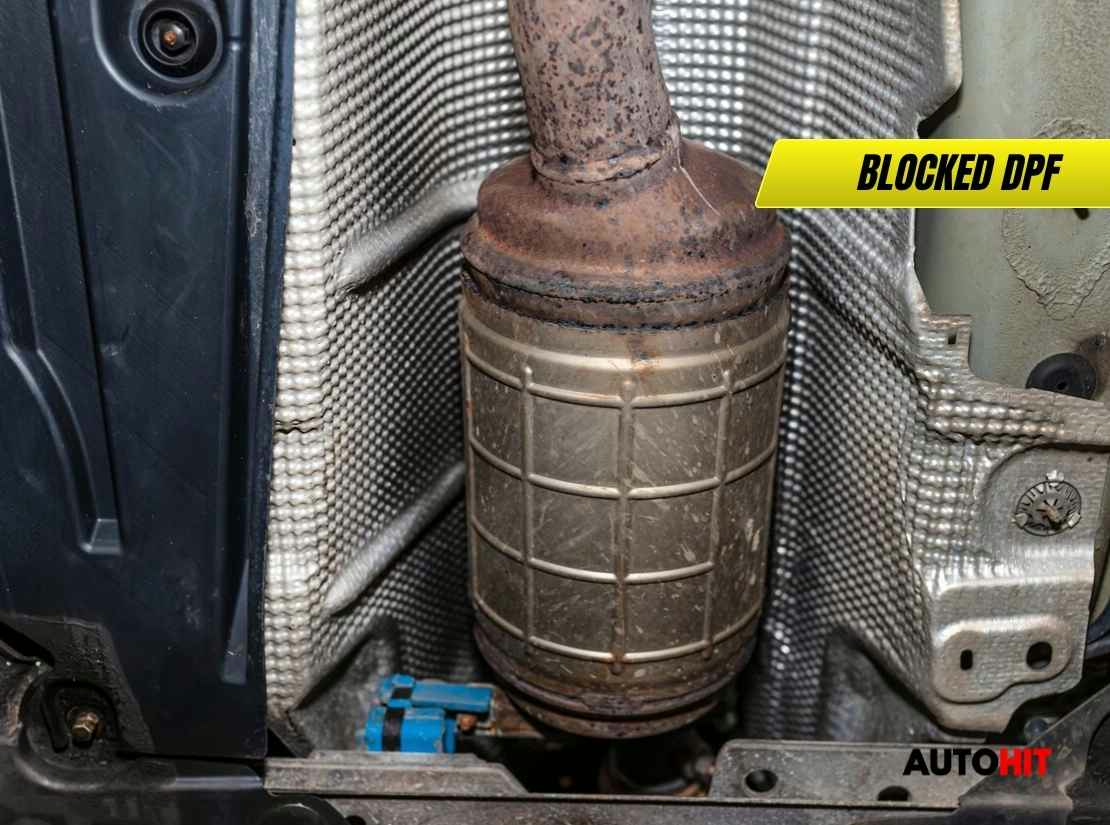
Blocked DPF causing reduced power and black smoke? Our guide covers symptoms, regeneration procedures, repair costs, and prevention tips for UK diesel drivers.
There’s perhaps no modern diesel problem more frustrating than a blocked Diesel Particulate Filter (DPF), and according to our analysis at AutoHit, this issue affects hundreds of thousands of UK drivers annually, often striking at the most inconvenient moments and leaving perfectly serviceable cars in limp mode. Having investigated countless cases of DPF problems and consulted with diesel specialists across Britain, we’ve discovered that understanding DPF operation and maintenance can prevent most issues while knowing how to respond correctly when problems occur can save thousands in unnecessary repairs.
The DPF represents one of the most sophisticated pollution control devices ever fitted to road vehicles, designed to capture and burn off microscopic soot particles that would otherwise be released into the atmosphere. However, this environmental benefit comes with maintenance requirements that many drivers don’t fully understand, leading to expensive problems that are often entirely preventable through proper driving habits and timely intervention.
What makes DPF issues particularly problematic for UK drivers is our driving patterns – short urban journeys, stop-start traffic, and lower-speed driving that prevents the high exhaust temperatures needed for proper DPF regeneration. We’ve spent considerable time researching both the technical aspects of DPF operation and the real-world solutions that work, providing you with the knowledge needed to keep your diesel running smoothly while protecting the environment.
Understanding DPF Technology and Operation
Modern DPF systems represent sophisticated engineering designed to eliminate visible particulate emissions while maintaining engine performance and reliability.
How DPF Systems Work
Particulate Capture: The DPF contains a ceramic honeycomb structure with microscopic pores that trap soot particles as exhaust gases pass through. Over time, these particles accumulate and begin to block the filter.
Regeneration Process: When sensors detect sufficient soot accumulation, the engine management system initiates regeneration – a controlled process that raises exhaust temperatures to 600°C+, burning off trapped particles and converting them to harmless ash.
Automatic Operation: Modern systems manage regeneration automatically, typically every 300-500 miles depending on driving conditions. The process usually occurs during normal driving without driver awareness.
Monitoring Systems: Sophisticated sensors monitor pressure differences across the filter, exhaust temperatures, and soot loading to determine when regeneration is needed and whether it’s completing successfully.
Types of Regeneration
Passive Regeneration: Occurs naturally during highway driving when exhaust temperatures reach 350°C+. This continuous process prevents excessive soot buildup without active intervention.
Active Regeneration: The engine management system actively raises exhaust temperatures through post-injection of fuel or other methods when passive regeneration isn’t sufficient.
Service Regeneration: Forced regeneration performed by technicians using diagnostic equipment when automatic systems can’t complete the process due to excessive soot loading.
Recognizing DPF Problems: Key Symptoms
Understanding early warning signs helps prevent minor DPF issues from becoming expensive repairs requiring filter replacement or engine damage.
Primary Warning Signs
DPF Warning Light: The most obvious indicator appears as an amber or red light on the dashboard, often showing a filter symbol or “DPF” text. Early attention to this warning can prevent more serious problems.
Reduced Engine Power: When the DPF becomes severely blocked, the engine enters “limp mode” with significantly reduced power output to prevent damage. This safety feature can leave you stranded but protects expensive engine components.
Black Smoke from Exhaust: Visible black smoke indicates incomplete combustion often caused by restricted exhaust flow from a blocked DPF. This symptom typically accompanies other warning signs.
Poor Fuel Economy: A partially blocked DPF forces the engine to work harder, increasing fuel consumption noticeably. Many drivers first notice DPF problems through unexpected drops in fuel efficiency.
Secondary Symptoms
Engine Roughness: Restricted exhaust flow can cause irregular engine operation, particularly at idle or during acceleration. The engine may feel hesitant or lack its usual smoothness.
Unusual Exhaust Odours: A blocked DPF can create distinctive smells – sometimes described as burning or acidic – as incomplete combustion products accumulate in the system.
Frequent Regeneration Attempts: If the car seems to run fans longer after stopping or the exhaust remains hot for extended periods, it may be attempting repeated regeneration cycles.
Error Codes: Diagnostic scanners reveal specific fault codes related to DPF pressure, temperature, or regeneration failure, providing precise information about system problems.
Why DPF Blocking Occurs
Understanding the causes of DPF problems helps prevent their occurrence and guides appropriate solutions when problems develop.
Driving Pattern Impact
Urban Driving: Short journeys, frequent stops, and low-speed driving prevent exhaust temperatures from reaching the 350°C+ needed for passive regeneration. City driving represents the most challenging conditions for DPF systems.
Cold Weather Operation: Winter conditions exacerbate DPF problems as engines take longer to reach operating temperature and drivers often make shorter journeys when roads are challenging.
Engine Loading: Light engine loads during gentle driving don’t generate sufficient exhaust heat for effective regeneration. Occasional higher-load driving helps maintain DPF health.
Journey Length: Trips under 20 minutes rarely allow complete warm-up and regeneration cycles, causing gradual soot accumulation that eventually blocks the filter.
Maintenance-Related Causes
Poor Quality Fuel: Low-grade diesel fuel or contaminated supplies can increase soot production and introduce contaminants that interfere with DPF operation.
Oil Contamination: Worn engines that allow oil consumption produce ash deposits that can’t be burned off during regeneration, gradually reducing DPF capacity.
Faulty Sensors: Malfunctioning pressure, temperature, or air flow sensors can prevent proper regeneration timing or completion, allowing excessive soot buildup.
Neglected Service: Overdue oil changes, dirty air filters, or worn fuel injection components can increase soot production and DPF loading beyond system capacity.
Immediate Actions When DPF Warning Appears
Quick and appropriate response to DPF warnings can often resolve problems without expensive professional intervention.
Emergency Regeneration Procedure
Highway Driving: When the DPF warning light illuminates, drive on a dual carriageway or motorway at steady speeds of 40-60mph for 15-20 minutes. Maintain 2,000-3,000 rpm to generate sufficient exhaust heat.
Avoid Stopping: Don’t stop the engine during regeneration attempts as this interrupts the process and may worsen the problem. Plan a route that allows continuous driving.
Monitor Progress: Watch for the warning light to extinguish, indicating successful regeneration. Some vehicles show progress through dashboard displays or different warning light patterns.
Safety Considerations: Choose safe roads for regeneration drives. Avoid urban areas where stop-start traffic might interrupt the process or create safety concerns with hot exhaust systems.
What NOT to Do
Ignore Warnings: DPF problems worsen rapidly if ignored. Early intervention usually succeeds while delayed action often requires expensive professional solutions.
Short Urban Trips: Avoid making short journeys when DPF warnings are active as these prevent regeneration and can cause complete filter blocking.
Engine Switching: Don’t turn the engine off during regeneration as this stops the process and may require starting over with more difficult conditions.
Aggressive Driving: While highway speeds help regeneration, excessive speeds or harsh acceleration aren’t necessary and may cause other problems.
Professional Solutions and Repair Options
When DIY regeneration attempts fail, several professional solutions can restore DPF function without expensive replacement.
Forced Regeneration Services
Diagnostic Assessment: Professional diagnosis determines whether forced regeneration is possible or if filter replacement is necessary. Proper assessment prevents wasted time and money on ineffective procedures.
Service Regeneration: Using specialist diagnostic equipment, technicians can force regeneration with the vehicle stationary. This process takes 15-30 minutes and costs typically £100-200.
Success Indicators: Successful forced regeneration restores normal power and eliminates warning lights. Failed attempts indicate more serious problems requiring additional intervention.
Follow-Up Testing: Professional services should include post-regeneration testing to ensure proper operation and advice on preventing recurrence.
Chemical Cleaning Solutions
DPF Cleaning Additives: Specialist chemicals can help dissolve soot deposits and improve regeneration effectiveness. These typically cost £20-50 and can be added to the fuel tank.
Professional Cleaning: Some specialists offer chemical cleaning services that circulate cleaning solutions through the DPF without removal. Costs typically range from £200-400.
Effectiveness Limitations: Chemical cleaning works best for moderate blockages but can’t remove ash deposits or repair physical damage to the filter structure.
Physical DPF Cleaning
Filter Removal: Severely blocked DPFs can be removed and cleaned using specialist equipment that combines chemical treatment with ultrasonic or pressure washing.
Cleaning Process: Professional DPF cleaning typically takes 1-2 days and costs £300-600, significantly less than replacement while often achieving like-new performance.
Success Rates: Physical cleaning succeeds in 80-90% of cases where regeneration has failed, though success depends on filter condition and contamination type.
Warranty Considerations: Some cleaning services provide warranties on their work, offering confidence in the solution while protecting against immediate re-blocking.
Repair Costs and Value Decisions
Understanding typical repair costs helps make informed decisions about DPF problems and whether solutions represent good value versus vehicle replacement.
Professional Service Costs
Diagnostic Testing: Initial diagnosis typically costs £80-150 but provides essential information about problem severity and appropriate solutions.
Forced Regeneration: Service regeneration costs £100-200 and succeeds in many cases where DIY attempts fail.
Chemical Cleaning: Professional cleaning services range from £200-600 depending on method and filter condition.
Filter Replacement: New DPF units cost £1,000-3,000 plus installation, making this option expensive for older vehicles.
Cost-Benefit Analysis
Vehicle Value Consideration: DPF repairs costing over 50% of vehicle value rarely make economic sense, particularly for older diesels with uncertain remaining life.
Running Cost Impact: Successful DPF repair restores fuel economy and performance while failed repairs may require additional attempts or more expensive solutions.
Alternative Costs: Consider total costs of changing to a different vehicle, including depreciation, registration, and potential unknown problems versus DPF repair costs.
Long-Term Reliability: Successful DPF repair should provide years of trouble-free operation if combined with appropriate driving pattern changes.
Prevention Strategies and Best Practices
Preventing DPF problems proves far more cost-effective than treating them, with relatively simple driving habit changes dramatically reducing problem occurrence.
Optimal Driving Patterns
Regular Highway Driving: Weekly drives of 20+ minutes at motorway speeds allow passive regeneration and prevent excessive soot buildup.
Monthly Long Journeys: Plan monthly drives of 30+ miles at steady speeds to ensure complete regeneration cycles and system health maintenance.
Engine Loading: Occasional moderate acceleration and hill climbing help generate exhaust heat needed for effective regeneration.
Warm-Up Periods: Allow engines to reach normal operating temperature before demanding full performance, particularly important during cold weather.
Maintenance Best Practices
Quality Fuel: Use premium diesel fuel from reputable suppliers to minimize soot production and contamination risks.
Regular Oil Changes: Maintain oil change intervals strictly as contaminated oil increases soot production and reduces DPF effectiveness.
Air Filter Maintenance: Clean air filters ensure optimal combustion and reduce soot production that loads the DPF system.
Professional Servicing: Use diesel specialists who understand DPF systems and can identify developing problems before they become serious.
Early Intervention
Warning Light Response: Address DPF warnings immediately rather than hoping they’ll disappear, as problems worsen rapidly without intervention.
Performance Monitoring: Notice changes in fuel economy, power, or exhaust behavior that might indicate developing DPF problems.
Seasonal Preparation: Plan longer drives during winter months when DPF problems are most common due to cold weather and shorter journeys.
Understanding Different DPF Types
Modern vehicles use various DPF technologies that affect maintenance requirements and problem patterns.
Diesel DPF Systems
Active Regeneration: Diesel DPFs require active temperature management through post-injection or exhaust heating to achieve regeneration temperatures.
Ash Accumulation: Diesel DPFs gradually accumulate ash from oil consumption that can’t be burned off, eventually requiring physical cleaning or replacement.
Additive Systems: Some diesels use fuel additives (like Eolys) to reduce regeneration temperatures, requiring periodic additive replenishment.
Petrol Particulate Filters (GPF)
Self-Cleaning: Petrol engines naturally produce higher exhaust temperatures that enable continuous passive regeneration without active intervention.
Lower Maintenance: GPF systems generally require less maintenance and experience fewer problems than diesel equivalents due to cleaner combustion.
Reduced Complexity: Petrol particulate filters operate more transparently with less driver awareness or intervention required.
Legal and Environmental Considerations
Understanding the legal framework around DPF systems helps avoid serious consequences while supporting environmental protection.
Legal Requirements
MOT Testing: DPF presence and function are checked during MOT tests. Missing or obviously tampered systems result in automatic failure.
Emission Compliance: Vehicles must meet emission standards throughout their operational life, requiring functional pollution control equipment.
Road Traffic Act: Using vehicles with disabled pollution control equipment violates construction and use regulations with potential fines and prosecution.
Environmental Responsibility
Air Quality Impact: Functional DPF systems dramatically reduce particulate emissions that contribute to respiratory problems and environmental pollution.
Urban Air Quality: DPF systems are particularly important in urban areas where air quality often struggles to meet legal standards.
Public Health: Properly maintained DPF systems contribute to public health by reducing harmful emissions that affect everyone, particularly vulnerable populations.
When to Consider Vehicle Replacement
Sometimes DPF problems indicate broader issues that make vehicle replacement more sensible than expensive repairs.
Decision Factors
Repair Cost Ratio: When DPF repairs exceed 50% of vehicle value, replacement often provides better long-term value.
Overall Condition: Consider engine condition, mileage, and other potential problems when evaluating repair economics.
Future Reliability: High-mileage diesels with DPF problems may face additional expensive issues making replacement more sensible.
Usage Suitability: If your driving patterns don’t suit diesel DPF systems, changing to petrol or hybrid alternatives may prevent future problems.
Alternative Considerations
Petrol Alternatives: Modern petrol engines offer similar fuel economy with fewer maintenance complications for urban-focused drivers.
Hybrid Options: Hybrid vehicles provide efficiency benefits without DPF complexity, though at higher purchase prices.
Electric Vehicles: For suitable usage patterns, electric vehicles eliminate emission system maintenance entirely while providing cost benefits.
Final Assessment: Prevention Beats Cure
DPF problems represent one of the most preventable yet potentially expensive issues facing modern diesel drivers. Understanding how these systems work and what they need to function properly can prevent most problems while knowing how to respond correctly when issues occur can often resolve them without major expense.
The key insight is that DPF systems work well when used as intended – regular longer drives at appropriate speeds with proper maintenance. Problems typically arise from usage patterns that prevent normal operation rather than inherent system defects.
For UK drivers operating diesels, particularly in urban environments, understanding DPF requirements represents essential knowledge that can save thousands in repair costs while contributing to environmental protection. The systems are sophisticated but not fragile when properly understood and maintained.
Remember that ignoring DPF problems rarely makes them disappear – early intervention usually succeeds while delayed action often requires expensive solutions. When DPF warnings appear, treat them seriously and respond appropriately to maintain both vehicle reliability and environmental responsibility.
Frequently Asked Questions
How long can I drive with the DPF warning light on before causing serious damage?
You should address DPF warnings within 50-100 miles of first appearance to prevent serious problems. Continued driving with active warnings can cause complete filter blocking within days, potentially requiring expensive replacement rather than simple regeneration. If the warning light is flashing or red rather than steady amber, stop driving immediately and seek professional help. Early-stage DPF warnings often resolve with 15-20 minutes of motorway driving, while ignored warnings can lead to engine damage from excessive back-pressure or contamination. The key is immediate action – the longer you delay, the more expensive and complex the solution becomes. Never ignore DPF warnings hoping they’ll disappear as problems worsen rapidly without intervention.
Can I prevent DPF problems if I only do short urban journeys?
Short urban journeys represent the most challenging conditions for DPF systems, but problems can be prevented with planned longer drives. Aim for at least one 20-30 minute motorway drive weekly at steady speeds of 40-60mph to allow regeneration. Some drivers schedule monthly longer journeys specifically for DPF health, treating it like any other maintenance requirement. Alternative solutions include parking further from destinations to extend journey times, combining multiple errands into single trips, or occasionally taking longer scenic routes. If your driving genuinely can’t accommodate longer journeys, consider whether diesel suits your needs – modern petrol engines offer similar fuel economy without DPF complications for urban-focused drivers.
How much does DPF repair typically cost and is it worth fixing on older cars?
DPF repair costs vary dramatically depending on problem severity. Forced regeneration costs £100-200, professional cleaning £300-600, while replacement ranges from £1,000-3,000. For vehicles worth over £8,000, most DPF repairs provide good value. However, on cars worth less than £3,000, expensive DPF repairs may not be economical unless you plan extended ownership. Consider the vehicle’s overall condition, potential future problems, and whether your driving patterns suit diesel operation. Sometimes changing to a petrol alternative provides better long-term value than expensive DPF repairs on older diesels. Get multiple quotes and honest assessments of success likelihood before committing to expensive DPF repairs on higher-mileage vehicles.
What’s the difference between forced regeneration and DPF cleaning?
Forced regeneration uses the vehicle’s existing systems to burn off soot deposits while the car is stationary, typically taking 15-30 minutes and costing £100-200. This works for moderate blockages but can’t remove ash deposits or address severely contaminated filters. DPF cleaning involves removing the filter for physical cleaning using chemicals, ultrasonic treatment, or pressure washing, costing £300-600 but achieving more thorough results. Cleaning can remove both soot and ash deposits that regeneration can’t address. Choose forced regeneration for recent blockages or as a first attempt, but consider professional cleaning for repeated problems or severe contamination. Some specialists offer mobile cleaning services, while others require workshop visits.
Are there any fuel additives that help prevent DPF problems?
Several fuel additives claim to improve DPF function, with varying effectiveness depending on type and application. Catalytic additives like Eolys (used in some PSA Group vehicles) reduce regeneration temperatures but require specific dosing systems. Cleaning additives can help dissolve existing deposits but won’t prevent problems caused by inappropriate driving patterns. Quality diesel fuel with detergent packages provides some benefit over basic fuel. However, additives aren’t magic solutions – proper driving patterns remain the most effective prevention. If considering additives, choose reputable brands and follow instructions carefully. Don’t rely solely on additives to solve DPF problems caused by short journeys or poor maintenance. Most importantly, ensure any additives are compatible with your specific DPF system.
How do I know if my DPF is beyond repair and needs replacement?
Several indicators suggest DPF replacement rather than repair: repeated regeneration failures despite professional attempts, visible physical damage to the filter structure, excessive ash accumulation from high-mileage operation, or contamination from engine oil or coolant. Professional diagnosis using pressure testing and visual inspection can determine repairability. Generally, DPFs lasting over 100,000 miles or showing repeated problems despite proper maintenance may need replacement. However, many apparently “failed” DPFs can be successfully cleaned if attempted promptly. Get second opinions before committing to expensive replacement, as some specialists succeed where others fail. Consider vehicle value versus replacement costs – on older cars, successful repair attempts often provide better value than immediate replacement.
What should I do if DPF problems keep recurring despite professional repairs?
Recurring DPF problems usually indicate underlying issues beyond the filter itself. Check for engine problems causing excessive soot production – worn injectors, faulty EGR valves, oil consumption, or poor fuel quality. Driving patterns that don’t allow proper regeneration will cause problems regardless of DPF condition. Some vehicles have known issues with DPF sensor calibration or software that requires manufacturer updates. Consider whether your typical journeys suit diesel operation – if most trips are under 10 miles, DPF problems may be inevitable. Persistent problems might justify changing to petrol alternatives rather than ongoing expensive diesel maintenance. Work with diesel specialists who understand both DPF systems and underlying engine issues that affect their operation.
Conclusion
DPF problems represent one of the most common yet preventable issues facing modern diesel drivers, with understanding and appropriate action often making the difference between minor inconvenience and expensive repairs. The technology works effectively when used as intended, but requires driver awareness and occasional longer journeys to maintain proper function.
The fundamental insight is that DPF systems are sophisticated but not unreliable when properly understood and maintained. Problems typically arise from usage patterns rather than inherent defects, making prevention through appropriate driving habits more effective than reactive repairs.
For UK drivers operating diesels, particularly in urban environments, DPF knowledge represents essential automotive literacy that can save thousands in repair costs while supporting environmental protection. The key is treating DPF health as a maintenance requirement rather than an optional consideration, with regular longer drives serving the same preventive function as oil changes or tyre pressure checks.





