
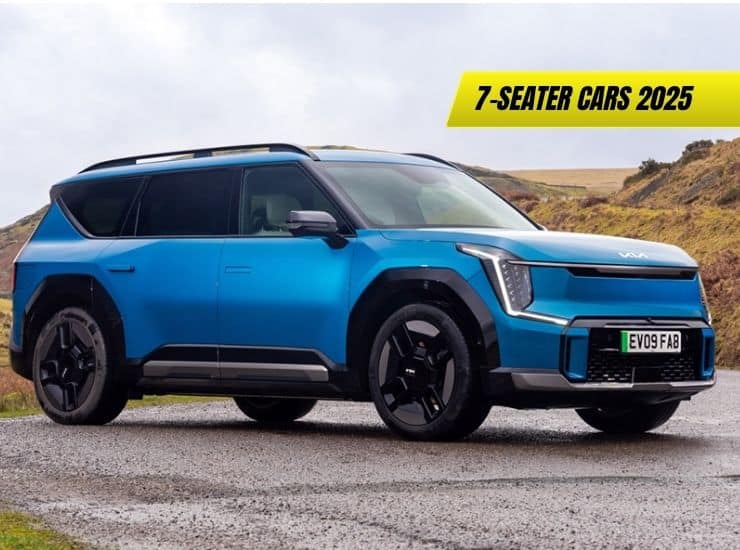
The seven-seater market in Britain has undergone a fascinating transformation over the past decade. Where once the choice meant accepting a boxy MPV with all the visual appeal of a white goods appliance, today’s seven-seat landscape offers genuine variety spanning sleek SUVs, practical people carriers, and even the occasional luxury barge. At AutoHit, we’ve spent considerable time testing these family workhorses across British roads, from school runs in Surrey to holiday trips to the Scottish Highlands.
What strikes us most about the current seven-seater market is how manufacturers have finally cracked the code of combining genuine seven-seat practicality with everyday usability. The days of choosing between a cramped third row and a massive external footprint are largely behind us. Modern seven-seaters manage to pack adult-friendly seating into packages that won’t leave you circling Tesco car parks looking for a space.
The segment’s evolution reflects changing British family needs perfectly. With house prices pushing extended families together and weekend activities requiring transport for multiple children plus friends, the seven-seater has become less luxury and more necessity for many households. Whether you’re considering the budget brilliance of a Dacia Jogger or the premium sophistication of a BMW X5, we’ve tested them all to help you navigate this increasingly complex but rewarding market.
Our Meta Description: 7-seater cars 2025 UK – Complete guide to every seven-seat model available, from budget MPVs to luxury SUVs, with expert testing and British family buying advice.
Key Highlights: The Seven-Seater Revolution
• MPV resilience: Despite SUV dominance, traditional people carriers offer unmatched space efficiency for families prioritising practicality over image • Compact breakthrough: Seven-seat SUVs now measure under 4.7 metres whilst providing genuine adult accommodation in all positions • Electric evolution: Pure electric seven-seaters finally offer real-world ranges exceeding 250 miles, making them viable for family touring • Value recalibration: Exceptional seven-seat capability now available from £17,000, with premium features filtering down rapidly • Third-row reality: Modern seven-seaters increasingly offer genuine adult accommodation rather than emergency child seating • Technology triumph: Advanced safety systems, entertainment options, and connectivity now standard across all price points
Understanding Seven-Seater Categories
Traditional MPVs: Maximum Space Efficiency
Multi-purpose vehicles remain the gold standard for space utilisation, offering unmatched interior volume relative to external dimensions. Modern MPVs have shed their commercial vehicle origins, providing car-like refinement whilst maintaining their practical advantages.
Key Advantages: Superior headroom, flexible seating arrangements, easy third-row access, competitive pricingConsiderations: Less fashionable styling, higher centre of gravity affecting handling, potential image concerns
Compact Seven-Seat SUVs: The New Mainstream
The breakthrough category that’s revolutionised family motoring, compact seven-seat SUVs combine fashionable SUV styling with genuine seven-seat capability within manageable external dimensions.
Key Advantages: Contemporary styling, elevated driving position, reasonable external dimensions, broad model choice Considerations: Compromised third-row space compared to MPVs, higher pricing than equivalent MPVs
Large Seven-Seat SUVs: Premium Family Solutions
For families requiring maximum space, comfort, and prestige, large seven-seat SUVs represent the ultimate family vehicle, combining luxury car appointments with genuine seven-seat practicality.
Key Advantages: Adult-friendly third row, premium appointments, commanding road presence, advanced technologyConsiderations: Significant purchase price, higher running costs, challenging urban parking
Best MPVs: Practical Excellence
Dacia Jogger: Exceptional Value Redefined
Starting from £18,565 (£17,040 with current incentives)
The Jogger represents everything right about modern budget motoring. Built on proven Renault-Nissan architecture, it delivers genuine seven-seat capability at pricing that makes premium rivals appear overpriced. We’ve tested the Jogger extensively with families, and its ability to function as both daily driver and weekend adventurer continues to impress.
Space Achievement: The Jogger’s 708-litre boot with five seats occupied exceeds many larger, more expensive alternatives. Third-row access proves straightforward for adults, whilst headroom throughout surpasses SUV rivals costing twice as much.
Build Quality: Interior materials feel appropriately robust rather than obviously cheap, with hard-wearing fabrics suited to family use. Assembly quality has improved markedly over previous Dacia generations, addressing historical reliability concerns.
Running Costs: Real-world fuel economy consistently exceeds 40mpg in mixed driving, whilst insurance groups remain refreshingly reasonable. The seven-year warranty provides exceptional peace of mind for long-term family ownership.
UK Suitability: The slightly raised ride height handles British road imperfections well, whilst the compact external footprint makes urban use viable. For growing families prioritising space over status, the Jogger offers compelling logic.
Volkswagen Touran: German Engineering Excellence
Starting from £32,000 approximately
The Touran represents Volkswagen’s interpretation of the ideal family MPV, emphasising quality, refinement, and technological sophistication over pure value. Built on the flexible MQB platform, it shares componentry with more expensive Group models whilst maintaining competitive pricing.
Quality Benchmark: Interior materials and build quality maintain Volkswagen’s traditional strengths, with controls and switchgear that feel genuinely premium. The attention to detail throughout justifies the price premium over budget alternatives.
Technology Integration: Standard equipment includes comprehensive connectivity, digital instruments, and advanced safety systems. The optional virtual cockpit and gesture control represent cutting-edge automotive technology.
Space Efficiency: Despite compact external dimensions, the Touran provides genuinely spacious accommodation throughout all seven seats. Flexible seating arrangements enable various load configurations to suit different family requirements.
Dynamic Excellence: The Touran offers car-like handling characteristics unusual in the MPV segment, with precise steering and composed ride quality suited to British road conditions.
Toyota ProAce Verso: Commercial Vehicle Sophistication
Starting from £35,000 approximately
The ProAce Verso demonstrates how commercial vehicle architecture can provide exceptional family car capability when executed thoughtfully. Based on proven Citroën/Peugeot commercial platforms, it offers unmatched space and versatility.
Space Leadership: Few vehicles match the ProAce Verso’s interior volume, with adult-friendly accommodation throughout all seating positions. The completely flat floor enables flexible load configurations impossible in conventional cars.
Reliability Heritage: Toyota’s reputation for long-term durability combines with proven commercial vehicle engineering to create exceptional ownership security. Maintenance costs remain reasonable despite the vehicle’s size.
Versatility Focus: Sliding passenger doors ease access in tight spaces, whilst the modular seating system enables complete reconfiguration. For families requiring maximum flexibility, few alternatives provide comparable capability.
Best Compact Seven-Seat SUVs
Škoda Kodiaq: Czech Engineering Brilliance
Starting from £43,901 (£40,034 with incentives)
The Kodiaq established Škoda’s credentials in the competitive seven-seat SUV segment through exceptional space utilisation, quality execution, and competitive pricing. Built on Volkswagen Group’s proven MQB platform, it delivers German engineering at accessible pricing.
Seven-Seat Reality: Unlike many compact seven-seaters where the third row feels apologetic, the Kodiaq provides genuine adult accommodation throughout. Third-row access proves straightforward via sliding second-row seats.
Interior Excellence: Space utilisation throughout impresses, with the 270-litre boot capacity (seven seats up) exceeding many smaller five-seat SUVs. With the third row folded, cargo space expands to over 700 litres.
Technology Leadership: Standard equipment includes comprehensive connectivity, digital cockpit, and advanced driver assistance systems. The optional Canton audio system provides premium sound quality.
Value Proposition: At current pricing levels, the Kodiaq offers exceptional value considering the space, quality, and technology provided. Running costs remain reasonable for the size and capability.
Mercedes GLB: Compact Luxury
Starting from £38,000 approximately
The GLB represents Mercedes-Benz’s most accessible seven-seat SUV, combining premium appointments with surprisingly practical packaging within compact external dimensions.
Premium Positioning: Interior quality justifies the Mercedes badge, with premium materials, sophisticated design, and advanced technology throughout. The MBUX infotainment system provides cutting-edge connectivity and artificial intelligence integration.
Space Innovation: Despite measuring just 4.64 metres externally, the GLB accommodates seven adults reasonably comfortably. The third row suits teenagers and smaller adults effectively.
Technology Integration: Advanced driver assistance systems approach semi-autonomous capability, whilst the premium audio options provide excellent sound quality. Wireless charging and comprehensive smartphone integration come as standard.
Dynamic Balance: The GLB balances comfort with engagement admirably, providing precise handling whilst maintaining ride quality suited to British road conditions.
Citroën C3 Aircross: Space Maximisation
Starting from £24,000 approximately
The C3 Aircross achieves remarkable space efficiency within its compact external dimensions, offering genuine seven-seat capability whilst maintaining urban-friendly proportions.
Interior Innovation: The flexible seating system enables various configurations, with the third row providing adequate accommodation for children and shorter adults. Storage solutions throughout demonstrate French ingenuity.
Comfort Excellence: Citroën’s advanced comfort suspension system delivers exceptional ride quality, particularly over challenging road surfaces. The system actively counteracts road irregularities, providing luxury-car refinement at mainstream pricing.
Value Assessment: At current pricing levels, the C3 Aircross offers exceptional space and comfort for the money. Running costs remain reasonable, whilst the distinctive styling provides visual differentiation from German alternatives.
Best Large Seven-Seat SUVs
BMW X5: Driving Dynamics Excellence
Starting from £65,000 approximately
The X5 represents BMW’s interpretation of the ideal large seven-seat SUV, prioritising driving dynamics and technological sophistication over pure value. For families seeking premium refinement with engaging performance, few alternatives provide comparable appeal.
Dynamic Leadership: The X5 offers exceptional handling characteristics for such a large vehicle, with precise steering, controlled body movements, and impressive agility. The adaptive suspension system provides remarkable breadth between comfort and sportiness.
Seven-Seat Capability: Unlike many large SUVs where the third row feels cramped, the X5 provides adequate adult accommodation throughout. Access to the rearmost seats proves straightforward via power-folding second-row seats.
Technology Showcase: BMW’s iDrive system represents the pinnacle of automotive infotainment, with crisp graphics, intuitive operation, and comprehensive connectivity. The premium audio options deliver exceptional sound quality.
Premium Experience: Interior quality justifies the substantial pricing, with premium materials, sophisticated design, and meticulous attention to detail throughout.
Starting from £60,000 approximately
The XC90 continues defining luxury SUV excellence through uncompromising safety, distinctive design, and environmental responsibility. For families prioritising protection and sustainability, few alternatives provide comparable appeal.
Safety Leadership: The XC90’s safety credentials remain class-leading, with comprehensive active and passive systems protecting all occupants. The autonomous emergency braking system works effectively in real-world conditions.
Seven-Seat Excellence: All seven seats provide adult-friendly accommodation, with particularly generous second-row space. The third row suits adults for reasonable distances whilst remaining ideal for children.
Environmental Focus: Hybrid powertrains provide impressive fuel economy considering the vehicle’s size, whilst the interior emphasises sustainable materials without compromising luxury.
Design Authority: The XC90’s distinctive Scandinavian design philosophy creates a genuinely premium ambience whilst avoiding ostentation. The minimalist interior feels genuinely sophisticated.
Kia Sorento: Value-Luxury Balance
Starting from £45,000 approximately
The Sorento demonstrates how Korean manufacturers have elevated their offerings to challenge premium alternatives whilst maintaining competitive pricing and exceptional warranty coverage.
Seven-Year Security: The industry-leading seven-year warranty provides exceptional peace of mind for family buyers, covering the vehicle throughout its prime ownership period.
Premium Aspirations: Interior quality rivals German alternatives whilst pricing remains significantly more accessible. The design and materials feel genuinely upmarket rather than merely adequate.
Hybrid Sophistication: The hybrid powertrain delivers impressive fuel economy for such a large vehicle, averaging 35-40mpg in real-world mixed driving whilst providing adequate performance.
Practical Excellence: Seven-seat accommodation proves genuinely adult-friendly, whilst the 821-litre boot (five seats up) provides exceptional cargo flexibility.
Audi Q7: Technological Sophistication
Starting from £70,000 approximately
The Q7 represents Audi’s flagship seven-seat offering, emphasising technological advancement and luxury appointments over pure value considerations.
Technology Leadership: The virtual cockpit and MMI systems provide cutting-edge automotive technology, with crisp displays and comprehensive functionality. The optional rear-seat entertainment systems rival domestic setups.
Luxury Positioning: Interior quality throughout justifies the premium pricing, with exquisite materials, sophisticated design, and meticulous build quality. The ambient lighting and premium audio create a genuinely special environment.
Seven-Seat Sophistication: All seven seats provide adult-friendly accommodation, with powered adjustment throughout enabling precise positioning. Climate control operates independently for all seating zones.
Performance Breadth: Engine options span efficient diesels to high-performance petrols, with sophisticated all-wheel-drive systems providing confident traction in all conditions.
Electric Seven-Seaters: The Future of Family Motoring
Mercedes EQB: Electric Premium
Starting from £50,000 approximately
The EQB demonstrates how electric powertrains can enhance rather than compromise seven-seat capability, providing silent operation and instant torque delivery ideal for family use.
Electric Refinement: The silent operation and smooth acceleration create a genuinely premium experience, whilst the advanced climate control systems operate efficiently without engine waste heat.
Range Reality: Real-world range consistently exceeds 250 miles in mixed UK driving conditions, making family touring entirely practical. The rapid charging capability enables convenient longer journeys.
Seven-Seat Practicality: Electric packaging enables improved interior space utilisation, with flat floors throughout enhancing passenger comfort and cargo flexibility.
Technology Integration: The MBUX system includes sophisticated route planning accounting for charging requirements, whilst over-the-air updates continuously improve functionality.
UK-Specific Seven-Seater Considerations
ISOFIX and Child Seat Compatibility
Modern seven-seaters typically provide ISOFIX mounting points throughout the second row, with some offering third-row compatibility. However, checking specific child seat compatibility remains essential, as dimensions vary significantly between models.
Company Car Implications
Seven-seater classification can affect company car taxation, with some vehicles qualifying for commercial vehicle rates rather than passenger car BiK calculations. This particularly benefits electric and hybrid seven-seaters for business users.
Insurance and Running Costs
Seven-seater insurance premiums typically exceed five-seat equivalents, though safety equipment helps moderate costs. Fuel consumption generally increases with size and weight, though modern efficiency gains minimise the penalty.
MOT and Servicing Considerations
Larger seven-seaters may require specialist servicing facilities due to their size and weight. Extended service intervals help moderate maintenance costs, though parts pricing generally exceeds smaller vehicles.
Practical Buying Guidance
Assessing Real Seven-Seat Needs
Consider whether you require seven seats permanently or occasionally. Many families find five-seat vehicles with large boot capacity more practical than seven-seaters with compromised cargo space.
Third-Row Reality Check
Test drive with the intended passengers in all seating positions. Many seven-seaters limit the third row to children or short adults, which may not suit your specific requirements.
Access and Egress
Check third-row access with child seats installed in the second row. Some configurations make third-row access practically impossible for regular use.
Boot Space Priorities
With all seven seats occupied, boot capacity often becomes minimal. Consider your typical load requirements and whether roof boxes or alternative storage solutions might be necessary.
Market Trends and Future Developments
Electrification Acceleration
Seven-seater electrification continues accelerating, driven by taxation advantages and improving technology. Battery packaging in large vehicles provides better range than smaller EVs whilst maintaining practicality.
Technology Integration
Advanced driver assistance systems particularly benefit large family vehicles, with automatic emergency braking and blind-spot monitoring providing enhanced safety for complex family journeys.
Sustainability Focus
Manufacturers increasingly emphasise sustainable materials and production methods, responding to family buyers’ environmental consciousness whilst maintaining durability requirements.
Our Category Recommendations
Best Budget Seven-Seater: Dacia Jogger
The combination of genuine seven-seat capability, exceptional warranty coverage, and sub-£18k pricing makes the Jogger our top budget recommendation for growing families.
Best Compact Seven-Seat SUV: Škoda Kodiaq
The Kodiaq’s blend of space, quality, technology, and value creates the ideal mainstream seven-seat SUV for families seeking contemporary appeal with practical excellence.
Best Premium Seven-Seater: BMW X5
The unique combination of luxury appointments, driving dynamics, and genuine seven-seat capability keeps the X5 at the premium segment’s apex for families refusing to compromise.
Best Value Premium: Kia Sorento
Offering exceptional warranty coverage with near-premium appointments at competitive pricing, the Sorento provides accessible luxury with long-term security.
Best Electric Seven-Seater: Mercedes EQB
The EQB demonstrates electric technology’s potential for family vehicles, combining silent refinement with practical seven-seat capability and impressive range.
Frequently Asked Questions
How practical are seven-seat SUVs compared to traditional MPVs for large families? Based on our extensive family testing, traditional MPVs like the Dacia Jogger offer superior space efficiency and easier third-row access compared to compact seven-seat SUVs. However, modern seven-seat SUVs provide more contemporary styling and better driving dynamics. For families prioritising pure practicality, MPVs remain superior, whilst those wanting SUV appeal should focus on larger models like the BMW X5 or Volvo XC90 where space compromises are minimal.
Are the third-row seats genuinely usable for adults in compact seven-seaters? Third-row accommodation varies dramatically between models. Vehicles like the Škoda Kodiaq and Mercedes GLB provide reasonable adult accommodation for shorter journeys, whilst the Citroën C3 Aircross limits the third row to children or emergency adult use. We recommend testing with intended passengers before purchasing, as individual tolerance for confined spaces differs significantly.
How do running costs compare between seven-seaters and five-seat alternatives? Seven-seater running costs typically exceed five-seat equivalents by £800-1,500 annually, primarily through increased fuel consumption (15-25% higher), insurance premiums (10-20% increase), and maintenance costs. However, modern seven-seaters achieve significantly better efficiency than previous generations. Our SUV efficiency guide shows how hybrid systems minimise the fuel economy penalty.
Which seven-seaters offer the best warranty coverage for family buyers? Kia leads with seven-year/100,000-mile coverage on models like the Sorento, whilst Dacia provides seven years/80,000 miles on the Jogger. German premium brands typically offer three-year coverage but with comprehensive dealer networks. For family buyers prioritising long-term security, Korean manufacturers provide exceptional value through extended warranty coverage.
How do seven-seat electric vehicles compare to petrol alternatives for family touring? Modern electric seven-seaters like the Mercedes EQB offer 250+ mile real-world ranges suitable for most UK family journeys. Charging planning becomes more important for longer trips, though rapid charging networks have improved dramatically. For families with predictable journey patterns and home charging access, electric seven-seaters provide lower running costs and enhanced refinement. Our electric vehicle guide covers these considerations comprehensively.
What should I prioritise when choosing between different seven-seater categories? MPVs excel for space efficiency and value, making them ideal for families prioritising practicality over image. Compact seven-seat SUVs balance contemporary appeal with reasonable practicality, suiting families wanting SUV styling without excessive size. Large seven-seat SUVs provide premium refinement and genuine space but require higher budgets and tolerance for urban parking challenges. Consider your specific priorities: space efficiency (MPV), contemporary appeal (compact SUV), or luxury refinement (large SUV).
How do seven-seaters perform in terms of safety for large families? Modern seven-seaters typically achieve maximum safety ratings, with vehicles like the Volvo XC90 leading safety innovation. Advanced driver assistance systems particularly benefit large family vehicles through automatic emergency braking, blind-spot monitoring, and rear cross-traffic alerts. However, safety equipment effectiveness depends on proper installation and use of child restraints throughout all seating positions. Our comprehensive safety guide covers family safety considerations in detail.
The Bottom Line: Seven-Seater Excellence for Every Family
The seven-seater market’s evolution throughout 2025 has created genuine choice across every budget and requirement. From the remarkable value of the Dacia Jogger to the ultimate luxury of the BMW X5, manufacturers have largely solved the traditional compromises associated with seven-seat capability.
For budget-conscious families, the Dacia Jogger provides exceptional space and practicality at pricing that makes alternatives appear overpriced. The seven-year warranty adds confidence that premium competitors rarely match.
Mainstream families should focus on the Škoda Kodiaq, which combines contemporary SUV appeal with genuine seven-seat capability and competitive running costs. The build quality and technology levels rival much more expensive alternatives.
Premium families will find the BMW X5 delivers uncompromising luxury whilst maintaining genuine seven-seat practicality. The driving dynamics and technology integration justify the substantial pricing for buyers refusing to compromise.
Looking ahead, electrification seems inevitable throughout the seven-seater segment, driven by taxation advantages and improving technology. However, current hybrid and efficient petrol alternatives provide excellent interim solutions whilst charging infrastructure continues expanding.
Whatever your budget or requirements, the 2025 seven-seater market offers compelling solutions for every family size and priority. The challenge lies not in finding a suitable seven-seater, but in choosing from an abundance of genuinely excellent options tailored to specific family needs.
For additional guidance, explore our comprehensive guides to the best 8-seater SUVs or discover premium SUVs under £60k for families seeking luxury appointments with seven-seat capability.





