
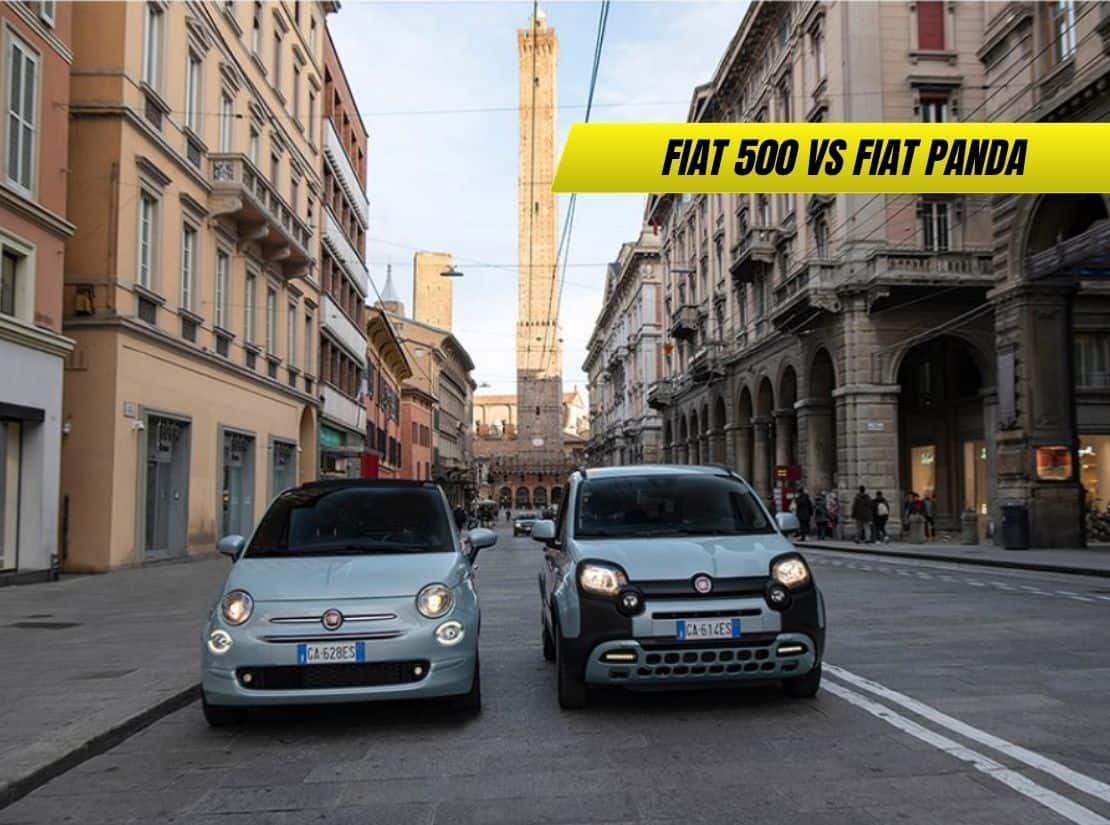
Standing on a Fiat dealer forecourt in Manchester, contemplating whether to choose the stylish 500 with its retro charm or the practical Panda (now Grande Panda) with its no-nonsense functionality, represents one of the most characteristically Italian automotive dilemmas facing British buyers. Both cars epitomise different philosophies from the same manufacturer, yet the decision between them often reveals more about your driving priorities than your brand loyalty.
Having spent considerable time with both models across our test fleet at AutoHit, we’ve come to appreciate how these seemingly similar city cars actually serve quite different purposes in the UK market. The Fiat 500 continues its remarkable 17-year journey as a style-focused urban icon, while the Panda has evolved into the larger, more practical Grande Panda that maintains its utilitarian roots while embracing modern expectations.
The choice between these two Fiat offerings has become particularly relevant as the UK market shifts toward electrification and value-conscious purchasing. With the 500 now available exclusively in hybrid and electric forms, and the new Grande Panda offering both efficient hybrid and affordable electric options, British buyers face a decision that encompasses style preferences, practical requirements, and increasingly important environmental considerations.
Understanding how these cars differ in real-world UK usage – from navigating London’s congested streets to tackling family duties in suburban Birmingham – has become essential for making the right choice between Italian flair and pragmatic functionality.
Key Highlights: Essential Fiat 500 vs Panda Comparison Facts
• Size and Space: The Grande Panda measures 3.99m long vs 500’s 3.57m, offering significantly more interior room and boot capacity (400L vs 185L) • Seating Capacity: Grande Panda accommodates five passengers vs 500’s four-person limit, making it better for family use • Price Range: Grande Panda starts from £18,975 for hybrid versions, while 500 hybrid begins around £20,000, with electric variants costing £20,975 vs £25,300 respectively • Powertrain Options: Both offer 1.0-litre mild hybrid systems, but 500 provides 118hp electric option vs Grande Panda’s 111hp, with 500 offering superior performance • Fuel Economy: Grande Panda hybrid achieves 50-53mpg vs 500’s 47-50mpg, though differences are marginal in real-world use • Target Market: 500 prioritises style and urban image while Grande Panda emphasises practicality and value for money
Design Philosophy: Style Icon vs Practical Workhorse
The fundamental difference between these two Fiat models lies not in their mechanical similarities but in their contrasting design philosophies, each reflecting different aspects of Italian automotive culture and appealing to distinct buyer personalities.
Fiat 500: Retro Glamour and Urban Sophistication
The Fiat 500 represents automotive emotional design at its most successful, drawing inspiration from Dante Giacosa’s iconic 1957 original while incorporating contemporary safety and technology requirements. Its primary purpose is to help you stand out from the crowd through chrome detailing, a huge range of colours and extensive customisation options.
Exterior Design Elements
The 500’s styling remains deliberately nostalgic, featuring rounded headlights, distinctive bonnet creases, and proportions that immediately evoke its 1950s ancestor. Chrome trim around windows, door handles, and grille creates premium visual appeal that distinguishes it from more utilitarian competitors.
Fiat offers an extensive colour palette and customisation programme that allows buyers to create highly personalised vehicles. Body-coloured dashboard trim, contrasting roof options, and numerous alloy wheel designs enable individual expression rarely matched in this market segment.
The car’s compact dimensions – 3.57m long by 1.89m wide including mirrors – make it ideal for tight urban environments while its 1.49m height maintains a sporty, ground-hugging appearance.
Grande Panda: Functional Design with Crossover Appeal
The new Grande Panda maintains the practical design DNA of its predecessors while adopting contemporary SUV-influenced styling that appeals to modern buyers seeking versatility over pure style. The general aspect nods towards crossovers, with detailing that’s heartwarming and original.
Practical Design Priorities
At 3.99m long, the Grande Panda maximises interior space within its footprint, featuring an upright seating position and large glass areas that provide excellent visibility for urban driving. The boxy silhouette directly echoes Giugiaro’s original 1980 Panda design while incorporating modern safety and efficiency requirements.
Plastic body cladding and raised ride height create a more rugged appearance than the 500, suggesting capability beyond pure urban use. This design approach appeals to buyers who want versatility without the size and cost penalties of larger SUVs.
The interior design prioritises functionality over glamour, with straightforward controls, generous storage solutions, and materials chosen for durability rather than visual impact.
Interior Space and Practicality: Where the Differences Matter
The interior dimensions and practical usability represent perhaps the most significant differences between these two models, with implications that extend far beyond simple passenger accommodation to encompass everyday usability for British families.
Passenger Accommodation Comparison
Fiat 500 Interior Layout
The 500’s four-seat configuration reflects its positioning as an urban style statement rather than a family utility vehicle. Front seat passengers enjoy reasonable space, with the driving position optimised for city centre manoeuvring rather than long-distance comfort.
Rear seat access requires folding the front seats forward, and space for adult passengers is limited primarily to short journeys. The rear bench can accommodate two passengers comfortably, though taller adults may find headroom and legroom restrictive.
Interior styling emphasises the retro theme with body-coloured dashboard trim, circular instrument clusters, and chrome detailing that creates visual appeal but may sacrifice some ergonomic efficiency.
Grande Panda Family-Focused Space
The Grande Panda’s five-seat arrangement immediately signals its family-oriented priorities, with rear accommodation suitable for three passengers or two adults plus child seats. The upright seating position and generous headroom make it more comfortable for longer journeys.
Door openings are larger than the 500’s, facilitating easier access for elderly passengers or child seat installation. The rear seats fold to create extended luggage space, making the Grande Panda more versatile for weekend activities or shopping trips.
Dashboard design prioritises functionality over visual drama, with controls positioned for ease of use rather than aesthetic impact. Storage solutions throughout the cabin reflect real-world usage patterns.
Boot Space and Load Carrying
Storage Capacity Analysis
The boot space difference between these models is substantial and often decisive for family buyers. The Grande Panda’s 400-litre boot capacity significantly exceeds the 500’s 185-litre limitation, making weekly shopping trips or holiday luggage accommodation much more practical.
With rear seats folded, the Grande Panda offers up to 1,100 litres of load space, enabling furniture transport or substantial DIY material carriage that would be impossible in the 500.
The 500’s limited boot space suits urban lifestyles where storage requirements remain minimal, but may prove restrictive for families or buyers who occasionally need significant carrying capacity.
Performance and Efficiency: Modern Powertrains for Urban Mobility
Both models now offer electrified powertrains that reflect Fiat’s commitment to reducing emissions while maintaining the engaging driving characteristics that have defined these cars throughout their evolution.
Hybrid Powertrain Technology
Shared Platform, Different Tuning
Both vehicles utilise Stellantis’ modular platform architecture with 1.0-litre three-cylinder mild hybrid engines, though implementation details and performance characteristics differ between the models.
The 500 hybrid system produces 70hp and is paired with a six-speed manual transmission that emphasises the car’s sporty character. The mild hybrid assistance provides smooth stop-start operation and modest fuel economy improvements while maintaining the direct driving feel that 500 enthusiasts appreciate.
Grande Panda hybrid versions use the same basic 1.0-litre engine but with different tuning that prioritises efficiency and refinement over outright performance. The system delivers 100hp through a six-speed automatic transmission that includes electric motor assistance for improved urban drivability.
Electric Powertrain Options
500 Electric Performance Focus
The fully electric 500e represents Fiat’s premium electric offering, available in two power outputs: 95hp with a 23.8kWh battery providing 199-mile range, and 118hp with a 42kWh battery offering 321-mile range.
The electric 500 maintains the model’s sporting character through instant torque delivery and responsive handling, achieving 0-62mph in approximately 9 seconds. Fast charging capability enables 80% charge in 35 minutes, making it suitable for longer journeys beyond its urban comfort zone.
Interior equipment levels in electric variants include advanced infotainment systems, climate control, and driver assistance features that position it as a premium electric city car.
Grande Panda Electric Value Proposition
The Grande Panda Electric offers 111hp from its single-motor setup, paired with a 44kWh battery providing 199-mile official range. While performance is more modest than the 500e, with 0-62mph taking around 11 seconds, the focus remains on efficiency and affordability.
At £20,975, the Grande Panda Electric becomes one of the cheapest electric cars available in the UK, undercutting the 500e by approximately £4,300 and making electric motoring accessible to buyers previously priced out of the EV market.
The integrated charging cable system, which retracts into the front grille area, eliminates the need to carry cables in the boot while providing 7kW AC charging capability for home use.
Technology and Equipment: Modern Features vs Simplicity
The technology and equipment specifications highlight the different market positions these models occupy, with the 500 offering more sophisticated systems while the Grande Panda prioritises essential functionality at accessible price points.
Infotainment and Connectivity
Fiat 500 Advanced Systems
The 500 includes Uconnect infotainment with touchscreen displays, smartphone integration through Apple CarPlay and Android Auto, and optional premium audio systems that enhance the urban driving experience.
Climate control systems include automatic temperature regulation, while optional features such as wireless charging pads and upgraded interior lighting create a more premium environment.
Driver assistance features include parking sensors, rear-view cameras, and optional automated parking systems that make urban manoeuvring easier in congested city centres.
Grande Panda Functional Approach
The Grande Panda includes a 10.25-inch infotainment screen even in base Icon trim, representing a significant upgrade from the previous Panda’s basic specification. However, the system prioritises ease of use over advanced features.
Air conditioning comes as standard across the range, while higher trim levels add convenience features such as cruise control and enhanced safety systems including lane-keep assist and automatic emergency braking.
The focus remains on providing essential modern amenities rather than cutting-edge technology, keeping costs down while meeting contemporary buyer expectations.
Safety and Driver Assistance
Euro NCAP Considerations
The current 500 achieved a four-star Euro NCAP rating, with strong performance in adult occupant protection but some limitations in pedestrian safety scoring. The sophisticated structure compensates for the car’s compact dimensions.
The Grande Panda has not yet been tested by Euro NCAP but comes standard with lane-keep assist, speed-limit recognition, driver attention alerts and automatic emergency braking.
Both models include the safety equipment required for modern city driving, though the 500’s longer development period has allowed for more refined implementation of assistance systems.
Cost of Ownership: Purchase Price, Running Costs, and Depreciation
Understanding the total cost of ownership for these models requires examining not just purchase prices but also fuel costs, insurance premiums, maintenance expenses, and residual values that affect long-term affordability.
Purchase Price Analysis
Initial Investment Comparison
The Grande Panda hybrid starts at £18,975 for the Icon trim, while the 500 hybrid typically begins around £20,000, creating a modest price premium for the more stylish option.
Electric variants show a more significant difference, with the Grande Panda Electric at £20,975 compared to the 500e starting at £25,300, making the Grande Panda substantially more accessible for electric vehicle adoption.
Equipment levels at each price point favour the 500, which includes more standard features and customisation options, though the Grande Panda provides better essential equipment ratios for budget-conscious buyers.
Operating Cost Considerations
Fuel Economy and Efficiency
The 500 hybrid achieves around 53mpg in mixed driving, while the Grande Panda hybrid returns approximately 50mpg, creating minimal difference in fuel costs for typical UK usage patterns.
Electric versions offer similar efficiency levels, with both models achieving around 3.5-4 miles per kWh in real-world driving conditions, making charging costs comparable for both options.
Insurance groups typically favour the Grande Panda due to its lower value and less sporty image, potentially saving £100-200 annually for younger drivers or those in higher-risk postcodes.
Maintenance and Reliability
Fiat underperformed in the 2024 What Car? Reliability Survey, finishing 25th out of 31 brands, suggesting both models may face higher than average maintenance costs compared to competitors from more reliable manufacturers.
However, the shared platform architecture and common powertrains mean service costs should be similar between the models, with the 500’s longer market presence providing more established service network coverage.
Parts availability and specialist knowledge tend to favour the 500 due to its higher sales volumes and longer production run, potentially reducing long-term maintenance costs.
Residual Values and Depreciation
Market Value Retention
The 500 has historically held its value better than the Panda, making it the preferred choice if long-term value for money is the main buying motive. This reflects the 500’s stronger brand image and broader appeal in the used car market.
The electric 500’s premium positioning and established reputation may provide better residual value protection compared to the newer, value-focused Grande Panda Electric, though the rapidly evolving EV market makes long-term predictions challenging.
Fashion-conscious buyers often prefer the 500’s distinctive styling over time, while the Grande Panda’s functional design may appeal primarily to value-seeking second-hand buyers.
Real-World UK Usage Scenarios
Understanding how these models perform in typical British driving conditions helps buyers assess which car better suits their actual needs rather than aspirational preferences.
Urban Driving Performance
City Centre Navigation
Both models excel in congested urban environments, with compact dimensions that facilitate parking and manoeuvring in tight spaces. The 500 feels more agile thanks to its lower centre of gravity and handles windy roads better, making it more engaging for enthusiastic urban driving.
The Grande Panda’s higher seating position provides better visibility in traffic, particularly helpful when dealing with larger vehicles or navigating complex junction layouts common in British city centres.
Electric versions offer virtually silent operation that’s particularly beneficial in residential areas or when starting early morning commutes in suburban environments.
Family and Practical Usage
School Runs and Weekend Activities
The Grande Panda’s five-seat capacity and larger boot make it significantly more practical for families with children, accommodating school bags, sports equipment, and weekly shopping without space constraints.
Child seat installation proves easier in the Grande Panda due to larger door openings and ISOFIX mounting points accessible without front seat adjustment, a significant advantage for parents managing multiple children.
The 500’s rear seats suit occasional adult passengers or older children but lack the space required for comfortable family transportation over longer distances.
Motorway and Longer Distance Travel
Out-of-Town Capabilities
Neither model prioritises motorway refinement, though the Grande Panda’s more upright driving position and better wind resistance provide marginally superior comfort for longer journeys.
Electric range considerations become important for longer trips, with both models requiring charging stops for journeys exceeding 150-200 miles, making them primarily suitable for regional rather than national travel.
The 500’s more sporting character provides greater driver engagement on country roads, while the Grande Panda’s practical nature makes it better suited to utility-focused longer journeys.
Market Positioning and Competition Analysis
Understanding where these models sit within the broader UK small car market helps contextualise their strengths and weaknesses against direct competitors and alternative solutions.
Direct Competitors and Alternatives
Small Car Market Context
The Grande Panda competes with models including the Renault 5, Hyundai Inster, and Citroën ë-C3, representing the affordable end of the electric and hybrid small car market.
The 500 faces competition from premium-positioned rivals including the Mini Electric, Honda e, and Volkswagen e-up!, though its distinctive styling and brand heritage provide differentiation advantages.
Both models operate in a shrinking segment as manufacturers focus resources on larger, more profitable vehicles, making their long-term availability potentially uncertain.
Value Proposition Assessment
The Grande Panda offers exceptional value in the electric car segment, making it the cheapest electric supermini on the market and undercutting the mechanically related Citroën ë-C3 by around £1,000.
The 500’s premium positioning justifies higher prices through superior equipment levels, customisation options, and brand prestige, appealing to buyers prioritising image over pure value.
Future Outlook and Model Evolution
Both models face uncertain futures as Fiat transitions toward electrification and responds to changing market demands and regulatory requirements affecting small car viability.
Electrification Timeline
Model Transition Strategy
Fiat is preparing all-new versions of both the 500 and Panda, with the 500 scheduled for 2029 and the Panda for 2030, suggesting the current models have limited remaining lifespans.
The transition toward pure electric powertrains will likely eliminate hybrid options, focusing both models on electric-only architectures that may affect pricing and market positioning significantly.
Regulatory and Market Pressures
UK Market Considerations
The UK’s 2030 ban on new petrol and diesel car sales will affect both models, though their existing electrification makes them better positioned than many competitors for continued sales.
Changing urban access restrictions, including expanded ULEZ zones and city centre emission controls, favour electric versions of both models while potentially limiting hybrid variant appeal.
Small car economics remain challenging as safety requirements and technology expectations increase costs while space constraints limit pricing flexibility.
Fiat 500 vs Panda FAQ: UK Buyer Questions
Which is more practical for a small family in the UK?
The Grande Panda is significantly more practical for families, offering five seats versus the 500’s four, plus a 400-litre boot compared to just 185 litres in the 500. The larger door openings make child seat installation easier, and the upright seating position provides better visibility for family drivers. For families with two or more children, or those needing regular luggage capacity for school equipment and shopping, the Grande Panda represents the only realistic choice between these two models.
How do the running costs compare in real-world UK driving?
Running costs are fairly similar between the hybrid versions, with the 500 achieving around 53mpg versus the Grande Panda’s 50mpg in mixed driving. However, the Grande Panda typically falls into lower insurance groups due to its less sporty image and lower value, potentially saving £100-200 annually. Electric versions have comparable efficiency at around 3.5-4 miles per kWh, making charging costs similar. The Grande Panda’s lower purchase price means lower depreciation costs, while the 500’s better residual values provide some compensation.
Which is better for London driving and ULEZ compliance?
Both models comply with ULEZ requirements in their hybrid and electric forms, making them equally suitable for London driving from an emissions perspective. The 500’s more compact dimensions (3.57m vs 3.99m) provide slight advantages for parking in central London’s tight spaces, while the Grande Panda’s higher seating position offers better visibility in heavy traffic. Electric versions of both models operate silently and produce zero local emissions, making them ideal for urban environments and residential areas.
How do the electric versions compare for UK buyers?
The Grande Panda Electric costs £4,325 less than the 500e (£20,975 vs £25,300), making it one of the cheapest electric cars available in the UK. Both offer similar real-world range of around 170-200 miles, though the 500e provides more power (118hp vs 111hp) and faster acceleration. The Grande Panda’s integrated charging cable system is more convenient for home charging, while the 500e offers more premium interior equipment and customisation options. For budget-conscious buyers prioritising EV access, the Grande Panda represents exceptional value.
Which model holds its value better in the UK used car market?
The Fiat 500 historically holds its value better than Panda models due to its stronger brand image and broader appeal. The distinctive styling, customisation options, and fashion status create more demand in the used market, translating to better residual values. However, both models suffer from Fiat’s overall reliability reputation in the UK market. For buyers planning to keep their car long-term, the residual value difference becomes less important than initial purchase price and running costs.
Are these cars suitable for motorway driving in the UK?
Both models can handle motorway driving but aren’t optimised for it. The 500 provides more engaging dynamics and slightly better high-speed stability due to its lower centre of gravity, while the Grande Panda offers superior comfort for longer journeys through its more upright seating position. Neither model excels at motorway refinement compared to larger cars, with wind and road noise becoming noticeable at 70mph. For regular motorway commuting, both represent compromises compared to larger vehicles, though they’re adequate for occasional longer journeys.
How do insurance costs compare between the two models?
Insurance costs typically favour the Grande Panda due to its lower value, less sporty image, and more practical positioning. The 500’s styling and performance focus can result in higher premiums, particularly for younger drivers or those in urban areas with higher theft rates. The difference might be £100-300 annually depending on driver profile and location. Electric versions of both models may qualify for green insurance discounts, though the Grande Panda’s lower value still provides cost advantages in most scenarios.
Regional Considerations for UK Buyers
Different regions of the UK present varying requirements and challenges that can influence the choice between these models, from urban density to rural practicality needs.
London and Major Cities
Urban Environment Adaptation
In London’s congested environment, both models offer advantages through compact dimensions and electric powertrain options that eliminate local emissions. The 500’s smaller footprint provides marginal parking advantages, while the Grande Panda’s better visibility aids navigation in heavy traffic.
Charging infrastructure in major cities increasingly favours electric versions of both models, with rapid charging networks making longer journeys feasible despite limited range compared to larger EVs.
Suburban and Rural Applications
Countryside Usability
Rural buyers often require greater versatility than pure city cars typically provide, making the Grande Panda’s additional space and higher ground clearance more appealing for country lane navigation and agricultural access routes.
The Panda’s traditional strength in rural Italian markets translates to UK countryside use, where its practical design proves more valuable than the 500’s urban-focused styling priorities.
Scotland and Wales Considerations
Terrain and Weather Factors
Scotland’s challenging terrain and weather conditions favour the Grande Panda’s more upright driving position and practical interior, while the 500’s lower stance may prove less suitable for rural Scottish or Welsh environments.
However, both models lack the all-wheel-drive capability that many rural buyers in these regions prefer, limiting their appeal compared to small SUV alternatives.
Dealer Network and Service Considerations
The practicalities of ownership extend beyond the vehicles themselves to encompass dealer support, service availability, and parts supply across the UK market.
Fiat UK Dealer Network
Service Accessibility
Fiat’s UK dealer network has contracted in recent years, potentially affecting service convenience for both models. Urban areas typically maintain good coverage, while rural regions may require longer journeys for dealer service.
Both models share mechanical components and service requirements, meaning any Fiat dealer can handle maintenance for either vehicle, though specialist knowledge of electric systems may vary between locations.
Parts Availability and Costs
Long-term Ownership Support
The 500’s longer production run and higher sales volumes generally ensure better parts availability compared to the newer Grande Panda, though both benefit from Stellantis’ global parts network.
Electric vehicle components for both models rely on specialist suppliers, potentially creating longer lead times for battery or motor-related repairs compared to conventional mechanical components.
Environmental Impact and Sustainability
As environmental considerations increasingly influence vehicle choice, understanding the sustainability credentials of both models helps environmentally conscious buyers make informed decisions.
Manufacturing and Lifecycle Impact
Production Footprint
Both models utilise similar manufacturing processes and materials, with the Grande Panda’s larger size creating marginally higher production emissions offset by its potentially longer service life due to greater practicality.
Electric versions of both models depend on battery production with significant environmental impact, though this is offset by zero operational emissions in typical UK usage patterns.
End-of-Life Considerations
Recycling and Disposal
Stellantis has committed to increasing recycled content across its model range, with both vehicles incorporating recycled materials in various components. The Grande Panda’s specification includes recycled material highlights such as bamboo fibre glovebox components.
Battery recycling programmes for electric versions ensure responsible disposal of high-voltage components, though the infrastructure for this remains developing across the UK.
Conclusion: Making the Right Choice for Your UK Driving Needs
The choice between the Fiat 500 and Grande Panda ultimately reflects personal priorities rather than objective superiority, with each model excelling in different aspects of city car ownership. The 500 continues its remarkable journey as a style-focused urban icon that prioritises emotional appeal and individual expression, while the Grande Panda represents practical Italian design that maximises utility within affordable pricing.
For UK buyers, the decision often comes down to lifestyle requirements and budget considerations. The 500 suits buyers who prioritise style, driving engagement, and brand image over pure practicality, making it ideal for urban professionals, empty nesters, or second car applications where maximum space isn’t essential.
The Grande Panda serves buyers who need genuine family capability, maximum value for money, or entry-level access to electric vehicle technology. Its five-seat capacity, substantial boot space, and competitive pricing make it particularly attractive for young families, first-time buyers, or those seeking practical urban transport without style compromises.
From a cost perspective, the Grande Panda offers better value across most ownership scenarios, with lower purchase prices, comparable running costs, and reduced insurance premiums offsetting the 500’s superior residual values for many buyers. The electric Grande Panda’s position as the UK’s cheapest electric supermini makes it particularly compelling for environmentally conscious buyers on limited budgets.
Looking forward, both models face uncertain futures as Fiat prepares next-generation replacements for 2029-2030 and the market continues evolving toward pure electrification. Current buyers benefit from mature, well-developed products that represent the culmination of decades of small car expertise from one of Europe’s most experienced city car manufacturers.
The enduring appeal of both models lies in their distinctly Italian character that prioritises either style or substance over the generic efficiency that characterises many modern small cars. Whether you choose the 500’s retro glamour or the Grande Panda’s practical honesty, you’re selecting a vehicle with genuine personality in a market increasingly dominated by anonymous, cost-optimised transportation appliances.
For most UK buyers, the practical advantages of the Grande Panda – more space, lower costs, and greater versatility – will outweigh the 500’s emotional appeal. However, for those who view their car as an extension of personal style and prioritise driving pleasure over practicality, the 500 remains a uniquely characterful choice that continues defying conventional automotive logic through sheer charm and Italian flair.





