
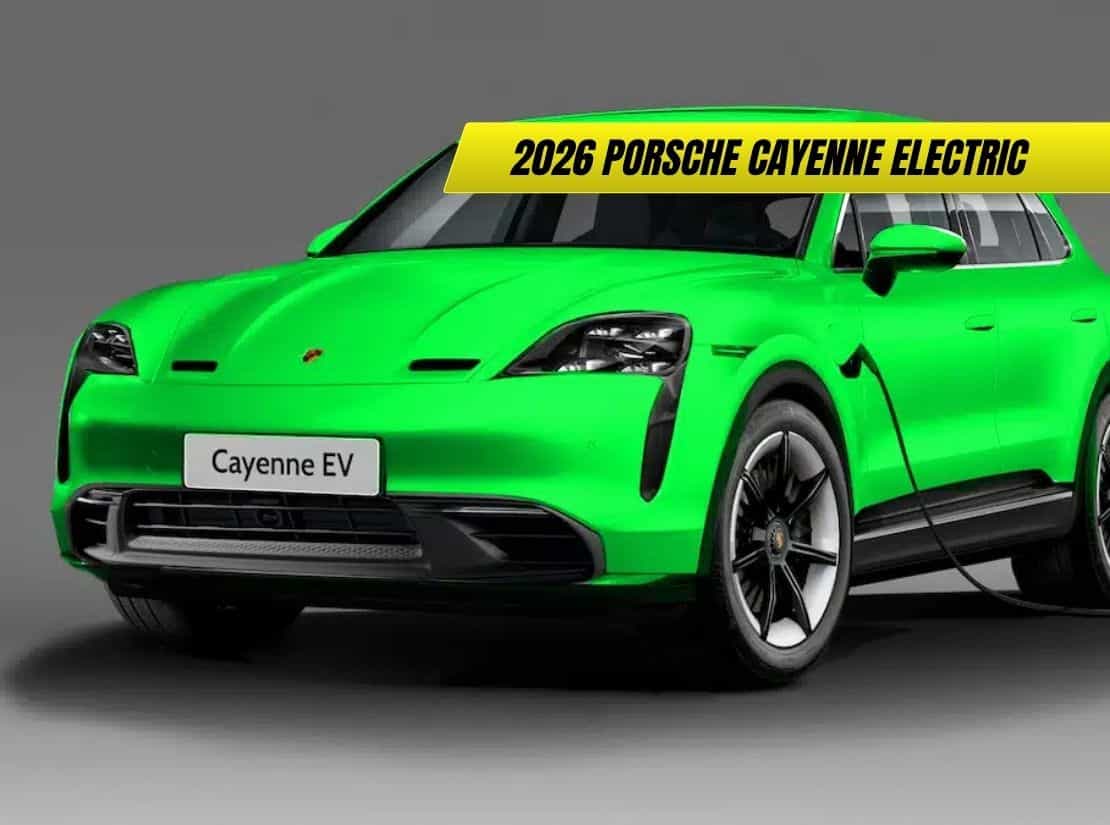
The 2026 Porsche Cayenne Electric represents more than just another SUV going electric – it’s Stuttgart’s bold statement that performance and sustainability can coexist without compromise. After watching Porsche transform the Taycan from concept to reality and witnessing the impressive Macan EV debut, we at AutoHit find ourselves genuinely intrigued by what appears to be the most significant Cayenne evolution since the original shocked the automotive world in 2002.
Having tested enough electric SUVs to know the difference between genuine sporting prowess and mere marketing claims, the prospect of an all-electric Cayenne built on Porsche’s Premium Platform Electric architecture feels genuinely exciting. This isn’t simply a case of stuffing batteries into an existing chassis – the German manufacturer is promising comprehensive platform upgrades that could finally deliver the emissions-free performance SUV that UK buyers have been waiting for.
Based on what we know so far, the 2026 Cayenne Electric will debut later this year as Porsche’s third fully electric vehicle, slotting above the Macan EV but below a planned flagship electric SUV arriving in 2027. The timing feels right for British buyers increasingly conscious of ULEZ regulations and the upcoming 2030 ICE ban, yet unwilling to sacrifice the driving dynamics that made the Cayenne a phenomenon.
Key Highlights
• Advanced PPE Architecture: Built on Porsche’s 800-volt Premium Platform Electric system with comprehensive upgrades for enhanced performance and efficiency • Expected Power Range: Between 500-800 horsepower across different trim levels, potentially exceeding the most powerful current Cayenne variants • Estimated UK Pricing: Starting around £65,000-70,000, extending to £100,000+ for high-performance variants, positioning it competitively against premium electric SUVs • Enhanced Range Capabilities: Target of approximately 400 miles on WLTP cycle, significantly surpassing most current electric SUV competitors • Coupe Variant Confirmed: Sleeker Cayenne Coupe Electric variant with improved aerodynamics and distinctive styling cues • Production Timeline: UK deliveries expected in late 2026 or early 2027, with official debut anticipated before the end of 2025
Revolutionary Platform Engineering
The foundation of the 2026 Cayenne Electric lies in Porsche’s Premium Platform Electric architecture – the same modular system underpinning the impressive Macan EV and Audi’s Q6 e-tron. However, Porsche has confirmed that the Cayenne will receive “comprehensive upgrades” to this platform, suggesting significant enhancements beyond what we’ve seen in smaller applications.
The 800-volt electrical architecture represents a substantial advantage over many competitors still operating on 400-volt systems. In practical terms, this translates to charging speeds that could see the Cayenne reach 10-80% battery capacity in approximately 20 minutes at suitable rapid charging stations – a crucial consideration for UK motorway travel where charging infrastructure continues expanding.
Battery Technology and Range
The modular nature of PPE allows Porsche to scale battery capacity according to vehicle dimensions and requirements. Where the Macan EV utilises a 100kWh battery pack delivering over 300 miles of range, the larger Cayenne could accommodate a more substantial pack targeting the 400-mile mark – a figure that would place it among the longest-range premium electric SUVs available.
Our analysis suggests this would position the Cayenne Electric competitively against established rivals like the Mercedes-Benz EQS SUV whilst offering the distinctive Porsche driving dynamics that have defined the model for over two decades. The challenge, as with all electric vehicles, will be maintaining real-world efficiency that matches laboratory figures – particularly relevant for UK buyers frequently navigating varying weather conditions and driving scenarios.
Performance Expectations
Based on insights from the Macan EV lineup, we anticipate the Cayenne Electric will offer multiple performance tiers mirroring its combustion counterparts. Entry-level models could deliver around 500 horsepower from dual permanently excited synchronous motors, whilst high-performance variants might approach or exceed 800 horsepower – figures that would make this the most powerful Cayenne ever produced.
The dual-motor configuration promises sophisticated torque vectoring capabilities, potentially enhanced by Porsche’s rear-axle steering technology. For UK driving conditions – from narrow country lanes requiring precise manoeuvrability to high-speed motorway cruising – this combination could deliver the athletic handling characteristics that separate Porsche SUVs from their competitors.
Trim Level Structure
Whilst Porsche hasn’t confirmed specific trim levels, industry patterns suggest we’ll see base, S, and GTS variants at minimum. A potential Turbo Electric flagship could push performance boundaries further, possibly incorporating lessons learned from the Taycan Turbo GT’s record-breaking capabilities.
The GTS variant holds particular appeal for UK enthusiasts, traditionally representing Porsche’s sweet spot between performance and practicality. An electric interpretation maintaining the GTS philosophy – enhanced suspension tuning, aggressive styling elements, and driver-focused technology – could prove especially compelling for British buyers seeking something more engaging than typical luxury electric SUVs.
Design Evolution and Aerodynamics
Recent prototype sightings reveal the Cayenne Electric will maintain recognisable Cayenne proportions whilst incorporating aerodynamic improvements essential for electric vehicle efficiency. The front end appears lower and more streamlined, taking advantage of not needing to accommodate large combustion engines or traditional cooling requirements.
Lower positioning allows for improved drag coefficients – crucial for maximising range and efficiency. The current Cayenne achieves around 0.34-0.35 Cd, respectable for a traditional SUV but modest by electric vehicle standards where competitors like the Mercedes EQE SUV manage 0.25 Cd.
Coupe Variant Sophistication
The confirmed Cayenne Coupe Electric promises even greater aerodynamic efficiency through its sloping roofline and refined profile. This variant could appeal particularly to UK buyers prioritising style and efficiency over maximum cargo capacity, offering a distinctive alternative to more conventional electric SUV designs.
Spy photography suggests rectangular headlight signatures and contemporary lighting arrangements that modernise the Cayenne’s appearance without abandoning its established identity – a delicate balance Porsche has historically managed well across model transitions.
Interior Technology and Comfort
Following Porsche’s recent interior upgrades across the range, the Cayenne Electric should feature the brand’s latest infotainment and connectivity technologies. The updated system incorporates enhanced processing power, expanded third-party app compatibility, and extended connected services – particularly relevant for electric vehicle functions like charging station location and battery conditioning.
British buyers will appreciate features like pre-conditioning systems that warm or cool the cabin whilst connected to mains power, preserving battery range for actual driving. Advanced driver assistance systems should include adaptive cruise control and lane-keeping assistance – valuable for UK motorway driving where stop-and-go traffic can significantly impact electric vehicle efficiency.
Practical Considerations
The Cayenne has always balanced performance with genuine practicality, and the electric version must maintain this equilibrium. Electric powertrains typically allow for additional storage compartments and more flexible interior packaging, potentially benefiting UK families requiring both performance and versatility.
Boot space remains crucial for British buyers, whether accommodating weekly shopping runs or weekend getaway luggage. The electric Cayenne must match or exceed its combustion sibling’s cargo capacity whilst integrating charging cables and associated equipment seamlessly.
Competitive Landscape Analysis
The 2026 Cayenne Electric enters an increasingly crowded premium electric SUV segment, facing established competitors and emerging threats. The Mercedes-Benz EQS SUV offers impressive range and luxury, whilst the BMW iX combines advanced technology with driving dynamics. Tesla’s Model X, despite its age, continues attracting buyers seeking maximum electric range and distinctive features.
However, none of these competitors replicate Porsche’s specific combination of sporting heritage, build quality, and driving engagement. The Cayenne Electric’s success will depend on translating these traditional strengths into the electric era whilst addressing practical concerns like charging infrastructure and real-world range.
| Specification | 2026 Cayenne Electric (est.) | Mercedes EQS SUV | BMW iX xDrive50 | Tesla Model X | Our Take |
|---|---|---|---|---|---|
| Power | 500-800+ hp | 536 hp | 523 hp | 670 hp | Porsche’s range should cover all performance requirements |
| Range (WLTP) | ~400 miles | 453 miles | 380 miles | 348 miles | Competitive figures with Porsche efficiency |
| Charging Speed | 270kW+ | 200kW | 200kW | 250kW | 800V architecture provides clear advantage |
| Price (est.) | £65,000-100,000+ | £107,000+ | £87,000+ | £95,000+ | Porsche positioning remains premium but competitive |
| Availability | Late 2026/Early 2027 | Available now | Available now | Available now | Worth waiting for if seeking ultimate driving dynamics |
UK Market Positioning and Pricing
Initial pricing estimates suggest the Cayenne Electric will start around £65,000-70,000 for base variants, positioning it competitively against established premium electric SUVs whilst maintaining Porsche’s traditional price premium. High-performance variants could extend beyond £100,000, particularly if Porsche develops an ultra-high-performance flagship variant.
For UK buyers, this pricing structure makes sense when considering benefit-in-kind tax advantages for company car drivers and the absence of road tax for electric vehicles. The Cayenne Electric should qualify for the lowest BiK rates, making it attractive for executive buyers previously considering combustion alternatives.
Ownership Costs and Practicality
Beyond purchase price, UK ownership costs should favour the electric Cayenne significantly. Elimination of fuel costs, reduced servicing requirements, and exemption from various congestion charges create compelling financial arguments – particularly for high-mileage users who would maximise these benefits.
The expanding UK charging infrastructure, including rapid charging networks along major motorways, makes long-distance electric SUV ownership increasingly practical. The Cayenne’s estimated 400-mile range would cover most journeys without charging, whilst rapid charging capabilities minimise stop times when required.
Technical Innovation and Future-Proofing
Porsche’s commitment to the Cayenne Electric extends beyond simple electrification – the model represents a platform for advanced technologies that could define future electric vehicles. The 800-volt architecture enables not just rapid charging but also advanced thermal management systems crucial for maintaining performance during sustained driving.
Expected features include sophisticated battery conditioning systems that optimise charge and discharge rates based on driving patterns and environmental conditions. For UK weather variations, this technology becomes particularly valuable in maintaining consistent performance and range regardless of seasonal temperature fluctuations.
Autonomous Driving Capabilities
Industry speculation suggests the Cayenne Electric could incorporate Level 4 autonomous driving capabilities, allowing hands-free operation in suitable conditions. Whilst full implementation awaits regulatory approval, the underlying hardware and software foundation positions the vehicle for future capability upgrades.
For UK buyers, this represents significant future-proofing value – purchasing a vehicle capable of enhanced autonomous functions as legislation and infrastructure develop. The technology could prove particularly valuable for motorway driving, reducing fatigue during longer journeys whilst maximising efficiency through optimised driving patterns.
Environmental Credentials and Sustainability
Beyond zero local emissions, Porsche has emphasised sustainable manufacturing processes and materials in the Cayenne Electric’s development. This commitment extends to using recycled materials where possible and implementing carbon-neutral production methods – considerations increasingly important to environmentally conscious UK buyers.
The vehicle’s lifecycle environmental impact compares favourably to combustion alternatives, particularly when considering the UK’s increasingly renewable electricity generation. For buyers motivated by environmental considerations alongside performance requirements, the Cayenne Electric offers compelling credentials without compromising driving engagement.
Production and Availability Timeline
Porsche will manufacture the Cayenne Electric at its Bratislava facility in Slovakia, alongside combustion variants. This approach ensures production quality consistency whilst allowing the flexibility to adjust output ratios based on market demand – particularly important as electric vehicle adoption rates vary across different regions.
UK deliveries are expected to commence in late 2026 or early 2027, depending on final development timelines and regulatory approvals. This schedule allows Porsche to incorporate lessons learned from Macan EV production whilst ensuring the Cayenne Electric meets the refined standards expected from the brand.
The production timeline also aligns well with UK market conditions, arriving as charging infrastructure matures and buyer confidence in electric vehicle technology solidifies. Early adopters will benefit from established service networks and charging partnerships that support premium electric vehicle ownership.
Frequently Asked Questions
How much will the 2026 Porsche Cayenne Electric cost in the UK, and what trim levels are expected?
Based on current market positioning and industry estimates, the Cayenne Electric should start around £65,000-70,000 for base variants, extending to £100,000+ for high-performance models. We expect to see familiar trim levels including base, S, and GTS variants, with a potential Turbo Electric flagship. These prices position the Cayenne competitively against the Mercedes EQS SUV and BMW iX whilst maintaining Porsche’s premium positioning. Company car drivers will benefit significantly from low BiK rates, making the total cost of ownership particularly attractive compared to combustion alternatives.
What range can UK buyers expect in real-world driving conditions?
Porsche is targeting approximately 400 miles on the WLTP test cycle, which typically translates to 320-360 miles in varied real-world conditions. UK driving patterns – mixing motorways, A-roads, and urban environments – should see range figures towards the higher end of this estimate, particularly with the sophisticated energy management systems expected. The 800-volt architecture also enables rapid charging, with 10-80% capacity achievable in around 20 minutes at suitable stations, making longer journeys practical even if range falls short of expectations.
Will the Cayenne Electric be available as both SUV and Coupe variants?
Yes, Porsche has confirmed both traditional SUV and Coupe variants of the Cayenne Electric. The Coupe version promises enhanced aerodynamics through its sloping roofline, potentially delivering superior range and efficiency at the expense of some cargo capacity. Both variants will share the same PPE platform and powertrain options, allowing buyers to choose based on aesthetic preferences and practical requirements. The Coupe’s improved aerodynamics could make it particularly appealing for UK buyers prioritising efficiency.
How does the charging infrastructure in the UK support high-performance electric SUVs like the Cayenne?
The UK’s rapid charging network has expanded significantly, with major operators like Ionity, Gridserve, and BP Pulse installing 150kW+ chargers along key motorway routes. The Cayenne’s 800-volt architecture can utilise these high-power chargers effectively, though the real benefit comes from the speed and convenience of charging rather than absolute charging power. For most UK buyers, the combination of 400-mile range and rapid charging capabilities makes long-distance travel practical, whilst home charging handles daily requirements.
What makes the Cayenne Electric different from other premium electric SUVs already available?
The key differentiator lies in Porsche’s integration of sporting dynamics with electric powertrains. Where competitors prioritise luxury or technology, the Cayenne Electric should deliver the engaging driving experience that separates Porsche from premium alternatives. The 800-volt PPE architecture, dual-motor setup with torque vectoring, and potential rear-axle steering create a combination focused on driving engagement rather than just transportation. For UK buyers seeking something more sporting than a Mercedes EQS SUV or more refined than a Tesla Model X, the Cayenne Electric promises a unique proposition.
Should UK buyers wait for the Cayenne Electric or consider current alternatives?
This decision depends on individual priorities and timelines. Current alternatives like the Mercedes EQS SUV and BMW iX offer immediate availability and proven reliability, making them sensible choices for buyers needing electric SUV capability now. However, if driving dynamics and brand heritage matter significantly, waiting for the Cayenne Electric could prove worthwhile. The 2026-2027 timeline also allows charging infrastructure to mature further whilst providing time to evaluate real-world experiences from early adopters of competing models.
What warranty and service support can UK buyers expect for the Cayenne Electric?
Porsche UK provides comprehensive warranty coverage for electric vehicles, typically including 8-year/100,000-mile battery warranties alongside standard vehicle coverage. The established UK dealer network already supports Taycan sales and service, ensuring technical expertise and parts availability. Porsche’s commitment to electric vehicle development suggests long-term support and software updates that maintain vehicle capability throughout ownership. The brand’s reputation for build quality and reliability should translate well to electric powertrains, though specific UK service programmes await official confirmation.
Conclusion: A Worthy Electric Evolution
After examining the available evidence, our verdict on the 2026 Porsche Cayenne Electric is cautiously optimistic with genuine excitement for what could be the most compelling premium electric SUV yet developed. The combination of proven PPE architecture, Porsche’s unmatched understanding of performance dynamics, and the brand’s commitment to electrification creates compelling foundations for success.
The estimated pricing positions the Cayenne Electric competitively within the premium segment whilst the performance envelope should satisfy even demanding enthusiasts. For UK buyers, the environmental benefits combine with practical advantages like reduced running costs and regulatory compliance to create a compelling ownership proposition.
That said, success depends on Porsche delivering the promised driving dynamics and build quality whilst achieving real-world range and charging performance that matches optimistic projections. The automotive landscape is littered with electric vehicles that promised much but delivered disappointment when subjected to everyday use.
Our assessment: If Porsche can translate the Cayenne’s traditional strengths into the electric era whilst addressing practical concerns around charging and range, the 2026 Cayenne Electric could define the premium electric SUV segment for years to come. For UK buyers willing to wait, it represents the most promising combination of performance, practicality, and environmental responsibility yet conceived for the luxury SUV market.
The 2026 Porsche Cayenne Electric appears poised to deliver what the market has been waiting for – a genuinely sporting electric SUV that doesn’t compromise on the attributes that made its combustion predecessor a phenomenon. For British buyers seeking the ultimate combination of performance and sustainability, the wait should prove worthwhile.
Meta Description: The 2026 Porsche Cayenne Electric promises 400-mile range, 800V rapid charging, and up to 800hp performance. Our comprehensive UK buyer’s guide covers pricing, specifications, and what makes this electric SUV special.





