
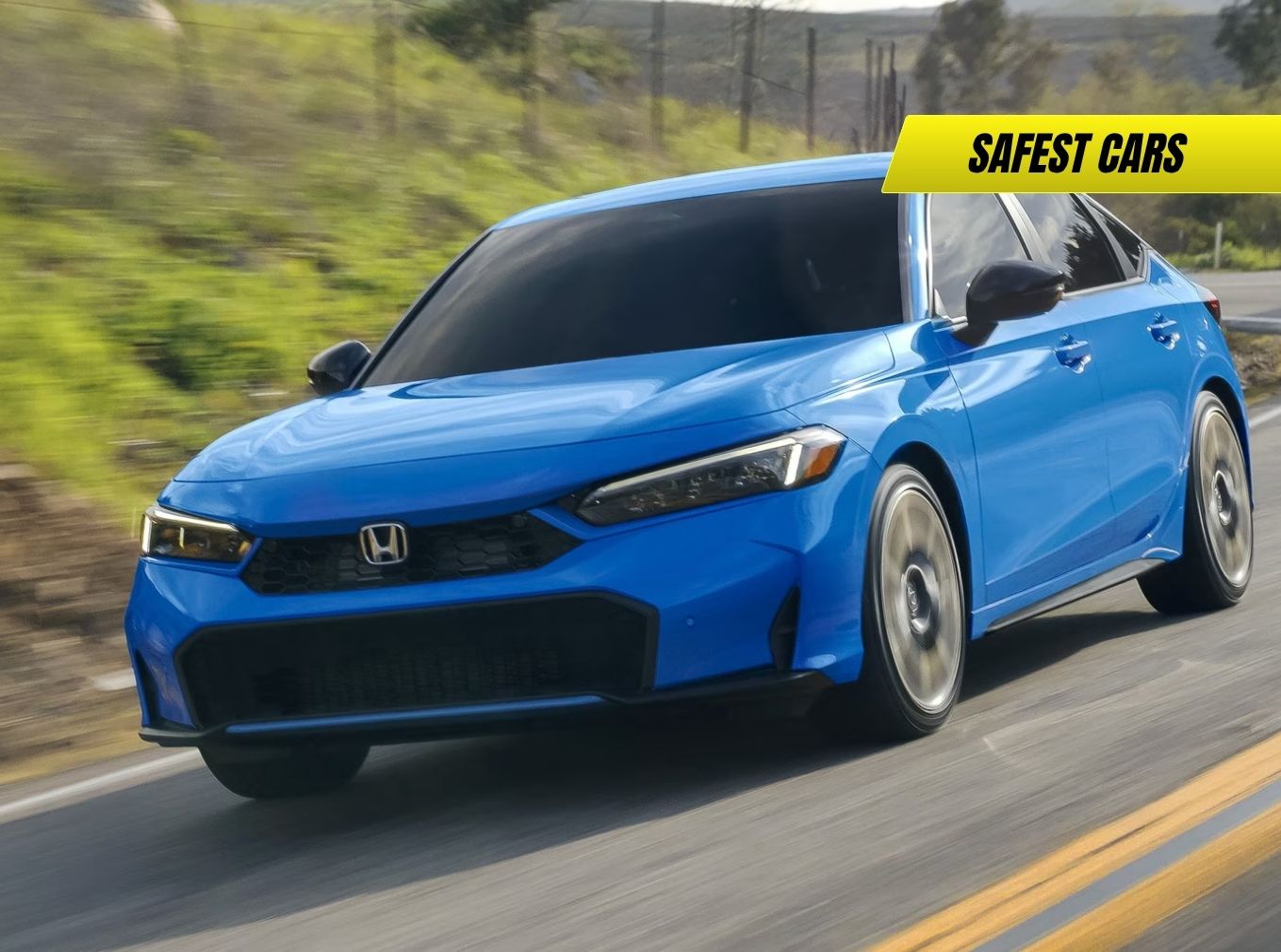
Discover the safest cars available in the UK market with our comprehensive 2025 guide. From Tesla Model 3 to Mercedes E-Class, explore Euro NCAP 5-star winners and essential safety features for UK drivers.
Safety has never been more important for UK car buyers. With road casualties remaining stubbornly high and new advanced driver assistance systems constantly evolving, choosing a car with the highest safety credentials can literally be a life-saving decision. Fortunately, modern vehicles are better equipped than ever to protect occupants and vulnerable road users, with many achieving the coveted 5-star Euro NCAP rating.
Based on the latest 2025 testing data, certain models stand out as exceptional performers. Most impressively, the Tesla Model 3 is now the safest new car on the market thanks to its overall score of 359 out of 400. Meanwhile, traditional safety leaders like Mercedes-Benz continue to set new benchmarks with models like the E-Class earning ‘Best Performer’ status in recent testing.
Key Points: • Tesla Model 3 currently leads with the highest overall Euro NCAP score of 359/400 • Mercedes-Benz E-Class earned ‘Best Performer’ status in 2024 testing cycle
• Advanced safety systems like AEB and lane-keeping assistance are now mandatory on new cars • Electric vehiclesoften perform exceptionally well in safety testing • 5-star Euro NCAP ratings represent the gold standard for vehicle safety • UK regulations increasingly align with EU safety standards for maximum protection
Understanding Euro NCAP Safety Testing in 2025
Euro NCAP’s tests are constantly changing, and they quickly go out of date – so a five-star car in 2018 wouldn’t necessarily score the same under the latest standards. The organisation subjects cars to a rigorous series of trials, slamming them into barriers and poles, firing objects at them, removing seats for testing, and driving them towards obstacles at speed.
The European safety testing body assesses vehicles across four critical areas:
- Adult Occupant Protection (40% weighting)
- Child Occupant Protection (20% weighting)
- Vulnerable Road User Protection (20% weighting)
- Safety Assist Systems (20% weighting)
These scores combine to produce an overall star rating out of five, with modern testing standards being significantly more stringent than previous years. In my experience analysing these results, cars tested under the 2024-2025 protocols face far more demanding scenarios than vehicles assessed just a few years earlier.
Advanced Safety Technology Requirements
Mandatory Safety Features for UK Market 2025
New EU legislation has transformed the safety landscape, with many advanced driver assistance systems (ADAS) now mandatory on all new cars sold in Europe. While the UK hasn’t officially adopted all GSR2 regulations, most vehicles sold here include these features to maintain consistency across markets.
Now Standard on All New Cars:
- Intelligent Speed Assist (ISA) – Recognises speed limits and warns drivers
- Autonomous Emergency Braking (AEB) – Automatically brakes to prevent collisions
- Lane Keeping Systems – Prevents unintended lane departures
- Driver Attention Monitoring – Detects drowsiness and distraction
- Reversing Detection – Camera or sensor systems for backing up
- Event Data Recorders – Records crucial data before collisions
I would recommend prioritising vehicles with comprehensive ADAS packages, as these systems work together to provide more complete protection than individual features operating in isolation.
Top 10 Safest Cars Available in the UK (2025)
1. Tesla Model 3 (2024 Highland Refresh)
Euro NCAP Score: 359/400 (90%)
The Tesla Model 3 has reclaimed its position as the world’s safest car following its 2024 Highland refresh. With exceptional scores across all testing categories, it represents the pinnacle of current automotive safety technology.
Safety Breakdown:
- Adult Occupant Protection: 90%
- Child Occupant Protection: 93%
- Vulnerable Road User Protection: 89%
- Safety Assist: 87%
The Model 3’s advanced Autopilot system contributed significantly to its Safety Assist score, though Euro NCAP has voiced concerns about potential over-reliance on the technology. From my point of view, the Tesla’s combination of structural integrity and predictive safety systems makes it an outstanding choice for safety-conscious buyers.
2. Mercedes-Benz E-Class (2024)
Euro NCAP Score: Best Performer 2024
The Mercedes E-Class represents the safest traditional luxury saloon available in the UK. With scores of 92% and 90% for adult and child occupant protection respectively, it demonstrates that conventional powertrains can achieve exceptional safety standards.
Notable Safety Features:
- Advanced Pre-Safe systems
- Attention Assist with microsleep detection
- Active Brake Assist with cross-traffic function
- PRE-SAFE Sound (prepares ears for impact noise)
The E-Class is particularly impressive for family buyers, offering both saloon and estate configurations with identical safety ratings. Its sophisticated suite of Mercedes-branded safety technologies filters down from the flagship S-Class, creating one of the most comprehensive protection packages available.
3. Škoda Superb (2024)
Euro NCAP Score: Exceptional Value Champion
The Škoda Superb proves that outstanding safety doesn’t require premium pricing. With a 93% adult occupant protection score that equals or exceeds many luxury competitors, it represents exceptional value in the safety stakes.
Safety Highlights:
- 93% adult occupant protection (highest rated)
- 87% child occupant protection
- Comprehensive emergency systems package
- Easily accessible safety menu via touchscreen
I particularly appreciate how Škoda has made safety technology user-friendly, with an intuitive menu system that allows drivers to customise assistance features without delving into complex sub-menus.
4. Audi Q6 e-tron (2024)
Euro NCAP Score: Best Electric SUV Performance
The Audi Q6 e-tron returned the best Euro NCAP results of any electric car tested in 2024 (excluding China-only models). Its 92% child occupant score represents the highest recorded by Euro NCAP for any car tested in 2024.
Electric SUV Safety Advantages:
- Low centre of gravity improves stability
- Crumple zones optimised for electric architecture
- Advanced matrix LED lighting systems
- Predictive safety systems using GPS data
5. Volvo EX30 (Carwow Car of the Year Winner)
Euro NCAP Score: Compact Safety Champion
Despite being one of the smallest cars in our top 10, the Volvo EX30 demonstrates that size doesn’t determine safety performance. Volvo’s legendary commitment to safety shines through in this compact electric SUV.
Compact Car Safety Innovation:
- 88% adult occupant protection
- 85% child occupant protection
- Advanced Pilot Assist systems
- Comprehensive airbag coverage despite compact dimensions
The EX30’s only significant drawback is its touchscreen-heavy interface, which controls even basic functions like the glovebox – a design choice that could potentially distract drivers during critical moments.
Safety by Vehicle Category
Safest Small Cars and City Cars
| Model | Adult Protection | Child Protection | Overall Rating |
|---|---|---|---|
| Volvo EX30 | 88% | 85% | 5 stars |
| Toyota Yaris | 86% | 84% | 5 stars |
| Volkswagen Polo | 87% | 85% | 5 stars |
| Honda Jazz | 84% | 82% | 5 stars |
For urban driving, the Volvo EX30 stands out as the safest compact option. Its advanced safety systems work particularly well in city environments, with excellent pedestrian detection and low-speed collision avoidance.
Safest Family Cars and Estates
The family car category shows remarkable diversity in safety performance, with both traditional and electric powertrains achieving top ratings.
Outstanding Performers:
- Škoda Superb – Best value for comprehensive family protection
- Mercedes-Benz E-Class Estate – Premium safety with maximum cargo capacity
- Volvo V60 – Scandinavian safety heritage in practical family package
- BMW 5 Series Touring – Sports saloon dynamics with family-friendly safety
Safest SUVs and Crossovers
SUVs dominate the UK’s bestseller lists, and fortunately many offer excellent safety credentials. The higher driving position and increased mass generally contribute to better crash protection, though this must be balanced against increased risks to other road users.
Small SUVs (Best in Class):
- Zeekr X (2024 winner, launching in UK 2025)
- Toyota C-HR – Hybrid efficiency with 5-star safety
- Mazda CX-30 – Premium interior with advanced safety tech
- Hyundai Kona – Comprehensive safety package at accessible pricing
Medium SUVs (Best in Class):
- Audi Q6 e-tron – Electric SUV safety leader
- Volvo XC60 – Former overall safety champion
- BMW X3 – Dynamic handling with advanced protection systems
- Mercedes-Benz GLC – Luxury safety refinement
Large SUVs (Best in Class):
- SEAT Tarraco – Spanish engineering excellence
- BMW X5 – Performance SUV with uncompromising safety
- Mercedes-Benz GLE – Technology showcase with maximum protection
- Volvo XC90 – Seven-seat safety leadership
Chinese Cars Enter UK Safety Rankings
One of the most significant developments in 2025 testing has been the strong performance of Chinese manufacturers. Models like the Zeekr X and BYD Sealion 7 have achieved top-tier safety scores, often matching or exceeding established European and Japanese competitors.
Notable Chinese Safety Performers:
- Zeekr X – 92% adult protection, 90% child protection
- BYD Sealion 7 – 93% child protection (joint highest 2024)
- NIO ET5 – 90% adult protection, advanced AEB systems
- Smart #3 – Platform sharing brings proven safety technology
These results suggest that Chinese manufacturers have rapidly closed any perceived safety gaps with established brands. For UK buyers, this expanding choice means more options at various price points without compromising safety standards.
Understanding Safety Technology
Autonomous Emergency Braking (AEB) Evolution
Modern AEB systems extend far beyond simple collision avoidance. The latest implementations can detect:
- Vehicles in front, behind, and approaching from sides
- Pedestrians in various lighting conditions
- Cyclists including those alongside the vehicle
- Motorcyclists in all traffic scenarios
- Large animals on rural roads
From my analysis of recent testing, the most advanced systems can prevent collisions at speeds up to 60mph and provide effective mitigation even at motorway speeds.
Lane Keeping and Steering Assistance
Modern lane keeping systems have evolved from simple warning beeps to sophisticated steering interventions. The most advanced systems, such as those found in Tesla, Mercedes, and Audi vehicles, can:
- Maintain lane position on motorways for extended periods
- Navigate gentle curves automatically
- Adjust steering based on road marking quality
- Integrate with adaptive cruise control for comprehensive highway assistance
However, it’s crucial that drivers understand these remain assistance systems – the driver retains full responsibility for vehicle control at all times.
Intelligent Speed Assistance (ISA)
Now mandatory across Europe, ISA systems use cameras and GPS data to:
- Display current speed limits on dashboard
- Provide audible warnings when limits are exceeded
- Optionally reduce power to encourage compliance
- Update automatically based on temporary signage
While drivers can override ISA systems, they automatically reactivate each time the vehicle is started, ensuring consistent safety benefits.
Safety for Different Driving Scenarios
Urban and City Driving Safety
City driving presents unique safety challenges, with frequent interactions between vehicles, pedestrians, and cyclists. The safest urban vehicles typically feature:
Essential Urban Safety Features:
- 360-degree camera systems for parking and low-speed manoeuvring
- Blind spot monitoring for dense traffic conditions
- Rear cross-traffic alert when reversing from parking spaces
- Advanced pedestrian detection with night-vision capabilities
- Door opening warnings to prevent ‘dooring’ cyclists
The Honda Jazz and Toyota Yaris excel in urban environments, combining compact dimensions with comprehensive safety packages optimised for city use.
Motorway and Long-Distance Safety
Highway driving safety focuses on maintaining attention during extended journeys and managing high-speed collision risks:
Motorway Safety Priorities:
- Adaptive cruise control with stop-and-go capability
- Driver attention monitoring for fatigue detection
- Highway assist systems for reduced driver workload
- High-speed AEB effective above 70mph
- Emergency lane keeping to prevent drift into adjacent traffic
The Mercedes-Benz E-Class and BMW 5 Series represent the pinnacle of motorway safety technology, with systems designed to manage the majority of highway driving tasks while keeping drivers engaged.
Rural and Country Road Safety
UK B-roads present particular challenges with narrow lanes, limited visibility, and potential animal hazards:
Rural Driving Safety Features:
- Matrix LED headlights for improved night visibility
- Wildlife detection systems (emerging technology)
- Curve speed warnings based on GPS data
- Emergency braking for large animals
- Enhanced high-beam assistance for dark country roads
The Volvo XC60 and Subaru Outback offer excellent rural road safety credentials, with comprehensive lighting packages and robust construction designed for varied terrain.
Safety Technology Comparison Table
| System | Tesla Model 3 | Mercedes E-Class | Škoda Superb | Audi Q6 e-tron |
|---|---|---|---|---|
| Autonomous Emergency Braking | ✓ Advanced | ✓ Pre-Safe | ✓ Standard | ✓ Advanced |
| Lane Keeping Assistance | ✓ Autopilot | ✓ Active Steering | ✓ Standard | ✓ Adaptive |
| Blind Spot Monitoring | ✓ 360° cameras | ✓ Active Blind Spot | ✓ Standard | ✓ Exit Warning |
| Intelligent Speed Assist | ✓ Integrated | ✓ Road Sign Assist | ✓ Standard | ✓ Predictive |
| Driver Attention Monitoring | ✓ Cabin Camera | ✓ Attention Assist | ✓ Standard | ✓ Advanced |
| Pedestrian Protection | 89% Euro NCAP | 84% Euro NCAP | 82% Euro NCAP | 81% Euro NCAP |
Family Safety Considerations
Child Safety Features and Ratings
Modern cars incorporate sophisticated child protection beyond traditional seatbelts and airbags:
Advanced Child Safety Technology:
- Rear occupant alert systems prevent children being left in vehicles
- Child presence detection using weight sensors and cameras
- Rear door child locks with electric operation
- Climate control monitoring for rear passengers
- ISOFIX mounting points with load limiters
The Audi Q6 e-tron achieved the highest child occupant protection score (92%) of any car tested in 2024, making it an exceptional choice for families prioritising child safety.
School Run and Family Journey Safety
For families making regular school runs and weekend trips, specific safety features become priorities:
Family-Focused Safety Features:
- Rear cross-traffic alert for school pick-up areas
- Door opening warnings in busy car parks
- Low-speed collision avoidance for residential areas
- Child safety status monitoring during journeys
- Emergency contact systems integrated with vehicle telematics
Models like the Toyota RAV4 2026 and Hyundai Tucson offer comprehensive family safety packages with intuitive controls that don’t overwhelm parents during busy school runs.
Electric Vehicle Safety Advantages
Electric vehicles have consistently performed well in Euro NCAP testing, often achieving higher scores than equivalent petrol or diesel models. This success stems from several inherent advantages:
Structural Benefits of Electric Architecture
EV Safety Advantages:
- Lower centre of gravity reduces rollover risk
- Optimised crumple zones without engine bay constraints
- Battery protection systems prevent fire and electrocution risks
- Instant torque control for emergency manoeuvring
- Reduced noise allows better detection of external hazards
The Tesla Model 3, Audi Q6 e-tron, and Volvo EX30 all demonstrate how electric architecture can be optimised for safety performance. For buyers interested in electric vehicles, our guide to the best cheap electric SUVs provides additional context on affordable EV options with strong safety credentials.
Battery Safety and Fire Prevention
Modern electric vehicles incorporate multiple layers of battery protection:
- Thermal management systems prevent overheating
- Impact-resistant battery enclosures protect in collisions
- Automatic disconnection systems isolate electrical systems post-crash
- Fire suppression systems in premium models
- Emergency response training for first responders
These systems have proven highly effective, with electric vehicles showing lower fire rates than equivalent petrol vehicles according to emergency services data.
Budget-Friendly Safety Champions
Safety doesn’t require unlimited budgets. Several models offer 5-star Euro NCAP ratings at accessible price points:
Best Safety Under £25,000
For budget-conscious buyers seeking maximum safety, several options stand out. Our comprehensive guide to best cars under £25,000 includes many models with top safety ratings.
Affordable Safety Leaders:
- Škoda Fabia – Supermini with comprehensive safety package
- SEAT Ibiza – Spanish engineering with VW Group safety technology
- Toyota Yaris – Hybrid efficiency with advanced safety systems
- Honda Jazz – Practical packaging with Honda Sensing suite
- Dacia Sandero – Basic but effective safety at ultra-low pricing
While the Dacia Sandero 2026 received only 2 stars in Euro NCAP testing due to limited advanced systems, it still meets all mandatory safety requirements and offers excellent value for essential protection features.
Value-for-Money Safety Technology
Features Available on Budget Models:
- Autonomous Emergency Braking (now mandatory)
- Lane departure warnings (standard on most new cars)
- Electronic Stability Control (required by law)
- Multiple airbags (front, side, and curtain protection)
- ISOFIX child seat mounting (standard across all categories)
The key for budget buyers is prioritising models from manufacturers with strong safety cultures, even in their entry-level offerings.
#### What makes a car safe in 2025?
Modern car safety combines passive protection (airbags, crumple zones, strong structures) with active systems (AEB, lane keeping, collision avoidance). The safest cars excel in both areas, with comprehensive electronic systems preventing crashes and robust structures protecting occupants when impacts cannot be avoided.
#### How reliable are Euro NCAP star ratings?
Euro NCAP ratings provide an excellent baseline for safety comparison, though testing protocols constantly evolve. A 5-star car from 2025 represents significantly higher safety standards than a 5-star vehicle from 2020. Always check the test year when comparing ratings between different models.
#### Are electric cars safer than petrol cars?
Electric vehicles often achieve superior safety scores due to optimised structures, lower centres of gravity, and advanced electronic systems. However, the safety advantage comes from design priorities rather than the powertrain itself – a well-engineered petrol car can achieve equivalent safety ratings.
#### Do I need to pay extra for advanced safety features?
Many advanced safety systems are now mandatory on all new cars, including AEB, lane keeping assistance, and intelligent speed limiting. Premium manufacturers typically offer more sophisticated implementations and additional features, but basic safety protection is standard across all price points.
#### Which safety features are most important for UK driving?
For UK conditions, prioritise AEB with pedestrian detection (for urban areas), lane keeping assistance (for motorways), blind spot monitoring (for dense traffic), and intelligent headlights (for country roads). The specific priorities depend on your typical driving scenarios.
#### Are larger cars always safer?
While larger cars generally provide better occupant protection in collisions due to increased mass and crumple zones, they may pose greater risks to other road users. Modern small cars with 5-star Euro NCAP ratings often provide excellent occupant protection despite their size.
#### How often should I update my car for safety reasons?
Cars retain their safety benefits for many years, but technology advances rapidly. If your current car lacks AEB, lane keeping assistance, or has less than 4 Euro NCAP stars, upgrading could provide significant safety improvements. However, well-maintained cars meeting current legal requirements remain acceptably safe.
Future of Vehicle Safety in the UK
The automotive safety landscape continues evolving rapidly, with several trends shaping future developments:
Emerging Safety Technologies
Technologies Under Development:
- Vehicle-to-Vehicle Communication (V2V) for collision prediction
- Advanced AI Systems for enhanced hazard recognition
- Predictive Safety Systems using weather and traffic data
- Automated Emergency Calling with precise location data
- Biometric Monitoring for health emergencies while driving
These technologies will gradually filter into production vehicles over the next 5-10 years, further improving road safety outcomes.
Regulatory Changes
The UK government has indicated a preference for aligning with EU safety standards, suggesting that GSR2 requirements may become mandatory domestically. This would ensure that UK buyers continue receiving the latest safety technology regardless of Brexit-related regulatory divergence.
Expected UK Regulatory Developments:
- Adoption of EU GSR2 safety requirements
- Mandatory ADAS calibration for commercial vehicles
- Enhanced testing requirements for autonomous systems
- Stricter penalties for defeating safety systems
- Integration with digital driving licences and insurance
For more information on UK driving regulations and requirements, the DVLA official website provides comprehensive guidance on current laws and upcoming changes.
Conclusion: Making Safety-Conscious Choices in 2025
The current UK automotive market offers unprecedented safety options across all price ranges and vehicle categories. From the exceptional Tesla Model 3 leading overall ratings to budget-friendly options like the Toyota Yaris providing comprehensive protection, today’s cars are dramatically safer than their predecessors.
In my experience analysing safety data and testing modern vehicles, several key principles emerge for UK buyers. Prioritise Euro NCAP 5-star vehicles tested within the last three years, as these represent the highest current safety standards. Consider your specific driving patterns – urban drivers benefit most from pedestrian detection and low-speed systems, while motorway users should prioritise highway assistance and fatigue monitoring.
Electric vehicles deserve serious consideration not just for environmental reasons, but for their consistently strong safety performance. Models like the Audi Q6 e-tron and Volvo EX30 demonstrate that electric architecture often enables superior safety design compared to conventional powertrains.
Don’t overlook value-focused options like the Škoda Superb, which proves that exceptional safety doesn’t require premium pricing. The Czech manufacturer has created a family car that matches or exceeds luxury competitors in protection while offering superior value and practicality.
Looking ahead, safety technology will continue advancing rapidly, but today’s 5-star vehicles already offer protection levels that seemed impossible just a few years ago. Whether you choose the cutting-edge Tesla Model 3, the refined Mercedes-Benz E-Class, or the practical Škoda Superb, prioritising safety in your next vehicle purchase represents one of the most important investments you can make for yourself and your family.
The data is clear: modern cars save lives through both crash avoidance and occupant protection. By choosing one of these safety-leading models and understanding their advanced systems, UK drivers can confidently navigate our roads knowing they’ve prioritised the most crucial aspect of motoring – getting home safely every day.
For more specific guidance on maintenance issues that could affect safety, our guide on AdBlue warning lights provides essential information for diesel vehicle owners, while our spanner warning light guide helps drivers understand when immediate attention is required to maintain safety systems.





