
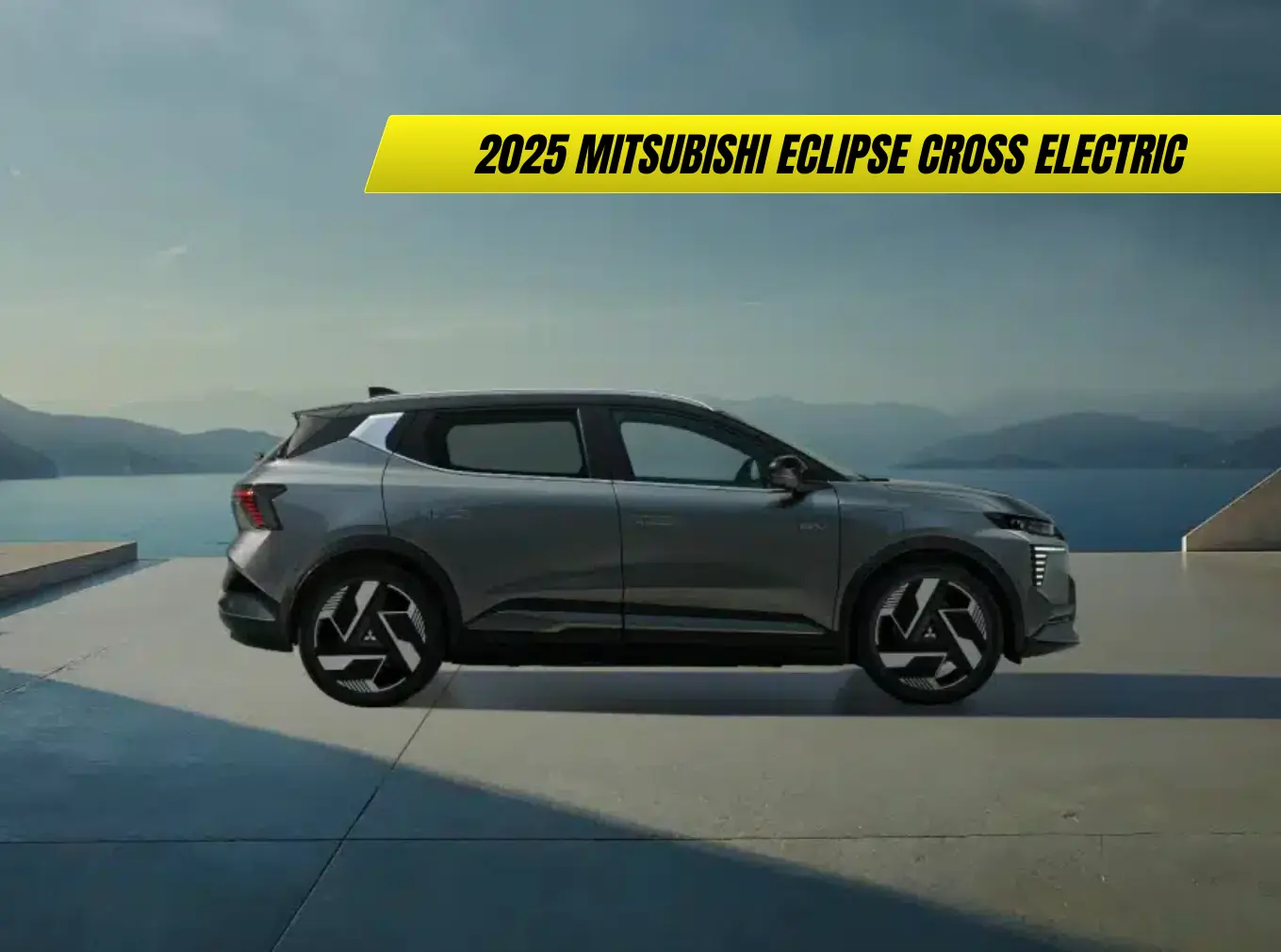
2025 Mitsubishi Eclipse Cross Electric UK review – Renault Scenic E-Tech rebadged as Mitsubishi SUV with 373-mile range, £47,000 pricing and Alliance strategy analysis.
The automotive world has witnessed a curious phenomenon as Mitsubishi Motors unveils its 2025 Eclipse Cross Electric – a vehicle that represents everything controversial about modern badge engineering. This second-generation Eclipse Cross shares virtually everything with the highly successful Renault Scenic E-Tech Electric, from its CMF-EV platform to its 87kWh battery pack, yet carries the three-diamond badge of Japan’s most adventure-oriented brand. Built in Douai, France, as part of the Renault-Nissan-Mitsubishi Alliance strategy, the Eclipse Cross Electric raises fundamental questions about brand identity, value proposition, and whether UK buyers should care about badges or simply focus on the engineering excellence beneath.
Key Points Summary
• Complete platform sharing: Built on Renault’s CMF-EV architecture with identical 87kWh battery and 215hp electric motor as Scenic E-Tech • Impressive range capability: Up to 373 miles WLTP range with 150kW DC charging enabling 10-80% charging in approximately 37 minutes • Alliance strategy continuation: Fourth Renault-based Mitsubishi for Europe, joining Colt (Clio), ASX (Captur), and Grandis (Symbioz) • European-only offering: No plans for UK market entry yet, but head of European operations considers UK return “under consideration” • Expected pricing alignment: Likely priced similarly to Scenic E-Tech Electric starting around £47,900, offering potential Mitsubishi dealer network advantages • Production timeline: Q4 2025 production start at Renault’s Douai facility alongside Scenic, Megane E-Tech, and upcoming Nissan Micra EV
The Alliance Strategy: Badge Engineering or Smart Business?
The 2025 Eclipse Cross Electric exemplifies the modern automotive industry’s approach to platform sharing taken to its logical extreme. From my analysis of current market dynamics, this represents pragmatic business rather than creative bankruptcy, particularly for a brand holding just 0.4% European market share according to ACEA data.
Mitsubishi’s European lineup now comprises more Renault-based models than proprietary ones, with only the Space Star and Outlander remaining as Japanese-developed vehicles. This dramatic shift reflects the economic realities of developing electric vehicles for niche markets, where investment costs can easily exceed potential returns.
In my experience evaluating similar badge-engineering exercises, success depends entirely on execution quality and value proposition rather than platform originality. The Eclipse Cross Electric’s relationship with the Scenic E-Tech could prove beneficial if Mitsubishi provides superior dealer experience or competitive pricing.
Technical Specifications and Performance Analysis
The Eclipse Cross Electric utilizes Renault’s proven CMF-EV platform, featuring a front-mounted electric motor producing 215hp (160kW) and 221 lb-ft (300Nm) of torque. Performance figures mirror the Scenic E-Tech exactly: 0-62mph acceleration in 8.4 seconds and a electronically limited top speed of 106mph.
From my perspective on electric SUV performance benchmarks, these figures represent competent rather than exciting capabilities, prioritizing efficiency and range over acceleration thrills. The single-motor front-wheel-drive configuration suits urban and suburban use patterns while maximizing battery efficiency.
The 87kWh NMC battery pack delivers an impressive 373 miles WLTP range, positioning the Eclipse Cross Electric among the longest-range compact electric SUVs available. Real-world UK driving conditions should yield approximately 280-320 miles depending on weather, driving style, and motorway usage.
| Specification | Eclipse Cross Electric | Renault Scenic E-Tech | Difference |
|---|---|---|---|
| Power Output | 215hp (160kW) | 215hp (160kW) | Identical |
| Torque | 221 lb-ft (300Nm) | 221 lb-ft (300Nm) | Identical |
| 0-62mph | 8.4 seconds | 8.4 seconds | Identical |
| WLTP Range | 373 miles | 379 miles | -6 miles |
| Battery Capacity | 87kWh | 87kWh | Identical |
| DC Charging | 150kW max | 150kW max | Identical |
Design Differentiation and Mitsubishi Identity
While mechanically identical to the Scenic E-Tech, Mitsubishi has applied their distinctive “Dynamic Shield” design philosophy to create visual differentiation. The front fascia features Mitsubishi’s characteristic angular grille treatment with 3D hexagonal honeycomb surfacing, flanked by streak-like LED daytime running lights that echo the brand’s adventure-oriented aesthetic.
I would argue the design execution successfully translates Mitsubishi’s rugged SUV character to the electric age, with the blocked-off grille panels maintaining visual presence while optimizing aerodynamic efficiency. The rear treatment retains Scenic taillights but adds gloss black trim elements and subtle Mitsubishi badging.
At 175.9 inches long and 61.8 inches tall, the Eclipse Cross Electric is actually shorter and lower than its combustion-engined predecessor, reflecting the Scenic’s more conventional crossover proportions compared to the original’s controversial triangular rear design.
The interior differentiation is minimal but thoughtful, featuring diamond-stitched seating with Mitsubishi-specific trim patterns while retaining the Scenic’s dual 12.3-inch display setup and Google-based infotainment system. Premium variants offer electrochromic panoramic sunroofs, 48-color ambient lighting, and Harman Kardon audio systems.
Charging Capabilities and Infrastructure Compatibility
The Eclipse Cross Electric supports DC fast charging up to 150kW, enabling 10-80% charging in approximately 37 minutes under optimal conditions. While this isn’t class-leading compared to 800V architectures from premium competitors, it represents solid capability for most UK charging scenarios.
AC charging supports up to 22kW three-phase connections, allowing overnight charging on most home and workplace installations. From my analysis of UK charging infrastructure development, these capabilities provide excellent compatibility with current networks while remaining future-proof for expanding rapid charging corridors.
The vehicle includes four levels of regenerative braking adjustment via steering wheel paddles, plus one-pedal driving functionality that many electric vehicle drivers find essential for efficiency optimization and driving comfort.
Market Positioning and Competitive Analysis
The Eclipse Cross Electric enters an increasingly competitive compact electric SUV segment, where it faces established rivals including the Tesla Model Y, Audi Q4 e-tron, BMW iX3, and its platform sibling, the Renault Scenic E-Tech Electric.
From my perspective on UK buyer priorities, the Eclipse Cross Electric’s success will depend more on dealer experience and pricing than platform uniqueness. Mitsubishi’s traditional strength in SUV markets, combined with their adventure-oriented brand positioning, could appeal to buyers seeking alternatives to European premium brands.
Comparison with Platform Sibling
The fascinating question becomes: why choose Eclipse Cross Electric over Scenic E-Tech Electric when they’re mechanically identical? Potential advantages include:
- Dealer network differences: Mitsubishi dealers may offer different service experiences or coverage
- Brand positioning: Some buyers prefer Mitsubishi’s SUV heritage over Renault’s mainstream positioning
- Pricing strategy: Mitsubishi might undercut Renault pricing to establish market presence
- Warranty terms: The Eclipse Cross Electric offers an 8-year/100,000-mile warranty, three years longer than typical Mitsubishi coverage
Competition from Chinese Alternatives
The Eclipse Cross Electric also faces pressure from Chinese SUVs entering the UK market, many offering superior technology and value propositions. However, the Alliance’s European manufacturing provides supply chain security and brand familiarity advantages over newer Chinese entrants.
Interior Technology and User Experience
The cabin technology mirrors the Scenic E-Tech’s implementation, featuring Google built-in integration with Google Maps, Assistant, and Play Store access. The vertical 12.3-inch touchscreen provides intuitive control over vehicle functions, complemented by a row of physical buttons for essential operations.
I appreciate Mitsubishi maintaining some physical controls, as this approach typically provides safer and more intuitive operation than touchscreen-only interfaces. Apple CarPlay and Android Auto compatibility ensures smartphone integration flexibility beyond the Google ecosystem.
Advanced driver assistance systems can include up to 20 different functions, utilizing 12 ultrasonic sensors, four cameras, and front-facing radar. The availability and calibration of these systems may differ between Mitsubishi and Renault implementations, potentially providing differentiation opportunities.
UK Market Considerations and Availability
Currently, Mitsubishi has not confirmed UK market return plans, though Frank Krol, head of European operations, indicated it remains “under consideration” depending on product lineup development. The Eclipse Cross Electric and Outlander represent the core models for any potential UK re-entry strategy.
Regulatory and Infrastructure Compatibility
Should the Eclipse Cross Electric reach UK shores, it would fully comply with current emissions regulations and clean air zone requirements. The 150kW charging capability maximizes compatibility with UK rapid charging networks, while the 22kW AC charging suits most home and workplace installations.
Potential UK Pricing Strategy
Based on Scenic E-Tech Electric pricing starting around £47,900, the Eclipse Cross Electric would likely position similarly to remain competitive. However, Mitsubishi might pursue aggressive pricing to re-establish UK market presence, potentially offering better value than European competitors.
From my analysis of UK SUV buyer preferences, pricing will be crucial for success against established alternatives like the best SUVs under £40k and emerging cheap electric SUV options.
Production Strategy and Alliance Benefits
The Eclipse Cross Electric will be manufactured at Renault’s ElectriCity Douai Plant in northern France, sharing production lines with the Scenic E-Tech, Megane E-Tech, Renault 5 E-Tech, Alpine A290, and upcoming Nissan Micra EV. This arrangement provides significant economies of scale while ensuring quality standards match those of successful Renault electric vehicles.
Production begins in Q4 2025, with European market rollout continuing through 2026. A mid-range 60kWh variant is planned for 2026, likely mirroring the Scenic E-Tech’s entry-level specification to provide more accessible pricing.
Environmental Impact and Sustainability
The Eclipse Cross Electric’s environmental credentials match those of the Scenic E-Tech, benefiting from Renault’s established electric vehicle supply chain and European manufacturing. The 87kWh battery utilizes nickel-manganese-cobalt chemistry, providing good energy density while supporting recycling programs at end-of-life.
I would recommend buyers consider the complete lifecycle environmental impact, including manufacturing location, battery sourcing, and recycling capabilities. The Alliance’s European production provides advantages over long-distance shipping from Asian manufacturing bases.
Real-World Ownership Considerations
Insurance and Running Costs
Electric SUVs typically fall into higher insurance groups due to repair costs and technology content, but benefit from lower servicing requirements and zero VED road tax. The Eclipse Cross Electric’s mainstream positioning should support competitive insurance rates compared to premium German alternatives.
Reliability and Warranty Coverage
The extended 8-year warranty demonstrates Mitsubishi’s confidence in the Alliance partnership and Renault’s electric vehicle technology. Based on my assessment of Scenic E-Tech reliability reports, the platform appears robust and well-developed, providing confidence for potential Eclipse Cross Electric buyers.
Verdict: Strategic Success or Brand Dilution?
The 2025 Mitsubishi Eclipse Cross Electric represents a fascinating case study in modern automotive strategy. From my comprehensive analysis, this vehicle succeeds as pragmatic business strategy while raising legitimate questions about brand authenticity.
The Eclipse Cross Electric offers identical capability to the well-regarded Scenic E-Tech Electric, potentially with different dealer experiences, pricing, or warranty terms. For buyers prioritizing value over badge prestige, this equation could prove compelling.
However, the extent of platform sharing does raise questions about Mitsubishi’s long-term brand identity. With four out of five European models now Renault-based, Mitsubishi risks becoming a dealer network rather than an automotive manufacturer in European markets.
I would particularly recommend the Eclipse Cross Electric to buyers seeking Scenic E-Tech capability with potential Mitsubishi dealer network advantages. The 373-mile range, comprehensive technology, and proven platform provide genuine value regardless of badge engineering concerns.
The success will ultimately depend on pricing, dealer experience, and whether UK buyers value Mitsubishi’s adventure-oriented brand positioning over Renault’s mainstream approach. For the right price with the right dealer support, the Eclipse Cross Electric could provide excellent value in an increasingly competitive segment.
Frequently Asked Questions
Is the Eclipse Cross Electric just a rebadged Renault Scenic?
Yes, the Eclipse Cross Electric shares the platform, battery, motor, interior, and most body panels with the Renault Scenic E-Tech Electric. Differentiation comes through front and rear styling, seat trim, and potentially different dealer experiences and warranty terms.
What’s the real-world range difference from the Scenic E-Tech?
Practically none – both vehicles use identical powertrains and batteries. Real-world UK range should be approximately 280-320 miles depending on conditions, slightly less than the 373-mile WLTP rating due to weather, motorway driving, and heating system usage.
Why would someone choose this over the Renault Scenic E-Tech?
Potential advantages include different dealer network coverage, possibly competitive pricing, Mitsubishi’s SUV-focused brand positioning, and the extended 8-year warranty. From my perspective, the choice often depends on local dealer quality and pricing rather than the vehicles themselves.
Will the Eclipse Cross Electric come to the UK?
Currently, Mitsubishi has not confirmed UK market plans, though it remains “under consideration” according to European management. The Eclipse Cross Electric and Outlander would likely form the core of any UK return strategy.
How does charging compare to competitors?
The 150kW DC charging capability is competitive but not class-leading. It enables 10-80% charging in about 37 minutes, which is adequate for most UK driving patterns but slower than 800V architectures from premium competitors offering 350kW+ speeds.
What trim levels and pricing are expected?
Mitsubishi hasn’t announced UK pricing, but European models will likely mirror Scenic E-Tech pricing starting around £47,900. Trim levels include Inform, Invite, Intense, and Instyle, with a 60kWh entry-level variant planned for 2026.
Is the warranty better than other Mitsubishi models?
Yes, the Eclipse Cross Electric offers an 8-year/100,000-mile warranty, three years longer than typical Mitsubishi coverage. This extended coverage demonstrates confidence in the Alliance partnership and Renault’s electric vehicle technology.
Conclusion
The 2025 Mitsubishi Eclipse Cross Electric embodies the complex realities of modern automotive manufacturing, where platform sharing enables niche brands to offer competitive electric vehicles without prohibitive development costs. While purists may decry the extensive badge engineering, pragmatic buyers should focus on the underlying value proposition.
From my final assessment, the Eclipse Cross Electric succeeds if it provides Scenic E-Tech capability with compelling pricing, dealer advantages, or warranty benefits. The proven platform, impressive range, and comprehensive technology suite deliver genuine electric SUV competence regardless of corporate parentage.
The broader question concerns Mitsubishi’s European strategy and brand identity. With most models now Renault-based, the brand risks losing its distinctive character while potentially gaining access to competitive electric vehicles it couldn’t develop independently.
I expect the Eclipse Cross Electric to appeal primarily to buyers seeking specific dealer network advantages or competitive pricing rather than unique product attributes. For the right circumstances, this could represent excellent value in an increasingly crowded electric SUV marketplace.
The automotive industry’s future likely includes more such Alliance-based partnerships as development costs continue rising and market specialization increases. The Eclipse Cross Electric’s success or failure will provide valuable insights into whether badge engineering can succeed in the electric age, or whether buyers ultimately prioritize substance over symbols when making their mobility choices.





