
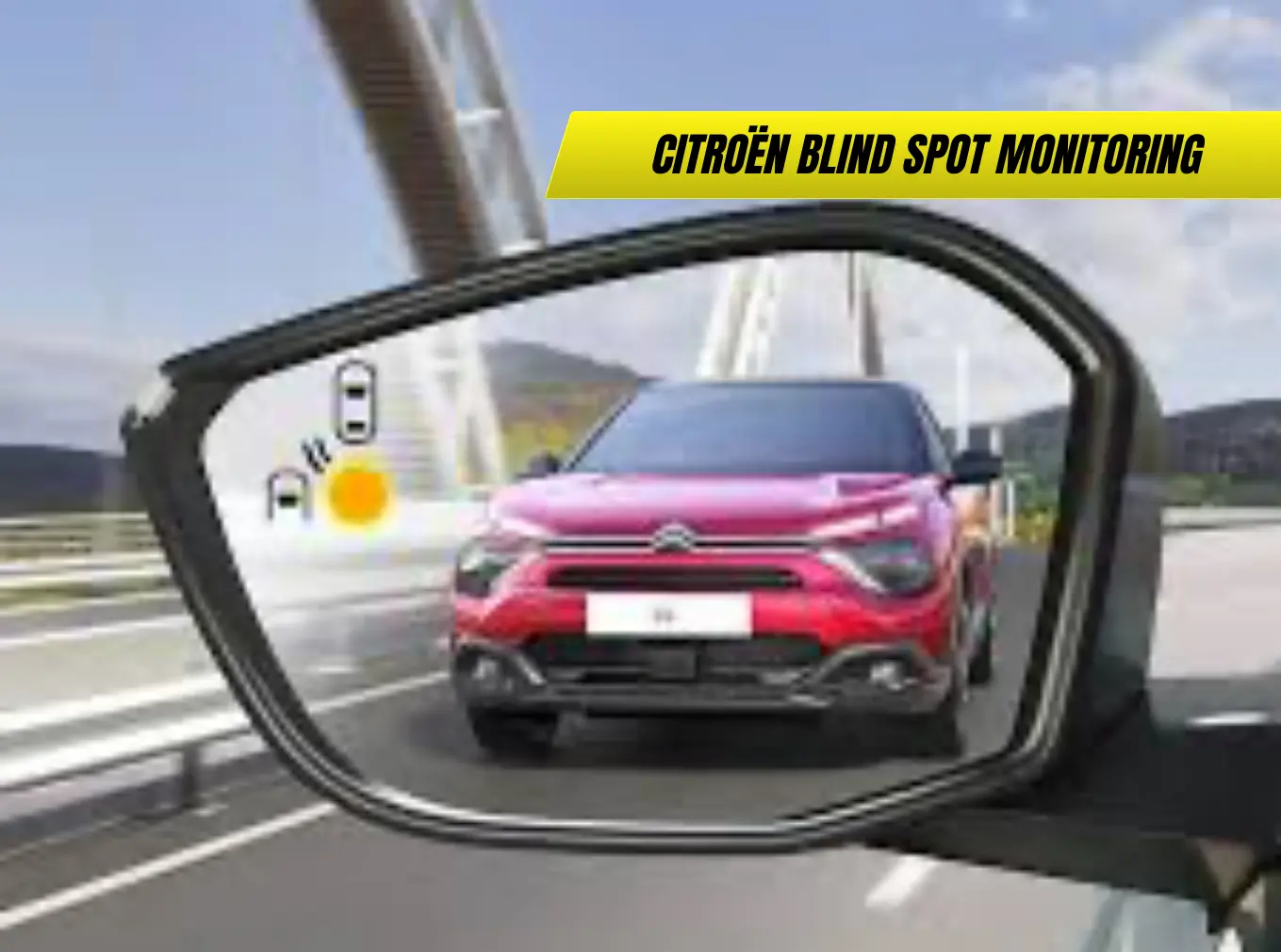
Blind Spot Monitoring (BSM) is one of Citroën’s most important safety systems for UK drivers, particularly useful on multi-lane motorways, busy dual carriageways and urban traffic. The system helps detect vehicles that may be hidden from view, reducing the risk of side collisions during lane changes. This guide explains how Citroën’s BSM works, when it intervenes, its limitations and the best way to use it.
Key Points
- Uses rear radar sensors to detect vehicles in blind spots.
- Illuminates a warning light on the door mirror when a vehicle is detected.
- Issues alerts if the driver indicates while another vehicle is in the blind spot.
- Works at medium and higher speeds (typically above 20–25 mph).
- Pairs with Lane Keeping Assist for safer lane changes.
How Blind Spot Monitoring Works
Citroën’s BSM uses radar sensors located near the rear bumper. These sensors scan adjacent lanes to detect vehicles:
- Approaching from behind
- Driving alongside your car
- Entering your blind spot zone
When a vehicle enters this area, a small amber light illuminates on the corresponding door mirror.
If you activate the indicator while the blind spot is occupied, the system escalates with:
- Flashing mirror light
- Audible warning (model dependent)
- Dashboard message
Benefits for UK Roads
BSM is particularly useful in the UK because of:
- Frequent multi-lane motorways
- Congested city driving
- Narrow A-roads where overtaking requires extra caution
- High number of lane-change collisions on major routes like the M25 and M6
The system improves awareness when visibility is compromised by weather, vehicle design or driver position.
System Limits
While effective, BSM cannot see everything.
It may not detect:
- Motorcycles closing in at high speed
- Vehicles far outside radar range
- Cyclists or pedestrians
- Vehicles hidden by large obstructions
It will also be less effective when:
- Sensors are covered by dirt, snow or road salt
- Weather is extremely wet or foggy
- The rear bumper has been damaged or repainted incorrectly
Driver Responsibilities
BSM is an aid, not a substitute for checking mirrors.
Drivers should continue to:
- Check mirrors regularly
- Use shoulder checks
- Maintain clear visibility
- Indicate in good time
BSM is designed to complement normal safe driving habits.
Integration With Other Citroën ADAS
The system pairs well with:
- Lane Keeping Assist – prevents drifting into another lane
- Driver Attention Alert – reduces distracted driving
- Active Safety Brake – supports emergency braking
Some models include Rear Cross Traffic Alert, which uses the same radar sensors to detect traffic when reversing.
Troubleshooting Common Issues
| Issue | Cause | Solution |
|---|---|---|
| Light stays on constantly | Sensor obstruction | Clean bumper area |
| No warning during lane change | System off or malfunction | Check vehicle settings |
| Frequent false alerts | Narrow roads or barriers | Reduce sensitivity if available |
| Warning disabled after repair | Recalibration required | Visit a Citroën-approved workshop |
If BSM stops working after bumper repairs or paint resprays, sensor recalibration is essential.
Maintenance Tips
- Keep rear bumper clean, especially during winter salt season.
- Replace faulty sensors promptly to maintain safety.
- Avoid placing stickers or film over sensor areas.
- Ensure correct tyre pressure to avoid unstable lane positioning.
For more safety and maintenance guidance, including dashboard icons, see the UK guide to warning symbols:
My Point of View
From my point of view, Blind Spot Monitoring is one of the most helpful ADAS features for everyday UK driving. Motorways are busy, vans block visibility and lane discipline varies widely — making BSM a valuable second set of eyes.
FAQs
Does BSM work in stop-start traffic?
Yes, but it is most effective above 20–25 mph.
Will it detect motorcycles?
Usually, but very fast-approaching bikes may fall outside detection range.
Can I switch it off?
Yes, but keeping it active is recommended for motorway driving.
Does it work at night?
Yes. Radar sensors function regardless of lighting conditions.
Should I still check mirrors?
Absolutely. BSM supports but never replaces manual checks.
Conclusion
Citroën’s Blind Spot Monitoring enhances safety for UK drivers by reducing the risk of unseen vehicles during lane changes. When combined with good mirror use and solid driving habits, it significantly lowers the chance of side collisions. In my experience, it provides invaluable reassurance in heavy traffic and on busy motorways where quick decisions are often required.





