
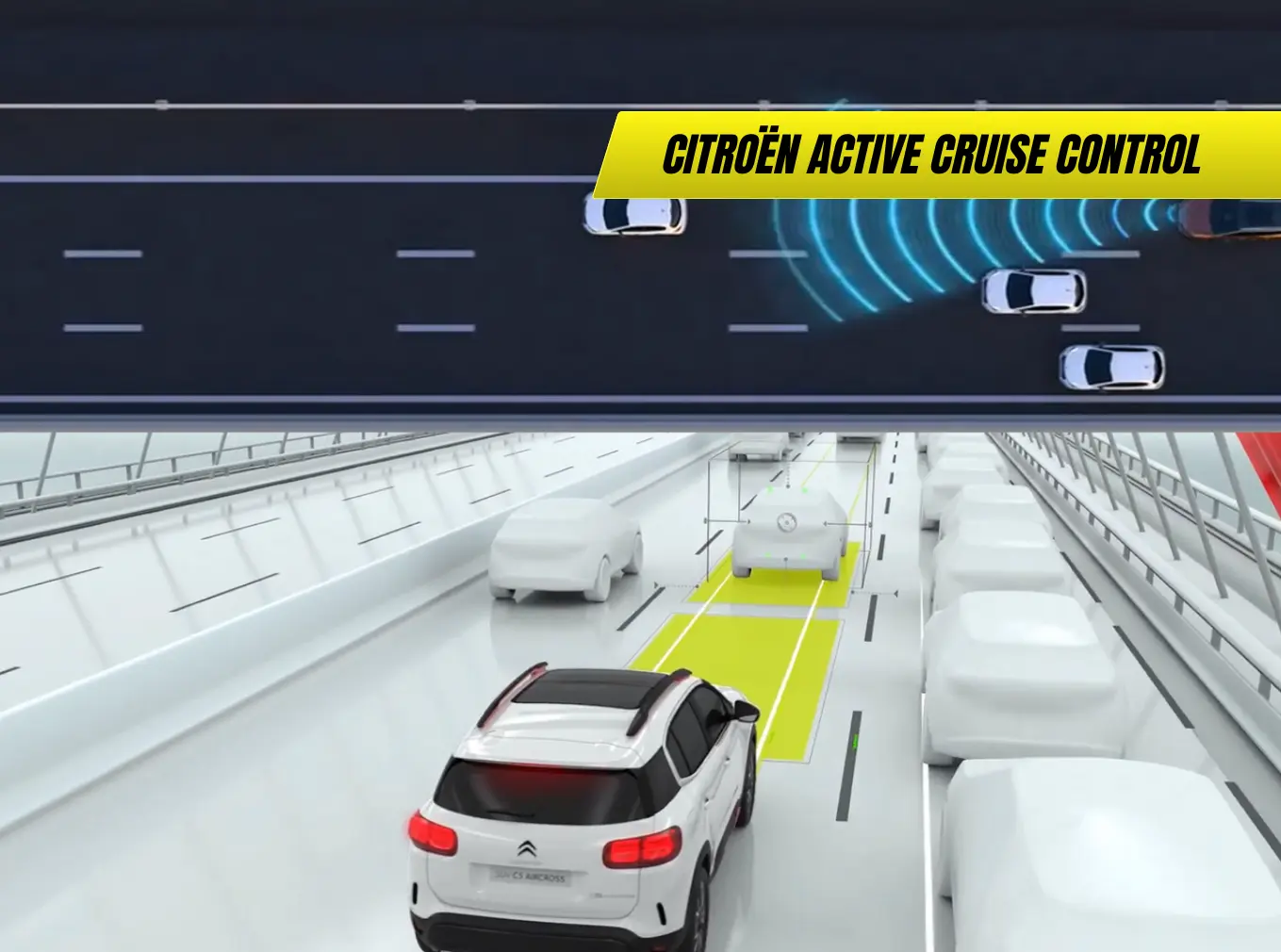
Active Cruise Control (ACC) is one of Citroën’s most practical driver assistance systems, designed to maintain a safe distance from the vehicle ahead while automatically adjusting speed. On UK motorways and dual carriageways, where traffic flow frequently changes, ACC reduces fatigue and helps drivers maintain smoother, safer journeys. This guide explains how ACC works, its key functions, limitations and how to use it effectively every day.
Key Points
- Automatically adjusts speed to maintain a safe gap.
- Uses radar and camera sensors to monitor traffic ahead.
- Works best on motorways and steady-speed A-roads.
- Can bring the car to a stop and resume in traffic (model dependent).
- Reduces fatigue by smoothing acceleration and braking.
How Active Cruise Control Works
ACC uses front-mounted radar and a camera to:
- Detect vehicles ahead
- Measure distance and closing speed
- Adjust acceleration and braking
After the driver sets a speed, ACC automatically slows the vehicle if the car ahead reduces speed, then accelerates again when the lane clears.
Adjustable Distance Settings
Most Citroën models offer three or four distance levels:
- Short – suitable for light traffic
- Medium – ideal for everyday driving
- Long – best for wet roads or higher speeds
Drivers can adjust distance using steering wheel buttons.
Stop & Go Function
On newer Citroën models, ACC includes Stop & Go, which:
- Brings the vehicle to a complete stop in traffic
- Automatically resumes driving when the car ahead moves
- Requires driver confirmation if stationary for too long
This feature is especially useful on congested UK routes like the M25 and M60.
ACC Compared with Standard Cruise Control
| Feature | Standard Cruise Control | Active Cruise Control |
|---|---|---|
| Maintains speed | Yes | Yes |
| Adjusts speed automatically | No | Yes |
| Maintains safe distance | No | Yes |
| Works well in traffic | No | Yes |
| Helps prevent collisions | Limited | Yes (with Distance Alert and AEB) |
ACC adds layered safety by integrating with other Citroën systems such as Distance Alert and Active Safety Brake.
When ACC Works Best
ACC is ideal for:
- Long motorway journeys
- Night-time driving
- Variable traffic speeds
- Drivers who want a more relaxed commute
ACC becomes less effective when:
- Road markings are unclear
- Heavy rain or fog blocks sensors
- Roads are extremely winding
- Sensors are dirty or iced over
Driver Responsibilities
Although ACC assists with braking and acceleration, the driver must:
- Keep hands on the wheel
- Stay attentive at all times
- Be ready to brake manually
- Follow UK Highway Code guidelines
ACC is not an autonomous driving feature.
Using ACC Step-by-Step
- Accelerate to your desired speed.
- Press the CRUISE button.
- Set speed using the + / − controls.
- Adjust following distance.
- Monitor road conditions and be prepared for manual control.
Troubleshooting ACC Issues
| Issue | Possible Cause | Fix |
|---|---|---|
| “ACC unavailable” | Radar blocked by dirt or snow | Clean front bumper |
| Car brakes suddenly | Vehicle ahead detected or cut-in | Increase following distance |
| System won’t resume | Stopped too long | Press accelerator or RES |
| Warning light on | Sensor misalignment | Dealer calibration needed |
Windscreen and bumper repairs often require recalibration of the radar and camera.
Maintenance Tips
- Keep radar sensor area clean.
- Replace worn wipers for camera clarity.
- Avoid placing stickers near the front camera.
- Ensure tyres are correctly inflated to maintain smooth ACC operation.
For wider maintenance help, including dashboard warnings, see:
My Point of View
From my point of view, Active Cruise Control is one of the most useful features for UK motorway driving. It smooths out speed changes, reduces fatigue and provides an extra buffer of safety, especially during long commutes or heavy traffic.
FAQs
Does ACC work in stop-start traffic?
Yes, if equipped with Stop & Go functionality.
Can ACC prevent collisions?
It helps reduce risk, but Active Safety Brake is responsible for automatic braking in emergencies.
Does ACC work at low speeds?
Yes on most newer models; older systems activate above 20–25 mph.
Can I override ACC?
Yes, by braking, accelerating or switching the system off.
Does ACC work in rain or fog?
Performance may decrease due to reduced sensor visibility.
Conclusion
Citroën’s Active Cruise Control enhances motorway comfort and safety for UK drivers by maintaining distance, managing speed and supporting smoother traffic flow. When paired with attentive driving and regular maintenance, it significantly improves the everyday driving experience. In my experience, ACC is one of the most effective tools for stress-free long-distance travel in modern Citroën vehicles.





