
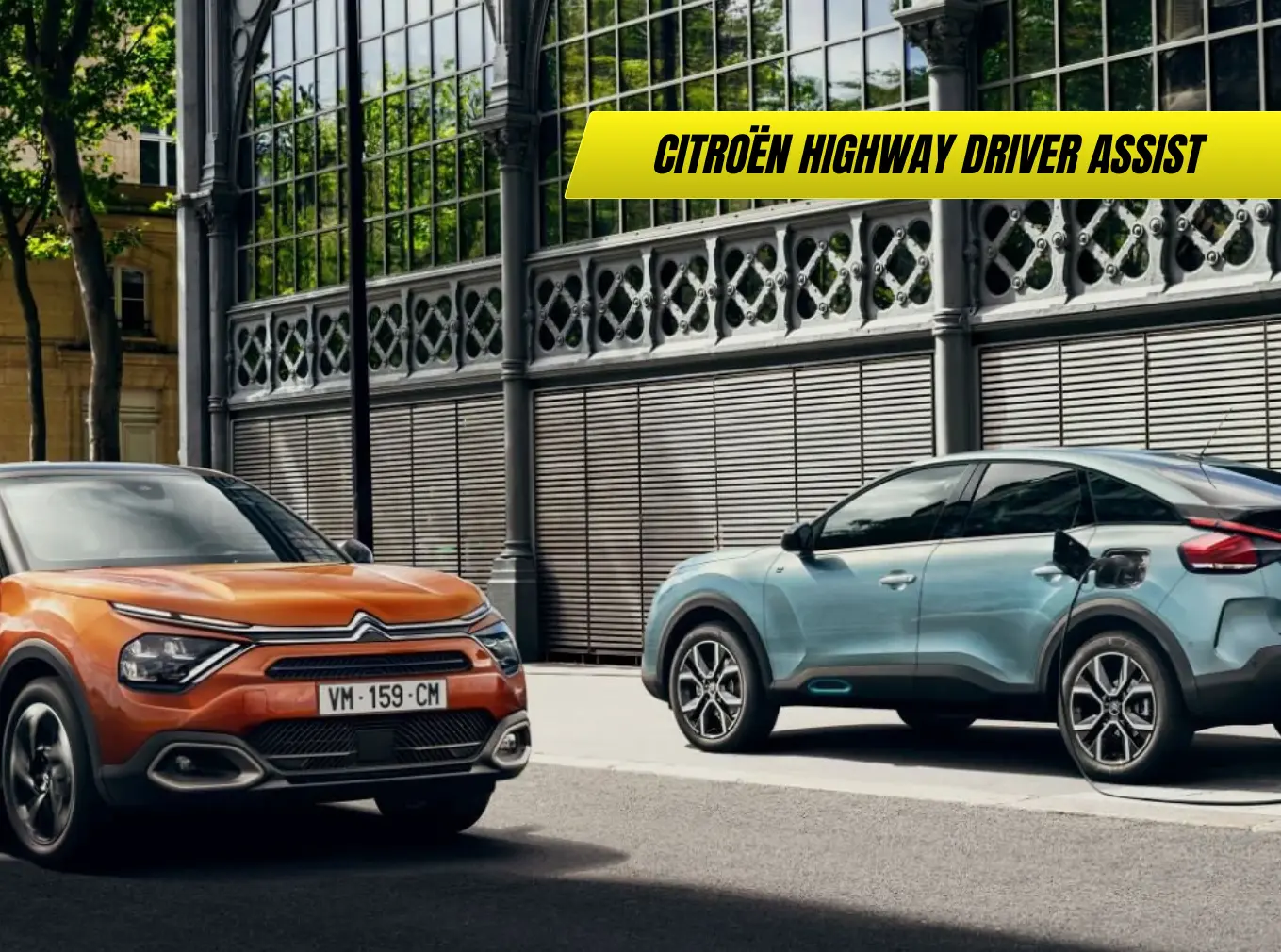
Highway Driver Assist (HDA) is Citroën’s most advanced assisted-driving system, combining Adaptive Cruise Control and Lane Keeping Assist to support drivers on long, fast, and often congested UK motorway journeys. While not an autonomous system, it significantly reduces fatigue by managing speed, distance and lane positioning under the driver’s supervision. This 2025 guide explains how HDA works, where it performs best, and what British drivers need to know to use it safely.
Key Points
- Combines Adaptive Cruise Control and Lane Keeping Assist.
- Controls speed, following distance and steering assistance.
- Works best on motorways and dual carriageways.
- Helps reduce fatigue on long journeys.
- The driver must always keep hands on the wheel.
How Highway Driver Assist Works
HDA merges data from:
- Front radar
- Windshield camera
- Steering sensors
- Lane detection algorithms
By combining these inputs, the system can:
- Maintain a set speed
- Adjust to keep safe distance from traffic ahead
- Keep the vehicle centred within its lane
- Provide smooth acceleration and braking
The driver supervises continuously and must remain ready to intervene at all times.
When HDA Activates
Highway Driver Assist typically functions when:
- Speed exceeds ~40 mph
- Clear lane markings are present
- Sensors have good visibility
- Adaptive Cruise Control is activated
It is most effective on:
- Motorways (M6, M1, M25, M4)
- Busy A-roads
- Long-distance commutes
- Holiday travel on major UK corridors
Core Components
1. Adaptive Cruise Control (ACC)
Maintains distance from the vehicle ahead and adjusts speed automatically.
Especially useful on stop-start motorway sections.
2. Lane Keeping Assist (LKA)
Actively steers to keep the vehicle centred in the lane.
If hands leave the wheel, you will receive prompts to resume control.
3. Speed Limit Integration (where available)
The system can recommend speed adjustments—or apply them automatically—based on detected limit signs.
Highway Driver Assist vs Autonomous Driving
| Feature | Highway Driver Assist | Fully Autonomous |
|---|---|---|
| Keeps lane | Yes | Yes |
| Adjusts speed | Yes | Yes |
| Driver supervision required | Yes | No |
| Hands-free permitted | No | Yes |
| Works everywhere | No | Limited to motorways |
HDA is assisted driving, not autonomous driving.
Benefits for UK Drivers
- Reduces fatigue on long motorway journeys
- Smoothes stop-start congestion
- Improves lane discipline
- Helps maintain safer distances
- Supports better fuel efficiency
- Enhances confidence in heavy traffic
Drivers who frequently use the M25, M60, M62, A14 or M4 tend to benefit the most.
Limitations
Performance may be reduced when:
- Lane markings are faded or obscured
- Heavy rain or fog limits camera visibility
- Strong sun glare affects sensors
- Roadworks alter lane positions
- Sharp bends exceed system capability
HDA may disengage and alert the driver to take over.
Maintenance Requirements
To keep HDA functioning correctly:
- Clean the windscreen regularly
- Avoid blocking camera zones with stickers or mounts
- Keep front radar clear of dirt or snow
- Replace worn wipers
- Recalibrate sensors after windscreen or bumper work
- Maintain correct tyre pressure for predictive steering
Minor sensor obstruction can cause the system to disable temporarily.
Troubleshooting
| Issue | Likely Cause | Fix |
|---|---|---|
| System unavailable | Camera or radar blocked | Clean area |
| Wandering within lane | Poor lane markings | Manual steering required |
| Sudden braking | Vehicle ahead detected | Increase following distance |
| Frequent disengagement | Weather or sharp bends | Slow down / monitor conditions |
If warnings persist, the dealer can perform diagnostic checks.
Tips for Safe Use
- Always keep hands on the wheel—HDA will warn you if you don’t.
- Use indicators clearly to avoid confusion with lane-keeping logic.
- Reduce reliance during heavy rain or poor visibility.
- Let HDA handle routine motorway flow, but remain alert for cut-ins.
- Combine with navigation systems for more predictable journeys.
For related safety-system and maintenance guidance, see:
My Point of View
From my point of view, Highway Driver Assist is one of the most helpful features for UK motorway driving. It noticeably reduces driving strain, especially in long queues or during late-evening travel. While not autonomous, it provides an excellent safety and comfort buffer when used responsibly.
FAQs
Does HDA allow hands-free driving?
No. Your hands must remain on the wheel at all times.
Does it work in heavy traffic?
Yes, especially when combined with ACC. It can slow, stop and resume driving.
Will it change lanes automatically?
Most models do not; lane changes remain manual.
Does it work in cities?
Not reliably. It is designed for motorways and well-marked dual carriageways.
Is it safe in rain or fog?
Yes, but accuracy decreases due to reduced sensor visibility.
Conclusion
Citroën’s Highway Driver Assist enhances motorway travel by managing speed, distance and steering assistance, reducing fatigue and improving safety. In my experience, it’s one of the most effective tools for long UK journeys—as long as drivers remain attentive and treat it as assistance, not autonomy.





