
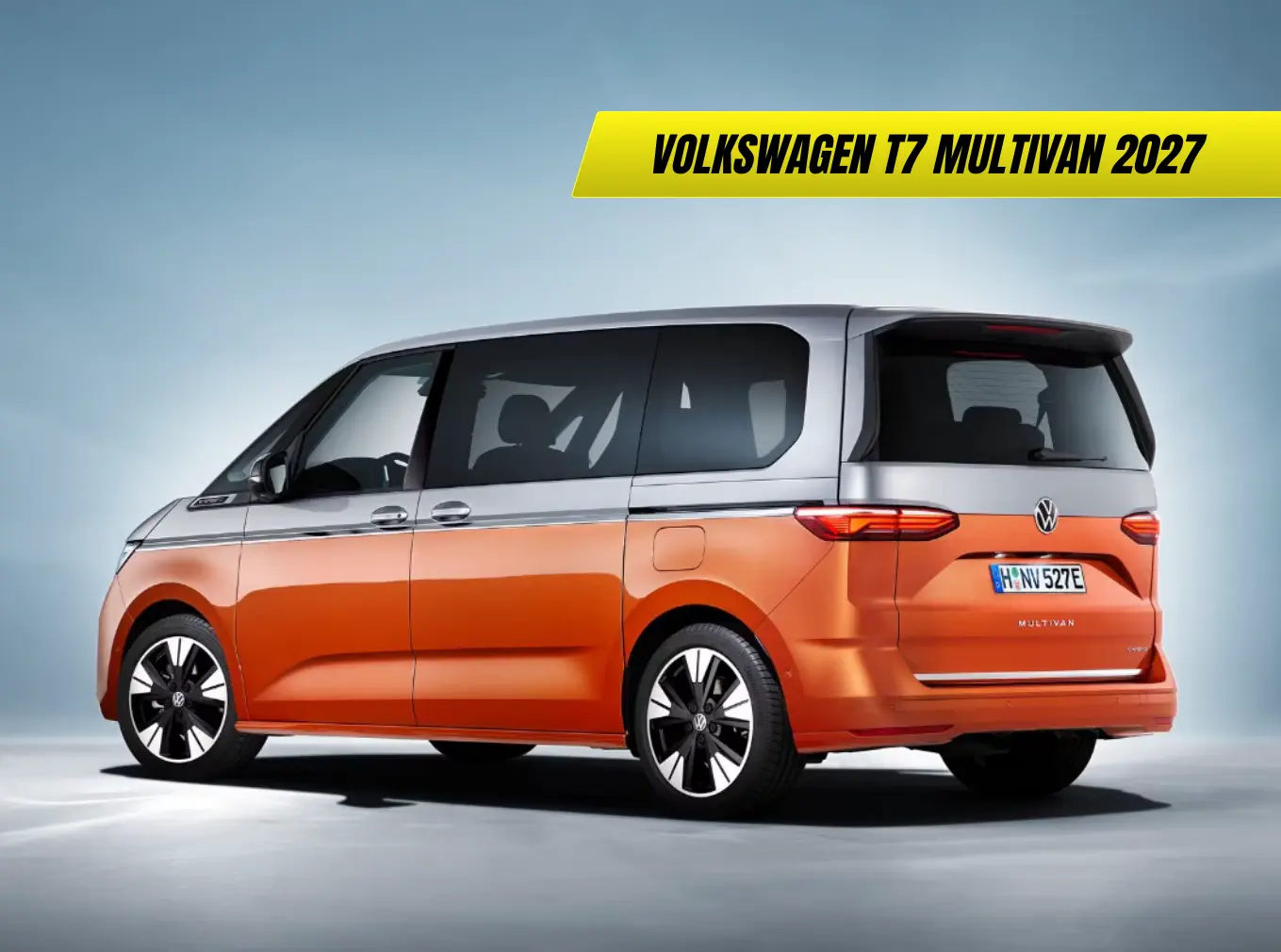
Volkswagen T7 Multivan 2027 facelift: larger headlights, new infotainment, improved PHEV. UK launch late 2026 from £55,000 after ID.Buzz struggles.
The Volkswagen T7 Multivan receives comprehensive mid-cycle facelift for 2027 featuring redesigned front end with larger headlights and minimalist light bar, 12.9-inch freestanding infotainment system (up from 10 inches), and potentially improved plug-in hybrid with enhanced battery capacity beyond current 19.7kWh pack offering 52-mile electric range. Expected UK availability Q4 2026 priced from approximately £55,000-70,000 spanning diesel, mild hybrid, and eHybrid PHEV variants, the refreshed premium people-mover targets British families navigating UK toll roads requiring seven-seat practicality after electric ID.Buzz’s disappointing sales performance (high £65,000+ pricing, limited range) forced Volkswagen refocusing attention on proven combustion/hybrid T7 platform delivering superior value, flexibility, and real-world usability versus pure electric alternative struggling to justify premium positioning against cheaper diesel competitors.
Why VW Turns Attention From ID.Buzz to T7
The ID.Buzz’s commercial underperformance stems from multiple factors plaguing premium electric MPV segment:
ID.Buzz UK Sales Challenges
- High pricing: £65,000-75,000 (vs T7’s £55-65k)
- Limited range: 258-291 miles WLTP (realistic 220-250mi UK)
- Slow charging: 170kW DC peak inadequate for family touring
- Niche appeal: Retro styling polarizes versus broad T7 acceptance
- Infrastructure anxiety: Long-distance family trips require strategic charging
VW’s strategic pivot toward T7 facelift investment acknowledges market reality that majority buyers prioritize affordability, flexibility, and operational simplicity over zero-emission credentials when seven-seat capacity and long-distance touring capability define requirements. The T7’s combustion/PHEV powertrains deliver 500+ mile range eliminating charging anxiety plaguing ID.Buzz ownership.
From my point of view, this represents pragmatic business decision recognizing electric MPV adoption remains premature for mass market, though VW’s marketing positioned ID.Buzz as mainstream family transport rather than early-adopter premium offering – pricing miscalculation contributing to disappointing sales trajectory.
Exterior Design Changes: Larger Headlights and New Face
Spy photos reveal photorealistic camouflage wrap covering completely redesigned front end hiding substantial changes beneath deceptive current-model stickers:
Front End Transformation
- Larger headlights: Outline visible through wrap reveals significantly increased dimensions
- Minimalist light bar: Thinner connecting element versus current chunky chrome strip
- Eliminated top intake: Current slender upper grille appears removed entirely
- Rectangular lower intake: New geometric design echoing ID.Buzz styling language
- Cleaner bumper: Reduced visual complexity for modern aesthetic
The traditional intake restoration (versus current design’s complex multi-element approach) suggests VW prioritizes timeless elegance over fussy detailing – wise strategy for premium people-mover requiring broad demographic appeal spanning young families through retired touring couples.
Rear Modifications Expected
- New OLED taillights with 3D depth effect
- Revised rear bumper with integrated diffuser
- Updated tailgate panel with subtle character line changes
Side profile remains largely unchanged maintaining current T7’s upright MPV proportions, though new wheel designs (18-20 inch options) and potential flush door handles could enhance aerodynamic efficiency reducing diesel consumption and extending PHEV electric range.
Visual Comparison: Current vs 2027 Facelift
| Element | Current T7 (2021-2026) | 2027 Facelift | UK Appeal |
|---|---|---|---|
| Headlights | Slim horizontal clusters | Larger vertical-oriented units | Modern presence |
| Light Bar | Chrome connecting strip | Minimalist illuminated band | Premium refinement |
| Front Grille | Multi-element design | Simplified rectangular intake | Timeless elegance |
| Bumper | Complex detailing | Cleaner geometric forms | Easier maintenance |
| Taillights | Current LED graphics | New OLED technology | Night visibility |
Interior Technology Upgrades: 12.9-Inch Infotainment
The cabin receives welcome modernization addressing current T7’s dated tech criticized versus rivals:
Confirmed Interior Enhancements
12.9-Inch Freestanding Display
- Replaces current 10-inch integrated screen
- MIB4 infotainment system (US-spec Tiguan basis)
- Wireless Apple CarPlay/Android Auto standard
- Improved processor speed and graphics rendering
- Over-the-air software update capability
Revised Dashboard Architecture
- New horizontal design language
- Improved material quality (soft-touch surfaces)
- Ambient lighting with customizable colour zones
- Updated switchgear with better tactile feedback
New Steering Wheel
- Redesigned rim and spoke design
- Capacitive touch controls (improved sensitivity vs current)
- Integrated heating element (premium trims)
Enhanced Driver Assistance
- Travel Assist 2.5 with improved lane centring
- Matrix LED headlights with adaptive beam shaping
- 360-degree camera with 3D visualization
- Park Assist Pro with remote parking via smartphone
The technology upgrades bring T7 into alignment with latest Golf 8.5 and Tiguan generations sharing Volkswagen Group’s newest infotainment architecture, addressing criticism that current T7’s tech feels generation-old versus contemporary rivals’ cutting-edge displays.
Powertrain Options: Diesel, Mild Hybrid, and Improved PHEV
The 2027 facelift retains current powertrain portfolio with potential efficiency enhancements:
Diesel Options (TDI)
2.0 TDI 150PS (entry diesel)
- Power: 148hp (110kW)
- Torque: 360Nm
- 0-62mph: 10.8 seconds
- Combined MPG: 42-45mpg WLTP
- UK price: £55,000-58,000 estimated
2.0 TDI 204PS (performance diesel)
- Power: 201hp (150kW)
- Torque: 320Nm
- 0-62mph: 9.1 seconds
- Combined MPG: 40-43mpg WLTP
- UK price: £58,000-62,000 estimated
Plug-In Hybrid eHybrid (PHEV)
Current Specification
- 1.5 TSI petrol + electric motor
- Combined output: 241hp (180kW)
- Battery: 19.7kWh lithium-ion
- Electric range: 52 miles WLTP (UK)
- Combined MPG: 188mpg (charge-depleting)
- CO2 emissions: 30-35g/km
- UK price: £62,000-68,000 estimated
Potential Facelift Improvements
- Upgraded battery: 25-30kWh (60-70 mile electric range)
- Increased DC charging: 50kW peak (vs current 50kW)
- Improved electric motor efficiency
- Enhanced regenerative braking
The PHEV variant’s potential battery upgrade from 19.7kWh to 25-30kWh would significantly improve company car appeal: 60-70 mile electric range would shift BIK tax from current 8% to potential 5% band (2026/27 rates for 70+ mile EV range), saving £1,200+ annually for 40% taxpayers.
UK Powertrain Specifications Projected
| Variant | Power | 0-62mph | MPG/Range | CO2 | BIK Tax | UK Price (est) |
|---|---|---|---|---|---|---|
| 2.0 TDI 150 | 148hp | 10.8s | 42-45mpg | 165g/km | 35% | £55,000 |
| 2.0 TDI 204 | 201hp | 9.1s | 40-43mpg | 175g/km | 37% | £60,000 |
| eHybrid PHEV | 241hp | 8.1s | 52mi EV / 188mpg | 30-35g/km | 8% (5% if upgraded) | £65,000 |
Practicality and Seven-Seat Versatility UK Context
Dimensions hold steady maintaining current T7 platform:
Space and Capacity
- Length: 5,173mm (substantial footprint)
- Width: 1,941mm (2,297mm with mirrors)
- Height: 1,903mm (tall MPV stance)
- Wheelbase: 3,124mm (maximum interior room)
- Boot: 469 litres (7-seat), 1,844 litres (seats folded)
- Towing: 2,500kg braked (diesel), 2,000kg (PHEV)
The seven-seat configuration offers genuine adult accommodation across all three rows – crucial advantage versus compromised third-row offerings (BMW X7, Mercedes GLS) where rearmost seats suit children only. Middle-row captain’s chairs (six-seat layout optional) enhance luxury and access versus bench configuration.
Seating Configurations UK Family Context
- Seven-seat bench: Maximum capacity for large families, school runs
- Six-seat captain’s chairs: Premium comfort, improved third-row access
- Five-seat removal: Maximum cargo 3,672 litres for commercial use
- Camping conversion: Third-party converters (Reimo, Jerba) offer bed/kitchen packages
Ground clearance 141mm adequate for UK speed bumps and rural tracks, though not genuine off-road capability. Sliding side doors (powered optional) ease tight car park maneuvering versus conventional hinged doors requiring clearance space.
UK Pricing Strategy and Competitive Positioning
UK pricing unconfirmed but expected modest increases reflecting technology upgrades:
Premium MPV Competitive Landscape UK
| Model | UK Price | Powertrain | Seats | Range/MPG | Boot | Appeal |
|---|---|---|---|---|---|---|
| VW T7 Multivan (2027) | £55-68k (est) | Diesel/PHEV | 7 | 52mi EV / 42mpg | 469L | Premium versatility |
| Mercedes V-Class | £58-75k | Diesel only | 7-8 | 38mpg | 410L | Luxury badge |
| Ford Tourneo Custom | £42-52k | Diesel/PHEV | 8-9 | 35mi EV / 35mpg | 1,200L+ | Commercial origins |
| VW ID.Buzz | £65-75k | Electric only | 7 | 258-291mi | 1,340L | Retro electric |
| Toyota Proace Verso | £38-48k | Diesel only | 8-9 | 40mpg | 1,500L+ | Value reliability |
T7 positions between commercial-based Ford Tourneo (£42-52k) and luxury Mercedes V-Class (£58-75k), offering premium VW brand cache without excessive pricing. Against ID.Buzz, the T7 undercuts by £10,000+ while delivering superior real-world flexibility through PHEV’s dual fuel/electric capability eliminating charging anxiety.
Company Car Tax Benefits PHEV Focus
The eHybrid PHEV variant’s company car tax advantages justify premium pricing:
BIK Calculation: T7 eHybrid vs Diesel
eHybrid PHEV (52-mile current, potential 70-mile upgraded)
- P11D value: £65,000
- BIK rate: 8% (current 52mi), potential 5% (70mi+)
- Taxable benefit: £5,200/year (8%), £3,250/year (5%)
- Tax paid (40%): £2,080/year (8%), £1,300/year (5%)
2.0 TDI 204 Diesel
- P11D value: £60,000
- BIK rate: 37%
- Taxable benefit: £22,200/year
- Tax paid (40%): £8,880/year
Annual BIK saving: £6,800 (current PHEV) or £7,580 (upgraded PHEV) – transformative for company car fleets justifying £5-8k PHEV premium through operational tax savings alone.
FAQ
When does VW T7 facelift launch UK?
Expected Q4 2026 (October-December) deliveries targeting crucial year-end sales period and March 2027 plate change registrations.
How much will 2027 T7 Multivan cost UK?
Estimated £55,000-68,000 spanning diesel/PHEV variants – modest increases versus current pricing reflecting technology upgrades and enhanced specification.
What’s new on facelift versus current model?
Larger headlights, minimalist light bar, 12.9″ infotainment (up from 10″), potential improved PHEV battery (60-70mi range vs current 52mi).
Why focus on T7 instead of ID.Buzz?
ID.Buzz’s high pricing (£65-75k), limited range (258-291mi), and niche appeal underperformed sales expectations. T7 offers broader market accessibility.
Powertrain options: diesel or hybrid?
2.0 TDI diesel (148/201hp, 42-45mpg) or eHybrid PHEV (241hp, 52mi electric potentially upgraded 60-70mi). No petrol-only or full electric.
Company car tax benefits PHEV?
8% BIK (52mi EV range) saves £6,800/year versus diesel for 40% taxpayer. Potential 5% BIK (70mi upgrade) saves £7,580/year.
Seven-seat practicality genuine or token?
Genuine adult-size third row (vs compromised BMW/Mercedes offerings) with 469L boot capacity maintaining luggage space all seven seated.
T7 vs ID.Buzz: which to buy?
T7 if prioritizing value (£10k cheaper), flexibility (500+ mile PHEV range), towing (2,500kg). ID.Buzz if zero-emission commitment and retro styling appeal.
Conclusion
The 2027 Volkswagen T7 Multivan facelift represents strategic refocusing toward proven combustion/hybrid technology after ID.Buzz’s premium electric positioning underperformed UK market expectations, delivering comprehensive design refresh through larger headlights, minimalist front end, and 12.9-inch infotainment addressing technology gaps versus contemporary rivals. The estimated £55-68k UK pricing maintains competitive positioning between commercial Ford Tourneo and luxury Mercedes V-Class, while potential PHEV battery upgrade enabling 60-70 mile electric range would dramatically improve company car appeal through 5% BIK qualification saving £7,580 annually versus diesel alternatives. Seven-seat genuine adult accommodation and 2,500kg towing capacity distinguish T7 from compromised crossover rivals offering token third rows, appealing to British families requiring practical long-distance touring capability without electric charging infrastructure dependency plaguing ID.Buzz ownership. Whether VW successfully leverages T7 investment offsetting ID.Buzz disappointment depends on pricing discipline avoiding premium creep and PHEV battery enhancement materializing beyond speculation, though current trajectory suggests combustion/hybrid MPVs retain commercial viability through remainder of decade before genuine affordable electric alternatives achieve price parity and infrastructure maturity enabling mass-market transition.





