
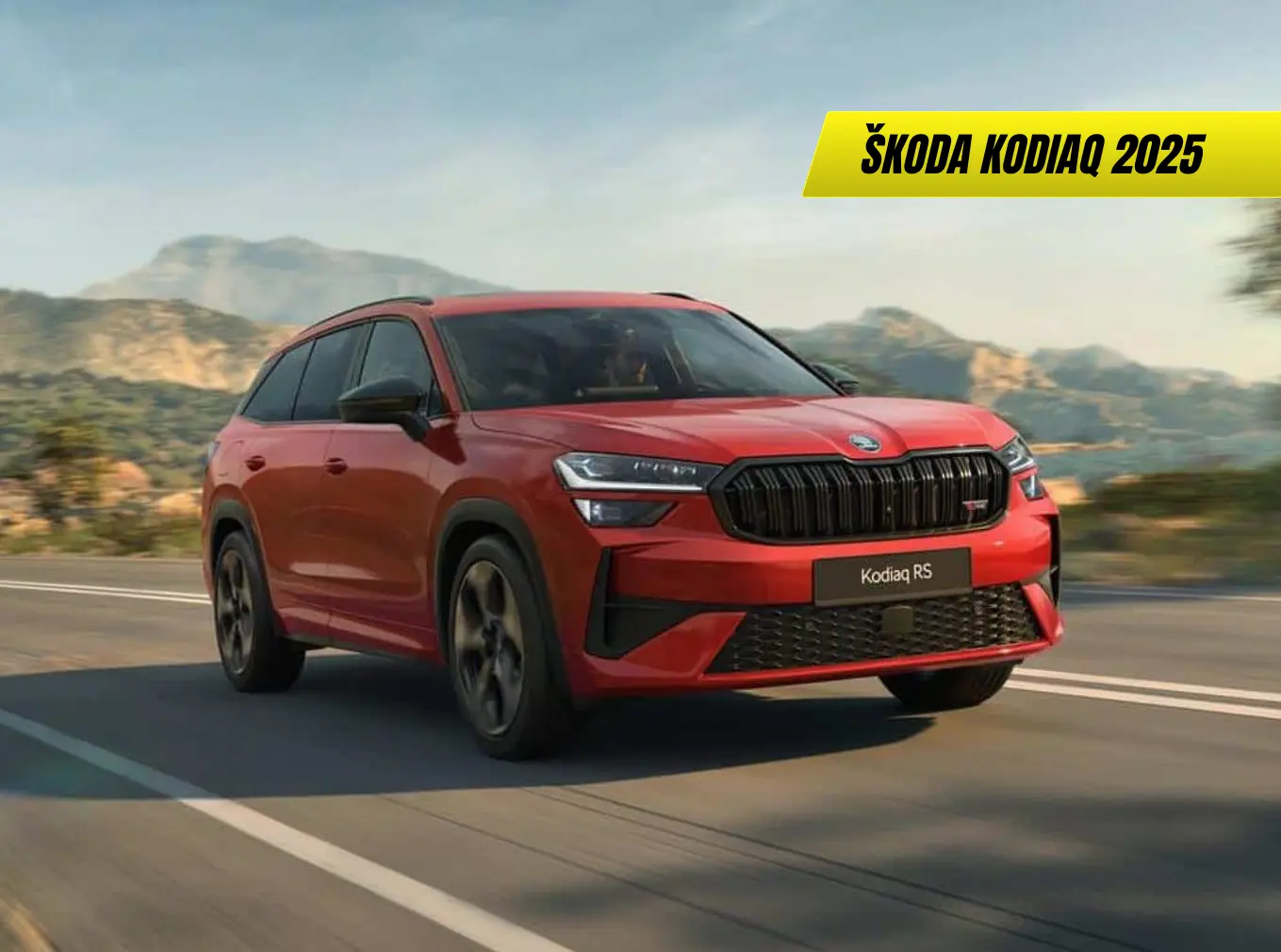
Škoda Kodiaq 2025 UK review: second-generation seven-seat SUV with mild-hybrid and PHEV options, pricing from £40,700, family practicality and Simply Clever features. The Škoda Kodiaq 2025 enters its second generation building on the formula that made its predecessor so successful—abundant space, ingenious storage solutions and high-quality interiors wrapped in handsome styling. Available with five or seven-seat configurations and a range of petrol, diesel and plug-in hybrid powertrains, it targets families seeking maximum versatility without graduating to premium German SUVs. UK pricing starts from approximately £40,700 for the 1.5 TSI mild-hybrid, positioning it competitively against the Kia Sorento and Peugeot 5008.
Second-generation design evolution
The 2025 Kodiaq grows by 60 mm to 4,760 mm long whilst maintaining 1,860 mm width and 1,660 mm height, creating marginally more interior space without compromising urban maneuverability. The redesigned front fascia features a three-dimensional grille flanked by second-generation Full LED Matrix headlights arranged on two levels, connected by a slim “Crystal Line” that emphasizes width and creates a distinctive lighting signature visible from distance.
The modern rear end incorporates redesigned LED taillights with updated graphics and a clean, robust bumper design. From my perspective, the Kodiaq’s evolutionary styling avoids radical changes that might alienate existing owners whilst appearing sufficiently fresh to attract conquest buyers from rivals.
Clever interior packaging and materials
Škoda’s Simply Clever philosophy permeates the cabin through numerous thoughtful details including fabric upholstery extending to dashboard and door panels, multiple storage compartments, and the innovative gear selector relocated to the right of the steering wheel to free central tunnel space. Dual wireless phone charging pads feature active ventilation to prevent overheating—a detail demonstrating Škoda’s attention to real-world usability.
Tri-zone climate control operates through two rotary knobs with integrated displays that also manage seat heating and ventilation, whilst a third central rotary controller selects between four functions including audio volume, map zoom, fan speed and drive mode. The 13-inch touchscreen responds quickly with clear graphics and logical menu structures, complemented by intuitive steering wheel controls featuring buttons and scroll wheels.
Škoda Kodiaq interior technology
| Feature | Specification |
|---|---|
| Central display | 13-inch touchscreen, wireless Apple CarPlay/Android Auto |
| Climate control | Tri-zone with rotary controls and integrated displays |
| Phone charging | Dual wireless pads with active cooling |
| Storage | Multiple compartments, hooks, extractable rear tunnel box |
| Gear selector | Steering column-mounted, frees tunnel space |
Seven-seat flexibility and practicality
The cabin offers genuinely spacious accommodation with ample leg and headroom—the latter increased by 15 mm over the previous generation. The sliding second-row bench travels 180 mm fore-aft to prioritize rear legroom or third-row access, whilst reclining seatbacks enhance comfort on longer journeys. The third row accommodates two adults at a push, though space remains tight and better suited to children or occasional use.
Boot capacity varies dramatically depending on configuration: 340 litres with all seven seats occupied, rising to 845 litres in five-seat mode, and 2,105 litres maximum with both rear rows folded in front-wheel-drive variants. The substantial central tunnel intrudes on middle-seat comfort, though this affects most rivals similarly. Compared with alternatives like the Nissan X-Trail, the Kodiaq offers marginally more space and superior build quality.
Simply Clever optional packages
Škoda’s Simply Clever philosophy extends through optional packages that add genuine everyday utility. The Simply Clever Family pack (from £600) includes rear side airbags, automatic door edge protectors, rear tablet holders, roller sunblinds, extractable rear tunnel storage and door pocket rubbish bins—thoughtful touches that enhance family life without gimmickry.
The Simply Clever Cargo package (£180) adds boot dividers in the double floor, additional bag hooks, reversible floor mat and cargo nets. The adjustable-height boot floor (£190) simplifies loading by lowering to bumper level, demonstrating Škoda’s focus on practical details rather than just headline specifications.
Mild-hybrid powertrain efficiency
The tested 1.5 TSI mild-hybrid produces 150 hp paired with a seven-speed DSG dual-clutch automatic, utilizing 48-volt technology that enables coasting, enhanced start-stop functionality and mild torque assistance. Škoda claims the mild-hybrid system reduces consumption by approximately 15% versus non-hybrid equivalents, with real-world testing achieving 6.0-6.5 l/100 km (43-47 mpg) in predominantly urban use with some motorway driving.
Alternative powertrains include diesel options for high-mileage users, plus plug-in hybrid variants combining petrol and electric propulsion for company car tax advantages. The 1.5 TSI delivers adequate performance for family duties without feeling underpowered, though buyers prioritizing stronger acceleration should consider larger-capacity options or PHEV specifications.
Refined driving experience
The Kodiaq prioritizes comfort and refinement over sporting pretensions, employing suspension tuning and sound insulation that creates a relaxing long-distance environment. Wind noise and tyre roar remain well-controlled at UK motorway speeds, whilst the mild-hybrid system operates imperceptibly during normal driving. The tested car lacked the optional Performance pack including drive mode selection, adaptive dampers and variable-ratio steering, yet still delivered pleasant and secure handling.
Steering provides adequate precision without excessive weight, whilst body roll remains controlled for an SUV exceeding 1,500 kg. The seven-speed DSG shifts smoothly at higher speeds though occasionally holds gears too long during low-speed maneuvering—a minor irritation remedied by using the steering-mounted paddles for manual control. From my experience, the Kodiaq excels at relaxed family transport rather than entertaining keen drivers, which aligns perfectly with its mission.
Safety and driver assistance
Comprehensive active safety equipment includes adaptive cruise control with stop-and-go, lane-keeping assist with steering correction, blind-spot monitoring, autonomous emergency braking with pedestrian detection, and traffic sign recognition. The systems integrate smoothly during motorway use, though lane-keeping can feel intrusive on narrow British B-roads where tight lanes trigger frequent corrections.
Front and rear parking sensors combine with a reversing camera to simplify maneuvering the 4.76-meter SUV in tight UK spaces, though 360-degree cameras remain optional rather than standard. For understanding UK driving regulations, guides to UK speed camera regulations 2025 provide comprehensive coverage of current enforcement practices.
UK pricing and equipment levels
The Kodiaq range starts from £40,700 for SE specification with the 1.5 TSI mild-hybrid and DSG automatic, representing the entry point to the lineup. Higher SE L and flagship Sportline trims add equipment and visual enhancements, whilst L&K (Laurin & Klement) specification delivers maximum luxury. Plug-in hybrid variants command premiums around £5,000-£7,000 over equivalent petrol models but offer substantial company car tax savings.
Three-year/60,000-mile warranty matches industry standards, with optional extensions available for buyers planning longer ownership. Fixed-price servicing plans keep maintenance costs predictable for budget-conscious families prioritizing total ownership expenses.
Running costs and ownership considerations
The 1.5 TSI mild-hybrid achieves around 43-47 mpg in real UK mixed driving, translating to approximately 13p per mile at current fuel prices. Insurance groups sit around 18-22 depending on specification, remaining competitive for the large SUV segment. Service intervals follow Škoda’s standard 12-month or variable schedules based on driving style, with routine maintenance costs remaining lower than premium German alternatives.
For information about UK road charging, guides to UK toll roads and charges 2025 cover motorway service costs that affect longer family journeys.
How it compares to key rivals
The Kodiaq battles the Kia Sorento, Peugeot 5008 and SEAT Tarraco for seven-seat family SUV buyers. The Kia offers longer warranty coverage (seven years versus three) and marginally more generous equipment, whilst the Peugeot counters with more distinctive styling and third-row flexibility. Against the mechanically-related Tarraco, the Kodiaq provides superior perceived quality and more practical interior packaging through Simply Clever features.
From my assessment, the Kodiaq suits buyers who prioritize space, build quality and everyday usability over brand prestige or maximum technology, accepting slightly conservative styling for exceptional practicality.
Frequently asked questions
Is the Kodiaq’s third row suitable for adults?
The third row accommodates two adults for shorter trips with the middle row slid forward, though knee and headroom remain tight. It works best for children or occasional extra passenger capacity rather than regular seven-adult transport, though it exceeds many rivals’ third-row space.
Which powertrain offers the best value?
The 1.5 TSI mild-hybrid balances adequate performance with decent efficiency and lower initial cost than PHEV variants. High-mileage drivers covering 15,000+ annual miles should consider diesel options, whilst company car users benefit from plug-in hybrid’s favorable tax treatment.
How practical is the Simply Clever Family pack?
The £600 Family pack delivers genuine everyday utility through rear tablet holders, automatic door protectors and extractable storage that enhance family life tangibly. For families with young children, it represents excellent value versus selecting individual options.
What is real-world fuel economy?
The 1.5 TSI mild-hybrid achieved 43-47 mpg in mixed UK driving during testing, translating to around 6.0-6.5 l/100 km. Urban driving and frequent stop-start reduces this toward 38 mpg, whilst motorway cruising improves efficiency toward 52 mpg.
How does boot space compare with rivals?
The 845-litre capacity in five-seat mode exceeds the Kia Sorento (821 litres) and matches the Peugeot 5008, though all three shrink dramatically with third rows occupied. Maximum capacity with seats folded reaches 2,105 litres in front-drive variants—among the segment’s best.
What warranty does Škoda provide?
Three years or 60,000 miles covers the vehicle, falling short of Kia’s seven-year coverage but matching most mainstream brands. Extended warranties are available for buyers planning longer ownership, with reasonable costs reflecting Škoda’s reliability reputation.
What are common dashboard warning lights?
Like all modern vehicles, the Kodiaq features comprehensive warnings for service needs and faults. UK drivers should understand indicators including the spanner warning light for maintenance intervals and handbrake warning light which may indicate brake system issues.
The Škoda Kodiaq 2025 delivers exceptional family practicality through abundant space, clever storage solutions and high build quality wrapped in conservative but handsome styling. It suits UK buyers who prioritize tangible utility over brand prestige, accepting slightly lower equipment levels than Korean rivals for superior perceived quality and Simply Clever ingenuity. For families needing genuine seven-seat capability without premium price tags, the Kodiaq represents one of the segment’s strongest all-round packages, particularly in well-specified SE L trim that balances equipment against cost.





