
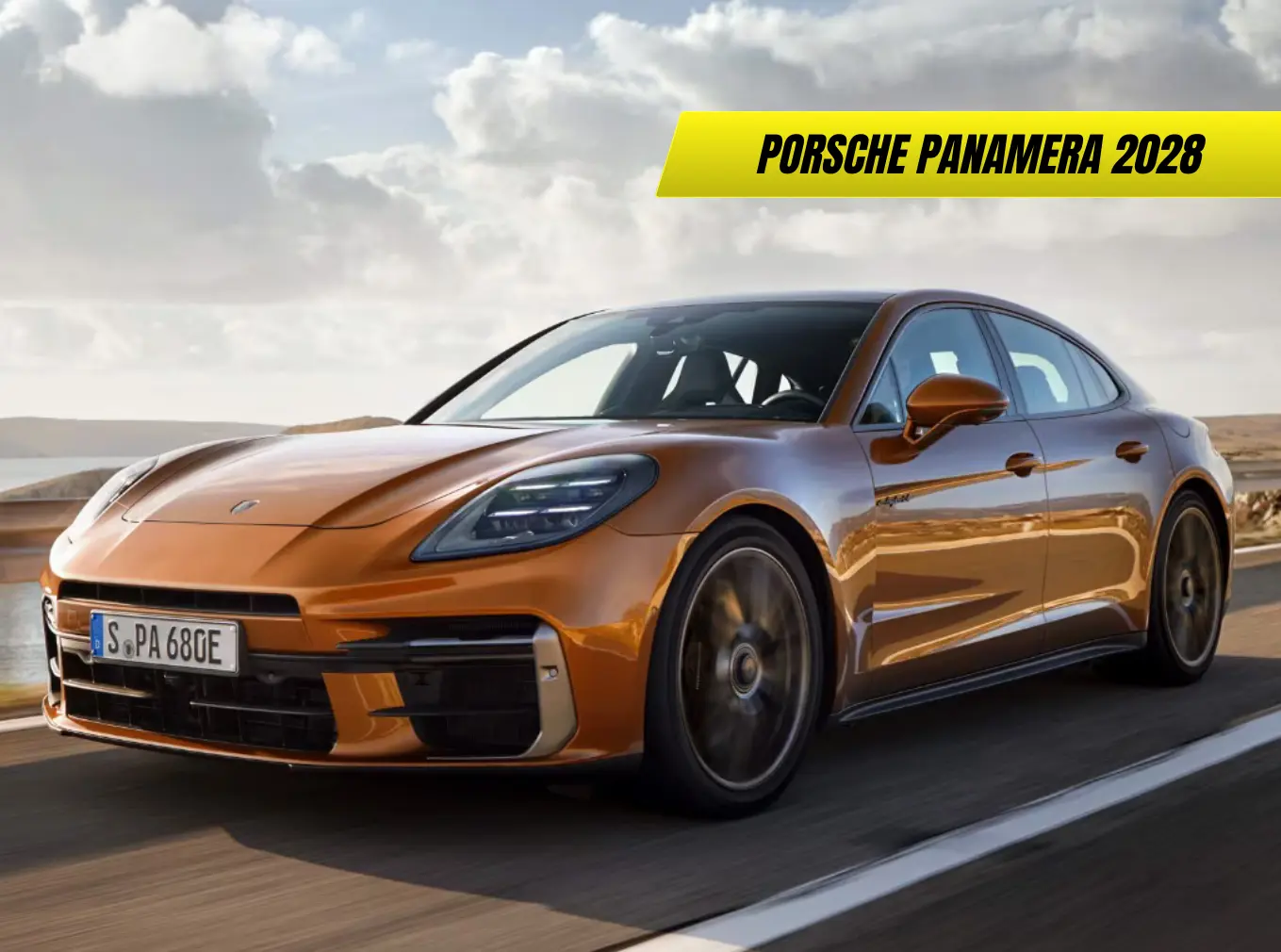
Porsche Panamera 2028 facelift: updated lights, Macan EV radar, revised bumpers. Hybrid variants dominate sales, outselling Taycan by 70% as combustion thrives.
Porsche prepares 2028 model year Panamera facelift following current generation’s 2023 launch continuing third-generation platform dating to 2016, with spy photos revealing updated Matrix LED headlights featuring relocated illuminated Porsche logo moving from center to inner tip, new windscreen-mounted radar borrowed from Macan EV, and revised front/rear bumpers maintaining luxury sedan’s appeal amid surprising sales success. The refresh arrives as Panamera outsells Taycan by 70% margin (2025 global sales), validating combustion/hybrid strategy while pure-electric Taycan struggles through 22% sales decline as luxury EV enthusiasm cools. Current lineup spans 348hp V6 base (£113,000) through 771hp Turbo S E-Hybrid (£242,500) with three plug-in hybrid variants dominating volume, likely continuing post-facelift alongside potential GT3 RS-inspired performance model spotted testing with center-lock wheels and carbon-ceramic brakes suggesting 800hp+ flagship. UK launch expected late 2027 or early 2028 maintaining Porsche’s luxury four-door positioning between Taycan’s EV purity and Cayenne’s SUV practicality, proving traditional powertrains remain commercially viable despite industry electrification pressure.
Panamera vs Taycan: The Hybrid Wins
Porsche’s 2025 sales data reveals unexpected victor in luxury four-door battle:
2025 Global Sales Performance
| Model | 2024 Sales | 2025 Sales | Change | Market Trend |
|---|---|---|---|---|
| Panamera | 32,800 units | 30,800 units | -6% | Stable demand |
| Taycan | 39,500 units | 30,800 units | -22% | EV cooling |
| Panamera advantage | -17% deficit | +70% surplus | 87% swing | Hybrid preference |
Why Panamera Thrives While Taycan Struggles
- Powertrain flexibility: Customers choosing hybrid over pure-electric (range anxiety, charging infrastructure concerns)
- Price value: Base Panamera £113k vs Taycan £82k, but hybrid variants offer performance + practicality
- Segment positioning: Traditional luxury sedan buyers preferring familiar format over EV novelty
- Charging anxiety: Long-distance capability without charging stops appeals to conservative luxury buyers
- Residual values: Panamera holding value better than Taycan as EV depreciation accelerates
Hybrid Variant Dominance
Three Panamera plug-in hybrids account for estimated 65-70% total sales:
| Variant | Power | Electric Range | Price | Sales Share (est) |
|---|---|---|---|---|
| 4 E-Hybrid | 463hp (468 PS) | 31 miles | £117,000 | ~30% |
| 4S E-Hybrid | 544hp (551 PS) | 31 miles | £132,000 | ~25% |
| Turbo S E-Hybrid | 771hp (782 PS) | 31 miles | £242,500 | ~15% |
| Hybrid total | – | – | – | ~70% |
| V6/V8 combustion | 348-493hp | N/A | £113-160k | ~30% |
From my point of view, Panamera’s hybrid dominance validates conservative luxury buyers’ preference for “best of both worlds” approach—electric driving urban convenience combined with combustion long-distance capability eliminating charging anxiety plaguing pure EVs like Taycan, especially as public charging infrastructure reliability remains inconsistent even 2026 despite investment promises.
2028 Facelift: Design Evolution Details
Spy photos reveal modest but meaningful updates:
Front Fascia Changes
Relocated Illuminated Logo
- Previous position: Center of Matrix LED headlight units
- New position: Inner tip of headlight lens (closer to grille)
- Visual effect: Sharper, more modern appearance emphasizing horizontal width
- Inspiration: Follows design direction from Macan EV, electric Cayenne
Updated Matrix LED Headlights
- Refined internal graphics and LED element arrangement
- Maintains four-point LED daytime running light signature
- Improved adaptive lighting technology (wider illumination, better beam control)
- Enhanced interaction with radar/camera systems for predictive lighting
Revised Front Bumper
- New angled design elements providing visual height perception
- Enlarged cooling intakes accommodating hybrid powertrains’ thermal requirements
- Sharper corner detailing creating aggressive stance
- Maintains three-intake layout (center + flanking side intakes)
Macan EV Radar Integration
- Windscreen-mounted safety sensor array (replacing hood/bumper-mounted units)
- Identical hardware to electric Macan’s advanced driver assistance system
- Supports Level 2+ semi-autonomous driving features:
- Adaptive cruise control with predictive speed adjustment
- Lane centering with traffic jam assist
- Automatic emergency braking with pedestrian/cyclist detection
- Intersection collision avoidance
Rear Design Updates
Revised Taillights
- Electric Cayenne-inspired LED light signatures
- Tape on prototype suggesting “Porsche” lettering integration within taillight bar (similar electric models)
- Four-point LED design maintaining brand recognition
- Improved illumination visibility and premium appearance
Redesigned Rear Bumper
- Camouflaged diffuser section hiding aerodynamic improvements
- Revised exhaust outlet positioning (quad outlets on performance variants)
- Cleaner surfacing reducing visual complexity
- Integrated rear spoiler with improved downforce generation
Powertrain Lineup: Current Range Continues
The 2028 facelift likely maintains existing powertrain structure:
Expected 2028 Panamera Lineup
| Model | Engine | Power | Torque | 0-62mph | Top Speed | Price (est) |
|---|---|---|---|---|---|---|
| Panamera | 2.9L V6 twin-turbo | 348hp | 369 lb-ft | 5.3s | 168mph | £115,000 |
| 4 E-Hybrid | 2.9L V6 + electric | 463hp | 516 lb-ft | 4.1s | 174mph | £120,000 |
| 4S E-Hybrid | 2.9L V6 + electric | 544hp | 553 lb-ft | 3.7s | 186mph | £135,000 |
| GTS | 4.0L V8 twin-turbo | 493hp | 479 lb-ft | 3.8s | 188mph | £140,000 |
| Turbo E-Hybrid | 4.0L V8 + electric | 680hp | 663 lb-ft | 3.1s | 196mph | £170,000 |
| Turbo S E-Hybrid | 4.0L V8 + electric | 771hp | 737 lb-ft | 2.8s | 202mph | £245,000 |
| GT3 RS variant? | TBA (likely V8+) | 800hp+ | TBA | ~2.5s | 205mph+ | £200,000+ |
Plug-in Hybrid Specifications
All E-Hybrid variants share core electric components:
- Battery capacity: 25.9kWh (21.8kWh usable)
- Electric motor: Integrated within 8-speed PDK transmission
- Electric-only range: 31 miles WLTP (realistic 25-28 miles)
- AC charging: 11kW onboard charger (0-100% in 2.4 hours)
- DC charging: Not supported (PHEV architecture limitation)
- Electric top speed: 87mph in E-Power mode
Why No Full Hybrid?
Porsche maintains plug-in hybrid exclusivity versus Toyota-style full hybrids:
- Performance advantage: Electric motor integrated transmission providing instant torque
- Tax benefits: PHEV qualifies for lower UK company car tax (5-8% BIK vs 30%+ pure combustion)
- Brand positioning: Premium plug-in technology differentiating from mass-market hybrids
- Charging infrastructure: PHEV enables home charging convenience wealthy buyers appreciate
GT3 RS-Inspired Performance Variant Speculation
Spy prototype spotted with performance indicators:
Performance Clues Observed
- Center-lock wheels: Motorsport-derived single-nut wheel mounting (typically GT3/GT2 exclusive)
- Carbon-ceramic brakes: Massive PCCB rotors visible through wheel spokes
- Deployable rear spoiler: Active aerodynamic element suggesting high-speed optimization
- Dual charging ports: Fuel door on both driver/passenger rear fenders (PHEV configuration)
- Quad exhaust: Four-outlet exhaust system indicating performance V8
Potential Specifications “Panamera GT” or “Panamera GT3”
| Specification | Estimate | Basis |
|---|---|---|
| Engine | 4.0L V8 twin-turbo + electric | Turbo S E-Hybrid evolution |
| Total power | 800-850hp | Beyond current 771hp Turbo S |
| Torque | 750+ lb-ft | Hybrid electric boost |
| 0-62mph | 2.5-2.6 seconds | Taycan Turbo S territory |
| Top speed | 205-210mph | GT3 RS-inspired performance |
| Weight reduction | -50kg vs Turbo S | Carbon fiber, stripped interior |
| Aerodynamics | Enhanced downforce | Active aero, GT3-inspired elements |
| UK pricing | £200,000-220,000 | Positioned above Turbo S |
Market Positioning Rationale
Porsche could introduce ultra-performance Panamera as:
- Taycan Turbo S alternative: Customers wanting similar 800hp+ but preferring PHEV over BEV
- Flagship statement: Demonstrating hybrid technology’s performance potential
- Limited production: Exclusive model enhancing brand prestige (500-1,000 annual units globally)
- GT department involvement: Motorsport division lending credibility and engineering expertise
UK Market: Pricing and Positioning
Current UK Panamera Pricing (2026)
- Panamera: £112,800 (base V6)
- Panamera 4 E-Hybrid: £117,300
- Panamera 4S E-Hybrid: £131,700
- Panamera GTS: £138,400
- Panamera Turbo E-Hybrid: £169,200
- Panamera Turbo S E-Hybrid: £242,500
2028 Facelift Projected Pricing
Expect £3-5k increases reflecting inflation and enhanced technology:
| Model | Current Price | 2028 Price (est) | Increase |
|---|---|---|---|
| Panamera | £112,800 | £116,000 | +£3,200 |
| 4 E-Hybrid | £117,300 | £120,500 | +£3,200 |
| 4S E-Hybrid | £131,700 | £135,000 | +£3,300 |
| GTS | £138,400 | £142,000 | +£3,600 |
| Turbo E-Hybrid | £169,200 | £173,500 | +£4,300 |
| Turbo S E-Hybrid | £242,500 | £248,000 | +£5,500 |
Company Car Tax Advantage (2028/29)
| Variant | CO2 | Electric Range | BIK Rate | Tax (40% taxpayer, £135k P11D) |
|---|---|---|---|---|
| Panamera (petrol V6) | 255g/km | N/A | 37% | £19,980 annually |
| 4S E-Hybrid | 49g/km | 31 miles | 8% | £4,320 annually |
| Savings | -81% | +31 miles | -29% | £15,660 saved |
PHEV variants’ 8% BIK rate versus 37% pure petrol provides massive company car tax advantage justifying £15-20k higher purchase price for fleet buyers and salary sacrifice schemes dominating UK luxury sedan market.
Competitive Context: Luxury Sedan Segment 2028
Four-Door Luxury Performance Market UK
| Model | Type | Power | Price | 2025 UK Sales (est) |
|---|---|---|---|---|
| Porsche Panamera | PHEV/Petrol | 348-771hp | £113-243k | 2,800 units |
| Porsche Taycan | BEV | 408-952hp | £82-152k | 1,600 units |
| BMW M5 | PHEV | 727hp | £115k | 1,200 units |
| Mercedes-AMG E 63 | PHEV | 680hp | £110k | 900 units |
| Audi RS7 | Petrol/Hybrid | 600hp | £108k | 800 units |
| Maserati Quattroporte | Petrol | 580hp | £117k | 400 units |
Panamera dominates UK luxury performance sedan segment despite Taycan’s EV appeal, validating hybrid strategy’s commercial viability through 2028-2030 transition period before eventual full electrification mandates.
FAQ
When does 2028 Panamera launch UK?
Late 2027 (November-December) or early 2028 (January-March) UK deliveries expected following typical Porsche facelift cycle. Official reveal likely summer-autumn 2027.
How much will facelift cost?
Estimated £116,000-248,000 depending on variant, representing £3-5k increases over current pricing reflecting inflation and enhanced technology integration.
What changes for 2028?
Relocated illuminated Porsche logo, updated Matrix LED headlights, revised front/rear bumpers, Macan EV radar system, improved interior tech, possible GT3 RS-inspired performance model.
Will there be new engines?
Unlikely major powertrain changes. Current V6/V8 and three PHEV variants continuing, possible addition of ultra-performance 800hp+ GT variant.
Why is Panamera outselling Taycan?
Hybrid flexibility eliminates range anxiety, traditional luxury sedan buyers preferring familiar format, PHEV company car tax benefits (8% BIK vs 37% petrol), charging infrastructure concerns.
Is there full-electric Panamera coming?
Not confirmed. Taycan serves as Porsche’s electric luxury sedan, Panamera likely continuing combustion/PHEV through 2030s given strong hybrid sales performance.
What’s the electric range?
PHEV variants offer 31 miles WLTP (realistic 25-28 miles), sufficient for daily urban driving with petrol engine providing unlimited long-distance capability.
Better than BMW M5 hybrid?
Different priorities: Panamera offers more variants (six vs one), proven reliability, classic Porsche dynamics. BMW provides newer PHEV tech (18.6kWh battery), lower base price (£115k).
The Porsche Panamera 2028 facelift arrives validated by surprising commercial success outselling Taycan EV by 70% margin as luxury sedan buyers demonstrate preference for plug-in hybrid flexibility over pure-electric limitations despite automotive industry’s electrification push. Updated Matrix LED headlights with relocated illuminated logo, Macan EV-borrowed radar system, and revised bumpers provide modest visual refresh maintaining traditional luxury sedan proportions while enhancing technology integration supporting Level 2+ semi-autonomous driving features. Expected UK pricing £116,000-248,000 continues spanning base 348hp V6 through flagship 771hp Turbo S E-Hybrid, with three PHEV variants commanding estimated 70% sales volume through 8% company car tax rate versus 37% pure petrol providing £15,660 annual savings justifying higher purchase prices among fleet buyers dominating segment. Potential GT3 RS-inspired 800hp+ performance variant spotted testing with center-lock wheels and carbon-ceramic brakes could arrive 2028-2029 as ultra-exclusive flagship demonstrating hybrid technology’s performance potential while addressing Taycan Turbo S customers preferring PHEV over BEV powertrain philosophy. Whether Panamera’s combustion/hybrid success sustains through 2030s depends on regulatory environment and infrastructure development, though current sales trends suggest traditional powertrains remain commercially viable luxury segment through decade’s end as conservative buyers prioritize range flexibility and charging convenience over zero-emissions purity defining mass-market EV adoption trajectory.





