
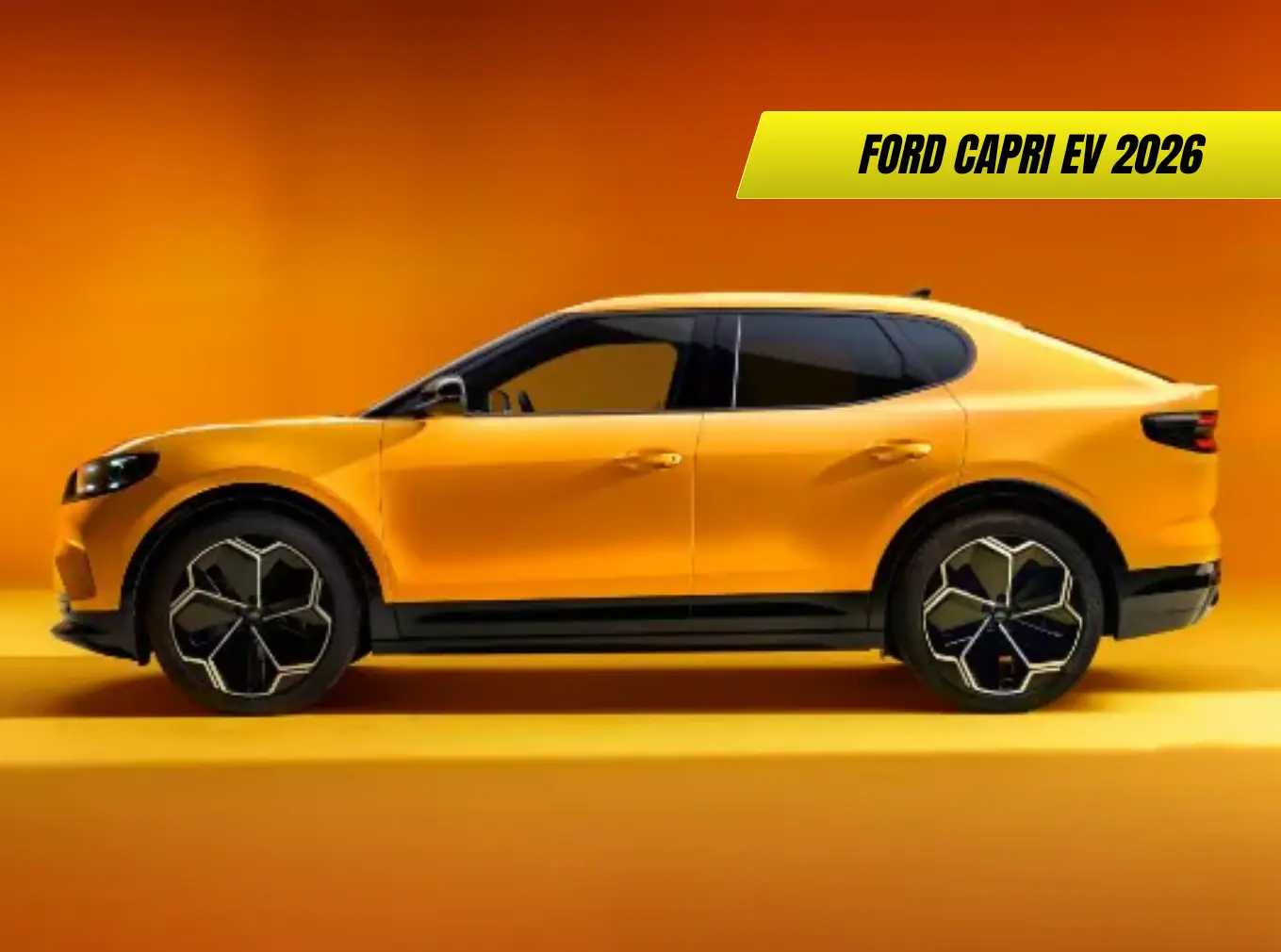
Ford upgrades Explorer and Capri Standard Range variants with new 58kWh lithium-iron-phosphate battery increasing range to 444km (Explorer) and 464km (Capri), while enhanced 190hp motor improves acceleration to 8.0 seconds 0-100km/h with deliveries beginning May 2026 at unchanged pricing.
Ford Europe announces significant mid-cycle enhancement for Explorer and Capri electric SUVs exclusively targeting Standard Range entry-level variants addressing customer feedback regarding insufficient range and performance compromising competitiveness versus rivals offering 400+ kilometer capability at comparable pricing. The updated models receive 58kWh lithium-iron-phosphate (LFP) battery replacing previous 52kWh nickel-manganese-cobalt (NMC) chemistry, delivering 444km WLTP range for Explorer Standard Range (up from 378km, +17% improvement) and 464km for Capri Standard Range (up from 393km, +18% improvement) through combination of increased capacity and LFP’s superior discharge characteristics. Simultaneously, electric motor upgraded from 170hp to 190hp (+20hp gain) while torque increases 350Nm enabling 8.0-second 0-100km/h acceleration (improved from 8.3 seconds) through enhanced inverter efficiency and motor calibration. The LFP battery chemistry permits daily 100% charging without accelerated degradation concerns affecting NMC batteries typically requiring 80% maximum charging preserving longevity, simplifying ownership through eliminating charge management complexity and maximizing usable capacity. UK pricing remains £39,975 for Explorer Standard Rangeand £42,975 for Capri Standard Range unchanged despite substantial technical upgrades, improving value proposition while Extended Range variants (79kWh battery, 600km range) continue unchanged at £46,975-49,975. First deliveries commence May 2026 with order books opening immediately, positioning enhanced Standard Range models competitively against Volkswagen ID.4 (from £41,915), Škoda Enyaq (from £39,000), and Hyundai Ioniq 5 (from £44,995) through combination of improved range, competitive pricing, and Ford’s established dealer network providing service accessibility advantages versus newer EV-focused brands.
LFP vs NMC Battery Chemistry: Technical and Practical Implications
Ford’s switch from NMC to LFP battery chemistry in Standard Range Explorer and Capri represents strategic decision balancing cost, performance, and ownership experience through different electrochemical properties.
Battery Chemistry Comparison
| Characteristic | NMC (Nickel-Manganese-Cobalt) | LFP (Lithium-Iron-Phosphate) |
|---|---|---|
| Energy density | Higher (~200-260 Wh/kg) | Lower (~150-180 Wh/kg) |
| Cost | More expensive (nickel, cobalt materials) | Cheaper (iron-phosphate abundant) |
| Cycle life | ~1,000-1,500 cycles to 80% | ~2,000-3,000 cycles to 80% |
| Charging to 100% | Accelerates degradation (recommend 80% max) | Minimal degradation impact (daily 100% acceptable) |
| Cold weather performance | Better low-temperature performance | Reduced cold weather capability |
| Thermal stability | Higher thermal runaway risk | Safer, more thermally stable |
| Weight | Lighter for equivalent energy | Heavier for equivalent energy |
Why Ford Chose LFP for Standard Range
Cost Reduction
- LFP materials substantially cheaper than nickel and cobalt
- Cost savings partially fund 58kWh vs 52kWh capacity increase
- Enables maintaining pricing despite technical improvements
- Positions Ford competitively versus Chinese EVs using LFP extensively
Longevity Benefits
- 2x-3x cycle life versus NMC chemistry
- Enables daily 100% charging without degradation concerns
- Supports Ford’s battery warranty commitments (8 years/100,000 miles)
- Improves resale values through better long-term battery health
Simplified Ownership
- No complex charge management strategies required
- Maximizes usable capacity daily versus 80% NMC limitation
- Reduces range anxiety through consistent full-charge availability
- Eliminates customer confusion regarding optimal charging practices
Thermal Safety
- Lower thermal runaway risk improves vehicle safety
- Reduces fire risk in accidents or electrical faults
- Simplifies battery thermal management systems
- Lowers insurance premiums long-term through improved safety profile
Trade-offs Accepted
Energy Density Penalty
- 58kWh LFP provides similar usable energy as 52kWh NMC
- Requires 11.5% larger physical battery for equivalent performance
- Added weight (~30-50kg estimated) partially offset by motor efficiency
- Packaging constraints manageable given SUV platform flexibility
Cold Weather Performance
- LFP exhibits reduced range in sub-zero temperatures versus NMC
- Winter range potentially 15-20% below WLTP versus 10-15% for NMC
- Mitigated through battery heating systems and improved thermal management
- Less problematic in moderate European climates versus Nordic regions
Charging Speed Reduction
- Maximum DC fast charging reduced from 145kW (NMC) to 110kW (LFP)
- 10-80% charging increases from 25 minutes to 28 minutes (+3 minutes)
- Negligible impact for most customers charging primarily at home
- Still faster than many mainstream EVs costing similar amounts
The net calculation favors LFP for entry-level models where cost competitiveness, ownership simplicity, and longevity outweigh ultimate energy density and charging speed advantages NMC provides in premium Extended Range variants targeting long-distance drivers prioritizing maximum capability.
Technical Specifications: Standard Range Enhancement Details
The updated Standard Range Explorer and Capri receive comprehensive powertrain improvements beyond battery capacity increase alone, similar to enhancements discussed in Mercedes Electric GLC 2026.
2026 Standard Range Specifications
| Specification | Ford Explorer Standard Range | Ford Capri Standard Range | Previous (2025) |
|---|---|---|---|
| Battery capacity | 58 kWh (LFP) | 58 kWh (LFP) | 52 kWh (NMC) |
| WLTP range | 444 km (276 miles) | 464 km (288 miles) | 378 km / 393 km |
| Range improvement | +66 km (+17%) | +71 km (+18%) | — |
| Motor power | 190 hp (141 kW) | 190 hp (141 kW) | 170 hp (125 kW) |
| Torque | 350 Nm (258 lb-ft) | 350 Nm (258 lb-ft) | 310 Nm (229 lb-ft) |
| 0-100 km/h | 8.0 seconds | 8.0 seconds | 8.3 seconds |
| Drive configuration | Rear-wheel drive | Rear-wheel drive | Rear-wheel drive |
| DC fast charging | 110 kW maximum | 110 kW maximum | 145 kW maximum |
| 10-80% charging | 28 minutes | 28 minutes | 25 minutes |
| UK pricing | £39,975 | £42,975 | £39,975 / £42,975 |
Real-World Range Expectations
WLTP figures typically prove optimistic versus real-world conditions. Realistic range estimates:
Ford Explorer Standard Range (444km WLTP)
- Motorway driving (70mph constant): 320-350km (200-220 miles)
- Mixed urban/rural: 380-420km (235-260 miles)
- Gentle urban driving: 440-480km (275-300 miles)
- Cold winter conditions: 310-360km (195-225 miles)
Ford Capri Standard Range (464km WLTP)
- Motorway driving: 340-370km (210-230 miles)
- Mixed urban/rural: 400-440km (250-275 miles)
- Gentle urban driving: 460-500km (285-310 miles)
- Cold winter conditions: 330-380km (205-235 miles)
The Capri’s 20km range advantage over Explorer results from superior aerodynamics through sleeker fastback roofline versus Explorer’s more upright SUV proportions, though both vehicles share identical mechanical specifications and MEB platform architecture.
Enhanced Motor Performance
The 20hp power increase (170hp to 190hp) and 40Nm torque boost (310Nm to 350Nm) deliver measurable real-world benefits:
Acceleration Improvement
- 0-100km/h: 8.0s (down from 8.3s, -0.3s improvement)
- 50-100km/h overtaking: ~5.5s (estimated, ~0.5s quicker)
- In-gear responsiveness: Noticeably improved throttle response
Driving Experience Enhancements
- Better motorway merging and overtaking confidence
- Improved hill climbing with passengers and cargo
- More engaging driving dynamics overall
- Competitive acceleration versus mainstream rivals
The performance now matches or slightly exceeds key competitors:
- VW ID.4 (174hp, 8.5s 0-100km/h)
- Škoda Enyaq (180hp, 8.7s 0-100km/h)
- Hyundai Ioniq 5 (170hp, 8.5s 0-100km/h base model)
Extended Range Models: Unchanged Premium Options
While Standard Range variants receive comprehensive updates, Extended Range Explorer and Capri continue unchanged with 79kWh NMC battery delivering maximum range and performance targeting buyers prioritizing long-distance capability.
Extended Range Specifications (Unchanged 2026)
| Model | Battery | WLTP Range | Power | 0-100km/h | UK Price |
|---|---|---|---|---|---|
| Explorer Extended Range RWD | 79 kWh NMC | 602 km (374 miles) | 286 hp | 6.4 seconds | £46,975 |
| Explorer Extended Range AWD | 79 kWh NMC | 552 km (343 miles) | 340 hp | 5.3 seconds | £49,975 |
| Capri Extended Range RWD | 79 kWh NMC | 610 km (379 miles) | 286 hp | 6.4 seconds | £48,975 |
| Capri Premium Extended Range AWD | 79 kWh NMC | 560 km (348 miles) | 340 hp | 5.3 seconds | £51,975 |
Extended Range models maintain NMC chemistry providing:
- Superior energy density enabling 600+ km range without excessive weight
- Better cold weather performance for Nordic markets and winter driving
- Faster 135kW DC charging (10-80% in 26 minutes)
- Enhanced performance particularly AWD variants with dual motors
Model Positioning Strategy
Ford’s two-tier approach creates clear differentiation:
Standard Range (58kWh LFP): Value-Focused Entry
- £39,975-42,975 pricing targets mainstream buyers
- 444-464km range adequate for daily driving and occasional road trips
- LFP longevity and 100% charging simplifies ownership
- 190hp performance competitive with mainstream rivals
Extended Range (79kWh NMC): Premium Long-Distance
- £46,975-51,975 pricing £7,000 premium over Standard Range
- 600+km range enables genuine long-distance touring minimal charging
- NMC performance benefits (cold weather, charging speed)
- Available AWD and higher performance for enthusiast buyers
The £7,000 price gap between Standard and Extended Range requires justification through combination of:
- 150-160km additional range (35% increase)
- NMC chemistry benefits (charging speed, cold performance)
- Enhanced equipment typically bundled with Extended Range
- Available AWD option (Standard Range RWD only)
Most customers likely gravitating toward Standard Range given 444-464km proves sufficient for typical European driving patterns, with Extended Range appealing primarily to:
- High-mileage drivers covering 400+ km daily
- Nordic market customers requiring cold weather capability
- Towing users needing range buffer
- Technology enthusiasts wanting maximum specifications
UK Market Competition and Value Proposition
The enhanced Explorer and Capri Standard Range models compete in fiercely-contested mid-size electric SUV segment where range, pricing, and brand reputation determine success.
Direct Competitor Comparison
| Model | Starting Price | Range (WLTP) | Battery | Power | Key Advantage |
|---|---|---|---|---|---|
| Ford Explorer SR | £39,975 | 444 km (276 mi) | 58 kWh LFP | 190 hp | Ford brand, dealer network |
| Ford Capri SR | £42,975 | 464 km (288 mi) | 58 kWh LFP | 190 hp | Distinctive styling, range |
| VW ID.4 | £41,915 | 400-550 km | 52-77 kWh | 174-286 hp | German engineering, MEB platform twin |
| Škoda Enyaq | £39,000 | 393-585 km | 63-82 kWh | 180-286 hp | Value pricing, practicality |
| Hyundai Ioniq 5 | £44,995 | 354-481 km | 58-77.4 kWh | 170-325 hp | 800V charging, design |
| Kia EV6 | £45,995 | 361-528 km | 58-77.4 kWh | 170-325 hp | 800V charging, warranty |
| Tesla Model Y | £44,990 | 455-600 km | ~60-75 kWh | 299-534 hp | Supercharger network, performance |
| Nissan Ariya | £43,995 | 400-500 km | 63-87 kWh | 218-306 hp | Japanese reliability, e-4ORCE AWD |
Ford’s Competitive Positioning
Strengths
- Established brand: Ford’s century-long UK presence versus newer EV brands
- Dealer network: 400+ UK Ford dealers versus Tesla’s ~20 stores
- Competitive pricing: Explorer £39,975 undercuts most rivals
- Improved range: 444-464km now competitive versus segment leaders
- LFP longevity: 100% charging capability unique value proposition
- Familiar ownership: Traditional dealership experience versus Tesla’s direct model
Weaknesses
- MEB platform dependencies: Volkswagen architecture limits Ford’s control
- Brand perception: Ford lacks premium cachet versus Tesla, German brands
- Charging speed: 110kW trails Hyundai/Kia’s 800V 350kW capability
- Technology image: Perceived behind Tesla’s software and autonomy leadership
- Resale uncertainty: Limited EV track record versus Tesla’s established values
Value Proposition Analysis
For £39,975, Explorer Standard Range now delivers:
- 276-mile real-world range (adequate most buyers)
- Proven Ford reliability and service accessibility
- 190hp performance matching mainstream competitors
- LFP battery longevity reducing degradation concerns
- Spacious SUV practicality with 450-liter cargo capacity
This positions Explorer as rational mainstream choice for buyers prioritizing:
- Established brand over EV specialists
- Dealer service accessibility over direct-to-consumer models
- Value pricing over premium positioning
- Adequate range over maximum capability
The Capri’s £42,975 pricing commands £3,000 premium over Explorer justified by:
- Distinctive fastback styling differentiating from conventional SUVs
- 20km additional range through superior aerodynamics
- More exclusive positioning (likely lower production volumes)
- Emotional appeal versus Explorer’s purely practical positioning
For context on EV ownership considerations, buyers might reference guides like diesel SUVs comparison evaluating powertrain alternatives.
Frequently Asked Questions
What’s new for 2026 Ford Explorer and Capri?
Standard Range variants receive 58kWh LFP battery (up from 52kWh NMC) increasing range 444km Explorer and 464km Capri (+17-18%). Motor upgraded to 190hp/350Nm (from 170hp/310Nm) improving 0-100km/h to 8.0 seconds. Extended Range models unchanged. Deliveries begin May 2026 at unchanged pricing (£39,975 Explorer, £42,975 Capri Standard Range).
Should I buy Standard Range or Extended Range?
Depends on driving patterns. Standard Range’s 444-464km (275-290 miles real-world) adequate for daily commuting and occasional road trips with charging stops. Extended Range’s 600+km justifies £7,000 premium only for high-mileage drivers covering 400+ km daily or requiring maximum cold-weather capability. Most buyers better served by Standard Range given significantly lower cost.
Can I charge LFP battery to 100% daily?
Yes. Unlike NMC batteries requiring 80% maximum for longevity, LFP chemistry tolerates daily 100% charging without accelerated degradation. This simplifies ownership, maximizes usable capacity, and improves real-world range versus NMC vehicles where 80% limitation reduces practical capability 20%.
How does Explorer compare to Volkswagen ID.4?
Explorer and ID.4 share same MEB platform architecture. Updated Explorer Standard Range (£39,975, 444km range, 190hp) now offers better value than ID.4 base model (£41,915, 400km range, 174hp) through superior range, more power, and lower pricing. ID.4 offers potentially better residual values and German brand prestige.
What’s the difference between Explorer and Capri?
Mechanically identical – same batteries, motors, platform. Capri features fastback sloping roofline creating coupe-SUV styling versus Explorer’s traditional upright SUV proportions. Capri achieves 20km additional range through better aerodynamics. Capri costs £3,000 more (£42,975 vs £39,975) for distinctive styling and exclusivity versus Explorer’s mainstream practicality.
How long does charging take?
Standard Range: 28 minutes 10-80% on 110kW DC fast charger. Extended Range: 26 minutes 10-80% on 135kW charger. Home charging (7kW wallbox): 8-9 hours empty to full overnight. Slower than Hyundai/Kia’s 800V 18-minute capability but adequate for most users charging primarily at home or during meal stops on road trips.
Is Ford Explorer good value?
Yes, particularly updated Standard Range at £39,975. Competitive pricing, improved 444km range, established Ford dealer network, and LFP battery longevity create compelling mainstream proposition. Undercuts VW ID.4, Hyundai Ioniq 5, and Tesla Model Y while delivering adequate range and performance for typical buyers prioritizing value over maximum specifications or premium positioning.
When are updated models available?
Order books open immediately (late January 2026) with first deliveries beginning May 2026. Production ramp-up through summer with full availability by autumn 2026. Existing inventory of 2025 models likely discounted clearing stock ahead of updated versions, potentially offering short-term bargains for buyers accepting previous 52kWh battery and 170hp motor specifications.
Conclusion
Ford’s mid-cycle enhancement transforming Explorer and Capri Standard Range variants through 58kWh LFP battery and 190hp motor represents strategic response to customer feedback and competitive pressures in rapidly-evolving electric SUV segment where 400+ kilometer range and sub-£40,000 pricing increasingly define mainstream expectations. The 444-464km range improvement (+17-18%) positions updated Standard Range models genuinely competitively versus Volkswagen ID.4, Škoda Enyaq, and Hyundai Ioniq 5 while maintaining price advantage through unchanged £39,975-42,975 pricing absorbing technical improvements within existing cost structure enabled by LFP’s material advantages offsetting capacity increase expenses.
For UK buyers, the enhanced Standard Range variants deliver genuine 275-290 mile real-world range adequate for daily commuting, school runs, weekend trips, and occasional longer journeys with strategic charging stops at ubiquitous 110kW+ rapid chargers proliferating across UK motorway network. The LFP chemistry’s tolerance for daily 100% charging simplifies ownership versus NMC-equipped rivals requiring complex charge management strategies limiting practical capacity, while 2,000-3,000 cycle longevity reduces degradation concerns supporting stronger resale values and lower total ownership costs through extended battery life.
Whether Ford’s updates prove sufficient maintaining Explorer and Capri competitiveness through 2026-2027 depends on rival responses, with Volkswagen, Hyundai, and Tesla continuously improving offerings through software updates, price reductions, and technical enhancements maintaining pressure on mainstream manufacturers struggling balancing affordability, capability, and profitability amid industry-wide electrification transition. However, Ford’s established dealer network, familiar brand positioning, and improved technical specifications position Explorer and Capri as rational mainstream choices for buyers prioritizing proven reliability and service accessibility over cutting-edge technology or premium brand positioning – precisely the sweet spot defining mass-market EV adoption as early-adopter enthusiasm gives way to practical transportation priorities among mainstream consumers.





