
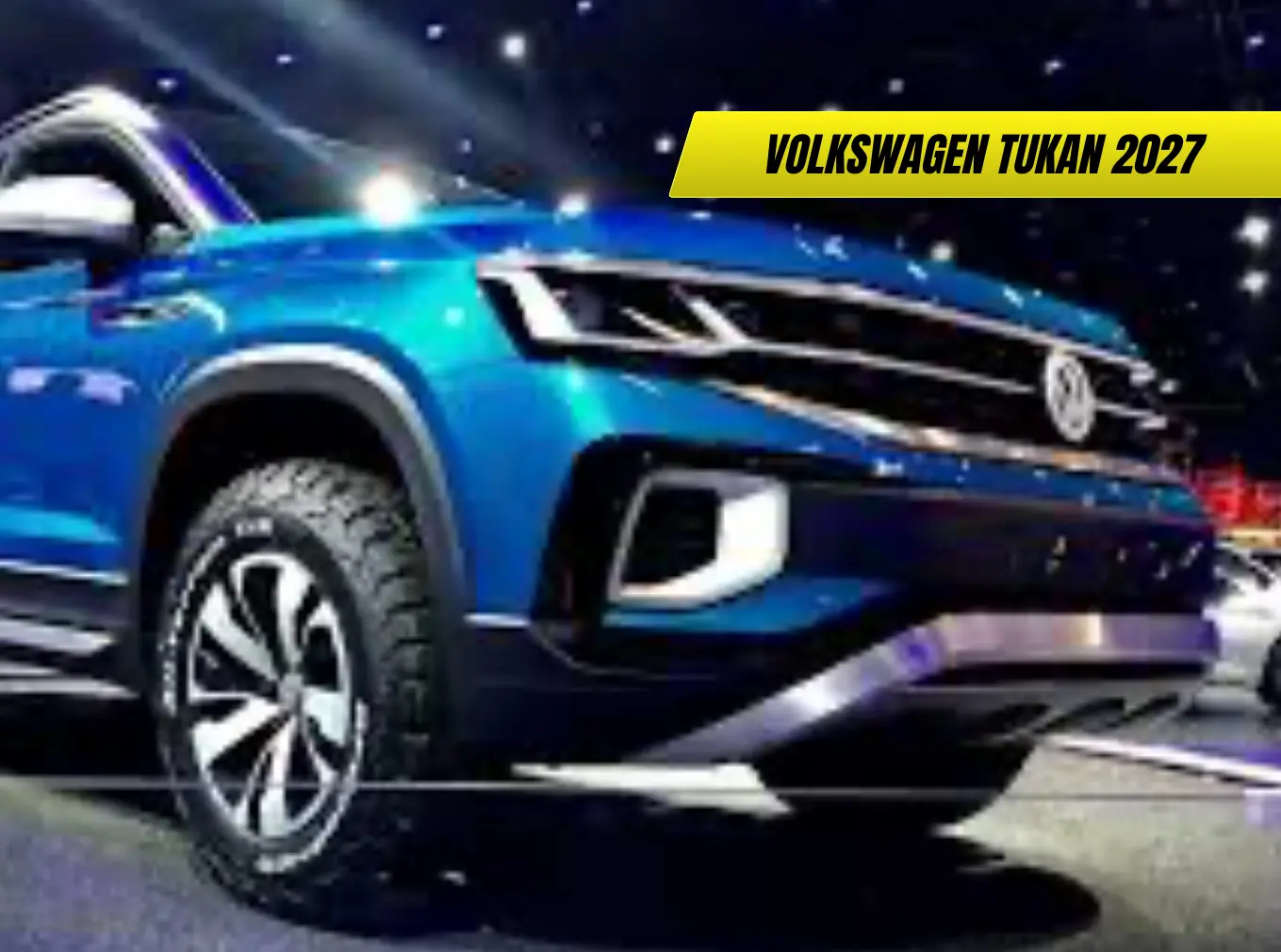
Volkswagen announces Tukan compact pickup launching 2027 from Brazilian São José dos Pinhais plant, entirely developed domestically from design through engineering with signature Canary Yellow finish targeting regional compact truck segment estimated pricing R$ 120,000-160,000 (£18,000-24,000 equivalent).
German manufacturer Volkswagen reveals Tukan nameplate for compact pickup truck entering production 2027 at São José dos Pinhais facility in Brazil, representing brand’s strategic expansion into South American light truck segment currently dominated by Fiat Toro, Chevrolet Montana, Ford Maverick (select markets), and Renault Orochthrough domestically-developed vehicle addressing regional preferences for versatile utility vehicles combining passenger car comfort with cargo capability. The toucan-inspired naming references iconic tropical bird recognized across Americas for distinctive colorful appearance, with Volkswagen emphasizing international pronunciation suitability suggesting potential expansion beyond initial South American focus toward global markets where compact unibody pickup demand grows steadily. First teaser images reveal signature Amarelo Canário (Canary Yellow)exterior finish becoming defining color identity alongside unibody construction rather than traditional body-on-frame architecture, positioning Tukan as urban/suburban-focused lifestyle truck prioritizing car-like refinement and fuel economy over maximum payload and off-road capability typical heavy-duty pickups. Built on likely modified MQB A0 platform shared across VW’s global compact vehicle lineup (Polo, Virtus, T-Cross, Nivus) enabling cost-effective production and comprehensive powertrain integration including 1.0-litre TSI turbocharged 3-cylinder producing 116-128hp, 1.4-litre TSI delivering 150hp, and potential 1.5-litre ethanol-flex engines addressing Brazil’s biofuel infrastructure and customer preferences for renewable fuel compatibility. The R$ 3 billion investment (approximately £450 million) demonstrates Volkswagen’s commitment Brazilian market where pickups represent ~18% total vehicle sales – substantial segment justifying dedicated product development, with Tukan targeting position between entry-level compact trucks and mid-size models through estimated 4.5-4.7 meter length creating genuine five-seat comfort and practical cargo beds without excessive dimensions compromising urban maneuverability typical larger American-style pickups.
Brazilian Development: Localized Engineering Strategy
The Tukan represents significant strategic shift positioning Brazil as genuine product development center rather than merely manufacturing hub producing European-designed vehicles adapted for regional markets.
Complete Brazilian Development Scope
| Development Phase | Brazilian Responsibility | Strategic Significance |
|---|---|---|
| Exterior styling | Complete design at VW Brazil Design Center | Local aesthetic preferences integrated from inception |
| Interior design | Full cabin development addressing regional needs | Climate considerations, material durability, cost targets |
| Platform engineering | MQB A0 modification for pickup application | Structural reinforcement, cargo integration, suspension tuning |
| Powertrain calibration | Engine tuning for ethanol/gasoline flex-fuel | Optimized performance across fuel types common Brazil |
| Chassis development | Suspension tuning for poor road conditions | Durability testing on Brazilian roads with potholes, unpaved surfaces |
| Manufacturing engineering | Production process design for local facility | Efficiency optimization within existing plant constraints |
Why Brazilian Development Matters
Regional Market Understanding
- Brazilian engineers inherently understand local customer priorities: durability over luxury, flexibility over specialization, cost-effectiveness over premium features
- Direct exposure to competitive landscape enables targeted positioning versus established rivals
- Climate testing under actual operating conditions (tropical heat, humidity, seasonal flooding)
Cost Optimization
- Engineering salaries in Brazil substantially lower than Germany reducing development costs
- Immediate feedback loop between design, engineering, and manufacturing teams located same facility
- Avoids expensive adaptation processes retrofitting European designs for different use cases
Speed to Market
- Local decision-making authority accelerates development timelines versus transatlantic approvals
- Faster iteration cycles responding to competitive threats and market shifts
- Reduced bureaucratic complexity typical multinational corporations with centralized development
Talent Development
- Investment in Brazilian engineering capability builds long-term competitive advantage
- Attracts skilled graduates to Volkswagen versus rivals or international emigration
- Creates institutional knowledge valuable future regional products
This localization strategy mirrors successful approaches from Fiat (Toro developed entirely Brazil), General Motors(Montana Brazilian-engineered), and Toyota (Hilux regional variants developed South America) where domestic development teams create products genuinely suited regional needs versus compromised adaptations from European/North American originals, similar to considerations in Toyota Hilux GR Sport 2026.
Design Philosophy: Urban Lifestyle Pickup
The Tukan’s teased Canary Yellow finish and toucan naming suggest positioning as cheerful, approachable lifestyle truck rather than utilitarian work vehicle – strategic differentiation within crowded compact pickup segment.
Expected Design Language
Exterior Styling Cues (Based on Teaser and VW Design Direction)
- Bold front grille: Likely incorporating VW’s current design language with horizontal elements
- Integrated LED lighting: Modern slim headlights matching contemporary VW passenger car aesthetic
- Sculpted fenders: Muscular wheel arches suggesting capability without excessive aggression
- Unibody integration: Seamless transition between cab and bed versus bolted-on bed appearance
- Protective cladding: Black plastic lower body protection suggesting adventure capability
- Roof rack provisions: Practical accessories appealing lifestyle buyers hauling sports equipment
Canary Yellow Signature Color
The Amarelo Canário launch color serves multiple strategic purposes:
- Brand differentiation: Bright cheerful yellow distinguishes Tukan from competitor trucks typically offered silver, white, black
- Youthful positioning: Vibrant color appeals younger buyers versus conservative colors traditional truck customers prefer
- Visibility: High-visibility yellow enhances safety and brand recognition on roads
- Toucan connection: Yellow complements toucan’s colorful plumage reinforcing naming theme
- Social media appeal: Distinctive color generates attention Instagram, TikTok, automotive media
However, Volkswagen will certainly offer conventional colors (white, silver, black, gray) appealing mainstream buyers uncomfortable bold statement colors, with Canary Yellow serving marketing flagship while volume sales occur neutral shades.
Cab and Bed Configurations
Expected Layouts
- Single cab short bed: Base work truck configuration (if offered)
- Extended cab short bed: Compromise between passenger space and cargo capacity
- Crew cab short bed: Primary configuration five-seat comfort with practical cargo area
The unibody construction visible teaser images suggests Volkswagen prioritizing crew cab configuration from launch, potentially avoiding single/extended cab variants requiring different structural engineering – cost savings enabling competitive pricing while addressing primary customer demand for five-seat capability typical compact lifestyle pickups.
Estimated Dimensions
| Specification | Tukan (Estimated) | Fiat Toro | Chevrolet Montana | Context |
|---|---|---|---|---|
| Length | ~4,550-4,700 mm | 4,935 mm | 4,800 mm | Compact positioning |
| Wheelbase | ~2,650-2,750 mm | 2,850 mm | 2,800 mm | Five-seat comfort |
| Width | ~1,850 mm | 1,844 mm | 1,854 mm | Segment standard |
| Bed length | ~1,200-1,400 mm | 1,245 mm | 1,370 mm | Practical cargo |
| Payload | ~500-650 kg | 1,000 kg | 1,200 kg | Lifestyle focus |
The shorter overall length versus established competitors positions Tukan as urban-friendly option prioritizing maneuverability over maximum cargo/towing capability – deliberate trade-off appealing city-dwelling buyers using trucks occasionally versus daily commercial/agricultural applications requiring heavy-duty capability.
Powertrain Strategy: Flex-Fuel and Turbocharged Efficiency
Brazilian market’s unique biofuel infrastructure and customer preferences for ethanol-gasoline flexibility will heavily influence Tukan’s engine lineup, with turbocharged efficiency prioritized over displacement.
Expected Engine Options
1.0 TSI Turbocharged 3-Cylinder (Entry)
- Displacement: 999cc turbocharged 3-cylinder
- Output: 116 hp (base tune) or 128 hp (enhanced)
- Torque: 200 Nm (148 lb-ft)
- Fuel system: Flex-fuel (gasoline or ethanol E85)
- Transmission: 6-speed manual or 6-speed automatic
- Fuel economy: ~12-14 km/L gasoline, ~8-10 km/L ethanol
- Target: Budget-conscious buyers prioritizing low purchase price and operating costs
The 1.0 TSI proves surprisingly capable in Brazilian market powering Polo, Virtus, T-Cross where turbocharged responsiveness compensates small displacement, though pickup application with higher weight and wind resistance may strain performance particularly loaded conditions or highway overtaking.
1.4 TSI Turbocharged 4-Cylinder (Mid-Range)
- Displacement: 1,395cc turbocharged 4-cylinder
- Output: 150 hp / 250 Nm (184 lb-ft)
- Fuel system: Flex-fuel compatibility
- Transmission: 6-speed automatic or 7-speed DSG dual-clutch
- Fuel economy: ~11-13 km/L gasoline, ~7-9 km/L ethanol
- Towing capacity: ~1,200-1,500 kg estimated
- Target: Mainstream buyers wanting adequate performance and capability
The 1.4 TSI represents sweet spot balancing performance, efficiency, and cost – adequate power for loaded highway driving and moderate towing without premium pricing or thirsty consumption typical larger engines.
1.5 TSI or Flex-Fuel Naturally-Aspirated (Alternative)
- Potential naturally-aspirated flex-fuel engines targeting specific price points or customer preferences
- Brazilian market historically prefers naturally-aspirated engines for simplicity and lower maintenance costs
- Turbocharged adoption increasing but traditional engines retain following among conservative buyers
Transmission Options
- 6-speed manual: Base transmission reducing costs appealing fleet/commercial buyers
- 6-speed conventional automatic: Mainstream choice balancing refinement and affordability
- 7-speed DSG dual-clutch: Premium option on top trims offering faster shifts and better efficiency
No Diesel Powertrain
Unlike European/Asian markets where diesel pickups dominate, Brazilian compact truck segment heavily favors gasoline/ethanol powertrains due to:
- Limited diesel infrastructure outside commercial corridors
- Higher diesel fuel costs versus ethanol (government subsidized)
- Simplified emissions compliance avoiding expensive diesel aftertreatment systems
- Customer preference for gasoline refinement over diesel torque in lifestyle applications
Market Positioning and Competitive Landscape
The Tukan enters fiercely competitive Brazilian compact pickup segment where established players enjoy strong brand loyalty and proven capability.
Direct Competitors (Brazilian Market)
| Model | Starting Price (BRL) | Length | Engine Options | Payload | Market Position |
|---|---|---|---|---|---|
| VW Tukan | ~R$ 120,000-160,000 (est) | ~4.6m | 1.0T, 1.4T flex | ~600kg | New challenger |
| Fiat Toro | R$ 125,000-180,000 | 4,935mm | 1.3T, 2.0 diesel | 1,000kg | Segment leader, established |
| Chevrolet Montana | R$ 120,000-170,000 | 4,800mm | 1.2T, 1.5 flex | 1,200kg | Recent redesign, strong brand |
| Renault Oroch | R$ 115,000-145,000 | 4,688mm | 1.3T, 2.0 flex | 650kg | Value positioning |
| Ford Maverick | ~R$ 180,000+ (if launched) | 4,880mm | 2.0 EcoBoost | ~680kg | Premium positioning |
Tukan’s Competitive Strategy
Key Differentiators
- Volkswagen brand prestige: German engineering perception versus French/American rivals
- TSI turbocharged efficiency: Advanced powertrains versus less sophisticated competitor engines
- Modern platform: Latest MQB architecture versus aging rival platforms
- Urban positioning: Compact dimensions and car-like refinement versus utility focus
- Distinctive styling: Toucan-inspired design and Canary Yellow signature creating memorable identity
Potential Vulnerabilities
- Higher pricing: Volkswagen premium typically R$ 5,000-15,000 above Chevrolet/Renault equivalents
- Lower payload: Unibody construction limits commercial appeal versus body-on-frame competitors
- Brand newness: Competitors enjoy established reputations and proven reliability in segment
- Limited towing: Smaller engines may trail diesel competitors’ torque for towing applications
- Maintenance costs: VW service expenses traditionally higher than Chevrolet/Fiat in Brazil
Target Customer Profile
Primary Demographics
- Young urban professionals (28-45 years): First-time truck buyers wanting versatility without traditional pickup image
- Active lifestyle enthusiasts: Weekend warriors hauling bikes, surfboards, camping equipment
- Small business owners: Entrepreneurs needing occasional cargo capability without full work truck
- Growing families: Buyers wanting SUV practicality plus open bed for bulky items
- Ethanol-conscious buyers: Environmentally-aware customers preferring renewable biofuel compatibility
Frequently Asked Questions
When does the Volkswagen Tukan launch?
Production begins 2027 at São José dos Pinhais plant with sales commencing shortly after. Exact launch timing likely mid-2027 (June-August) enabling full-year 2027 sales. Pre-orders potentially opening late 2026 following official public reveal expected Q4 2026 (October-December) at Brazilian auto show or standalone event.
How much will the Tukan cost in Brazil?
Estimated R$ 120,000-160,000 (approximately £18,000-24,000 or €21,000-28,000 equivalent) spanning base 1.0 TSI manual through top 1.4 TSI automatic crew cab. Entry pricing competitive with Chevrolet Montana and Renault Oroch while undercutting Fiat Toro slightly. Premium trims approach Toro pricing but offer VW brand cachet and modern technology.
Will the Tukan be sold outside South America?
Initially South American markets only (Brazil, Argentina, Chile, Colombia, Peru) but naming’s international pronunciation and unibody construction suggest potential European or global expansion if successful. However, right-hand-drive markets (UK, Australia, South Africa) unlikely given development costs and VW’s existing Amarok serving those segments at different price/size point.
What engines power the Tukan?
Expected 1.0-litre TSI turbocharged 3-cylinder (116-128hp) as entry powerplant with 1.4-litre TSI turbocharged 4-cylinder (150hp) providing mainstream performance. All engines feature flex-fuel capability running gasoline or ethanol E85 addressing Brazilian biofuel infrastructure. Transmissions include 6-speed manual, 6-speed automatic, or 7-speed DSG dual-clutch depending on trim.
Is Tukan unibody or body-on-frame construction?
Unibody construction based on modified MQB A0 platform prioritizing car-like ride quality, handling, and efficiency over maximum payload and off-road capability. This positions Tukan as lifestyle/urban pickup rather than heavy-duty work truck, similar to Ford Maverick, Hyundai Santa Cruz, rather than traditional Toyota Hilux, Ford Ranger body-on-frame designs.
How does Tukan compare to Fiat Toro?
Toro currently dominates Brazilian compact pickup segment with established reputation and comprehensive trim range. Tukan counters through VW brand prestige, modern platform, advanced turbocharged powertrains, and distinctive styling. However, Toro offers superior payload (1,000kg vs ~600kg), optional diesel engine, and proven reliability. Choice depends on priorities: VW refinement versus Fiat capability.
Will there be electric or hybrid version?
Not initially. Brazilian market heavily favors ethanol flex-fuel over electrification given limited charging infrastructure outside major cities and government biofuel subsidies making ethanol cost-competitive with electricity per kilometer. However, VW may introduce hybrid variant if government incentives change or competitor pressure emerges from Chinese EVs entering market.
What does Tukan compete against globally?
If exported beyond South America, competes against Ford Maverick (USA $25,000-35,000), Hyundai Santa Cruz (USA $27,000-40,000), and growing compact unibody pickup segment. However, established markets already served by incumbents may limit Tukan’s appeal versus targeting emerging markets where compact pickups growing but selection limited.
Conclusion
The Volkswagen Tukan’s 2027 Brazilian launch represents strategic commitment South American compact pickup segment where entirely domestic development from design through engineering demonstrates brand’s confidence regional engineering capabilities while addressing specific customer preferences for versatile lifestyle trucks balancing passenger comfort, cargo capability, and urban maneuverability through unibody construction and efficient turbocharged flex-fuel powertrains. The toucan-inspired naming and signature Canary Yellow finish create distinctive brand identity differentiating from established competitors (Fiat Toro, Chevrolet Montana, Renault Oroch) while estimated R$ 120,000-160,000 pricing positions competitively within segment prioritizing Volkswagen’s perceived quality and modern technology advantages justifying modest premiums over value-focused rivals.
For Brazilian buyers, Tukan’s success depends fundamentally on execution quality meeting elevated expectations given Volkswagen’s premium brand positioning typically commanding 10-15% price premiums requiring genuine advantages justifying costs, whether through superior refinement, advanced features, or distinctive styling resonating with image-conscious younger demographics prioritizing modern aesthetics over traditional truck attributes. The R$ 3 billion investment and dedicated São José dos Pinhais production demonstrate serious commitment though commercial viability requires capturing meaningful market share from entrenched competitors enjoying established dealer networks, proven reliability reputations, and comprehensive parts/service infrastructure advantages challenging new market entrants regardless of brand prestige or engineering sophistication.
Whether Tukan achieves projected success expanding beyond South America toward global markets depends on regional reception validating unibody compact pickup concept among customers historically favoring body-on-frame construction for perceived durability and capability, with international expansion requiring additional right-hand-drive development, market-specific regulations compliance, and competitive positioning against established players (Ford Maverick, Hyundai Santa Cruz) already serving those segments through proven products and dealer relationships difficult displacing even with superior products or compelling value propositions.





