
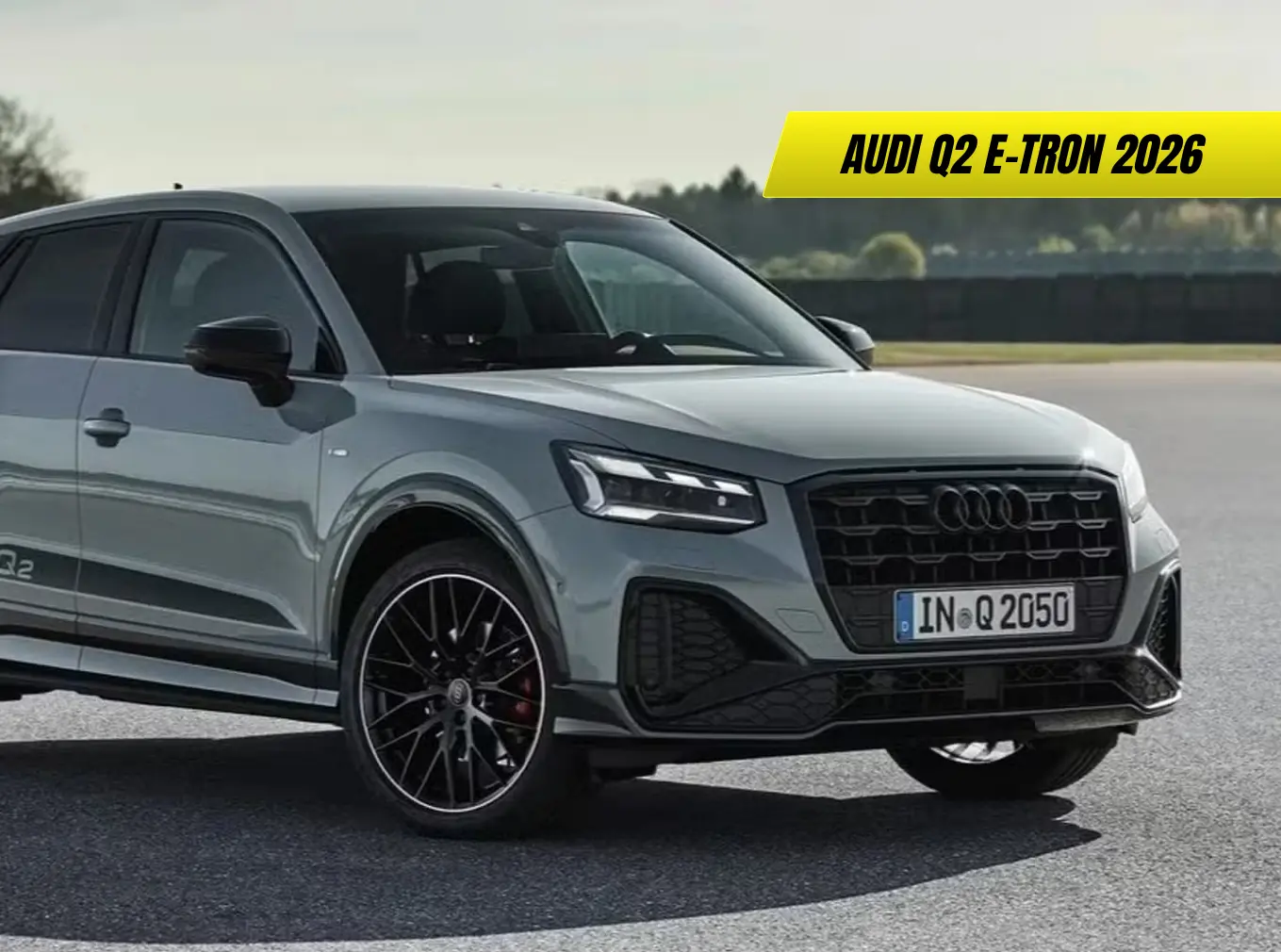
Audi revives iconic A2 nameplate for compact electric hatchback launching 2026 built on MEB platform with retro-inspired design, 420cm length, 170-340hp power range, and 58-80kWh battery options replacing discontinued A1 and Q2 models starting around €35,000-45,000.
German premium manufacturer Audi resurrects legendary A2 nameplate for all-electric compact hatchback debuting 2026 (production start expected Q2/Q3) at Ingolstadt factory, representing brand’s entry-level EV replacing discontinued A1 supermini and Q2 crossover through single model consolidating small-car lineup under revived heritage badge celebrating original 1999-2005 aluminum-bodied A2’s cult status among efficiency enthusiasts and design purists. Built on Volkswagen Group’s MEB platform (400V architecture shared with ID.3, Cupra Born) rather than delayed 800V SSP architecture initially planned, the approximately 420cm length positions A2 e-tron between supermini and compact segments featuring tall roofline, short overhangs, and tapering rear channeling original’s space-efficient proportions through contemporary electric design language incorporating stepped LED headlights from Q6 e-tron and clean surfacing prioritizing aerodynamic efficiency. Powertrain options span 170hp rear-wheel-drivebase model through 340hp dual-motor all-wheel-drive performance variant, paired with 58kWh or 80kWh battery capacities delivering estimated 400-600km WLTP range depending on specification while supporting 175-200kW DC fast charging enabling sub-30-minute 10-80% charging sessions despite 400V limitation. Design philosophy balances retro homage through upright greenhouse and minimalist surfacing with modern premium cues including digital matrix LED lighting, flush door handles, and aerodynamic wheel covers typical contemporary EVs, while interior features Audi’s latest Virtual Cockpit Plus digital instrumentation, augmented reality head-up display, and sustainable materials including recycled fabrics and FSC-certified wood trim appealing environmentally-conscious premium buyers. Estimated pricing €35,000-45,000 (approximately £30,000-38,000 UK) positions A2 e-tron as Audi’s most affordable EV undercutting Q4 e-tron substantially while commanding premium over Volkswagen ID.3 platform twin through enhanced equipment, superior materials, and premium badge cachet justifying typical 20-30% Audi markup within Volkswagen Group hierarchy.
Heritage Revival: Why Resurrect A2 Nameplate?
The original Audi A2 (1999-2005) achieved cult classic status despite commercial disappointment, making nameplate resurrection strategically significant beyond mere nostalgia.
Original A2 Legacy (1999-2005)
| Characteristic | Original A2 Achievement | Historical Significance |
|---|---|---|
| Construction | All-aluminum Space Frame (ASF) | First volume-production aluminum car, weight-saving innovation |
| Fuel economy | 3.0L/100km (78 mpg) 1.2 TDI | Class-leading efficiency decades ahead of regulations |
| Aerodynamics | 0.25 Cd drag coefficient | Among most aerodynamic production cars ever |
| Interior space | Tall cabin, minimal overhangs | Maximum space efficiency in compact footprint |
| Design | Minimalist, functional aesthetic | Timeless appearance aging better than contemporary rivals |
| Commercial result | ~175,000 units sold | Discontinued due to profitability challenges despite critical acclaim |
Why Commercial Failure Despite Excellence?
The original A2 faced multiple market headwinds:
- High pricing: Aluminum construction costs pushed prices £16,000-22,000 versus £10,000-15,000 mainstream competitors
- Polarizing styling: Upright proportions and minimalist aesthetic alienated conservative buyers
- Limited practicality perception: Small exterior dimensions suggested compromise despite spacious interior
- Diesel focus: Efficiency-optimized diesels lacked performance appeal versus sportier gasoline alternatives
- Premium positioning confusion: Neither luxury nor mainstream, falling between segments
Why Revival Makes Sense Now
Electric Architecture Solves Original Challenges
- MEB platform costs: Shared components across VW Group enabling competitive pricing versus bespoke aluminum
- Battery packaging: Electric powertrain benefits from tall roofline maximizing interior volume
- Performance availability: Instant electric torque provides sportiness original lacked
- Zero emissions: Ultimate efficiency expression appealing environmentally-conscious premium buyers
- Design acceptance: Retro-futurism now fashionable versus polarizing when original launched
Strategic Market Positioning
- Entry-level EV: Fills gap below Q4 e-tron (from €50,000+) enabling younger/budget-conscious premium buyers
- Heritage marketing: Cult following among automotive enthusiasts generates positive publicity and social media engagement
- Differentiation: Distinctive retro-modern aesthetic separates from conventional crossover dominance
- Model consolidation: Single A2 replaces both A1 and Q2 simplifying lineup and reducing development costs
The revival demonstrates Audi learning from original’s commercial challenges while capitalizing on timing where electric architecture, heritage appeal, and market acceptance align creating commercially viable proposition original never achieved, similar to successful retro revivals like Fiat 500, MINI Cooper, and Alpine A110.
Platform and Technical Specifications: MEB Foundation
The A2 e-tron’s MEB platform foundation represents pragmatic compromise following delays to Volkswagen Group’s advanced SSP architecture originally intended for next-generation affordable EVs.
MEB Platform Evolution: MEB+ Variant
| Specification | Standard MEB (ID.3) | MEB+ (A2 e-tron) | Improvements |
|---|---|---|---|
| Voltage | 400V architecture | 400V (not 800V SSP) | Unchanged versus standard MEB |
| Battery technology | Pouch cells, module-based | Cell-to-pack LFP chemistry | Reduced cost, improved longevity |
| DC charging | 120-135 kW max | 175-200 kW max | Enhanced charging speed (+45-65kW) |
| Motor efficiency | Standard permanent magnet | Enhanced winding, cooling | Improved efficiency, range |
| Weight optimization | Baseline | Reduced mass through refinements | Better performance, efficiency |
| Production cost | Reference | ~15% reduction target | Volume scale, simplified assembly |
Battery and Range Options
58kWh Entry Battery
- Chemistry: LFP (lithium-iron-phosphate) cell-to-pack construction
- Usable capacity: ~55kWh (58kWh gross)
- WLTP range: 380-420km (236-261 miles) depending on motor/drive configuration
- Real-world range: 300-350km (186-217 miles) typical conditions
- DC charging: 10-80% in ~28 minutes at 175kW
- Target: Budget-conscious buyers prioritizing affordability over maximum range
80kWh Extended Range Battery
- Chemistry: LFP or NMC (nickel-manganese-cobalt) depending on market/availability
- Usable capacity: ~77kWh (80kWh gross)
- WLTP range: 520-600km (323-373 miles) depending on configuration
- Real-world range: 420-500km (261-311 miles) typical conditions
- DC charging: 10-80% in ~32 minutes at 200kW
- Target: Long-distance drivers wanting maximum capability and range confidence
Powertrain Configurations
Base RWD (170hp)
- Single rear-mounted motor: 125kW (170hp) / 310Nm
- 0-100km/h: ~8.5 seconds
- Top speed: 160km/h (limited)
- Efficiency: Best in range, targeting 14-15 kWh/100km
- Target: Mainstream buyers prioritizing economy and rear-wheel driving dynamics
Performance RWD (210hp)
- Enhanced rear motor: 155kW (210hp) / 350Nm
- 0-100km/h: ~7.0 seconds
- Top speed: 180km/h (limited)
- Efficiency: 15-16 kWh/100km
- Target: Enthusiasts wanting livelier performance without AWD cost
Dual-Motor AWD (340hp)
- Front motor: 80kW (109hp) / 140Nm
- Rear motor: 170kW (231hp) / 350Nm
- Combined: 250kW (340hp) / 490Nm
- 0-100km/h: ~5.5 seconds
- Top speed: 200km/h (limited)
- Efficiency: 17-18 kWh/100km (reduced by AWD weight/complexity)
- Target: Performance buyers and all-weather capability priority customers
Design Philosophy: Retro-Modern Fusion
The A2 e-tron’s styling challenge involves honoring original’s iconic proportions while incorporating contemporary Audi design language and electric vehicle requirements creating cohesive aesthetic appealing both heritage enthusiasts and mainstream buyers.
Exterior Design: Original A2 DNA Meets Modern EV
Silhouette and Proportions
- Tall roofline: Upright greenhouse maximizing interior headroom and cargo volume channeling original
- Short overhangs: Electric powertrain enables minimal front/rear extensions improving maneuverability
- Long wheelbase: Battery packaging between axles creates spacious cabin relative to exterior dimensions
- Tapering rear: Gently sloping roofline from B-pillar improving aerodynamics without excessive coupe-SUV compromise
- Clean surfacing: Minimalist body panels avoiding excessive character lines honoring original’s purity
Lighting and Grille
Front Fascia
- Stepped LED headlights: Dual-tier arrangement matching Q6 e-tron and A6 e-tron family resemblance
- Closed grille: Electric vehicles eliminate cooling requirements enabling smooth sealed front
- Illuminated four rings: Backlit Audi badge creating premium nighttime signature
- Lower air intakes: Minimal functional openings for battery/motor cooling and aerodynamic management
- Sensors integration: Cameras, radar, lidar (if equipped) seamlessly incorporated into clean design
Rear Design
- Full-width LED light bar: Contemporary Audi signature connecting taillights horizontally
- Tapering glass: Original A2’s distinctive rear window angle adapted for modern aerodynamics
- Integrated spoiler: Subtle roof extension improving airflow separation and downforce
- Flush surfaces: Seamless panel gaps and integrated elements optimizing aerodynamic efficiency
Aerodynamic Optimization
Target Cd 0.25-0.27 drag coefficient matching or improving original A2’s class-leading 0.25 Cd through:
- Active grille shutters (if any openings present)
- Optimized underbody panels creating smooth airflow path
- Aerodynamic wheel covers on efficiency-focused trims
- Rear diffuser managing airflow exiting vehicle underside
- Flush door handles reducing turbulence
Color Strategy and Special Editions
Expected launch colors include:
- Heritage tribute: Papaya Orange reminiscent original A2 Colour Storm special editions
- Contemporary premium: Glacier White, Mythos Black, Manhattan Gray standard offerings
- Efficiency statement: Glacier Blue or silver emphasizing electric/efficiency positioning
- Personalization: Audi Exclusive program offering custom colors premium pricing
Dimensional Specifications
| Dimension | A2 e-tron (Estimated) | Original A2 | VW ID.3 | Context |
|---|---|---|---|---|
| Length | ~4,200 mm | 3,827 mm | 4,261 mm | Compact segment |
| Wheelbase | ~2,650 mm | 2,470 mm | 2,765 mm | Spacious cabin |
| Width | ~1,800 mm | 1,673 mm | 1,809 mm | Modern stability |
| Height | ~1,530 mm | 1,553 mm | 1,552 mm | Tall roofline maintained |
| Boot capacity | ~380-420 liters | 260-1,085L | 385L | Practical daily use |
The slightly larger dimensions versus original A2 reflect modern safety requirements, battery packaging, and customer expectations while maintaining compact urban-friendly footprint competitive within segment.
Interior Design: Premium Minimalism Meets Digital Technology
The A2 e-tron’s cabin balances Audi’s premium positioning requirements with sustainable materials philosophy and digital-first user experience contemporary buyers expect.
Digital Cockpit Architecture
Driver Interface
- Virtual Cockpit Plus: 12.3-inch fully-digital instrument cluster with customizable displays
- Augmented reality head-up display: Projects navigation, speed, assistance information onto windscreen
- Contextual information: Display adapts based on driving mode (efficiency, dynamic, comfort)
- Minimalist physical controls: Steering wheel buttons and essential switchgear only
Central Infotainment
- 11.6-inch touchscreen: Portrait or landscape orientation (unconfirmed) with latest MMI interface
- Wireless connectivity: Apple CarPlay, Android Auto without cable requirements
- Over-the-air updates: Software improvements delivered remotely maintaining vehicle freshness
- Voice control: Natural language processing understanding complex multi-step commands
- Navigation: Electric-specific routing accounting charging stops, battery state, traffic
Materials and Sustainability
Following Audi’s environmental commitments:
- Recycled polyester upholstery: Base trims using sustainable fabric from post-consumer plastic bottles
- Vegan leather alternatives: Premium trims offering animal-free synthetic materials
- FSC-certified wood trim: Sustainably-sourced wood accents on top specifications
- Reduced chrome: Minimizing environmentally-harmful plating processes favoring brushed aluminum
- Carpet from recycled materials: Floor coverings incorporating recycled fishing nets or plastic waste
Seating and Space Efficiency
Front Seats
- Comfortable sculpted buckets with adequate lateral support
- Manual adjustment standard, electric with memory optional
- Heating standard or optional depending on trim
- Massage function available top specifications
Rear Seats
- Generous legroom from long wheelbase and minimal intrusion
- Adequate headroom despite tapering roofline (better than coupe-SUVs)
- 60/40 split-folding enabling cargo flexibility
- ISOFIX mounting points outer positions
Cargo Capacity
- Seats up: 380-420 liters competitive with VW ID.3 (385L), better than MINI Electric (211L)
- Seats folded: ~1,200-1,300 liters maximum capacity
- Frunk: Potential small front trunk if motor packaging permits (~20-30L)
- Underfloor storage: Charging cable and tire repair kit compartment
Premium Touches Justifying Audi Pricing
Elements differentiating from VW ID.3 platform twin:
- Superior materials quality throughout cabin
- Enhanced sound deadening for quieter ride
- Ambient lighting with multiple color options
- Premium audio system (Bang & Olufsen available)
- More comprehensive standard equipment
- Higher-grade plastics with better visual finish
- Attention to detail in switchgear and controls
UK Market Positioning and Competitive Analysis
The A2 e-tron enters competitive premium compact EV segment requiring careful positioning balancing Audi brand expectations against aggressive pricing necessary achieving volume sales.
Direct Premium Compact EV Competitors
| Model | UK Price | Range (WLTP) | Power | Length | Key Positioning |
|---|---|---|---|---|---|
| Audi A2 e-tron | £30,000-38,000 (est) | 400-600km | 170-340hp | ~4.2m | Premium heritage, retro-modern |
| VW ID.3 | £36,000-43,000 | 345-559km | 170-286hp | 4.26m | Platform twin, mainstream positioning |
| MINI Electric | £32,000-39,000 | 402km | 184-218hp | 3.86m | British heritage, sporty handling |
| BMW i3 (discontinued) | £35,000-40,000 | 260-310km | 170-184hp | 4.01m | Quirky design, BMW badge |
| Cupra Born | £36,000-42,000 | 338-558km | 170-231hp | 4.32m | Sporty SEAT premium sub-brand |
| Mercedes EQA | £48,000-55,000 | 426-560km | 190-292hp | 4.46m | Premium positioning, crossover styling |
A2 e-tron’s Competitive Advantages
- Heritage appeal: Original A2 cult following generates positive sentiment and media coverage
- Distinctive design: Retro-modern aesthetic differentiates from conventional crossover monotony
- Audi brand prestige: Four rings command respect versus VW/SEAT/MINI positioning
- Space efficiency: Tall roofline maximizes interior volume in compact footprint
- Competitive pricing: Estimated £30,000 entry undercuts most premium rivals
Potential Weaknesses
- 400V architecture: Slower charging versus 800V competitors (Hyundai/Kia)
- MEB limitations: Platform from 2019 shows age versus newer dedicated EV architectures
- Brand dilution concerns: Entry-level pricing may cheapen Audi premium positioning
- Limited differentiation: Platform sharing with ID.3 visible despite cosmetic changes
- Original A2 baggage: Commercial failure association despite cult status
Frequently Asked Questions
When does the Audi A2 e-tron launch?
Production begins Q2-Q3 2026 at Ingolstadt factory with first customer deliveries expected autumn 2026 (September-November). Official public reveal likely Geneva Motor Show March 2026 or standalone digital event Q2 2026. UK market deliveries commence late 2026 or early 2027 depending on right-hand-drive production timing and regulatory approvals.
How much will the A2 e-tron cost in the UK?
Estimated £30,000-38,000 spanning base 170hp RWD with 58kWh battery through top 340hp AWD with 80kWh battery. Entry pricing positions as Audi’s most affordable EV undercutting Q4 e-tron (from £50,000+) substantially while commanding ~£3,000-5,000 premium over VW ID.3 platform twin through enhanced equipment and premium badge.
What’s the difference between A2 e-tron and VW ID.3?
Both share MEB platform architecture but A2 features distinctive retro-inspired design honoring original A2, premium Audi interior materials and technology, enhanced sound deadening, superior build quality, and four-ring badge commanding typical Audi premium. ID.3 offers mainstream Volkswagen positioning at lower pricing but less distinctive styling and standard equipment.
How far can the A2 e-tron drive on one charge?
58kWh battery: 400-420km WLTP (250-260 miles), real-world 300-350km (186-217 miles). 80kWh battery: 520-600km WLTP (323-373 miles), real-world 420-500km (261-311 miles). Range varies based on motor configuration (RWD more efficient than AWD), driving style, weather conditions, and terrain.
How fast does the A2 e-tron charge?
175-200kW maximum DC fast charging enables 10-80% in approximately 28-32 minutes depending on battery size and charging conditions. Home charging on 7.4kW wallbox takes 8-12 hours empty to full. AC charging supports up to 11kW three-phase where available reducing home charging time to 5-8 hours.
Will there be performance S or RS versions?
Unconfirmed but possible. Current specifications suggest 340hp AWD top variant though Audi could develop enhanced S2 e-tron (~400hp) or RS2 e-tron (~500hp+) leveraging heritage RS2 Avant nameplate recognition. However, entry-level positioning may preclude expensive performance development initially – dependent on standard model’s commercial success.
Does A2 e-tron replace A1 and Q2?
Yes. Audi discontinues both A1 supermini and Q2 compact crossover end 2026 consolidating entry-level lineup under single A2 e-tron model. This simplifies development, reduces production complexity, and focuses resources on single electric platform versus maintaining multiple combustion models approaching obsolescence under tightening European emissions regulations.
Is the A2 e-tron available outside Europe?
Uncertain. Initial focus European markets where original A2 achieved cult status and compact EVs demonstrate strong demand. US market unlikely given Americans’ preference for larger vehicles and limited appetite for premium compact hatchbacks. Chinese market possible given Q2L e-tron precedent though fierce local competition may limit appeal.
Conclusion
The Audi A2 e-tron’s 2026 revival represents strategic nameplate resurrection leveraging original cult classic’s heritage appeal while addressing commercial challenges through modern MEB electric architecture enabling competitive €35,000-45,000 pricing consolidating discontinued A1 supermini and Q2 crossover into single entry-level model featuring retro-inspired 420cm tall-roofed design, 170-340hp powertrain range, and 400-600km battery options positioning as Audi’s most accessible EV undercutting Q4 e-tron substantially while maintaining premium positioning versus Volkswagen ID.3 platform twin through enhanced materials, distinctive styling, and four-ring badge cachet. The original A2’s 1999-2005 commercial disappointment despite critical acclaim for aluminum construction, class-leading 0.25 Cd aerodynamics, and exceptional space efficiency provides cautionary tale though timing now favors success where electric architecture solves cost challenges, retro-futurism enjoys mainstream acceptance, and entry-level EV demand grows among premium buyers unable justifying £50,000+ for established models.
For UK buyers, the A2 e-tron delivers compelling alternative to conventional premium compact EVs (MINI Electric, Cupra Born) and mainstream crossovers through distinctive heritage-inspired design differentiating from segment monotony while estimated £30,000-38,000 pricing enables younger demographics and budget-conscious customers accessing Audi ownership previously restricted to used market or entry-level combustion models facing obsolescence under tightening emissions regulations. Success depends fundamentally on execution quality meeting elevated Audi expectations versus platform twin VW ID.3 where material quality, technology integration, and attention to detail must justify typical 20-30% premium preventing customer defection toward better-value Volkswagen alternative offering identical mechanical specifications beneath different badge and styling treatment.
Whether A2 e-tron achieves projected commercial success reversing original’s disappointing sales depends on balancing heritage appeal attracting enthusiast buyers with mainstream practicality and competitive pricing necessary volume production, avoiding original’s fatal combination of polarizing styling, compromised positioning, and excessive pricing alienating potential customers despite objective excellence in efficiency and engineering sophistication admired by automotive journalists but irrelevant to mainstream buyers prioritizing conventional aesthetics, familiar proportions, and value-oriented pricing over innovative aluminum construction and record-breaking fuel economy ultimately proving insufficient commercial justification continuing production beyond 175,000 units over six-year lifecycle.





