
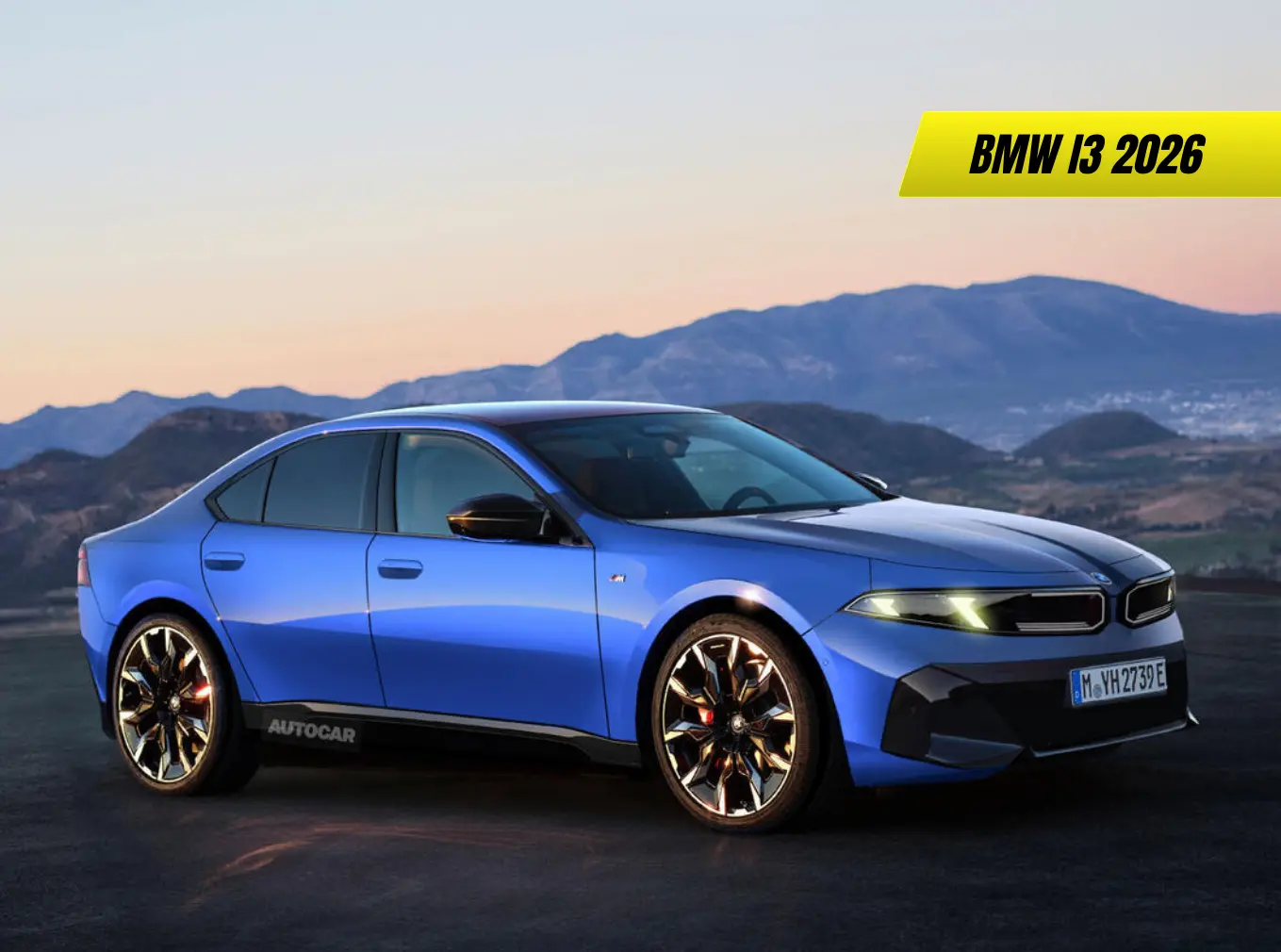
BMW’s revolutionary i3 sedan based on the Neue Klasse electric architecture is undergoing final validation testing ahead of its expected late 2027 UK launch, promising to redefine electric vehicle capabilities with up to 900km (559 miles) CLTC range and cutting-edge sixth-generation battery technology. The production model will introduce an 800-volt electrical architecture, advanced cylindrical cells delivering 20% improved energy density, and prices expected from £58,755 when UK order books open in mid-2027, positioning it as BMW’s most technologically advanced electric vehicle and a direct challenger to the Mercedes EQE and Tesla Model 3.
MeBMW i3 Neue Klasse 2027 UK preview: 559-mile range, 800V Gen6 battery, £58,755 starting price. Revolutionary electric sedan with advanced technology.
Key Points:
- Late 2027 UK launch expected with production commencing at BMW’s Debrecen, Hungary facility from autumn 2026, followed by UK deliveries in Q4 2027
- Revolutionary Gen6 battery technology featuring cylindrical cells with 20% improved energy density, reduced costs, and enhanced thermal management
- Up to 900km CLTC range claimed (approximately 559 miles WLTP equivalent) from battery capacities exceeding 100kWh with advanced chemistry optimisation
- 800-volt electrical architecture enabling DC fast charging up to 350kW, adding approximately 186 miles of range in just 10 minutes
- UK pricing from £58,755 estimated for base rear-wheel-drive variants, rising to £65,000-£70,000 for high-performance M Sport and xDrive all-wheel-drive specifications
- Neue Klasse platform expansion with iX3 SUV arriving simultaneously in late 2027, followed by additional bodystyles through 2028-2029 creating comprehensive electric lineup
BMW Neue Klasse: Revolutionising Electric Vehicle Architecture
BMW’s Neue Klasse (New Class) represents the most significant architectural transformation in the company’s modern history, rivalling the original Neue Klasse sedans of the 1960s that established BMW’s reputation for sporting driver-focused vehicles. This dedicated electric platform abandons all combustion engine compatibility in pursuit of maximum efficiency, packaging optimisation, and cost reduction that conventional multi-energy architectures cannot achieve.
The platform’s name deliberately references BMW’s heritage whilst signalling a complete break from the past. Just as the original Neue Klasse models rescued BMW from near-bankruptcy in the 1960s through innovative engineering and distinctive character, the electric Neue Klasse aims to secure BMW’s premium positioning against emerging Chinese competitors including BYD, Nio, and Xpeng who threaten established European brands with technologically advanced products at aggressively competitive pricing.
From my point of view, BMW’s decision to create a dedicated electric architecture rather than continuing with compromise platforms like the CLAR that currently underpins both combustion and electric models demonstrates genuine strategic commitment to electrification. The Neue Klasse’s flat floor structure, optimised wheelbase, and purpose-designed component packaging deliver advantages impossible with adapted combustion platforms, particularly regarding interior space efficiency and driving dynamics through lower centres of gravity.
Sixth-Generation Battery Technology: BMW’s Game-Changer
The Neue Klasse i3’s most transformational technology lies beneath its floor panels: sixth-generation cylindrical battery cells that BMW describes as delivering 20% improved energy density, 30% better charging speeds, and 50% reduced manufacturing costs compared to the prismatic cells used in current iX and i4 models. These advances come through revolutionary chemistry optimisation, enhanced thermal management systems, and manufacturing process innovations developed through partnerships with suppliers including CATL and Samsung SDI.
The cylindrical cell format represents BMW’s strategic shift after years of using prismatic cells. Cylindrical cells offer superior thermal characteristics through more effective cooling pathways, improved structural integrity that enhances crash safety, and manufacturing scalability that reduces costs through higher production volumes. Tesla pioneered this approach years ago, and BMW’s adoption confirms the format’s advantages despite requiring different pack architectures and cooling strategies.
Battery capacity in the i3 sedan will likely range from 85kWh in base variants to over 105kWh in long-range specifications, with the larger pack delivering the headline-grabbing 900km CLTC range (approximately 559 miles WLTP). Real-world UK range in mixed driving conditions should exceed 400 miles consistently – substantially more than current electric sedans including the Tesla Model 3 Long Range (374 miles WLTP) and Mercedes EQE (394 miles WLTP), positioning the i3 as the segment leader for range capability.
800-Volt Architecture: Ultra-Fast Charging Capability
BMW’s Neue Klasse platform adopts 800-volt electrical architecture as standard, doubling the 400-volt systems used in current i4 and iX models. This fundamental change enables dramatically faster DC charging speeds up to 350kW peak power – matching the capabilities of premium rivals including Porsche Taycan, Audi e-tron GT, and Hyundai Ioniq 6 whilst surpassing mainstream competitors still using 400-volt systems limited to 150-250kW.
The practical benefits for UK drivers prove substantial. At 350kW-capable chargers (increasingly common on motorway networks from providers including Ionity and Gridserve), the i3 can add approximately 186 miles of range in just 10 minutes, or achieve 10-80% charging in under 20 minutes. This transforms long-distance travel from an anxiety-inducing exercise in charge-point planning to a routine stop comparable with conventional refuelling, particularly for drivers willing to charge more frequently for shorter durations rather than waiting for complete 10-100% sessions.
The 800-volt architecture also delivers efficiency advantages beyond charging speed. Higher voltage enables reduced current flow for equivalent power delivery, which decreases resistive losses in cables and components whilst allowing lighter, less expensive wiring harnesses throughout the vehicle. These seemingly minor improvements accumulate into meaningful weight savings and efficiency gains that extend real-world range by 3-5% compared to equivalent 400-volt systems – not transformational, but certainly valuable for UK buyers prioritising maximum capability.
Real-World UK Charging Infrastructure Compatibility
UK public charging infrastructure continues expanding rapidly, with over 50,000 public charge points now installed including approximately 8,500 rapid chargers (50kW+) suitable for route charging. Premium networks including Ionity, Gridserve Electric Forecourts, and Tesla’s opened Supercharger network increasingly offer 350kW-capable chargers that fully exploit the i3’s 800-volt architecture, though the majority of UK rapids currently max out at 150-175kW.
Even at these more common charging speeds, the i3’s advanced battery chemistry and thermal management enable sustained charging rates that add meaningful range quickly. Expect approximately 120-140 miles added during a 15-minute stop at 150kW chargers – adequate for most UK motorway journeys where distances between major cities rarely exceed 250-300 miles. Those comparing electric vehicle options should also explore alternatives covered in our best plug-in hybrid cars UK guide for buyers requiring additional flexibility.
Home charging using standard 7kW wallboxes will require approximately 12-15 hours for a complete 10-100% charge on the larger battery pack, easily accomplished overnight for UK drivers with off-street parking. Those with three-phase electrical supplies can install 22kW chargers reducing full charge times to 4-5 hours, providing additional flexibility for drivers covering exceptionally high daily mileages who need to top up between journeys.
BMW i3 Design and Aerodynamic Efficiency
The production Neue Klasse i3 sedan showcases BMW’s evolved design language featuring a reinterpreted kidney grille, slimmer LED lighting signatures, and sculpted surfaces that balance aesthetic appeal with aerodynamic efficiency. The signature kidney grille elements remain visible despite electric powertrains not requiring traditional cooling, serving as distinctive brand identity markers and housing advanced sensors for driver assistance systems including adaptive cruise control, lane-keeping assistance, and autonomous emergency braking.
Aerodynamic efficiency receives paramount importance in electric vehicle design where every improvement directly extends range. The i3 targets a drag coefficient below 0.25 Cd through extensive wind tunnel development, underbody streamlining, active grille shutters, and flush door handles that retract when not needed. Wheels feature aerodynamic covers that reduce turbulence around the wells, whilst the rear incorporates an active spoiler that deploys at higher speeds to optimise downforce and stability.
From my experience, achieving genuine aerodynamic efficiency without compromising visual appeal proves exceptionally challenging. Many electric vehicles sacrifice aesthetic character in pursuit of minimal drag coefficients, resulting in bland, jellybean shapes that lack the emotional appeal necessary for premium positioning. BMW’s design team must balance these competing priorities – the i3 needs sufficiently low drag to deliver competitive range, whilst maintaining the aggressive, sporting character that defines BMW’s brand identity and justifies premium pricing over cheaper Chinese alternatives.
Interior Technology and Cabin Innovation
BMW has previewed the Neue Klasse interior through concept vehicles showcasing a revolutionary “Panoramic Vision” head-up display system that projects information across the entire width of the windscreen. This technology eliminates the need for conventional digital instrument clusters, displaying speed, navigation, and vehicle status directly in the driver’s forward sightline without requiring eye movement away from the road ahead. A central touchscreen handles infotainment, navigation, and vehicle settings, whilst physical controls for climate systems and audio volume address criticism of BMW’s recent touch-sensitive interfaces.
The cabin architecture exploits the Neue Klasse platform’s flat floor and optimised packaging to deliver exceptional interior spaciousness despite compact external dimensions. Rear passenger legroom exceeds the current 3 Series by approximately 20mm through extended wheelbase and forward-shifted A-pillars, whilst boot capacity increases to approximately 450-470 litres – competitive against premium sedan rivals including the Mercedes EQE and Audi A6 e-tron. Sustainable materials including recycled fabrics, responsibly sourced leather alternatives, and renewable wood trim elements align with UK buyers’ increasing environmental consciousness.
The Panoramic Vision display’s UK implementation will require right-hand-drive specific calibration ensuring information appears in appropriate locations for British drivers whilst complying with UK Type Approval regulations. BMW’s extensive experience with head-up display technology dating back over two decades provides confidence that the system will deliver intuitive usability rather than gimmicky distraction, though early production models may feature conventional digital clusters until the advanced display completes full validation and regulatory approval processes.
Expected Powertrain Options and Performance
BMW has not officially confirmed final powertrain specifications for the production i3, though test vehicles suggest multiple configurations catering to diverse customer priorities. The base variant will likely feature a single rear-mounted electric motor producing approximately 250-280hp, delivering 0-60mph acceleration around 6.0-6.5 seconds – adequate performance for a premium sedan without attempting to rival dedicated sports models. This rear-wheel-drive configuration maximises efficiency through simpler drivetrain architecture with fewer components, targeting the headline 900km CLTC (559 miles WLTP) range that positions the i3 as the segment efficiency leader.
All-wheel-drive xDrive variants will add a front-mounted electric motor, increasing total system output to approximately 400-450hp with 0-60mph times dropping below 4.5 seconds. This dual-motor configuration delivers superior traction in adverse weather conditions common across the UK, along with the visceral acceleration that electric powertrains enable through instant torque delivery. Range decreases modestly to around 480-520 miles WLTP due to increased weight and power consumption, though this remains competitive against any premium electric sedan currently available.
Performance-focused variants wearing M Sport badging or potentially full M designation will exploit tri-motor configurations producing 550-650hp, rivalling combustion-powered M3 sedans whilst delivering sub-3.5 second 0-60mph acceleration. However, battery capacity, weight, and power consumption considerations may limit range to 350-400 miles WLTP – still adequate for most UK driving but representing meaningful compromises compared to efficiency-optimised variants. Those prioritising maximum performance should also explore alternatives covered in our guide to best SUVs under £40k for broader market context.
UK Pricing and Market Positioning
Expected UK pricing for the BMW i3 Neue Klasse remains unconfirmed, though industry analysts predict the base rear-wheel-drive variant will start around £58,755 – positioning it competitively against the Mercedes EQE (from approximately £62,000) whilst commanding meaningful premiums over the Tesla Model 3 Long Range (£49,990). This pricing reflects BMW’s premium positioning, advanced Gen6 battery technology, and the comprehensive equipment levels that British buyers expect from German luxury brands.
Mid-specification variants with enhanced equipment, larger battery packs, and potentially all-wheel-drive capability should fall in the £62,000-£68,000 bracket, competing directly against the Audi A6 e-tron and Mercedes EQE whilst undercutting the Porsche Taycan’s premium pricing. Range-topping M Sport or M-badged variants with maximum performance and luxury appointments will likely exceed £70,000-£75,000, positioned against combustion-powered BMW M3 sedans and justifying premiums through instant electric torque delivery, advanced technology, and zero-emission capability.
| Expected Variant | Motors | Power | 0-60mph | Range (WLTP) | UK Price (Est.) |
|---|---|---|---|---|---|
| i3 eDrive RWD | Single rear | 250-280 hp | 6.0-6.5 sec | 520-559 miles | £58,755-£62,000 |
| i3 eDrive Extended | Single rear | 280-300 hp | 5.5-6.0 sec | 480-520 miles | £62,000-£65,000 |
| i3 xDrive AWD | Dual motor | 400-450 hp | 4.0-4.5 sec | 450-480 miles | £65,000-£70,000 |
| i3 M Sport/M | Tri-motor | 550-650 hp | 3.0-3.5 sec | 350-400 miles | £72,000-£78,000 |
These pricing predictions position the i3 competitively within the premium electric sedan segment whilst maintaining BMW’s traditional positioning slightly above Mercedes and Audi. Understanding UK regulations including UK toll roads and charges and speed camera regulations remains essential for all motorists.
UK Road Tax and Company Car Benefits
As a zero-emission electric vehicle, the BMW i3 Neue Klasse will qualify for the £10 annual VED road tax rate applicable to EVs, though vehicles exceeding £40,000 list price incur an additional £410 annual supplement for the first five years. This means all i3 variants will pay total annual road tax of £420 for years 1-5, dropping to just £10 thereafter – remarkably affordable given the vehicle’s performance and premium positioning.
Company car drivers will find the i3 exceptionally attractive with just 2% Benefit-in-Kind taxation for the 2027/28 tax year and beyond, compared to 30-37% for equivalent combustion vehicles. For a higher-rate taxpayer, this dramatic difference saves approximately £7,000-£9,000 annually compared to a petrol-powered BMW 3 Series, making the electric i3’s higher purchase price economically justifiable within just 12-18 months for business users. This tax advantage represents one of electric vehicles’ most compelling financial benefits for UK company car drivers.
Insurance costs will vary based on specification, with base rear-wheel-drive variants likely falling into Group 40-45 whilst high-performance M Sport versions may reach Group 50 (the maximum). Annual premiums for 40-year-old drivers with clean records should range from £800-£1,200 for standard variants, rising to £1,500-£2,500 for performance specifications. Specialist EV insurance providers may offer more competitive rates than mainstream insurers unfamiliar with electric vehicle risk profiles and repair costs.
iX3 SUV: Neue Klasse Platform-Sharing Sibling
BMW will launch the production iX3 SUV simultaneously with the i3 sedan in late 2027, sharing the Neue Klasse platform, Gen6 battery technology, and 800-volt electrical architecture. The SUV variant targets buyers prioritising practicality and commanding driving positions over the sedan’s sleeker styling and aerodynamic efficiency. Expected UK pricing will start around £60,000-£63,000, positioned competitively against the Mercedes EQC, Audi Q6 e-tron, and Tesla Model Y.
The iX3’s taller body and increased frontal area compromise aerodynamic efficiency, reducing maximum range to approximately 480-520 miles WLTP compared to the sedan’s 559-mile capability. However, the SUV compensates through increased boot capacity exceeding 550 litres, higher seating positions improving visibility in dense traffic, and greater ground clearance beneficial for UK drivers navigating poorly maintained rural roads and flooded sections during winter months.
From my point of view, the simultaneous sedan and SUV launch represents intelligent strategy – BMW can appeal to diverse customer preferences without requiring completely separate platforms, manufacturing facilities, or supply chains. Those comparing SUV options should also explore alternatives including the Nissan Qashqai e-Power for hybrid efficiency, or best Chinese SUVs offering compelling value propositions.
Production Timeline and UK Delivery Schedule
BMW’s Debrecen, Hungary manufacturing facility will commence Neue Klasse i3 and iX3 production in autumn 2026, with initial output allocated to European markets including Germany, France, and the UK. British deliveries should begin in Q4 2027 (October-December), timed to capture year-end fleet sales and private buyers seeking March 2028 registration plates. Order books will likely open in mid-2027, allowing UK customers 4-6 months to specify their preferred variant, colour scheme, and equipment packages ahead of delivery.
Production capacity at Debrecen will ramp gradually through 2027-2028, with BMW targeting annual volumes exceeding 150,000 units across both bodystyles once full capacity is reached. This represents a substantial commitment demonstrating confidence in Neue Klasse’s commercial viability, though also creates pressure to achieve ambitious sales targets in fiercely competitive markets where Chinese manufacturers increasingly challenge established European premium brands.
I would recommend prospective UK buyers register interest with local BMW dealerships early in 2027 to secure favourable delivery slots and avoid extended waiting periods that typically affect high-demand new model launches. Early orders may also benefit from launch edition specifications featuring enhanced equipment at competitive pricing designed to stimulate initial demand and generate positive media coverage.
How i3 Compares to Premium Electric Sedan Rivals
The BMW i3 Neue Klasse enters the UK market competing against established premium electric sedans including the Mercedes EQE, Audi A6 e-tron, Tesla Model 3, and Polestar 2. The BMW distinguishes itself through class-leading range capability (559 miles WLTP), cutting-edge Gen6 battery technology, and the sporting driving dynamics that have defined BMW’s character for decades. The 800-volt electrical architecture and 350kW charging capability match or exceed all rivals except the Porsche Taycan and Hyundai Ioniq 6.
UK pricing positions the i3 competitively – the base variant’s expected £58,755 starting price undercuts the Mercedes EQE by approximately £3,000-£5,000 whilst commanding meaningful premiums over the Tesla Model 3 Long Range. However, the BMW justifies its positioning through superior interior quality, advanced technology features including the Panoramic Vision display, and comprehensive standard equipment that Tesla charges extra for through its notorious options list.
The i3’s rear-wheel-drive architecture (in base form) delivers the balanced handling characteristics that BMW loyalists expect, contrasting with front-wheel-drive rivals including some Chinese alternatives that sacrifice driving dynamics for packaging efficiency. All-wheel-drive xDrive variants provide superior traction in adverse weather common across UK winters, whilst performance variants exploit tri-motor configurations for acceleration rivalling dedicated sports cars – versatility that few competitors can match across a single model range.
Frequently Asked Questions
When will the BMW i3 Neue Klasse launch in the UK?
The BMW i3 Neue Klasse is expected to reach UK showrooms in Q4 2027 (October-December), with order books opening mid-2027 allowing customers 4-6 months to specify preferred variants ahead of delivery. Production commences autumn 2026 at BMW’s Debrecen, Hungary facility.
How much will the BMW i3 Neue Klasse cost in the UK?
Expected UK pricing should start around £58,755 for base rear-wheel-drive variants, rising to £62,000-£68,000 for mid-specification models with enhanced equipment and all-wheel drive, and exceeding £72,000-£78,000 for high-performance M Sport or M-badged variants with maximum capability.
What is the range of the BMW i3 Neue Klasse?
BMW claims up to 900km CLTC range (approximately 559 miles WLTP equivalent) for the most efficient rear-wheel-drive variant with the largest battery pack. Real-world UK range in mixed driving conditions should consistently exceed 400 miles – substantially more than current electric sedan competitors.
How fast does the BMW i3 Neue Klasse charge?
The i3 features 800-volt electrical architecture enabling DC fast charging up to 350kW peak power, adding approximately 186 miles of range in just 10 minutes or achieving 10-80% charging in under 20 minutes at suitable rapid chargers increasingly available across UK motorway networks.
What battery technology does the Neue Klasse use?
The i3 employs BMW’s sixth-generation cylindrical battery cells delivering 20% improved energy density, 30% better charging speeds, and 50% reduced manufacturing costs compared to current prismatic cells. Battery capacity ranges from 85kWh to over 105kWh depending on specification.
Will the i3 Neue Klasse have all-wheel drive?
Yes, BMW will offer both rear-wheel-drive eDrive variants prioritising efficiency and range, plus all-wheel-drive xDrive models with dual motors delivering 400-450hp and improved traction in adverse weather conditions common across the UK, particularly during winter months.
How does the i3 Neue Klasse compare to the Tesla Model 3?
The BMW offers substantially greater range (559 miles vs 374 miles WLTP), superior interior quality with premium materials and advanced Panoramic Vision display technology, and traditional BMW sporting dynamics through rear-wheel-drive architecture. However, the Tesla undercuts BMW pricing by approximately £8,000-£9,000 for comparable specifications.
The BMW i3 Neue Klasse represents the German manufacturer’s most significant electric vehicle launch and a defining moment for the brand’s electrification strategy. The combination of revolutionary Gen6 battery technology, 800-volt architecture, and class-leading 559-mile range positions it as one of the most technologically advanced premium electric sedans available to UK buyers when deliveries commence in late 2027.
From my point of view, BMW has learned valuable lessons from its somewhat underwhelming first-generation i3 city car (2013-2022) and more recent iX and i4 models that competed adequately but failed to establish technological leadership over rivals. The Neue Klasse represents BMW’s determined effort to reclaim premium electric vehicle leadership through genuine innovation rather than incremental improvements, directly addressing range anxiety through exceptional efficiency whilst maintaining the sporting dynamics that define the brand’s character.
UK buyers seeking premium electric sedans with maximum capability should place the i3 Neue Klasse at the top of their consideration lists when order books open mid-2027. The combination of Mercedes-beating range, Tesla-matching charging speeds, and traditional BMW driving engagement creates a compelling package that justifies premium positioning against mainstream alternatives. Company car drivers particularly benefit from the 2% BIK taxation saving approximately £7,000-£9,000 annually compared to combustion equivalents, making the higher purchase price economically justifiable within just 12-18 months.
However, prospective buyers should also explore alternatives including the Mercedes EQE for superior luxury refinement, Tesla Model 3 for aggressive value positioning, or options covered in our best plug-in hybrid cars UK guide for those requiring additional powertrain flexibility. The i3 Neue Klasse will deliver exceptional capability and represents BMW’s electric future, but it must prove its commercial viability in fiercely competitive markets where Chinese manufacturers increasingly threaten established European premium brands with technologically advanced products at disruptive pricing that challenges traditional business models.





