
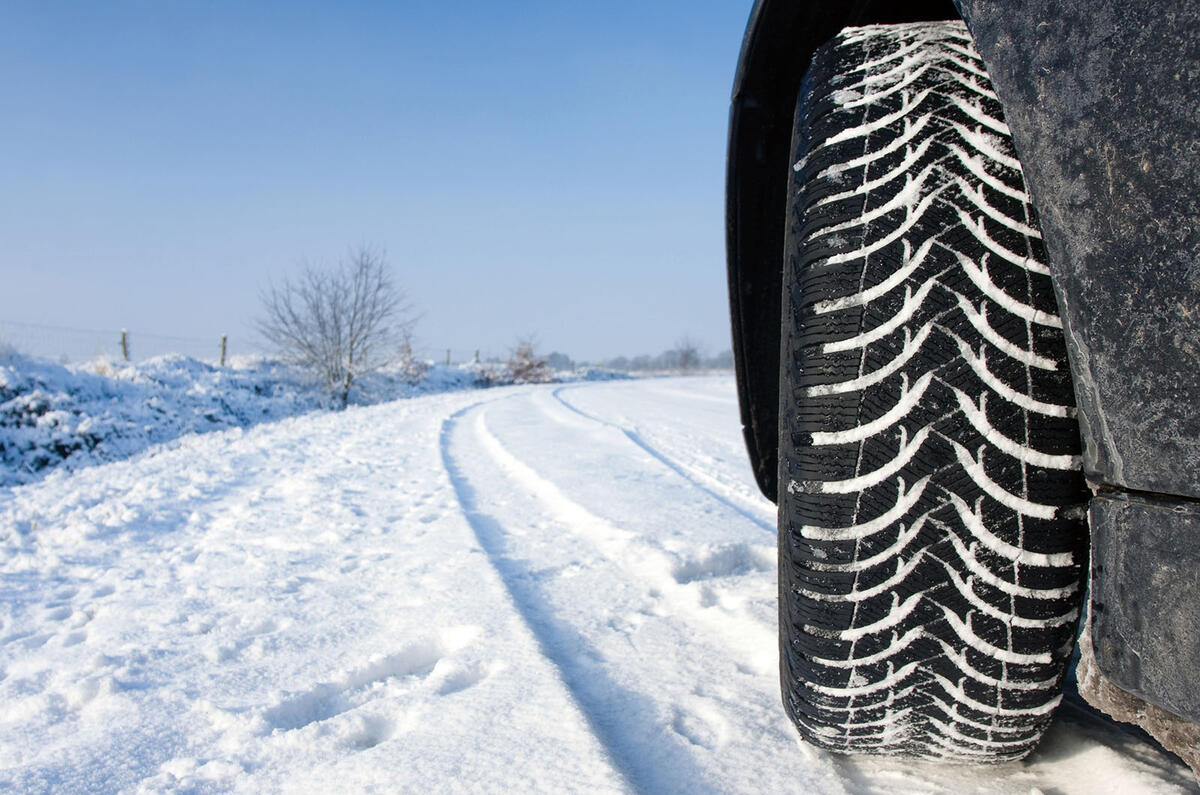
Unlike most of mainland Europe, the UK has no legal obligation to fit winter tyres. But that does not mean the question of whether to use them is simple — particularly for drivers in Scotland, Wales, and northern England, where severe winter conditions are a genuine annual reality.
Key Points
- Winter tyres are not legally required anywhere in the UK in 2026
- Scotland, northern England, and Wales experience conditions where winter tyres provide a measurable safety advantage
- Winter tyres must carry the 3PMSF snowflake symbol to be genuinely rated for severe winter conditions — M+S alone is not sufficient
- All-season tyres with the 3PMSF symbol are a legal and practical alternative to dedicated winter tyres
- Some UK insurers now offer discounted premiums for drivers who fit winter tyres seasonally
- Minimum legal tread depth remains 1.6mm for all tyres — but experts recommend a minimum of 4mm on winter tyres
The Legal Position in the UK
The UK is one of the few countries in Europe that does not mandate winter tyres at any time of year or in any region. There is no equivalent of the German, Austrian, or Scandinavian seasonal tyre laws. Driving on summer tyres through a blizzard is, technically, legal — though it could be considered driving without due care if conditions deteriorate and an incident occurs.
This contrasts sharply with the legal landscape across the Channel. As noted by Continental’s winter regulation guidance, countries including Germany, Austria, and the Czech Republic require winter-rated equipment when conditions demand it, with fines ranging up to €5,000 for non-compliance. UK drivers travelling to Europe in winter should check the specific requirements of every country on their route.
What the 3PMSF Symbol Actually Means
Not all tyres marketed as “winter” or “all-season” are equal in severe winter conditions. The key distinction is between:
- M+S (Mud and Snow) marking — indicates the tyre meets a basic mud and snow traction standard, but this is a self-certified claim by manufacturers with no independent testing requirement
- 3PMSF (Three-Peak Mountain Snowflake) symbol — awarded only after independent testing confirms the tyre meets specific performance thresholds in severe snow conditions; this is the standard that genuinely matters
In 2026, the 3PMSF symbol is the benchmark UK drivers and fleet operators should look for when selecting winter or all-season tyres for use in cold, wet, or snowy conditions. All-season tyres marked with both M+S and 3PMSF — such as the Michelin CrossClimate range — are accepted as winter equipment for travel through most European countries that require it.
Who Actually Benefits from Winter Tyres in the UK?
For drivers in central London or the south-east of England, winter tyres are rarely necessary — temperatures seldom drop far enough for long enough to justify the cost. For others, the case is considerably stronger:
| Driver Profile | Winter Tyre Benefit |
|---|---|
| Scotland (Highlands, rural roads) | High — significant snowfall, sustained sub-zero temperatures |
| Northern England (Pennines, Yorkshire Dales) | High — regular snow and ice events |
| Wales (Brecon Beacons, Snowdonia approaches) | Medium-High — unpredictable winter conditions |
| Midlands and East Anglia | Medium — occasional benefit during cold snaps |
| South-East England and London | Low — rarely cold enough to justify dedicated winter tyres |
A winter tyre’s compound is specifically formulated to remain pliable below 7°C — above that temperature, a summer tyre performs better. The critical threshold is not snow on the ground but air temperature: once temperatures consistently drop below 7°C, winter or all-season tyres offer shorter braking distances and more responsive handling even on dry, cold roads.
Winter Tyres and Your Car Insurance
An increasing number of UK insurers recognise the safety benefit of winter tyres and will not penalise you for fitting them — and some actively offer a reduced premium. However, the situation varies between providers.
Key points to check with your insurer:
- Notify your insurer before fitting winter tyres if the wheel size or specification changes from standard
- If you fit winter tyres on a different set of wheels (steel rims, for example), ensure the spare tyre situation is addressed
- Some policies explicitly reward the fitting of 3PMSF-rated tyres with a small premium reduction
The Association of British Insurers advises that policyholders always disclose modifications — even safety-positive ones — to avoid any potential issues at the point of a claim.
Tread Depth: The Legal Minimum vs the Safe Minimum
The UK legal minimum of 1.6mm applies to winter tyres just as it does to summer and all-season tyres. However, winter tyre specialists consistently recommend a practical minimum of 4mmfor winter use — because the deep, open tread grooves that channel slush and snow away from the contact patch are compromised significantly below that depth.
A winter tyre worn down to 2mm may still be technically legal, but it will deliver meaningfully less grip on snow and wet roads than the same tyre at 5mm. Budget-conscious drivers who run winter tyres to the absolute legal limit are often surprised to find their performance in genuine winter conditions has deteriorated well before the 1.6mm mark. For guidance on checking tread depth and understanding wear patterns, our Car Tyre Wear Patterns Explained article covers the full range of diagnostic indicators.
Storing Your Seasonal Tyres Correctly
If you opt for dedicated winter tyres on a second set of wheels, correct storage of the unused set extends tyre life and prevents degradation:
- Clean tyres before storage — remove road salt, brake dust, and grime
- Store in a cool, dark, dry location — UV exposure and ozone degrade rubber over time
- Keep tyres vertical or stacked horizontally — avoid hanging by the bead, which can distort the tyre’s profile over time
- Avoid petroleum-based products nearby — solvents and fuels accelerate rubber ageing
- Use tyre bags or a tyre hotel service — many tyre retailers offer affordable seasonal storage for drivers without suitable space at home
The GOV.UK guidance on vehicle maintenance confirms that stored tyres must still meet all legal requirements when refitted, including the 1.6mm minimum tread depth.
FAQ
Are winter tyres compulsory in the UK?
No. The UK has no legal requirement to fit winter tyres at any time of year or in any region, including Scotland. However, driving in dangerous conditions on inappropriate tyres could constitute careless driving.
What is the difference between M+S and 3PMSF tyres?
M+S is a self-certified designation with no independent testing requirement. The 3PMSF snowflake symbol requires the tyre to pass standardised independent performance tests in severe snow conditions — it is the more meaningful standard.
Do winter tyres affect fuel economy?
Slightly — a softer compound generates marginally more rolling resistance on warm, dry roads. The difference is typically 1–3% and is negligible in real-world driving during cold months when the tyre is operating within its optimal temperature range.
Can I use winter tyres all year round in the UK?
Technically yes, but not advisable. In summer temperatures, the soft winter compound wears rapidly, overheats, and provides inferior handling and braking on warm, dry roads. Most drivers use them between October and April in the UK.
How much do winter tyres cost in the UK?
A set of four winter tyres for a standard hatchback costs between £250 and £600 fitted, depending on brand and size. Premium brands such as Michelin, Bridgestone, and Continental sit at the higher end; mid-range options from Hankook or Falken offer a solid balance of performance and price.
Will fitting winter tyres invalidate my insurance?
No — switching to a different type of road-legal tyre is not a modification that invalidates a standard UK motor policy. However, if the wheel size or specification changes, notify your insurer to be safe.
I would recommend winter tyres to any driver who regularly travels rural roads in Scotland, the Pennines, or Wales between November and March. Based on my experience, the difference in stopping distances and stability on cold, wet roads — even before snow appears — is noticeable from the very first drive. For everyone else, a quality all-season tyre with the 3PMSF symbol is the most practical and cost-effective solution the UK’s unpredictable winters allow.





