
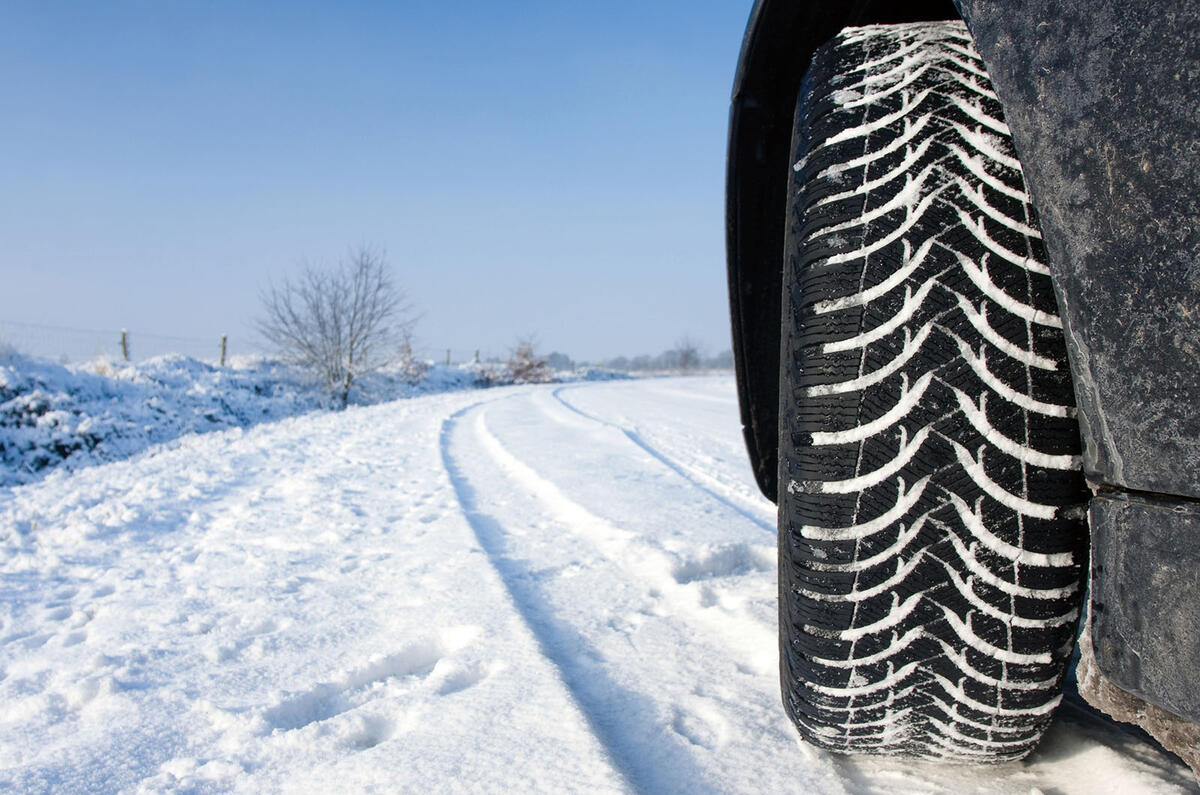
The complete guide to winter tyres for UK drivers in 2026 — covering the legal position, when they genuinely make a difference, the best all-season alternatives, and what Scotland’s specific requirements mean for drivers.
Winter tyres remain a subject of confusion and occasional misinformation for UK drivers. Unlike most of mainland Europe, the UK does not impose a general mandatory winter tyre requirement — but the performance difference they deliver in cold and wintry conditions is measurable and significant. This guide separates fact from fiction.
Winter Tyres UK 2026: Key Points
- The UK has no general legal requirement to fit winter or all-season tyres — unlike Germany, Austria, Sweden, and most of mainland Europe
- However, Scotland’s Winter Ready guidance and several local authority requirements for HGVs in specific mountain pass areas create partial obligations that affect some drivers
- Winter tyres outperform summer tyres in temperatures below 7°C — not just on snow and ice, but on cold, wet roads that represent typical UK winter conditions
- The performance advantage over summer tyres at 0°C in wet braking is approximately 11 metres shorter stopping distance from 50mph — the length of two cars
- All-season tyres bearing the Three-Peak Mountain Snowflake (3PMSF) symbol provide a certified level of winter performance and are a practical compromise for most UK drivers
- Summer tyres are not illegal in winter — but driving on clearly inappropriate tyres in dangerous conditions can constitute careless or dangerous driving if an accident occurs
The Legal Position in the UK
There is no statute in England, Wales, or Scotland that requires passenger car drivers to fit winter or all-season tyres during the winter months. This contrasts with most of mainland Europe, where mandatory winter tyre periods (typically October or November through March or April) are established law in Germany, Austria, Czech Republic, Sweden, Finland, and others.
For UK drivers who regularly cross to continental Europe — via the Channel Tunnel or ferry — checking the winter tyre requirements of every country on the planned route is essential before departure. The penalties for non-compliance vary by country but typically include on-the-spot fines and, in some cases, liability implications if an accident occurs on an unequipped vehicle.
The practical legal risk in the UK: While summer tyres are not banned in winter, police and courts have discretion to assess whether a driver’s tyre choice contributed to an accident. A driver involved in a winter collision with summer tyres in freezing conditions may face scrutiny over whether their vehicle was roadworthy and appropriate for the conditions — with potential implications for insurance liability and, in serious cases, prosecution for careless driving.
When Winter Tyres Actually Make a Difference
The most important misconception about winter tyres is that they are only relevant when snow is on the ground. In reality, their performance advantage begins at 7°C air temperature — not 0°C. Below 7°C, the compound used in summer tyres begins to harden, reducing the tyre’s ability to conform to the road surface and maintain grip. A winter tyre’s softer compound remains flexible below 7°C, maintaining grip on cold wet roads that summer tyres treat as relatively slippery.
For context: the average UK winter sees temperatures below 7°C for approximately four to five months — from November to March in most of England, longer in Scotland, Wales, and northern England. During this period, a vehicle on summer tyres is technically operating with a measurable grip deficit on every wet road, regardless of whether snow is present.
Stopping distance comparison at 0°C, 50mph:
- Summer tyre: approximately 59 metres
- Winter tyre: approximately 48 metres
- Difference: 11 metres — the length of two standard family cars
Scotland: The Specific Situation
Scotland’s higher elevation, longer winter season, and more frequent snowfall create a more pressing case for winter or all-season tyres than the rest of the UK. Transport Scotland’s Winter Ready campaign strongly recommends winter or all-season tyres for drivers in rural Highland, Perthshire, Aberdeenshire, and other upland areas from October through April.
Several of Scotland’s mountain passes — including the A9 over Drumochter Pass and sections of the A82 through Glencoe — are regularly affected by snow and ice from October to April. While winter tyres are not legally mandatory for passenger cars, the practical requirement for safe passage during winter closures and snow conditions makes them effectively essential for regular users of these routes.
Motorists entering Scotland from England are not subject to different legal requirements — but driving a vehicle clearly unsuited to prevailing conditions on Scottish mountain roads in winter is a practical and legal risk that sensible drivers should manage proactively.
All-Season Tyres as the UK Compromise
For the majority of UK drivers who want improved winter capability without the cost and inconvenience of maintaining two sets of tyres, all-season tyres bearing the Three-Peak Mountain Snowflake (3PMSF) symbol are the practical recommendation.
The 3PMSF symbol — a snowflake inside a three-peaked mountain outline — indicates that the tyre has passed a certified snow traction test and meets the minimum performance threshold for genuine winter use. It is not equivalent to a dedicated winter tyre in extreme conditions but provides substantially better winter performance than a summer tyre while retaining acceptable summer performance.
Tyres that carry only the M+S (Mud and Snow) marking without the 3PMSF symbol have not passed the certified winter performance test — the M+S designation is a self-certification by the manufacturer and does not guarantee winter capability. Always look for the 3PMSF symbol when selecting all-season tyres for genuine winter performance.
The Michelin CrossClimate 2, Continental AllSeasonContact 2, and Goodyear Vector 4Seasons Gen-3 all carry the 3PMSF symbol and consistently achieve the highest test scores in their category for UK conditions.
Should You Fit Winter Tyres or All-Season Tyres?
| Factor | Winter Tyres | All-Season Tyres |
|---|---|---|
| Best performance in snow/ice | Outstanding | Good (3PMSF-rated) |
| Performance in cold wet roads | Excellent | Very good |
| Summer performance | Poor — unsafe above 7°C | Acceptable — slightly below summer tyre |
| Cost | High — requires two sets | Moderate — single set |
| Convenience | Low — biannual change | High — no changeover |
| Recommended for | Scotland; heavy snowfall areas; drivers wanting best winter performance | Most UK drivers; urban and mixed use |
Is it illegal to use winter tyres in summer in the UK?
No — there is no law against fitting winter tyres in summer. However, their softer compound wears extremely rapidly on warm roads, degrades handling in warm conditions, and increases fuel consumption. Using winter tyres in summer is inadvisable on performance and cost grounds, not legal ones.
Do winter tyres affect insurance?
No UK insurer is required to be notified of a switch to winter tyres on an otherwise standard vehicle, and no mainstream insurer penalises the fitment of correctly specified winter tyres. Some specialist insurers actively encourage winter tyre fitment and may note it positively on a policy. Always check your specific policy terms if uncertain.
Can I fit winter tyres to only the front or rear axle?
This is strongly inadvisable — mixing winter and summer tyres on different axles creates significant handling imbalance, particularly in emergency braking where the axle with summer tyres will have substantially less grip than the winter-equipped axle, potentially causing uncontrollable vehicle behaviour. Always fit matching tyres to all four wheels simultaneously.
When should I change to winter tyres in the UK?
The traditional guideline is to fit winter tyres when ambient temperatures consistently fall below 7°C — typically October to November for most of England and Wales, September to October for Scotland and northern England. Remove them when temperatures consistently exceed 7°C — typically March to April in most regions.
Do winter tyres help in heavy rain as well as snow?
Yes — modern winter tyres perform very well in heavy rain due to their deeper, more aggressive tread patterns and hydrophilic compounds that channel water effectively. Their advantage over summer tyres in wet cold conditions is measurable even on rain-soaked roads with no ice or snow present.





