
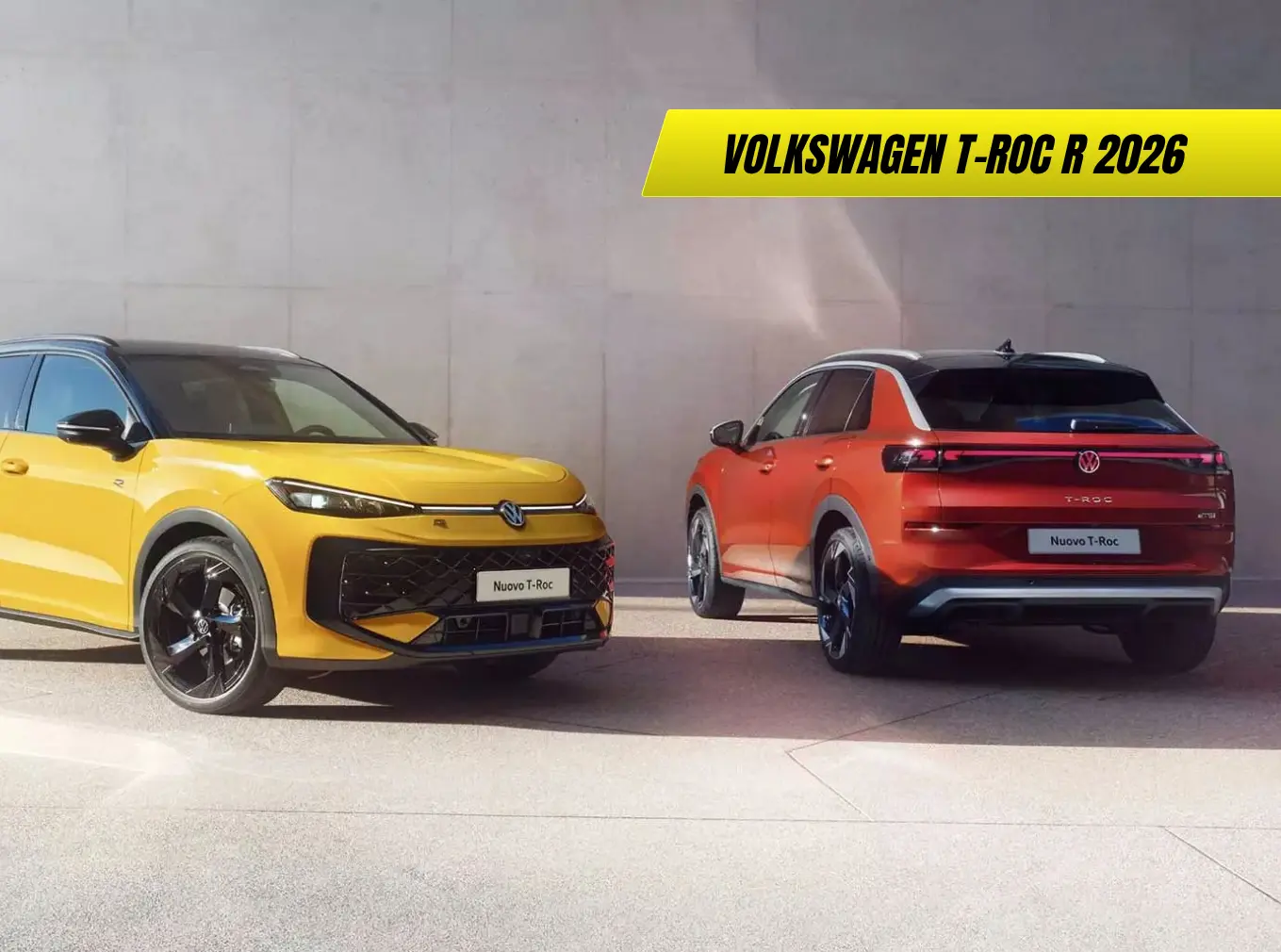
The all-new second-generation Volkswagen T-Roc arrived in UK showrooms in late 2025, winning the What Car? Small SUV of the Year award in January 2026. It is a substantially better car than its predecessor — more space, sharper technology, and a cleaner, more mature design. But with three trim levels and two power outputs from a single engine family, which version makes the most sense?
Key Points
- The new T-Roc is available exclusively with a 1.5 eTSI mild hybrid petrol engine in the UK
- Two power outputs are offered: 114bhp and 148bhp, both paired with a 7-speed DSG automatic
- UK prices run from £31,635 to £38,935 across three trim levels: Life, Style, and R-Line
- The T-Roc received a five-star Euro NCAP rating in December 2025, with particular praise for its driver assistance systems
- Boot space has grown to 475 litres with seats up — a meaningful improvement over the outgoing model
- The 148bhp engine is the stronger recommendation for motorway-heavy drivers and families
What’s New on the 2026 T-Roc
The second-generation T-Roc represents a meaningful step forward rather than a cosmetic refresh. The new model is longer than its predecessor, providing genuinely improved rear passenger space and a larger boot — 475 litres with seats up, rising to 1,350 litres with them folded. The interior has been redesigned with clear influence from the ID. range, featuring a cleaner dashboard layout, improved material quality, and a larger central touchscreen.
Safety technology has been significantly upgraded: the five-star Euro NCAP rating achieved in December 2025 reflects strong performance across all test categories, with particular praise for the Travel Assist adaptive cruise control and lane-centring system. All UK T-Rocs include autonomous emergency braking, blind-spot monitoring, and rear cross-traffic alert as standard — previously optional features on the outgoing car.
The Engine Range: One Family, Two Outputs
Unlike its predecessor, which offered a range of petrol and diesel options, the 2026 T-Roc launches in the UK with a single engine architecture: the 1.5 TSI eTSI mild hybrid, available in two states of tune.
| Engine | Power | 0–62mph | Combined MPG | Best For |
|---|---|---|---|---|
| 1.5 eTSI 114bhp | 114bhp | ~10.5 sec | 49.6–50.4mpg | Light family use, urban/suburban |
| 1.5 eTSI 148bhp | 148bhp | ~8.5 sec | 49.6–50.4mpg | Motorway driving, fuller loads, overtaking |
Both use 48V mild hybrid technology, with a belt-integrated starter-generator recovering energy under braking and assisting the engine during acceleration. Both are paired with a 7-speed DSG automatic. Both return almost identical official economy figures — the mild hybrid system effectively equalises consumption across the two power outputs in everyday driving.
The 114bhp version is entirely sufficient for most everyday UK use — urban commuting, school runs, weekend leisure. It is composed, refined, and economical. However, the 148bhp version is noticeably more relaxed on motorway overtakes and under load with passengers and luggage. For a family SUV that will spend time on A-roads and motorways, the extra £1,500–£2,000 for the more powerful variant is money well spent. VW confirmed pricing on the official Volkswagen UK website at launch.
Trim Levels Explained: Life, Style, and R-Line
Life — the sensible default
Life is the entry trim and is better equipped than its position in the range suggests. Standard kit includes the full digital instrument cluster, a large central touchscreen with wireless Apple CarPlay and Android Auto, LED headlights, heated front seats, a reversing camera, and keyless entry. For the majority of private buyers, Life offers everything that matters for daily use at the most accessible price.
Style — refinement over sportiness
Style adds a more premium feel through upgraded upholstery, additional chrome detailing, larger alloy wheels, and enhanced ambient lighting. It suits buyers who prioritise comfort and a more upmarket cabin atmosphere over the sporty aesthetic of the R-Line. At approximately £2,000 more than Life, it is a reasonable step up for those who will spend significant time in the car.
R-Line — style statement with a caveat
R-Line brings the most visually distinctive specification — a body kit, larger wheels, sportier bumpers, and a raft of black detailing. Inside, there are R-Line specific sports seats and steering wheel. The caveat: larger wheels and firmer suspension settings make the ride noticeably firmer on the UK’s imperfect road surfaces. On smooth A-roads this is no issue; on potholed urban streets it becomes perceptible. If ride comfort matters more than aesthetics, Style is the better choice. For context on how large alloy wheels interact with pothole damage risk, our Pothole Damage UK 2026 guide covers the relationship between wheel size, tyre profile, and structural vulnerability.
Which T-Roc Should You Buy?
Based on the available specifications and pricing, the strongest overall recommendation is:
148bhp Life — maximum power in the most value-conscious trim. It delivers the engine confidence needed for real-world family use without paying the premium for Style or R-Line specification that many buyers will not use day-to-day. If the budget allows, 148bhp Style is the rounded, premium-feeling daily companion that the T-Roc’s character suits best.
R-Line is best reserved for buyers who genuinely prioritise the visual statement and are prepared to accept the ride compromise. On UK roads in 2026, with pothole frequency at a historic high, low-profile tyres on large wheels are a pragmatic risk worth considering carefully.
For those weighing the T-Roc against the wider compact SUV market, our 20 best SUVs under £40k guide provides a comprehensive comparison across the full segment.
FAQ
Is the VW T-Roc available with a diesel engine in 2026?
No — at UK launch, the 2026 T-Roc is offered exclusively with the 1.5 eTSI mild hybrid petrol. Diesel has not been confirmed for the new generation in the UK market.
Is the T-Roc available with four-wheel drive?
Not at launch in the UK. The current range is front-wheel drive only. An AWD or higher-performance variant may follow, but no UK launch date has been confirmed.
What is the boot space on the new T-Roc?
475 litres with seats up — a meaningful improvement over the outgoing model — rising to 1,350 litres with rear seats folded flat.
How does the 2026 T-Roc compare to its predecessor?
The new model is longer, has a larger boot, a significantly improved interior, and better safety technology — including a five-star Euro NCAP rating achieved in December 2025. It is a substantial improvement in almost every measurable dimension.
Which T-Roc trim is best value?
Life offers the best value-to-specification ratio for most buyers. Style is worth considering for those who prioritise interior quality. R-Line suits those who want visual distinction and can accept the firmer ride.
From my point of view, the 2026 T-Roc is the most complete version of this car yet. The single engine choice simplifies the decision considerably, and in a class where rivals are still offering confusing arrays of powertrains, the T-Roc’s streamlined approach is refreshing. I would recommend the 148bhp Life as the sweet spot — it delivers the performance composure the car needs for family use, in the trim that keeps the price honest.





