
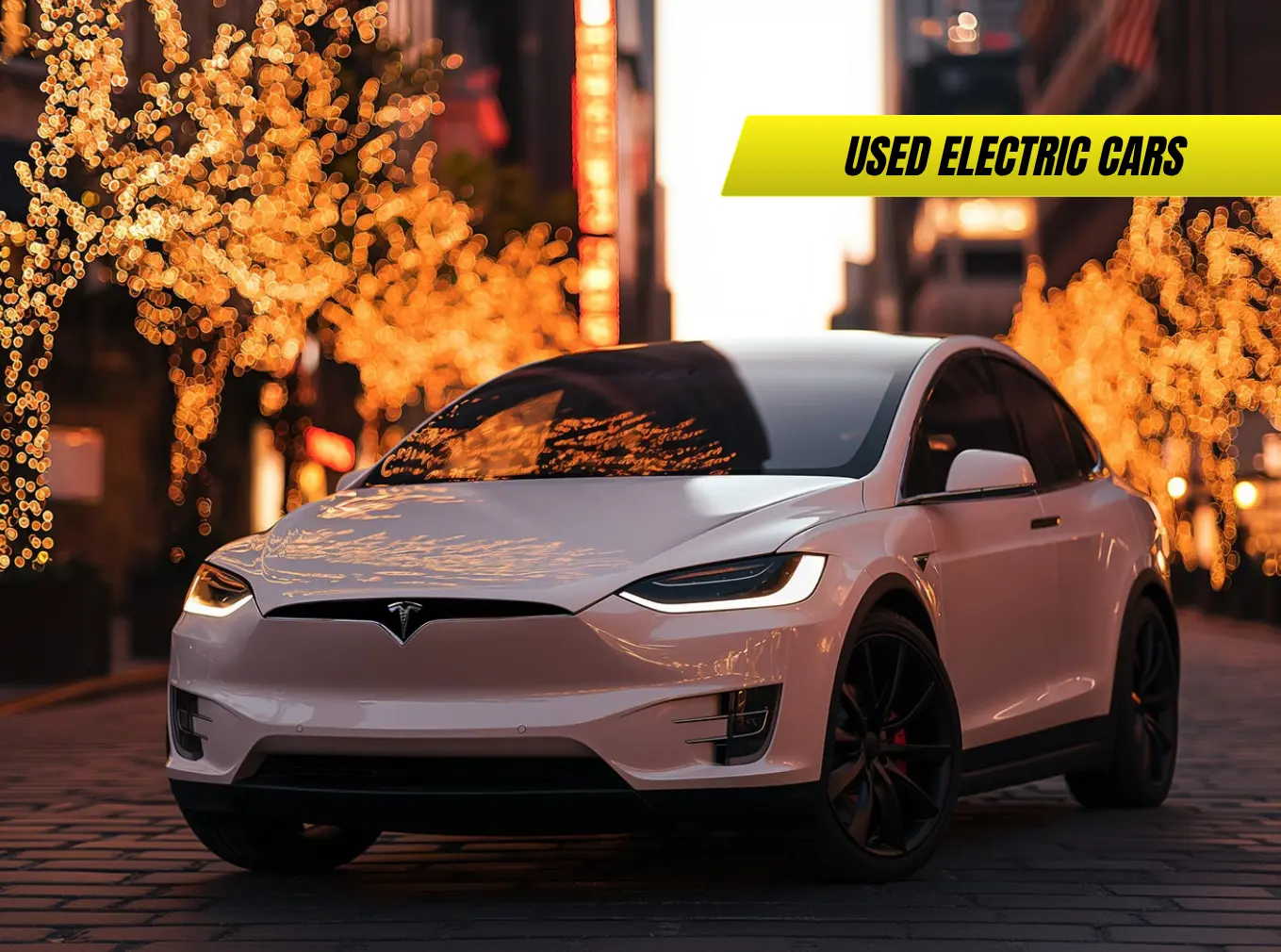
Used electric car prices have fallen dramatically in the past two years, creating genuine value opportunities that simply did not exist before. Whether you are buying your first EV or upgrading from an older model, 2026 is arguably the most compelling moment yet to buy a used electric car in the UK.
Key Points
- Used EV prices have dropped by up to 40% from their 2022 peak in some segments
- The Tesla Model 3 remains the benchmark used EV for range, charging network, and software
- The Nissan Leaf is the most accessible entry point, with reliable examples from £5,000–£8,000
- The MG4 offers the strongest value proposition under £20,000 in 2026
- The Hyundai Ioniq 5 and Kia EV6 represent the best used premium EV options under £30,000
- Battery health checks are essential before purchase — use a specialist OBD tool or request a dealer health report
Why 2026 Is a Strong Year to Buy Used Electric
The used EV market has undergone a significant repricing over the past 24 months. Early EV enthusiasm pushed used values to premium levels in 2021–2022; subsequent ZEV mandate pressure on new car sales, increased used supply, and some consumer hesitancy have driven values down sharply. The result in 2026: significantly more car for less money than at any point in the past four years.
The additional benefit for buyers is real-world data. Models that were new and unproven in 2020 now have three to five years of UK ownership data behind them, charging infrastructure has improved substantially across Great Britain, and the anxieties that surrounded early EV ownership have largely been resolved by lived experience. For guidance on managing EV performance in cold UK winters — relevant to any used EV purchase — our Electric Cars in Winter UK 2026 guide covers the practical realities in detail.
The Best Used EVs to Buy by Budget
Under £8,000 — Nissan Leaf (2018–2022)
The Leaf is the most accessible route into EV ownership in the UK, with a well-established ownership community, widely available independent servicing, and plentiful used stock. Second-generation examples from 2018 onward are the recommended starting point — they addressed the battery cooling weaknesses of the first generation.
Key figures:
- Real-world range: 130–160 miles (40kWh); up to 200 miles (62kWh e-Plus)
- Charging: up to 50kW DC on compatible models
- Common used price: £5,000–£10,000 depending on age and mileage
The Leaf’s limitation is its passive battery thermal management — unlike most newer EVs, it does not actively cool the battery during rapid charging, which can reduce charging speed and long-term capacity on very high-mileage or frequently rapid-charged examples. Check battery health carefully before purchase, ideally with a dealer-provided State of Health (SoH) report.
Under £15,000 — Tesla Model 3 Standard Range (2019–2021)
The Tesla Model 3 reshaped the used EV market when it appeared in volume. Even older Standard Range examples from 2019–2021 deliver around 200–220 miles of real-world range and access to Tesla’s Supercharger network — still the most reliable and widespread DC rapid charging infrastructure in the UK.
Key figures:
- Real-world range: 200–240 miles (Standard Range); 280–300 miles (Long Range)
- Charging: up to 170kW DC on Supercharger (older models) — fast and reliable
- Common used price: £12,000–£18,000 for Standard Range; £18,000–£26,000 for Long Range
Over-the-air software updates mean a 2019 Model 3 in 2026 runs more current software than most competitors that were new that year. The Model 3 remains the single strongest recommendation in the used EV market for buyers who prioritise range confidence and charging convenience.
Under £20,000 — MG4 (2022–2024)
The MG4 arrived in 2022 and immediately established itself as the value benchmark in the EV segment — and used examples in 2026 offer extraordinary specification for the money.
Key figures:
- Real-world range: 220–260 miles (Long Range RWD); 160–190 miles (Standard Range)
- Charging: up to 140kW DC on Long Range variants — faster than many more expensive competitors
- Common used price: £14,000–£20,000 for well-specced Long Range examples
The MG4’s 800V-adjacent charging capability on Long Range variants delivers rapid charging sessions that genuinely rival premium German alternatives. The main consideration is long-term software support and dealer network depth — SAIC’s UK presence is growing but is not yet as established as European or Japanese brands for independent specialists.
Under £30,000 — Hyundai Ioniq 5 or Kia EV6 (2021–2023)
These two vehicles — built on the same E-GMP 800V platform — represent the strongest all-round used premium EV proposition in 2026. Ultra-rapid charging at up to 240kW, genuinely impressive real-world range, and a quality of cabin and drive experience that rivalled cars costing significantly more when new.
| Hyundai Ioniq 5 | Kia EV6 | |
|---|---|---|
| Real-world range (LR RWD) | 270–290 miles | 270–300 miles |
| Max charging speed | 240kW (800V) | 240kW (800V) |
| 10–80% charge time | ~18 minutes | ~18 minutes |
| Common used price | £22,000–£30,000 | £23,000–£30,000 |
| Character | Spacious, relaxed | Sportier, driver-focused |
The Ioniq 5 suits buyers who prioritise space and comfort — its wide, airy cabin and upright seating position are particularly appreciated on longer journeys. The EV6 suits those who prefer a more dynamic, driver-focused feel. Both are outstanding used buys at current pricing.
Used Premium EV Under £35,000 — BMW iX3 (2021–2023)
For buyers who want a premium badge, a conventional SUV body style, and strong real-world usability, the used BMW iX3 offers genuine value at current prices. Real-world range of around 250–270 miles, a polished interior, and the reassurance of BMW’s extensive UK dealer and independent specialist network make it a confident choice.
Common used price: £18,000–£28,000 depending on specification and age. For buyers who find the full EV transition daunting, the iX3’s conventional SUV character and BMW reliability record make it one of the least disruptive ways to move into electric driving.
What to Check Before Buying a Used EV
Unlike a petrol or diesel car, a used EV’s most critical component — the battery — cannot be assessed by simply looking under the bonnet.
Essential pre-purchase checks:
- Battery State of Health (SoH) — request a dealer health report or use an OBD-II compatible app (Leaf Spy for Nissan, A Better Routeplanner-compatible tools for Tesla) to verify the battery retains close to its original capacity
- Charge at the vehicle — if possible, connect to a rapid charger during a test drive and verify the charge rate matches specification
- Service history — EVs have fewer service items than combustion vehicles but software updates, brake fluid changes, and tyre replacements should be documented
- Recall status — check the DVSA vehicle recall checker to confirm any outstanding safety recalls have been completed
- Remaining warranty — many manufacturers offer 8-year/100,000-mile battery warranties; confirm the remaining cover and whether it is transferable to a new owner
For context on how tyre choice and condition affects EV efficiency and safety — particularly on heavier battery-equipped vehicles — our Tyre Pressure Mistakes UK Drivers Make guide covers the specific considerations for EV tyre management.
The Best Moment to Buy: Timing Considerations
Used EV prices in 2026 continue to stabilise after the sharp falls of 2023–2024. The current market offers strong value, but analysts expect prices to firm gradually as ZEV mandate requirements push more consumers toward EVs and used supply from early adopters begins to plateau. Waiting for further price falls is not a guaranteed strategy — for buyers ready to purchase, 2026 remains a strong window.
The GOV.UK guidance on electric vehicle ownership also covers available incentives for home charger installation — the Charge Point Grant offers up to £350 off a home charger, a relevant consideration for any used EV purchase.
FAQ
Are used EVs reliable?
Evidence from UK ownership across models like the Nissan Leaf, Renault Zoe, and Tesla Model 3 consistently shows that EVs have fewer mechanical failures than equivalent combustion vehicles — fewer moving parts means fewer failure points. Battery degradation is the primary concern, which is why a health check before purchase is essential.
How much does a used EV battery replacement cost if needed?
Battery replacement costs vary widely but are generally between £3,000 and £10,000depending on the vehicle and battery size. Most well-maintained used EVs with documented history will not require battery replacement within a normal ownership period.
Do used EVs qualify for any UK government grants?
Direct purchase grants for private buyers are not currently available on used EVs. However, the Charge Point Grant of up to £350 for home charger installation applies regardless of whether the EV is new or used.
What mileage is acceptable on a used EV?
Unlike combustion engines, EV battery degradation is more closely related to charge cycles and age than pure mileage. A low-mileage but frequently rapid-charged example may have worse battery health than a higher-mileage car that was predominantly home-charged overnight. Always check SoH rather than relying on mileage alone.
Is it worth buying a used EV with a smaller range?
For a second car or primarily urban driver, a 120–150 mile real-world range is entirely adequate. For a sole family vehicle or regular long-distance use, aim for at least 200 miles of real-world range from any used purchase.
In my experience, the used EV market in 2026 has reached a maturity point where the barriers — range anxiety, charging uncertainty, reliability concerns — have been largely resolved by the evidence of several years of real-world ownership. The Tesla Model 3 Long Range at under £25,000 represents extraordinary value for any buyer who can charge at home. For buyers without home charging, the MG4 Long Range’s rapid charging speed makes public network use genuinely practical.





