
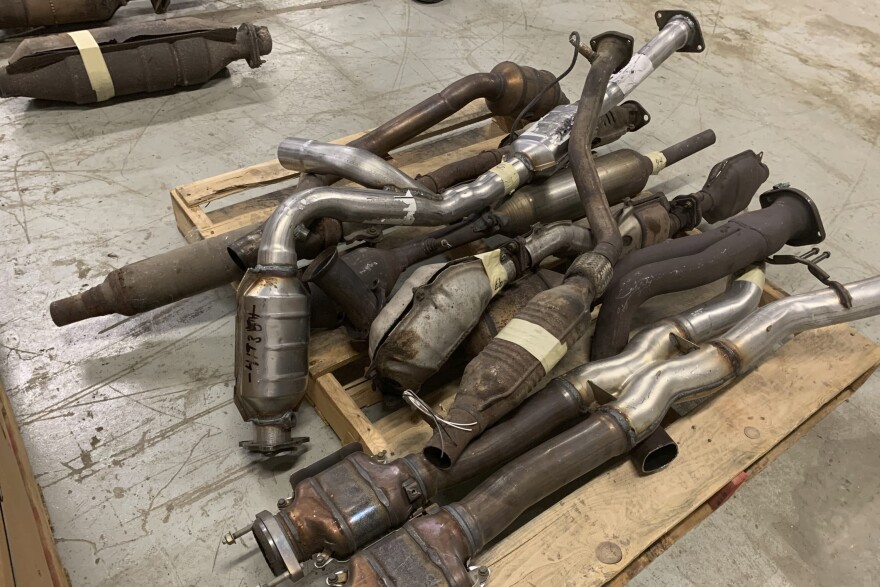
Catalytic converter theft remains one of the most prevalent vehicle crimes in the UK despite the introduction of new scrap metal legislation designed to close off the resale market. Understanding why your vehicle may be targeted, and what genuinely works to protect it, is essential for owners of the most at-risk models.
Key Points
- Catalytic converters contain platinum, palladium, and rhodium — precious metals worth hundreds of pounds per unit
- The theft typically takes under three minutes using a battery-powered angle grinder — it is an opportunistic crime
- Toyota Prius, Honda Jazz, Toyota Auris, Lexus RX, and Ford Jazz are among the most frequently targeted models in the UK
- Physical cat shields and clamps are the most effective deterrent — they do not prevent theft but make it slower and louder
- VIN engraving on the converter deters sale through scrap dealers and is free at many police marking events
- Insurance costs for targeted vehicles have risen significantly — declaring protective measures can reduce premiums
Why Catalytic Converters Are Still Being Stolen in 2026
The precious metal content of a modern catalytic converter — platinum, palladium, and rhodium — retains significant value regardless of legislation designed to restrict trade. While the UK’s Scrap Metal Dealers Act and subsequent tightening of scrap dealer obligations have made domestic resale harder, the export market and informal trade routes remain active.
Rhodium, the most valuable of the three metals, briefly traded at over £14,000 per troy ounce— though values have declined significantly from that peak, they remain high enough to make catalytic converter theft economically motivated crime. A standard converter may contain metals worth £50–£400 at current scrap prices; at street level, thieves typically sell them for £100–£300 each.
The operational simplicity of the crime is what makes it persistent: a battery-powered angle grinder, a car jack or trolley jack, and thirty seconds to three minutes is all it requires. Professional crews targeting high-value converters have been documented completing thefts in under 90 seconds. The crime is overwhelmingly nocturnal and predominantly targets vehicles in residential areas.
The Most Targeted Vehicles in the UK
Hybrid vehicles are disproportionately targeted because their catalytic converters contain higher concentrations of precious metals — the hybrid system means the combustion engine runs intermittently at lower temperatures, requiring a richer catalyst loading to maintain emission standards during cold starts.
Highest-risk models:
- Toyota Prius (all generations) — the most stolen cat in the UK for several consecutive years; accessible under the car and highly valuable
- Toyota Auris Hybrid — same platform and converter specification as the Prius
- Lexus RX 400h / 450h — high-value converters; ground clearance makes access easier
- Honda Jazz (pre-2021) — high converter value; accessible location under the vehicle
- Toyota RAV4 Hybrid — high converter value; SUV ground clearance makes access rapid
- Ford Jazz (Fiesta-based van conversions) — accessible converter location
- Honda Accord (pre-2015) — popular target in metropolitan areas
Non-hybrid vehicles with accessible converters — particularly older Vauxhalls, Land Rovers, and higher-ground-clearance vehicles — are also targeted but at lower rates than hybrids.
What Actually Works: Deterrence and Protection
1. Physical Cat Shield (Most Effective)
A purpose-made catalytic converter shield is the strongest practical deterrent available. Models such as the Catloc (Toyota-specific) and MillerCAT (broader range) bolt around the converter using hardened steel fixings that require specialised tools and significantly more time to defeat than a simple angle grinder cut.
A shield does not make the cat impossible to steal — a determined, well-equipped thief with sufficient time can defeat it. What it does is increase the time and noise required — the attributes that matter most to an opportunistic thief who needs to be gone in under three minutes. Thieves consistently move on to unprotected vehicles rather than fight through a shield.
Cost: £150–£250 fitted, depending on the vehicle. For a Toyota Prius owner paying elevated insurance premiums because of converter theft risk, a shield is almost always cost-effective within a single renewal cycle.
2. VIN Engraving
VIN (Vehicle Identification Number) engraving on the catalytic converter makes it traceable through scrap dealer databases and deters sale — scrap dealers are legally required to check for marked parts. Engraved converters are consistently worth less to thieves because fewer outlets will accept them.
The engraving can be done for free at many police property marking events, or by a locksmith or specialist for £20–£40. Register the engraving on the Datatag or Smartwater database for maximum traceability.
3. Parking Strategy
Where and how you park significantly affects risk:
- Garages — the most effective protection; a thief cannot operate under a car in a locked garage
- Overlooked, well-lit areas — CCTV coverage and passing pedestrian or traffic visibility deter opportunistic crime
- Avoid parking half-on, half-off the kerb — this tilts the vehicle and makes converter access easier
- Back up against a wall or solid barrier — limits the angle of access on rear-converter vehicles
For hybrid owners without garage access, combining a shield with considered parking is the most effective available protection.
4. Tilt and Motion Alarms
A Thatcham-approved tilt sensor alarm — which activates if the vehicle is jacked up — adds an audible deterrent. Modern alarm systems from Clifford, Meta, and Sigma offer tilt sensing as an integrated feature. This does not prevent a rapid theft but adds noise that draws attention and discourages lingering.
5. CCTV and Recording
A dash cam with parking mode (as covered in our dash cam guide above) will record a converter theft in progress — useful for police and insurance but does not prevent the crime. Dedicated driveway CCTV with motion alerts provides better surveillance coverage than a dash cam alone.
What Does Not Work
- Stickers warning of a cat shield — without an actual shield, stickers provide no protection and may be ignored by experienced thieves
- Leaving a light on in the car — does not deter a thief who has already identified the target vehicle
- Standard alarms alone — many professional crews operate fast enough that the alarm sounds after the theft is complete; an alarm without tilt sensing is ineffective against jacking
Insurance Implications for Targeted Vehicles
Insurers have responded to converter theft rates by applying significant premium increases on the most targeted models — Toyota Prius owners in particular have seen substantial insurance cost rises in metropolitan areas. Declaring a fitted cat shield to your insurer typically produces a premium reduction and demonstrates due diligence that supports any claim if theft occurs despite protection.
For the framework on how insurance premiums vary by region and what affects them, our car insurance by UK region guide covers the full landscape.
| Protection Method | Cost | Effectiveness | Notes |
|---|---|---|---|
| Cat shield (Catloc/MillerCAT) | £150–£250 fitted | High | Best single investment for targeted models |
| VIN engraving | Free–£40 | Moderate | Reduces resale value to thief |
| Tilt alarm | £100–£200 fitted | Moderate | Audible deterrent; combines well with shield |
| Garage parking | Variable | Very high | Eliminates risk entirely |
| Parking strategy | Free | Moderate | Combined with shield, very effective |
| Stickers only | Under £5 | Very low | Not recommended without physical protection |
FAQ
Which cars are most at risk of catalytic converter theft in the UK?
Toyota Prius, Toyota Auris Hybrid, Lexus RX Hybrid, Honda Jazz, and Toyota RAV4 Hybrid are consistently among the most targeted. Any hybrid vehicle is at elevated risk due to higher precious metal content.
How long does a catalytic converter theft take?
Typically 90 seconds to three minutes for a professional crew. Physical protection that extends this beyond three to five minutes is generally sufficient to deter opportunistic thieves.
Will my insurance cover catalytic converter theft?
Comprehensive insurance covers catalytic converter theft. The typical cost of replacement is £500–£2,000 depending on the vehicle, and claiming will affect your No-Claims Bonus. A cat shield costing £200 is almost always preferable to a claim.
Is catalytic converter theft decreasing in 2026?
Theft volumes declined from their 2021–2022 peak following changes to scrap metal regulations and targeted police operations. However, the crime remains significant — it has not been eliminated and continues to rise again in metropolitan areas as criminal networks adapt to the regulatory changes.
What should I do if my catalytic converter is stolen?
Report to the police immediately and obtain a crime reference number for your insurance claim. Inform your insurer. Do not drive the vehicle — a car without a catalytic converter will run very roughly, fail emissions, and cause damage to the engine management system. Arrange recovery to a garage.





