
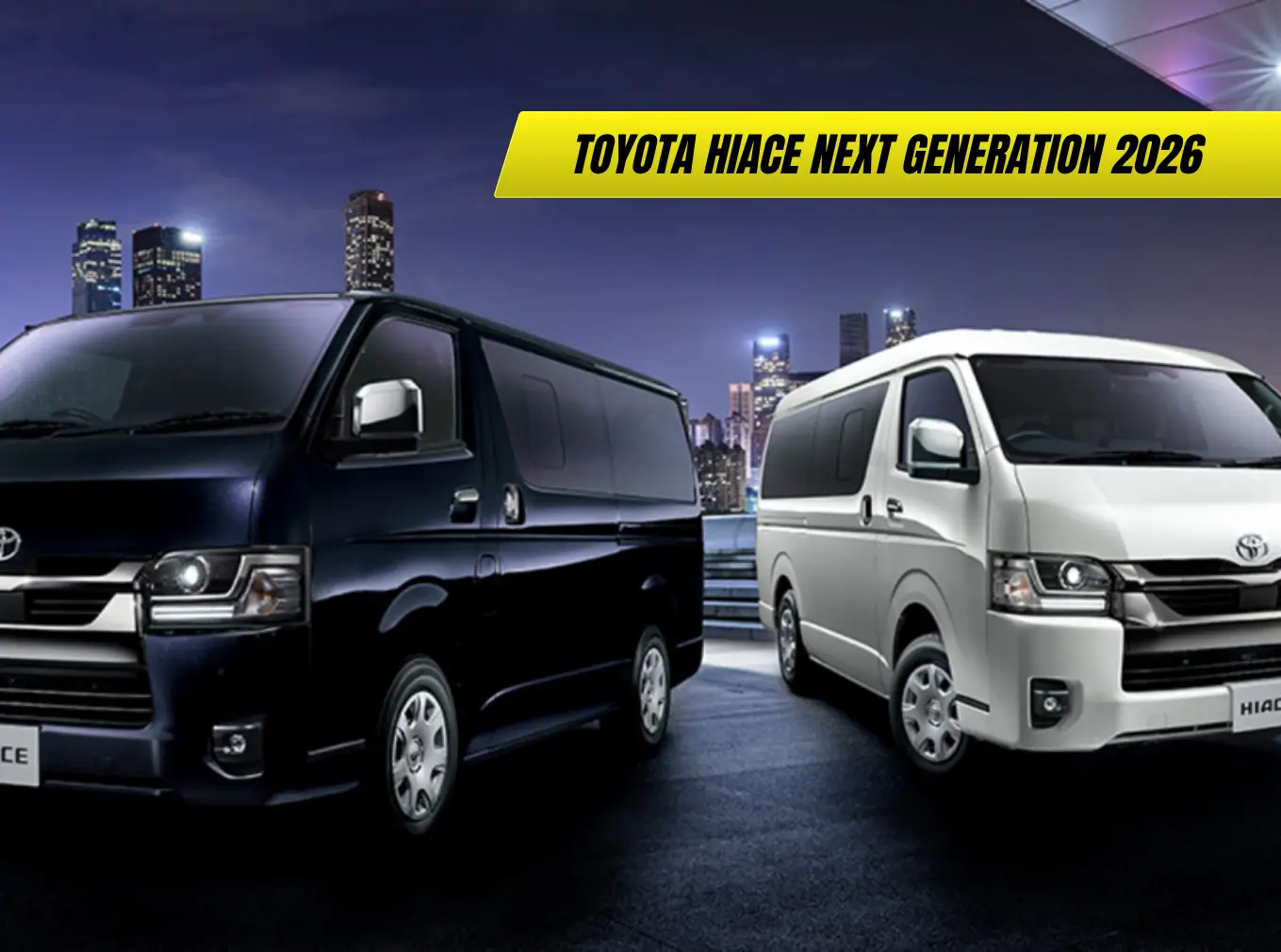
The next-generation Toyota HiAce is expected to debut by early 2027, bringing the most significant change in the nameplate’s history — a move to the TNGA platform, a front-engined layout replacing the iconic cab-over design, and a self-charging hybrid powertrain option for the first time.
The new Toyota HiAce will abandon the H200 generation’s cab-over body used in Japan since 2004, adopting a shorter bonnet profile appropriate for tight urban roads while introducing modern LED design, improved safety and Toyota’s latest hybrid technology.
- New generation expected to debut late 2026 or early 2027 in Japan
- Moves to TNGA platform — shared with the H300 generation sold in Australia, Philippines and Thailand
- Abandons cab-over layout for a front-engined design with a shorter bonnet than H300
- Self-charging hybrid powertrain expected — fully electric version put on hold
- Multiple body styles: van, combi and minibus variants confirmed
- A smaller urban variant based on the Daihatsu Kayoibako-K concept also planned
Twenty-Two Years Between Generations
The Toyota HiAce H200 has been on sale in Japan since 2004 — a remarkable 22-year production run sustained by incremental updates, fanatical owner loyalty and Toyota’s own reluctance to fix something that worked. However, with the global H300 generation having launched in 2019 for markets including Australia, the Philippines and Thailand, the gap between what Japanese buyers receive and what the rest of the world gets has become impossible to ignore.
The next generation will finally align Japan with the global HiAce programme, sharing platform and key components with the H300 while making specific adaptations for Japan’s narrower roads, tighter urban environments and different regulatory requirements.
Design: A New Face for a National Institution
The best preview of the next HiAce’s design comes from the two concept vehicles that debuted at the 2025 Japan Mobility Show. One featured a long-wheelbase, high-roof van configuration; the other a standard van body. Both share modern full-LED lighting, clean flat surfaces inspired by the 2023 Toyota Kayoibako concept and a considerably more contemporary aesthetic than the ageing H200.
Crucially, while the new HiAce adopts a front-engined layout — moving the engine from under the cabin floor to ahead of the front axle — it will have a shorter bonnet than the H300, making it more manoeuvrable in Japan’s characteristically tight urban streets. This compromise between modern layout and practical dimensions is central to Toyota’s vision for the new model.
TNGA Platform and Hybrid Power
The switch to the TNGA platform brings the HiAce into Toyota’s modern engineering family, delivering improved structural rigidity, better passive safety and a significantly more refined ride. TNGA is the same underpinning used across the Corolla, C-HR and RAV4 families — a platform with a well-established reputation for quality and durability.
The introduction of a self-charging hybrid powertrain is perhaps the most commercially significant change. A hybrid HiAce offers lower running costs, reduced urban emissions — potentially ULEZ-compliant in current or future form — and significantly better fuel economy on the mixed urban and motorway routes typical of UK van use. For UK fleets, a hybrid HiAce would be a compelling addition to the market.
The fully electric HiAce concept shown at the 2023 Global HiAce BEV preview has been put on hold, reflecting shifting commercial vehicle market conditions and buyer readiness for full EV adoption in this segment.
UK Relevance
The current HiAce H300 is not officially sold as a new vehicle in the UK, though it is available as a grey import and is well-established in specialist markets. The next generation’s alignment with TNGA and the addition of hybrid power could make it a viable official import for Toyota UK, particularly as fleet operators face increasing pressure to reduce commercial vehicle emissions.
For UK businesses running fleets, our guide to UK toll roads and charges 2025 is relevant context for fleet managers evaluating long-distance commercial vehicle costs.
| Spec | Detail |
|---|---|
| Platform | TNGA (shared with H300) |
| Layout | Front-engined (replaces cab-over) |
| Body styles | Van, combi, minibus |
| Powertrain | Petrol, diesel, self-charging hybrid |
| EV version | On hold |
| Expected debut | Late 2026 or early 2027 |
FAQ
When will the new Toyota HiAce be revealed?
A debut is expected in late 2026 or early 2027 in Japan.
What platform does it use?
The TNGA platform, shared with the H300 generation sold globally.
Will it be sold in the UK?
Not confirmed for official UK sale, but the improved specification and hybrid option could make it a candidate for Toyota UK’s commercial range.
Is the fully electric HiAce still coming?
The BEV variant has been put on hold. No timeline for reconsideration has been given.
Does it keep the cab-over design?
No — the new HiAce adopts a front-engined layout with a shorter bonnet than the H300.
Will there be a hybrid option?
Yes — a self-charging hybrid powertrain is expected as part of the lineup.
What is the Japanese starting price?
The current H200 starts from approximately ¥2.8 million in Japan — the new generation is expected to be priced slightly higher given the technological upgrades.
Conclusion
The next Toyota HiAce is a generational moment — a 22-year wait coming to an end with a thoroughly modern, hybrid-capable commercial vehicle that finally brings Japan’s most trusted workhorse into the contemporary era. From my point of view, the addition of hybrid power is the single most important feature for fleet buyers worldwide, and I would urge Toyota UK to consider bringing the new generation to British roads officially. A reliable, efficient and modern HiAce would be a genuine asset in the UK light commercial vehicle market.





