
Recognise the early warning signs of a failing car battery before winter leaves you stranded. A practical guide for UK drivers on prevention, testing and replacement.
A flat battery is the single most common cause of winter breakdown callouts in the UK — accounting for nearly a quarter of all AA and RAC callouts between December and February. Almost all of these failures are preventable, because a battery rarely fails without warning. The challenge is knowing what to look for.
Early Warning Signs and Prevention: What UK Drivers Need to Know
Battery failure rarely happens without advance notice. The signs are present for days or weeks before the final failure — but they are easy to miss or dismiss as minor inconveniences. Recognising them early converts a potential roadside failure into a planned, inexpensive battery replacement.
| Warning Sign | Significance | Urgency |
|---|---|---|
| Slow engine cranking on cold start | Battery losing cold-start capacity | Test immediately — replace if over 4 years |
| Start-stop system refusing to activate | Battery below threshold for start-stop operation | Battery test required |
| Headlights dimming when engine cranks | Battery struggling under starting load | Test within the week |
| Car “lazy” to start after 2+ days parked | Battery not holding charge | Check for parasitic drain; test battery |
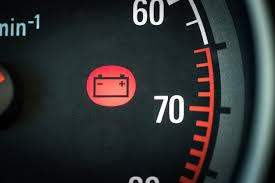
| Battery or charging warning on dashboard | Charging system or battery fault active | Test battery and alternator immediately |
| Corrosion on battery terminals | Increased resistance reducing effective capacity | Clean terminals; test battery |
| Electrical gremlins — windows, locks, radio resetting | Voltage fluctuation from failing battery | Battery load test required |
Why Winter Is When Batteries Fail
The connection between cold weather and battery failure is not coincidental — it is a direct consequence of battery chemistry. Lead-acid batteries (the standard 12V battery in all combustion cars) generate electrical energy through a chemical reaction between lead plates and sulphuric acid electrolyte. At low temperatures, this reaction slows significantly: a battery at 0°C delivers approximately 50% of its rated capacity compared to the same battery at 20°C.
At the same time, cold engine oil increases starting resistance — meaning the battery must deliver more energy at precisely the moment its capacity is most reduced. The combination of reduced supply and increased demand is why batteries that functioned adequately through summer fail definitively on the coldest morning of January.
The ADAC — Europe’s largest breakdown organisation — reports that approximately 43% of all car breakdowns are caused by battery failure, making it the single biggest cause of roadside incidents by a significant margin. UK data from the AA and RAC is consistent with this figure.
The Age Factor: When to Replace Regardless of Symptoms
Battery age is the most reliable predictor of winter failure. Most car batteries have a design life of three to five years, with premium batteries and AGM types potentially lasting longer. A battery over four years old that has not been tested should be treated as a potential failure risk before each winter, regardless of whether it currently starts the car without difficulty.
The reason is straightforward: battery degradation is not linear. A battery may pass from “adequate” to “failed” in a single cold morning once it crosses a capacity threshold — there is no gradual warning period that becomes obvious before the final failure. Testing provides the only reliable advance warning.
Free battery testing is available at most UK Halfords branches, Kwik Fit, and many independent garages — no appointment required. The test takes under five minutes and provides a clear indication of the battery’s remaining capacity and cold-cranking capability.
Start-Stop Batteries: A Special Case
Cars with start-stop systems — the majority of new cars sold in the UK since 2015 — use either AGM (Absorbent Glass Mat) or EFB (Enhanced Flooded Battery) technology rather than conventional lead-acid batteries. These batteries are designed for the frequent charge-discharge cycles of start-stop operation and are more resilient to deep discharge — but they fail differently and require specific testing equipment.
One of the first signs of a failing start-stop battery is the start-stop system refusing to activate— the car’s battery management system detects insufficient reserve capacity and disables start-stop to protect the battery’s remaining life. Many drivers dismiss this as a software glitch; it is almost always a battery health indicator.
When replacing a start-stop battery, always fit an AGM or EFB battery of the correct specification — never a standard lead-acid replacement, which is incompatible with the start-stop charging profile and will fail prematurely. For related guidance on start-stop system issues in winter, see our dedicated article on start-stop system faults in cold weather.
Preventing Battery Failure: The Practical Checklist
Prevention is straightforward and inexpensive compared to the cost and inconvenience of a winter breakdown:
October pre-winter checklist:
- Have the battery load-tested — not just voltage-tested; a load test measures actual cold-cranking capacity under simulated starting conditions
- Visually inspect terminals for white or blue-green corrosion — clean with a wire brush and apply terminal grease or petroleum jelly to slow re-oxidation
- Check that the battery clamp is secure — a loose battery vibrates during driving, accelerating internal plate damage
- If the car is used infrequently, connect a smart battery maintainer (CTEK MXS 5.0, Optimate 4, or equivalent) to keep the battery fully charged during storage periods
- Ensure the charging system is working — a healthy battery charged by a failing alternator will discharge progressively and fail unexpectedly
During winter:
- Minimise short trips where possible — a 5-minute journey draws more from the battery (cold start) than the alternator returns at low speed on a brief run
- Switch off all electrical loads before turning off the ignition — reducing the draw from the next cold start
- If the car is unused for more than a week, connect a maintainer or consider a brief drive to allow the alternator to top up the battery
For official guidance on vehicle roadworthiness and battery maintenance, the DVSA vehicle safety guidance provides the regulatory framework for ensuring vehicles are maintained to legal standards year-round.
How do I know if my car battery needs replacing?
The most reliable method is a load test at a garage or Halfords — this measures the battery’s actual cold-cranking capacity rather than just its resting voltage. Warning signs include slow cranking, dimming headlights during starting, start-stop refusing to activate, and the battery warning light. Any battery over four years old in a UK vehicle should be tested before winter.
What is the average cost of a car battery replacement in the UK?
A standard lead-acid battery for a mainstream family car costs £60–£100 for a quality replacement (Bosch, Varta, Yuasa). AGM batteries for start-stop cars typically cost £120–£200. Fitting at a garage or Halfords typically adds £15–£30. Total replacement cost for most UK cars: £75–£230 — considerably less than a roadside recovery callout.
Can I replace a car battery myself?
On most cars, yes — battery replacement requires a 10mm spanner, five minutes, and awareness of the correct disconnection sequence (negative first, positive last on removal; positive first, negative last on fitting). However, on some modern vehicles — particularly BMW, Mercedes, and VAG group cars — the new battery must be registered with the car’s battery management system using a diagnostic tool, or the charging strategy will be incorrect. Check your vehicle handbook before DIY replacement.
Does a car battery recharge itself after a flat?
Partially — an alternator will recharge a flat battery during driving, but only if the battery was flat rather than failed. A very deep discharge (left flat for days) can cause sulphation of the battery plates, permanently reducing capacity and making it unable to hold a full charge even after recharging. If the battery will not hold charge after a full recharge, it requires replacement.
How often should a car battery be replaced in the UK?
As a general guideline, budget for replacement every four to five years as a routine maintenance item — sooner if the battery shows any weakness symptoms. In practice, many batteries last six or seven years with regular use and proper maintenance, while others fail at three years due to manufacturing variation, frequent short trips, or a vehicle with high parasitic electrical loads.
In my view, a £5–£10 investment in a quality battery terminal spray or petroleum jelly each October is one of the most underrated pieces of car maintenance available to UK drivers — corrosion on terminals is responsible for a significant proportion of slow-crank cold-start problems and is entirely preventable with a five-minute annual treatment.





