
Is your car’s start-stop system refusing to activate on cold mornings? Discover the real reasons it shuts itself off in winter, which causes signal a fault, and what UK drivers can do to fix and prevent the problem.
Why Start-Stop Fails in Cold Weather and What UK Drivers Need to Know
The start-stop system is one of the most commonly misunderstood features on modern cars — and winter is the season when it most frequently refuses to operate. In the vast majority of cases, the system is not broken. It is working exactly as designed: the car’s battery management system has detected that conditions do not meet the threshold required for safe, reliable restarting, and has deactivated start-stop automatically to protect both the battery and the driver.
Understanding why the system makes that decision — and when it signals a genuine fault — is the key to knowing whether to visit a garage or simply wait for conditions to improve.
| Cause | System Status | Action Required |
|---|---|---|
| Ambient temperature below 5°C | Normal deactivation | None — will resume when warm |
| Battery below state-of-charge threshold | Normal deactivation | Short drive or trickle charge |
| Engine not yet at operating temperature | Normal deactivation | None — wait for warm-up |
| Air conditioning or heating demand high | Normal deactivation | None — system is managing load |
| Battery health below threshold | Permanent deactivation | Battery test and likely replacement |
| Faulty alternator reducing charge rate | Fault-based deactivation | Alternator inspection required |
| Battery management system coding error | Fault-based | OBD diagnosis at a garage |
How the Start-Stop System Actually Works
Every modern start-stop system relies on a continuous stream of data from the car’s Battery Management System (BMS) — a monitoring module that measures battery voltage, state of charge, temperature, and health in real time. Before allowing the engine to switch off at a junction or in traffic, the BMS checks whether the battery has sufficient capacity to restart the engine reliably when the driver releases the brake pedal or engages the clutch.
If any of the following conditions are present, the system will decline to shut the engine off — even if the driver has not manually deactivated it:
- Battery state of charge below a manufacturer-set threshold (typically 75–80% charge)
- Battery temperature too low for reliable restart
- Engine coolant not yet at operating temperature
- Climate control system demanding high electrical load to heat or cool the cabin
- Steering wheel turned significantly, indicating a parking manoeuvre
- Electrical accessories drawing load above a threshold
This means a driver who makes a short morning journey in winter — starting with a cold battery, heating on full, engine not yet warm — may find that start-stop never activates once throughout the entire trip. This is entirely normal and expected behaviour.
Cold Weather: The Primary Winter Cause
Cold temperatures reduce battery capacity significantly — a battery at 0°C may deliver only 50% of its rated capacity compared to the same battery at 20°C. The BMS detects this reduced capacity and correctly concludes that the battery does not have sufficient reserve to restart the engine reliably after a stop-start cycle.
As the journey progresses and the battery warms slightly from the alternator’s charging current, the system will typically reactivate within 10–20 minutes of driving. A driver who notices start-stop absent on a cold morning and present by the time they reach the office is experiencing exactly this pattern — and no intervention is required.
The relevant threshold: Most manufacturers set the cold-weather deactivation point at around 5°C ambient temperature. Below this, start-stop deactivates automatically as a precautionary measure regardless of battery state of charge. Some manufacturers set this threshold higher — the Volkswagen Group typically deactivates start-stop below 8°C — meaning drivers in northern England, Scotland, and Wales may find start-stop absent for extended periods during winter.
When Cold Is Not the Cause: Battery Health
The most important distinction UK drivers need to make is between temperature-related deactivation (which requires no action) and battery health-related deactivation (which requires a battery replacement).
A battery approaching end of life loses its ability to meet the BMS’s minimum state-of-charge threshold for start-stop activation — not because it is cold, but because its actual charge-holding capacity has declined permanently. The BMS detects this reduced capacity and permanently disables start-stop as a protective measure.
The tell-tale sign: start-stop fails to activate even after a long motorway journey that should have fully charged the battery, and even in mild weather when temperature is not a factor. If start-stop was working reliably in previous winters and has now stopped activating on warm, dry days with a full battery indicator, a battery health test is almost certainly going to reveal a battery below its serviceable threshold.
What to do: Have the battery load-tested at a Halfords, Kwik Fit, or independent garage — free of charge at most branches. A load test measures actual cold-cranking capacity under simulated starting conditions, which resting voltage cannot reveal. A battery failing a load test requires replacement to restore start-stop function.
Crucially, start-stop systems require either an AGM (Absorbent Glass Mat) or EFB (Enhanced Flooded Battery) — not a standard lead-acid battery. Fitting a standard battery to a start-stop car will cause premature failure within months and will not restore correct start-stop operation. Always confirm the correct battery specification before replacement.
For comprehensive guidance on battery warning signs throughout winter, our car battery warning signs guide covers every indicator of impending battery failure before it leaves you stranded.
Alternator and Charging System Faults
A less common but important cause of persistent start-stop deactivation is a failing or underperforming alternator. The alternator charges the battery while the engine runs; if it is producing below its rated output — due to a worn belt, failing diode, or bearing fault — the battery never reaches the state-of-charge threshold required for start-stop activation.
A driver with this problem typically notices that start-stop was working normally, then gradually stopped activating entirely, and the battery warning light may occasionally illuminate or flicker — particularly at idle when alternator output is lowest.
The diagnostic check is straightforward: with the engine running at idle, battery voltage should measure 13.8–14.4V across the terminals. Below 13.5V at idle suggests undercharging from the alternator. This test requires a simple multimeter available from any motor factor for under £10, or any garage can check it in under a minute.
Manually Deactivated Start-Stop: The Overlooked Cause
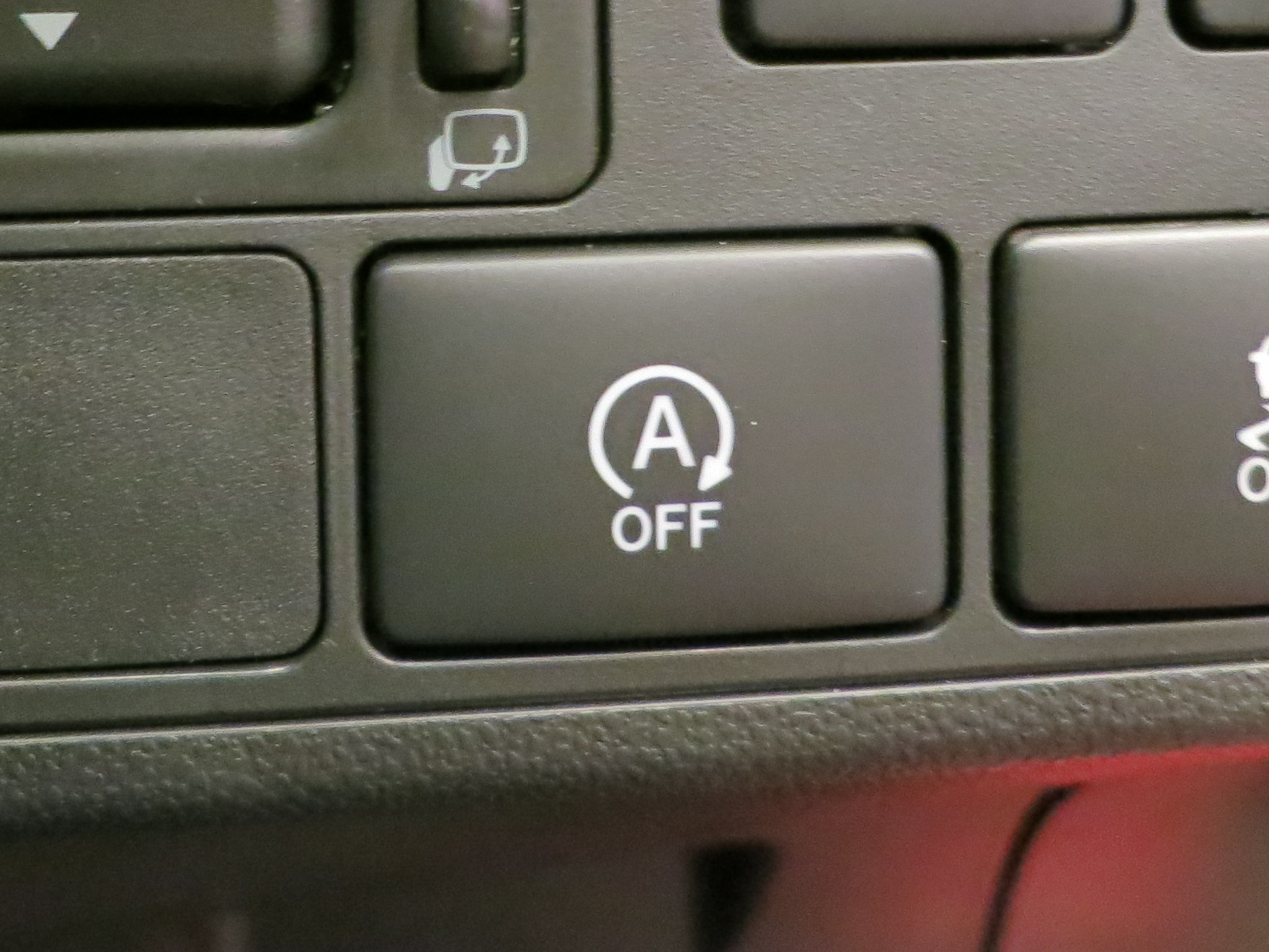
A significant number of calls to manufacturer helplines about start-stop “not working” turn out to be a driver who switched the system off — using the dashboard button, typically marked with an A with a circular arrow — and either forgot they did so or did not realise the setting does not always persist after a restart.
On most UK cars, the start-stop system reactivates automatically every time the ignition is switched on, regardless of the driver’s previous preference. On some vehicles — particularly higher-specification models from BMW, Mercedes, and Volvo — the driver’s preference is memorised between journeys. Check whether the start-stop disable button is illuminated before seeking a technical explanation.
Hybrid and Mild Hybrid Vehicles: Different Rules Apply
On full hybrid vehicles such as the Toyota Yaris, Toyota Corolla Cross, and Toyota Aygo X hybrid, the start-stop function is managed by the hybrid system rather than a conventional BMS. The 12V auxiliary battery still plays a role, but the high-voltage hybrid battery provides the primary restart energy — making cold-weather start-stop deactivation less common than on conventional cars.
On mild hybrid (MHEV) vehicles — which use a 48V belt-integrated starter-generator rather than a conventional 12V system — cold-weather start-stop behaviour varies significantly by manufacturer. The Nissan Qashqai e-Power, for example, manages start-stop very differently from a conventional system; our Nissan Qashqai e-Power review covers its specific powertrain behaviour in detail.
For drivers considering a switch to a plug-in hybrid to avoid cold-weather start-stop concerns entirely, our complete PHEV guide for UK drivers covers every available option.
The official position on start-stop systems and fuel consumption benefits is documented by the UK government’s Energy Saving Trust, which confirms that correctly functioning start-stop systems reduce fuel consumption by 3–8% in urban driving conditions.
Why does my start-stop not work in the morning but works later in the day?
This is the classic pattern of temperature-related deactivation combined with a battery that needs time to warm and charge. The BMS correctly identifies that the cold battery does not have sufficient reserve for reliable restart and deactivates start-stop until the battery reaches the required threshold — typically after 10–20 minutes of driving. No action is required unless the problem persists on warm days too.
Can I permanently disable start-stop without affecting anything else?
Some vehicles allow the driver’s start-stop preference to be programmed permanently via a dealer coding session. Most standard cars reset to start-stop active on every ignition cycle. Aftermarket modules that physically override the start-stop button press are available for many models — these are legal to fit and do not affect other vehicle systems, though they should be disclosed to an insurer if asked about non-standard modifications.
Will a new battery fix my start-stop system?
If the cause is battery degradation — the most common permanent cause — then yes, fitting a correct-specification AGM or EFB battery will restore start-stop function. If the cause is an alternator fault, BMS coding error, or sensor fault, a new battery alone will not fix it. Have the battery load-tested before replacing it to confirm this is the cause.
Does start-stop damage the engine through excessive wear?
This is one of the most common concerns about start-stop systems and is addressed by the engineering. Starter motors on start-stop equipped cars are rated for hundreds of thousands of cycles — typically three to five times the specification of a conventional starter motor. Engine lubrication systems on start-stop cars are designed to retain an oil film on critical surfaces during the brief off period. Independently conducted wear studies have found no significant increase in engine wear attributable to correctly functioning start-stop systems.
My start-stop light is showing but the system never deactivates the engine — what is wrong?
If the start-stop indicator is illuminated but the engine never actually switches off at junctions, check whether all activation conditions are met: the car must be stationary, the gear in neutral (manual) or brake pedal depressed (automatic), the engine at operating temperature, the bonnet closed, the seatbelt fastened, and the battery above its threshold. If all conditions appear to be met and the engine still will not switch off, an OBD fault code scan will identify whether a sensor fault is preventing activation.
In my experience, the most straightforward piece of advice for any UK driver whose start-stop has stopped working in winter is to complete a 30-minute motorway or A-road journey and then try again — if the system reactivates after the battery has had time to warm and charge, cold-weather deactivation was the cause and the system is functioning correctly. If it remains inactive after a long run in mild weather, a battery test is the next step.





